Centro
First-timersAround the Parque Central, with most hostels.

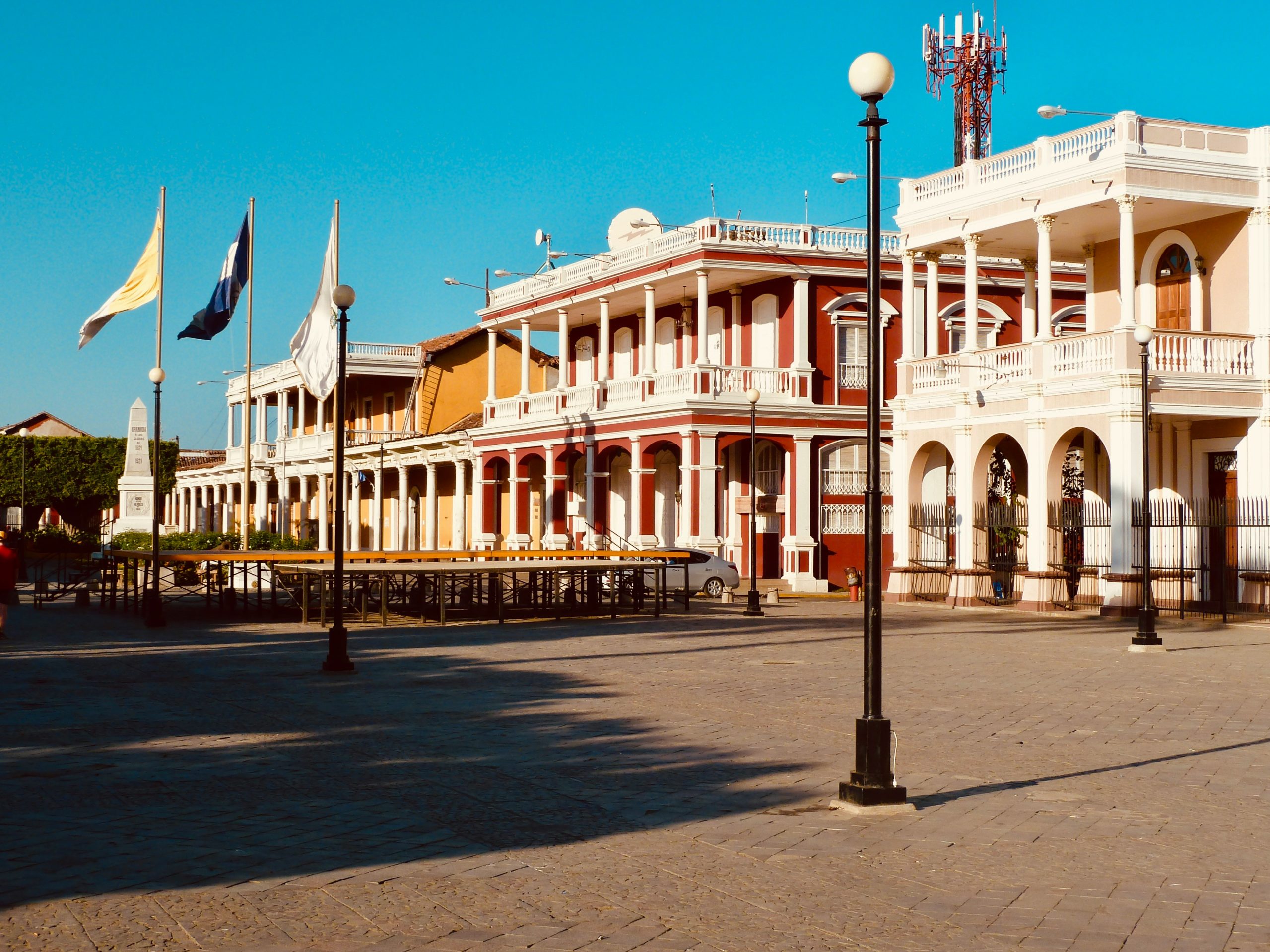
Nicaragua's colonial showpiece on Lake Nicaragua: painted streets and churches, kayaking among the isletas, the cloud forest on Mombacho volcano, the glowing crater at Masaya, and swimming in the Laguna de Apoyo.
Granada was founded by the Spanish in 1524 on the shore of Lake Nicaragua, one of the oldest colonial cities in the Americas. Pirates sacked it, and the American adventurer William Walker burned it in 1856, but it was rebuilt, and today its centre is a grid of brightly painted houses, churches and leafy courtyards.
It is the easiest place in Nicaragua for first-time visitors, with plenty of hostels, cafés and tour operators. Around it are some of the country's best day trips: the isletas in the lake, Mombacho volcano, the active crater at Masaya and its craft market, and the Laguna de Apoyo crater lake.
Give Granada three or four days, and add a night or two at the Laguna de Apoyo.
Stay in the centre, within a few blocks of the Parque Central and Calle La Calzada; for a quieter break, stay a night or two at the Laguna de Apoyo.
Around the Parque Central, with most hostels.
The pedestrian street down to the lake.
West of the centre, around the Xalteva church.
Lodges on the crater lake shore, 30 minutes away.
Orange labels are neighbourhoods, dots are the 7 top-rated hostels. Map data from OpenStreetMap contributors.
Climb the bell tower of La Merced church for the classic view over the red roofs to the cathedral and Mombacho. Walk Calle La Calzada down to the lake, and visit the San Francisco convent museum, with its pre-Columbian statues from Zapatera island.
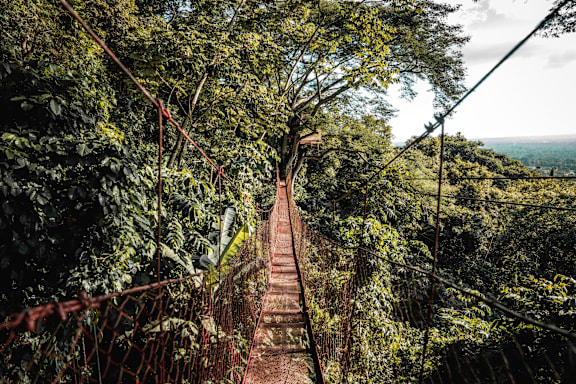
Take a boat or kayak trip around the isletas, more than 300 small islands formed by an ancient eruption of Mombacho. Hike the cloud forest trails at the top of Mombacho, and take an evening tour to Masaya volcano, where you can look into an active crater.
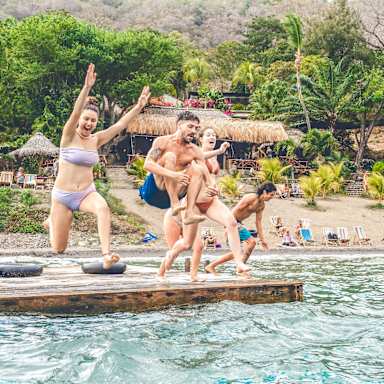
Spend a day, or a night, at the Laguna de Apoyo, a crater lake with warm, clear water and lodges where you can swim and kayak.
The Parque Central, the cathedral and Calle La Calzada are free. Walking down to the lake shore and the malecón costs nothing.
The Guadalupe church and the streets of the old centre are free to explore.
The La Merced tower, museums and tours charge.
Try vigorón, Granada's speciality of yuca, pork crackling and cabbage salad on a banana leaf, sold around the Parque Central for €2 to €3. Fritangas, evening street grills, serve meat, gallo pinto and plantain for €2 to €4.
The market south of the park has cheap comedores.
Calle La Calzada has restaurants and bars aimed at visitors, at higher prices. A 10 per cent service charge is often added to restaurant bills; if it is not, 10 per cent is a fair tip.
Granada is quieter than León or San Juan del Sur. Calle La Calzada has bars with outdoor tables, and hostel bars host the evening.
Rooftop bars are good for sunset over the cathedral.
A Toña or Victoria beer costs €1 to €2.
Granada's centre is walkable. Managua airport is about an hour away by shuttle or taxi.
Shuttles link Granada with León, San Juan del Sur and the Ometepe ferry at San Jorge. Chicken buses and minibuses run to Masaya and Managua for under €1.50.
For Masaya volcano and Mombacho, a tour is easiest. Take official taxis, not unmarked cars.
Hostel beds start at around €8 to €14 a night. Vigorón and fritanga plates cost €2 to €4.
An isletas boat trip costs about €15 to €25, a Masaya volcano night tour about €20 to €35, and a day pass at a Laguna de Apoyo lodge about €8 to €15.
US dollars are widely accepted, but you will get change in córdobas. Carry small notes.
Granada is one of the easier places in Nicaragua for visitors, but petty theft and bag snatching happen, especially at night and around the market and lake shore. Take an official taxi after dark.
Foreigners are banned from any political activity in Nicaragua, including joining protests, so avoid demonstrations and do not post about politics while you are there. Drones are banned.
Masaya volcano closes at times when gas levels rise. Drink bottled or filtered water; most hostels have refill stations. In an emergency, call 911, or 118 for the police.
Volcanoes, lakes and markets.
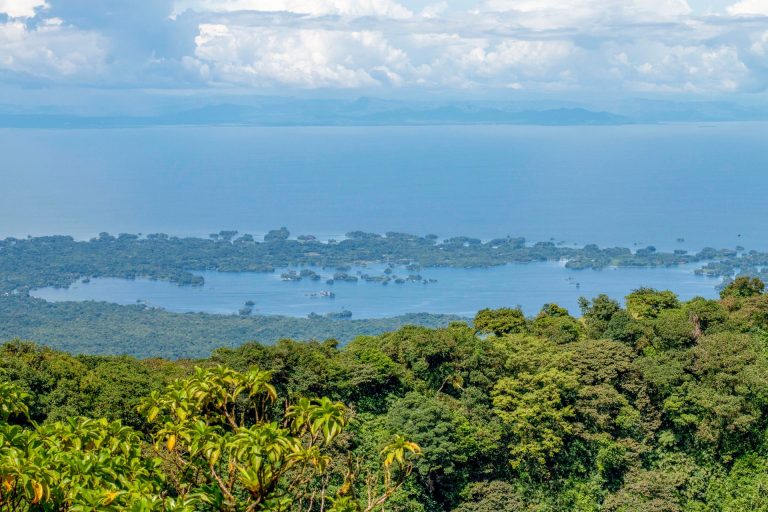
More than 300 small islands.
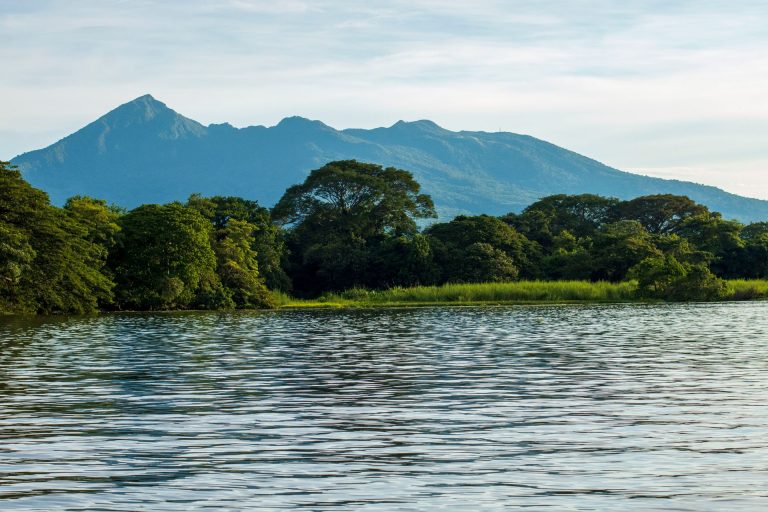
Cloud forest trails on a volcano.
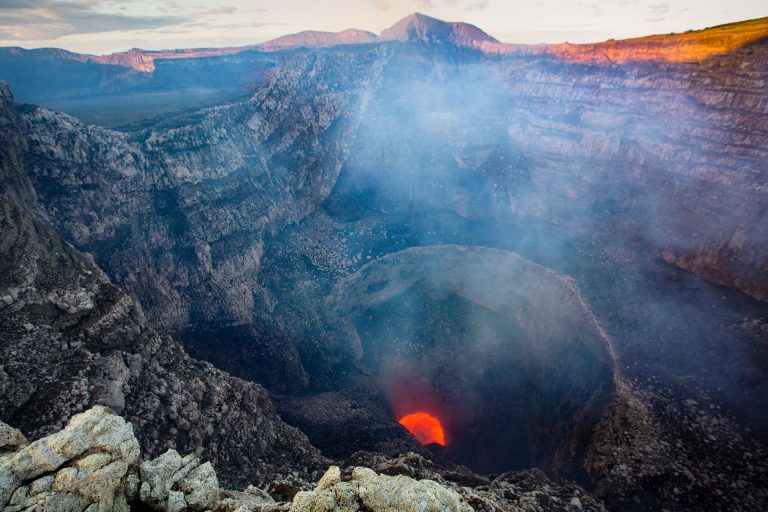
Look into an active crater.
Fiestas and holidays.
The Assumption fiestas, with parades.
The Gritería, with altars and sweets.
Processions.
Sunny and busy.
The highest-rated hostels in Granada, live from Hostelworld. Prices and availability are live on each property page.
December to April is the dry season, hot and sunny; March and April are the hottest months. May to November brings afternoon rain, and September and October are the wettest. Easter is busy.
Average highs, rounded. Hot all year.
Per night, for one person, based on Granada prices.
Treat these as a guide. Tours cost extra.
The ones we get asked most.

Compare hostels across Nicaragua: live prices, real reviews and free cancellation on most bookings. Then meet the people already there in the app.

 Get the App.



 Get the App.