Town and Ela Beach
HarbourThe old centre by the harbour.

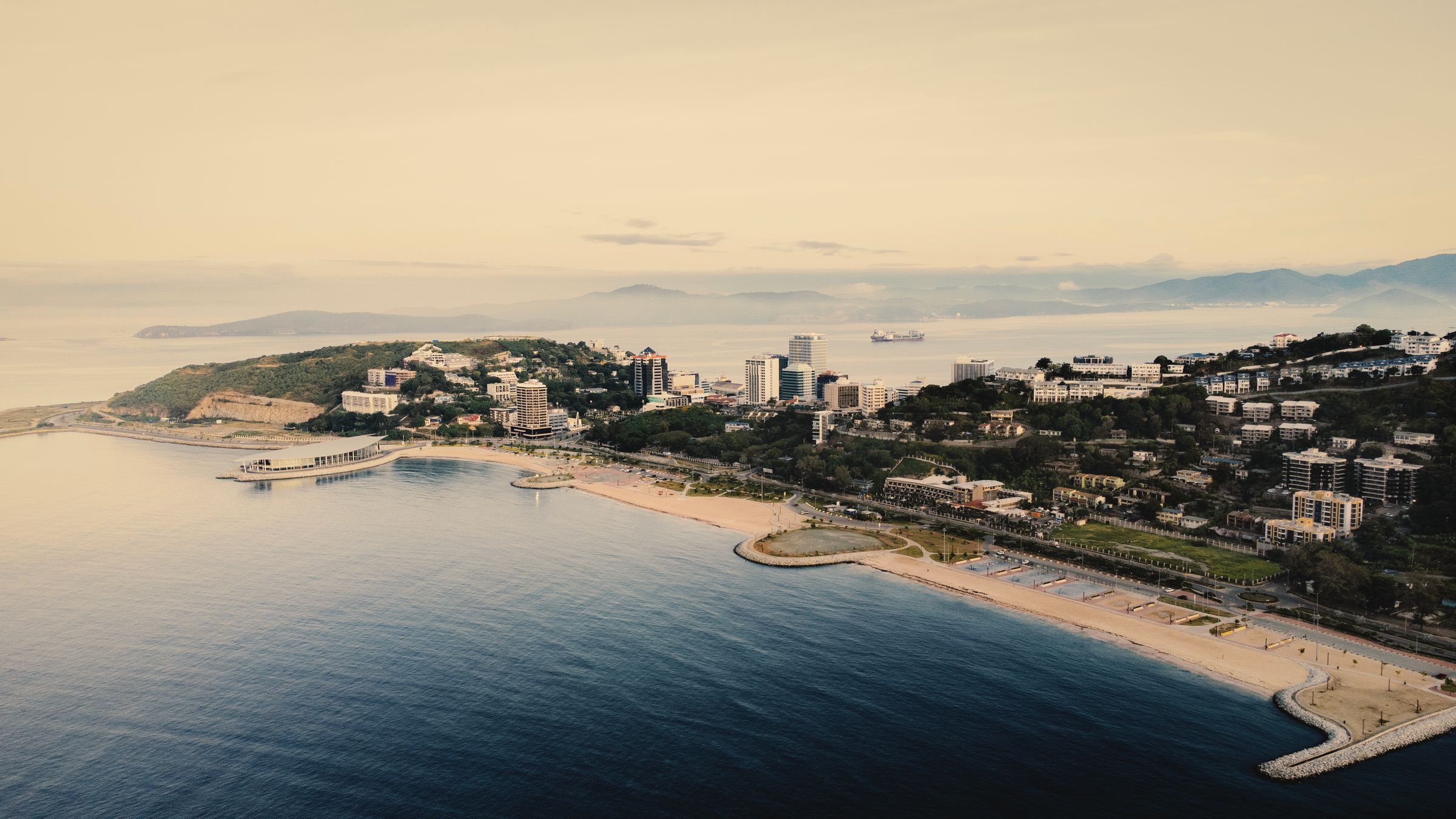
Port Moresby is Papua New Guinea's capital and the gateway for almost every visitor. It's not a city to wander, but with arranged transport it has a fine national museum, a nature park full of birds of paradise, moving war history and the start of the Kokoda Track.
Port Moresby sits on the Gulf of Papua, on the south coast of the main island. It's the capital, the largest city in the country and the main international gateway, with Jacksons International Airport a few kilometres from the centre.
The city is spread out over hills and bays, from the old town and Ela Beach by the harbour to Waigani, the government district with Parliament House and the National Museum.
Port Moresby has no road connection to the highlands, so most visitors pass through on the way to a domestic flight. Many stay a night or two, and some come to walk the Kokoda Track, which starts about an hour's drive away.
Crime is a serious issue here. Travellers use arranged transport, stay in secure accommodation and move by day, and that shapes everything about a visit.
One to two days is usually enough, before or after the rest of the country.
Stay in secure accommodation with transfers, in town near the harbour or near the airport. Hostelworld has no budget listings in Port Moresby right now.
The old centre by the harbour.
Government district with the National Museum.
North of the city.
Start of the Kokoda Track.
Map data from OpenStreetMap contributors.
Visit the National Museum and Art Gallery in Waigani, with one of the best collections of Pacific art and artefacts anywhere: masks, carvings, canoes and spirit boards from across the country.
See birds of paradise, tree kangaroos and cassowaries at the Port Moresby Nature Park, a botanical garden and wildlife park.
Visit Bomana War Cemetery, the largest Second World War cemetery in the Pacific, the resting place of thousands of Allied soldiers, many killed on the Kokoda Track.
See Parliament House, built in the style of a haus tambaran (spirit house), from the outside, with a driver.
Walk the Kokoda Track, 96 km over the Owen Stanley Range, following the Second World War campaign route. It starts at Owers' Corner, about an hour from the city, takes eight to ten days and must be walked with a licensed operator and porters. It costs K8,000 to K15,000 all in.
Dive or snorkel the Papuan Barrier Reef from Loloata Island, offshore.
Bomana War Cemetery is free to visit.
The National Museum has free or low-cost entry.
Even free sights need arranged transport, which is the real cost here.
Restaurant food in Port Moresby is mostly in hotels and a few restaurants reached by arranged transport. A meal costs K40 to K100.
PNG food is sweet potato, taro, sago, banana and greens, with pork for occasions. A mumu, food cooked in an earth oven with hot stones, is the feast format.
PNG coffee, grown in the highlands, is excellent.
Drink bottled or treated water.
Going out at night in Port Moresby is not advisable. Evenings happen in hotel bars and restaurants, reached by arranged transport.
SP Lager, the national beer, costs K10 to K20. Beware of contaminated drinks: there have been cases of methanol poisoning.
Jacksons International Airport is a few kilometres from the centre. Arrange a hotel transfer before you land.
In the city, use hotel transfers, arranged cars or a trusted driver. Don't walk around, and don't use PMV buses or hailed taxis, which have been targeted by armed robbers.
Port Moresby has no road link to the highlands. Air Niugini and PNG Air fly to Goroka, Mount Hagen, Hoskins for Kimbe Bay and elsewhere, for K400 to K1,200 a leg.
For Kokoda, the operator arranges transport to the trailhead.
Port Moresby is expensive. Hostelworld has no budget listings right now, and secure guesthouses start around K150 to K350.
Arranged transport is a real cost, and worth it.
Hotel meals are K40 to K100.
Use ATMs inside hotels or shopping centres, as people at banks and ATMs are targeted.
Allow around K300 to K550 a day, before flights.
UK government advice says serious crime is a high risk in Port Moresby, and that suburbs can be particularly dangerous. Bag-snatching and armed robbery happen, and people at banks and ATMs are targeted. The area around Parliament House in Waigani is named as high risk.
In practice: use arranged transport, stay in secure accommodation, move in daylight, carry little cash and don't travel alone.
After a road accident, crowds can form quickly. Go somewhere safe before contacting the police.
The Kokoda Track has seen serious attacks and robberies. Only walk it with a trusted, licensed operator. Unexploded wartime weapons remain along it.
Malaria is widespread, so take prophylaxis. Same-sex activity between men is illegal.
In an emergency, call 112, though response is limited.
Day trips from Port Moresby are done with a driver or an operator.
Birds of paradise and tree kangaroos.
The largest WWII cemetery in the Pacific.
The wartime route over the Owen Stanley Range.
The Hiri Moale Festival in September is the capital's big event.
Canoe races and dance marking the Hiri trading voyages.
Marking independence in 1975.
When the track is walked, with Anzac Day in April.
Port Moresby is hot all year, with highs from 29°C to 31°C, and drier than most of the country. May to October is the dry season and the best time, and the season for Kokoda. November to April is wet.
Average daily highs from weather2travel's Port Moresby climate data. Crowd levels are our rough guide.
Pick a style and a number of nights for a rough total. Per day, for one person, in kina.
Estimates, based on secure guesthouses and arranged transport. Flights and the Kokoda Track sit outside these figures.
Prices and timetables change. Check before you travel.

Compare Port Moresby hostels: live prices, real reviews and free cancellation on most bookings. Then meet the people already there in the app.

 Get the App.



 Get the App.