Centre-ville
First-timers and budget hotelsThe French-era centre around Place du 1er Novembre and Boulevard Emir Abdelkader, with the theatre, cafés, hotels and the tram.

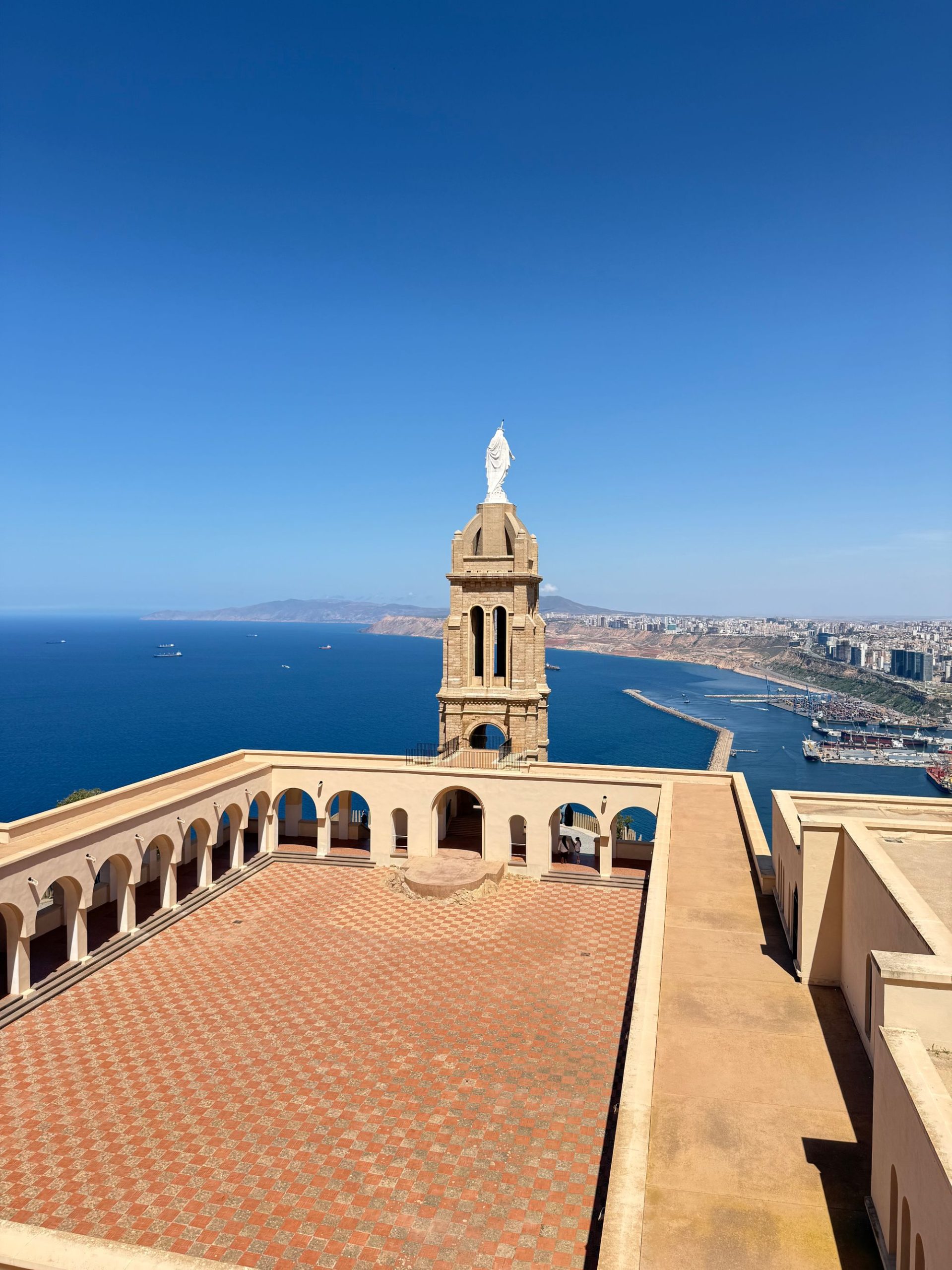
Oran is the big city of Algeria's west: a Spanish fort high on the mountain, a crumbling Ottoman old town, French boulevards and a long seafront, and the birthplace of raï music. Few foreign travellers come, so you'll have it largely to yourself. Stay two or three nights, and add a beach day or a trip to Tlemcen.
Oran sits on a wide bay in the north-west of Algeria, about 432 km west of Algiers, under the slopes of Mount Murdjadjo. It is a working port city and the main hub of the west, and it feels more Mediterranean than Saharan.
Its history is written in its buildings. Spain held Oran from 1509 to 1792, in two stretches, and left the Santa Cruz fort on the mountain above the harbour. The Ottoman Bey ruled from 1792 until the French arrived in 1831, and France governed until 1962, laying out the boulevards, theatre and cathedral of the modern centre.
Oran and Sidi Bel Abbès are where raï was born, the music of the west that went global. UNESCO added raï to its list of the Intangible Cultural Heritage of Humanity in 2022, and the national raï festival held its Oran evenings in August 2025.
For a visitor, Oran is easy. The centre is walkable, a single tram line crosses the city for 40 dinars, and ride-hailing apps work. What it lacks is tourist infrastructure: there are no hostels, opening hours are hard to confirm, and you will meet very few other travellers.
Two days covers the centre, the seafront, the old town of Sidi El Houari and the fort. With a third, add a beach day on the western coast or a long day trip to Tlemcen.
Most budget and mid-range hotels are in the French-era centre around Place du 1er Novembre and Boulevard Emir Abdelkader. The big international hotels are further east along the seafront, and Aïn El Turk, 15 km west, is the beach option in summer.
The French-era centre around Place du 1er Novembre and Boulevard Emir Abdelkader, with the theatre, cafés, hotels and the tram.
Oran's oldest quarter, below the main square: old mosques, the Bey's Palace and the old port. Atmospheric but run-down; visit in daylight.
The palm-lined seafront promenade above the port, a short walk from the centre, with cafés and the best sunset strolls.
East of the centre by the sea, home to the Sheraton and Four Points hotels and the convention centre.
Seaside town about 15 km north-west, with sandy beaches, grilled fish and the Corniche nightlife nearby. Packed in July and August.
Map data from OpenStreetMap contributors.
Start at Place du 1er Novembre, the main square, once the Place d'Armes. It is framed by the town hall and the Théâtre Régional Abdelkader Alloula, the city's opera house, inaugurated in 1907; the inside opens only for performances. From here, walk Boulevard de l'ALN and the Front de Mer, the palm-lined seafront promenade, with views over the port and the bay.
A few streets inland is the former Sacré-Cœur cathedral, an early 20th-century church that has been a public library since 1996. Nearby, the Abdellah Ben Salem Mosque was built as the Great Synagogue of Oran, inaugurated in 1918 and converted into a mosque after independence. Boulevard de la Soummam is worth walking for its French-era architecture.
Below the square, Sidi El Houari is the oldest part of the city, with the Hassan Pasha Mosque from the late 18th century, the Bey's Palace, the Spanish gate and the mausoleum of Sidi El Houari. Many buildings are in poor repair, and the Bey's Palace may be closed for restoration, so ask before you go. Explore in daylight, ideally with a local guide.
The highlight is Fort Santa Cruz, built by the Spanish between 1577 and 1604 on Mount Murdjadjo, about 400 m above the sea. Below it, the Santa Cruz chapel was built by the French in 1850 during a cholera outbreak, with a statue of the Virgin Mary looking over the city. The views over the bay and the naval harbour of Mers El Kébir are the best in Oran. Take a taxi up the winding road; a 2026 guide gives about 500 to 800 DZD from the centre.
The Ahmed Zabana National Museum covers the war of independence on one floor and archaeology, mosaics and paintings on the other. For shopping, Medina Jdida is the city's big market district, with clothes, fabrics, jewellery and street food.
Many of Oran's best moments cost nothing. Walk the Front de Mer at sunset, when families come out to stroll and the cafés fill up, then follow the seafront promenade towards the east of the city.
Place du 1er Novembre and the streets around it are an open-air museum of French-era architecture: the theatre, the town hall, the former cathedral and the grand buildings of Boulevard de la Soummam.
Sidi El Houari is free to wander in daylight, from the old mosques to the Spanish gate and the old port.
Medina Jdida is free to browse, and a karantika sandwich from a street stall costs very little.
Fort Santa Cruz is the one paid sight worth the money, and it is cheap: a 2026 guide gives 60 DZD for adults, though a 2022 visitor paid 160 DZD. The chapel next to it is free.
West of the city, the M'sila forest covers 1,560 hectares of cork oak and Aleppo pine with trails, and the Sebkha of Oran salt lake is a protected wetland where migratory birds, including flamingos, stop.
Oran's signature street food is karantika, a baked chickpea flan, sold in slices or stuffed into a baguette with harissa and cumin. Medina Jdida market is the place to try it, along with fruit, figs and sandwiches from the stalls.
Being a port, Oran is good for fish. Grilled sea bream, sardines and red mullet are the classic meal by the sea, in the marina area or at Aïn El Turk, at about 1,500 to 3,000 DZD a head according to a 2026 guide.
Couscous, chorba and mhajeb, square flatbreads stuffed with spicy tomato and onion, are everyday food across Algeria. Shawarma and pizza are everywhere; one visitor paid 200 DZD for a chicken shawarma in the centre in 2022.
Café culture is strong. Terraces around Place du 1er Novembre and along the seafront serve coffee, pastries and fresh orange juice, about 50 to 100 DZD a glass.
Alcohol is available, but only in licensed hotels, bars and some restaurants; many restaurants don't serve it. Drinking in public, or being drunk in public, is illegal.
Oran is the liveliest city in Algeria after dark, but it is still low-key by Mediterranean standards. Most evenings start with a walk on the Front de Mer at sunset, then coffee and pastries on a café terrace.
The real nightlife is on the Corniche, the coast road running west towards Aïn El Turk, Bousfer and El Ançor, with bars, cabarets and clubs, busiest in summer. The most upscale venues are in the big hotels, such as the Sheraton, and non-guests can visit.
For something cultural, check what's on at the Théâtre Régional Abdelkader Alloula. In August, the national raï festival holds open-air concerts at the Théâtre de verdure Hasni Chekroun.
During Ramadan, the city comes alive after sunset, with cafés and pastry shops open late.
Taxis are scarce after dark, so book a Yassir or arrange a return pickup before you go out, and avoid unfamiliar areas and deserted streets at night.
Oran's Ahmed Ben Bella Airport, also called Es Sénia, has flights to French and Spanish cities and to Istanbul and Tunis, as well as domestic routes. An airport bus runs to Place du 1er Novembre for 40 DZD, from 08:00 to 22:00. A taxi costs more, especially in the evening; a Yassir shows the fare before you book.
By train, Coradia services from Algiers take about four to five hours, with several departures a day from Algiers Agha. Gare d'Oran also has trains to Sidi Bel Abbès and a night train via Sidi Bel Abbès to Tlemcen. Buy tickets at the station window in dinars; SNTF has also sold long-distance tickets online since October 2025, but foreign cards may be refused. Returns on journeys over 200 km are 20% cheaper.
Ferries sail to Oran from Marseille, Alicante and Almería, arriving at the port below Sidi El Houari.
In the city, the tram is the easiest way around. It runs 18.7 km and 32 stops from Sidi Maarouf to Es Sénia via Place du 1er Novembre and the train station, about every 10 minutes, and a single ticket costs 40 DZD from kiosks near the stops.
Taxis rarely use meters, so agree the fare first, or use an app: Yassir, Heetch and inDrive all operate. For the beaches west of the city, a taxi or car is easiest. The land border with Morocco is closed, so you can't continue west by road.
Oran is cheap for food and transport and expensive for beds. In October 2026, the official rate is about 151 DZD to €1. Most travellers change euros on the informal market, where 2026 reports give up to about 250 DZD to the euro; a 2022 visitor named the Marché de la Bastille as the best-known place to do it in Oran. It is unofficial, so count every note.
There are no hostels. Online, the cheapest hotels in Oran were listed at about £25 to £35 a night in October 2026, and four-star hotels from about £53 to £155. Booking sites charge at the official rate, so paying cash in dinars changed informally can work out cheaper; ask when you book.
Food is the bargain. Street food and sandwiches cost a few hundred dinars, a café orange juice 50 to 100 DZD and a grilled fish meal about 1,500 to 3,000 DZD.
Getting around costs little: the tram and the airport bus are 40 DZD, and a taxi up to Santa Cruz about 500 to 800 DZD. Sights are cheap or free.
Oran is largely a cash city, and most shops and restaurants don't take foreign cards. A shoestring day comes to around €30 to €35, plus your bed.
Oran is not in any of the areas where the UK advises against travel, and most visitors have no problems. But the UK says terrorist attacks in Algeria are likely, so stay alert, and check the latest advice before you go.
The everyday risk is petty crime. The UK warns of pickpocketing, robbery and petty theft in the larger cities. Keep your phone and wallet close in crowds, on the tram and especially in Medina Jdida market, where pickpocketing is common. Don't carry large amounts of cash.
Taxis are scarce after dark, so arrange your ride home in advance, ask your hotel to call a reputable taxi and don't let unknown passengers join you. Avoid unfamiliar areas, especially the suburbs, at night, and explore Sidi El Houari in daylight.
Be careful with cameras. Don't photograph the naval base at Mers El Kébir, port installations or police, and remember drones, binoculars and telescopes are illegal to bring into Algeria without authorisation.
Dress modestly away from the beach, and don't drink alcohol in public. The land border with Morocco is closed: do not try to cross it.
West of Oran, a string of beaches runs from Aïn El Turk to Les Andalouses. Inland, Tlemcen has some of the finest Islamic architecture in Algeria, and Mostaganem and Sidi Bel Abbès are easy by road or rail.
The nearest big beaches, with grilled fish restaurants; Cap Falcon and Bousfer are just beyond. Very busy on summer weekends.
One of the beaches on the western coast, good for a full beach day. Shade is limited, so bring your own.
Western city of Islamic monuments: the Great Mosque, El Mechouar palace, the Sidi Boumediene complex and the Marinid ruins of Mansourah. Better as an overnight.
Coastal town with forts, mosques and a seafront corniche.
The other birthplace of raï, with a town centre from the French Foreign Legion era.
Naval harbour below Santa Cruz, best seen from the fort. Do not photograph the base.
Oran's big events are the national raï festival in August and the Arab film festival in the autumn. Ramadan and the Eids move about 11 days earlier each year.
Quiet days and lively nights after iftar; some restaurants close by day.
Public holiday marking independence from France in 1962.
Open-air raï concerts; in 2025 it was split between Sidi Bel Abbès (7–10 Aug) and Oran (19–22 Aug). Check this year's dates.
Films from across the Arab world; the 2025 edition ran from 30 October to 5 November. Check this year's dates.
Oran has a Mediterranean climate. Spring and autumn are best for walking the city, with highs of about 21 to 25°C in April, May and October. July and August average 31 to 32°C, when the beaches are packed with Algerian holidaymakers, and winters are mild but wetter.
Highs from weather2travel's Oran climate data (16°C in January, 17°C in February and December, 19°C in March, 21°C in April, 24°C in May, 27°C in June, 31°C in July, 32°C in August, 29°C in September, 25°C in October, 20°C in November). Crowd levels are our rough guide.
Pick a style and a number of nights for a rough total, per person, in euros.
Estimates, assuming you change money at informal rates of around 220–250 DZD to €1. With no hostels in Oran, beds are based on the cheapest online hotel prices (about £25–35 in October 2026) and four-star hotels for the comfortable style.
Prices and timetables change. Check before you travel.

Compare hostels across Algeria: live prices, real reviews and free cancellation on most bookings. Then meet the people already there in the app.

 Get the App.

 Get the App.