

For hatsumode in Tokyo, go to Meiji Jingu in Harajuku or Senso-ji in Asakusa if you want the famous crowds, and to a small neighbourhood shrine on 1 or 2 January if you want a calm visit with no queue. The big ones are busy: up to three million people visit Meiji Shrine at New Year, according to Time Out Tokyo. A local shrine gives you the same ritual alongside people from the neighbourhood.
Below you’ll find what hatsumode is, where to go by crowd level, when to avoid the queues, the simple etiquette, what it costs and how the trains run on New Year’s Eve. Manners matter here. One Hostelworld guest who stayed in Tokyo said locals “are getting tired of people breaking rules”, and advised travellers to “pick authentic hostels with local staff who respect the culture”. For the rest of your trip, start with our Tokyo travel guides.
What is hatsumode?
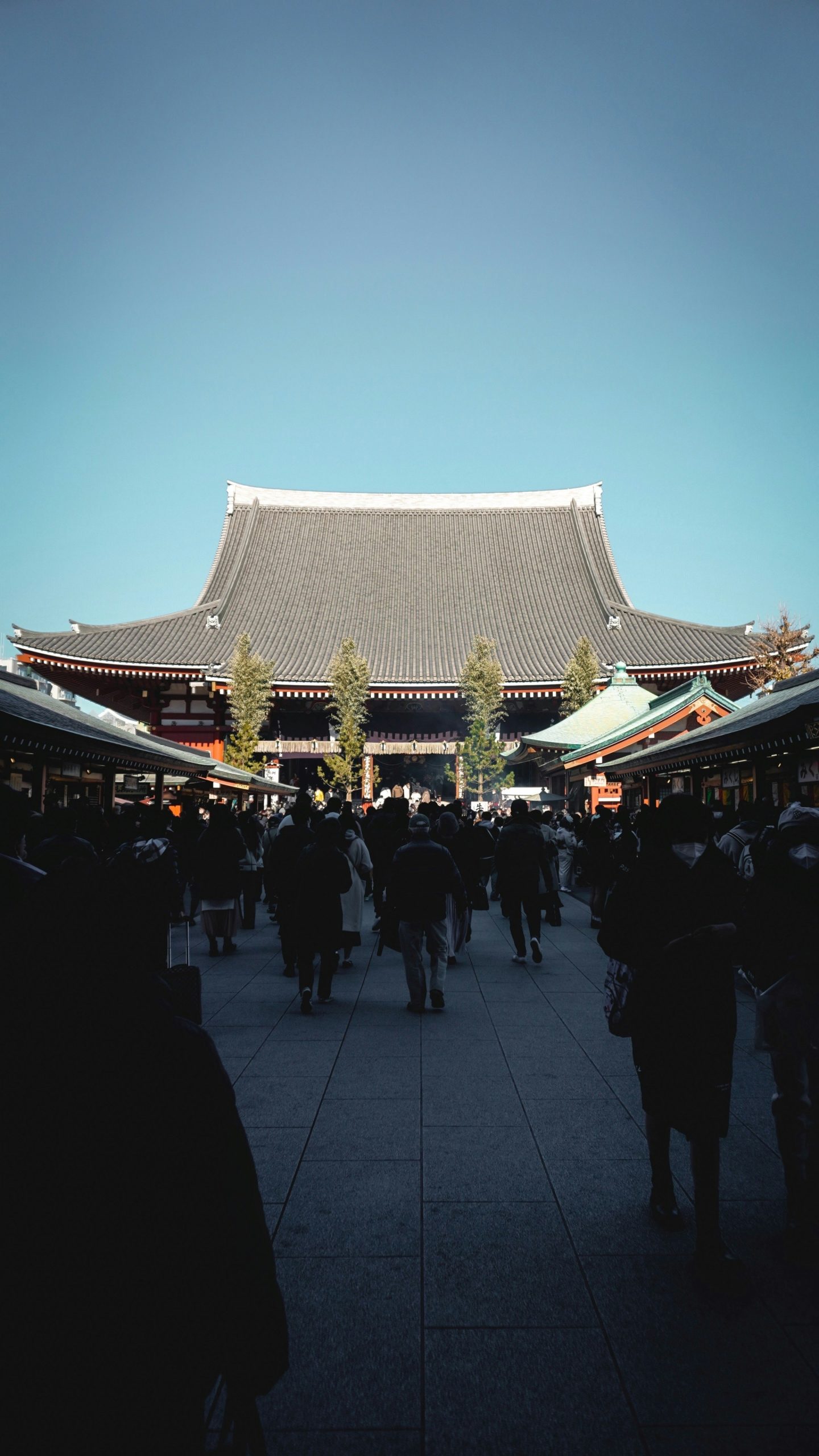
Hatsumode is the first visit of the year to a shrine or temple, and it’s how most people in Japan start January. Most go in the first three days of the year, from 1 to 3 January, though many still count a visit in the first week or so, according to Wikipedia’s entry on hatsumode.
The visit itself is short and simple:
- You say a quick prayer for the year ahead, usually for health, luck, work or exams.
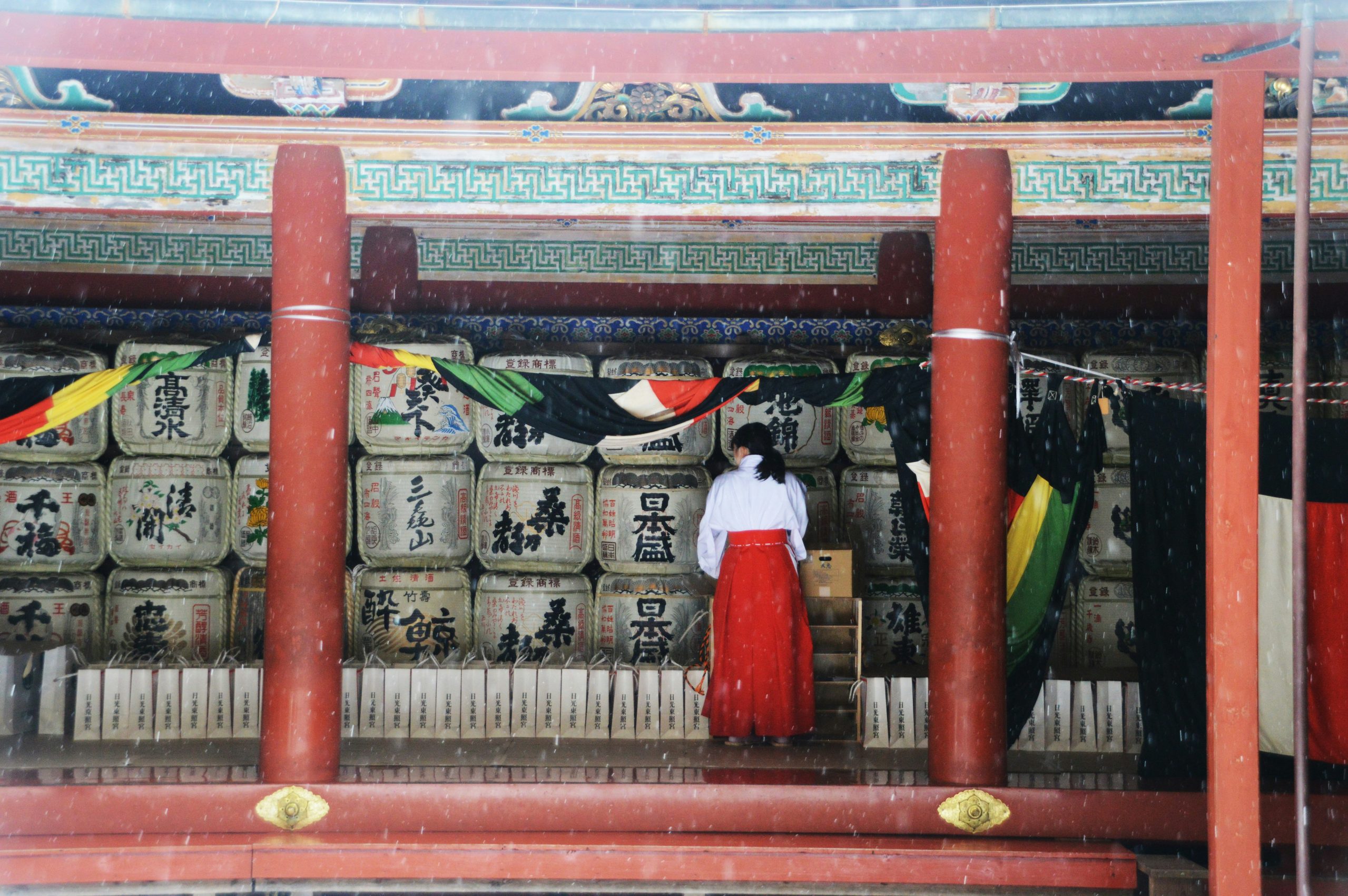
- Many people buy a new charm (omamori) and hand in last year’s to be burned.
- Most draw an omikuji, a paper fortune that tells you how your year will go.
You can go to either a Shinto shrine (jinja) or a Buddhist temple (tera). Japanese families go to both without a second thought, and visitors are welcome at either. The etiquette differs slightly, which the steps further down cover. If you’re in Japan for the whole season, our guide to winter in Japan has more festivals to plan around.
Where to go for hatsumode in Tokyo
Pick by how much crowd you can take. Meiji Jingu and Senso-ji are the big two, Kanda Myojin has its own rush, and any small neighbourhood shrine gives you the ritual without the wait.
Meiji Jingu, Harajuku
This is the biggest crowd in Tokyo. Go Tokyo says the shrine draws several million people between New Year’s Eve and 3 January, and it’s open all night on 31 December, so many people queue through midnight. The nearest stations are Harajuku on the JR Yamanote line and Meiji-jingumae on the Chiyoda and Fukutoshin lines. Expect to queue an hour or more at midnight, as Japan Activity warns.
Senso-ji, Asakusa
Tokyo’s oldest temple, as History Hit describes it, is the one to choose if you want food with your prayers. Stalls line Nakamise-dori on the way to the main hall, so you can snack while you queue. Visitor numbers vary a lot by source, from about 1.7 million to 2.8 million over the New Year period, according to Japan Wonder Travel, but either way it’s packed on 1 January. Get off at Asakusa station on the Ginza or Toei Asakusa line. If you’d rather sleep nearby, our guide to where to stay in Tokyo covers Asakusa.
Kanda Myojin, near Akihabara
This shrine is linked to business luck, and it sits close to the Otemachi, Marunouchi and Nihonbashi business districts. Many companies send staff to pray there on the first working day of the year, which was 6 January in 2025, according to the Foreign Correspondents’ Club of Japan, and news photos from 2024 show the shrine packed with office workers that day. Check when the first working day falls in 2027 and go on 1 or 2 January instead if you want space. It’s a short walk from Ochanomizu or Akihabara station.
Your neighbourhood shrine
Almost every Tokyo neighbourhood has a small local shrine, and on 1 or 2 January you’ll find families there with no queue at all. Ask at your hostel’s front desk where locals go, or look for a torii gate on a map near you. It’s also the best place to watch how people do it before you try the etiquette below. For more quiet corners of the city, see our list of hidden gems in Tokyo.
When to go to avoid the crowds
The worst time is midnight on 31 December, when the big shrines are at their fullest and the queue for the main hall can take an hour or longer, according to Japan Activity’s hatsumode guide. Meiji Jingu is open all night on 31 December, says Go Tokyo, so the crowd builds from late evening and keeps going past the first prayers of the year. If you want the countdown atmosphere, that’s the moment. If you just want to pray and draw a fortune, pick another time.
Your calmer options, from busiest to quietest:
- Early morning on 1 January. Once the midnight crowd has gone home to sleep, the first hours after sunrise are easier. Daytime on the 1st still gets busy at Meiji Jingu and Senso-ji, so go early.
- 2 or 3 January. Lines are shorter at most shrines, and the charm counters and food stalls are still running. This is the sweet spot for a first visit.
- After 3 January. Any early-year visit still counts, and it’s the quietest choice. Stalls and New Year counters wind down during the first week, often by around 7 January, so check the shrine’s own site before you go late.
Meiji Jingu hadn’t published its 2027 New Year hours when we checked in November 2026, and its daytime closing times on 1 to 3 January differ between guides. Look at the Meiji Jingu official site in late December. If you’re in Tokyo for a few days either side, slot the shrine visit into a quiet morning on the 2nd or 3rd and keep the rest of the day for the city; our day-by-day Tokyo plan helps you fill it. New Year is peak season for beds too, and our guide to peak-time booking strategies explains how to book around it.
How to do hatsumode properly
Hatsumode etiquette is simpler than it looks, and nobody expects a visitor to get every detail right. Watch the people in front of you, keep your voice down and follow these steps at a shrine. At a Buddhist temple like Senso-ji the routine is the same except for the clapping, which step 4 explains.
- Bow once before you walk under the torii gate, then keep to one side of the path. The centre is traditionally left for the gods, as this shrine etiquette guide explains. In the New Year crush you’ll walk wherever the crowd takes you, and that’s fine.
- Wash at the temizuya, the stone water basin near the entrance. Hold the ladle in your right hand and pour water over your left, switch hands and rinse your right, then pour a little into your cupped left hand, rinse your mouth and spit it out quietly beside the basin, never back into it. Don’t put the ladle to your lips. Many shrines removed their ladles or switched to running water during the pandemic, and not all have put them back, according to research from the National University of Singapore, so follow any signs you see.
- Drop a coin into the offering box. There’s no set amount, and the 5-yen coin is the favourite because its name, go-en, sounds like the word for a good connection, according to Tabimania Japan. Keep a few small coins in your pocket before you join the queue, as you won’t want to dig through your bag at the front.
- At a shrine, ring the bell if there is one, bow twice, clap twice, make your wish silently, then bow once more. At a temple, put your hands together, pray quietly and bow, with no clapping.
- Draw an omikuji, the paper fortune. If yours is bad, fold it and tie it to the rack or wires set up for them, so the bad luck stays at the shrine. Most people take a good fortune home.
That’s the whole ritual, and once the queue reaches the front it takes about a minute. If you want more of the everyday manners that make Japan easier, from shoes off indoors to quiet trains, our backpacker guide to Japan covers them.
How much does hatsumode cost?
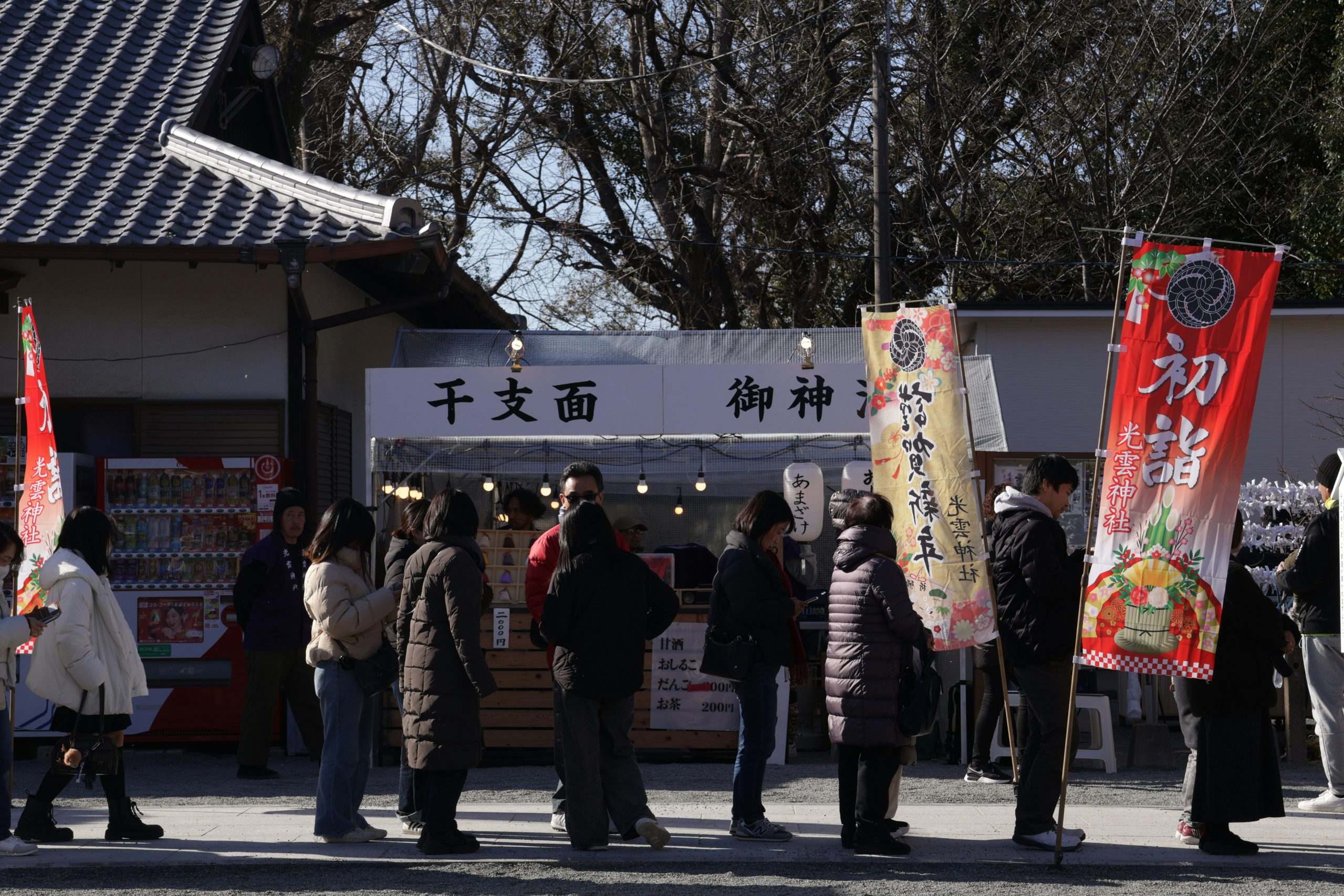
Hatsumode costs almost nothing. Shrine and temple grounds are free to walk into, there’s no ticket for the New Year visit, and the only money you need is for the offering, a fortune and anything you choose to buy or eat. Prices below are in yen with euros at the European Central Bank rate in November 2026, about 178 yen to the euro.
- The offering is whatever you like. A 5-yen coin is the classic choice and works out at less than one euro cent.
- An omikuji fortune is often 100 yen, about €0.55. That’s the voluntary fee at Senso-ji, according to Japan Travel, but each shrine sets its own price, as Japan Activity points out, and special or novelty fortunes cost more.
- An omamori charm is the bigger spend. Tsunagu Japan puts basic charms at about 200 to 500 yen, roughly €1 to €3, and the grander ones at over 1,000 yen. Each shrine decides, so check the board at the charm counter.
Food from the New Year stalls is the cost that adds up, because you pay per item and the smells along Nakamise-dori make it hard to stop at one. Our guide to Tokyo street food tells you what’s worth queuing for.
Bring cash in small coins and notes. Offering boxes take coins, and charm counters and stalls mostly expect cash, which Japan Activity also recommends. If you’re keeping the rest of the holiday cheap too, our list of free things to do in Tokyo fills the quiet days around New Year.
Getting around Tokyo on New Year’s Eve
Plan your midnight shrine visit around JR trains, because the subway stops at its usual time. For New Year’s Eve 2025 to 2026, JR East ran trains through the night on six Greater Tokyo lines, according to JR East’s own announcement. The Yamanote line, the loop that links Harajuku, Shibuya, Shinjuku, Tokyo and Ueno, ran in both directions from about 1am to 5am, every 10 to 25 minutes, as Time Out Tokyo listed. The Keihin-Tohoku, Chuo-Sobu local, Chuo rapid and Yokosuka lines also ran late, though less often, some only every hour or two.
Tokyo Metro and the Toei subway did not run all night. Time Out says both, along with Tobu, Keikyu, Seibu, Odakyu and the Yurikamome, simply ran their weekend and holiday timetables from 30 December to 3 January. That matters for Senso-ji: Asakusa station is on the Ginza and Toei Asakusa lines, so if you pray there at midnight you’ll be walking, waiting for the first morning train or paying for a taxi. Meiji Jingu is the easier midnight choice, because Harajuku station is on the Yamanote line.
A few private lines add their own late trains. In 2025 to 2026, Keisei ran trains between Ueno and Narita through the night, Keio ran hourly trains between Shinjuku and Takaosanguchi, and Tokyu ran one late departure each on the Den-en-toshi and Toyoko lines from Shibuya at 1:25am. There were also early sunrise specials, like Odakyu’s New Year’s Express from Shinjuku, which need a reserved seat ticket.
None of this is confirmed for New Year’s Eve 2026 to 2027 yet. We couldn’t find JR East’s announcement for this winter when we checked in November 2026, and last year’s details came out between mid-October and mid-December. Before you go:
- Check JR East’s news page and Time Out Tokyo in early December for the new overnight timetable.
- Look up the last subway train from the shrine to your hostel, and the first one on 1 January, in a journey planner like Google Maps.
- If your nearest station isn’t on an overnight line, plan the walk from the closest Yamanote stop, or pick a shrine you can walk to and back from.
- Carry a charged phone and a topped-up IC card such as Suica or Pasmo, so you’re not queuing at ticket machines with the midnight crowd.
If you’d rather stay out until the first trains anyway, our guide to the best clubs in Tokyo has places to see in the year before heading to a shrine at dawn. The simplest fix is a bed near a Yamanote station or within walking distance of your shrine.
Where to stay for New Year in Tokyo
Stay in Asakusa if Senso-ji is your hatsumode, and on the Shinjuku side if you’re heading to Meiji Jingu. What matters most is getting back to bed. The subway doesn’t run all night, so a hostel within walking distance of your shrine, or close to an overnight JR line, saves you a cold wait for the first train on 1 January.
Asakusa is the easy choice for Senso-ji. You can walk to the temple at midnight and back again without needing a train at all, which helps because Asakusa station is only on the Ginza and Toei Asakusa lines. Hostelworld lists 87 hostels in Tokyo (checked November 2026), so filter by Asakusa when you search. For one with character, our profile of Khaosan World Asakusa Ryokan Hostel covers a converted building minutes from Senso-ji and Nakamise.
For Meiji Jingu, look at Shinjuku. It’s two stops from Harajuku on the JR Yamanote line, which ran through the night last New Year’s Eve, so you can queue at midnight and ride home without a taxi if this year’s timetable follows the same pattern. Shinjuku and Asakusa feel very different after dark, and one Hostelworld guest who stayed in Tokyo put it well: “Different parts of Tokyo have entirely different atmospheres and appearance.” If you want people to go to the shrine with, our pick of the best social hostels in Tokyo includes UNPLAN Shinjuku.
Book as soon as your dates are fixed. New Year is one of Japan’s peak seasons, and Japan Guide says hotel rates are “particularly high” around New Year and advises reserving well in advance. If your plans might still change, pick a rate you can cancel; our guide to Hostelworld’s flexible booking options explains how they work.
Here are hostels in Tokyo to start from, with live prices and availability:
Plan the rest of New Year week
Hatsumode takes an hour or two, so plan the rest of the week before you arrive. Hostelworld’s Tokyo Events page lists what’s on in the city, and when we checked in November 2026 it had hatsumode running from 31 December 2026 to 7 January 2027 and the Tokyo Dome City Winter Lights until 28 February 2027. It didn’t list a countdown party yet, so check it again closer to the date. If you’d rather be in the crowd at midnight somewhere other than a shrine, our guide to Shibuya Crossing and its best views covers the area, but confirm whether any countdown is happening there this year before you head over.
Going to a shrine at midnight is more fun with company, and the Hostelworld app has two ways to find it. City Chats are group chats with travellers staying at any hostel in Tokyo, so you can ask who’s heading to Meiji Jingu or Senso-ji and arrange to meet at the station. Linkups are different: they’re activities that your hostel, nearby hostels or other backpackers organise, like a walking tour or a group dinner, and you can join or create one from 14 days before check-in. Both live in the app, not on the website. If you haven’t booked a hostel yet, a Social Pass opens up the chats without a booking.
Plan your meals around 1 January. Japan Guide says “many tourist attractions, stores, restaurants, banks and ATMs are closed” on one or more days between 29 December and 4 January, especially on New Year’s Day, and that museums usually close for several days. Shrines and temples stay open, which is the point of the holiday. Here’s how to avoid going hungry or cash-poor:
- Take out the cash you’ll need for the week before 29 December, including coins for the offering box.
- Count on convenience stores, fast food chains and hotel restaurants on 1 January; Japan Guide says many of these stay open.
- Stock your hostel kitchen shelf with breakfast for 1 January, since supermarket closures vary by chain.
- Check opening days for any museum, garden or tour before you go, and save the big sightseeing for 4 January onwards.
Shops bounce back fastest: Japan Guide says they typically close only on 1 January. Once the city is fully open again, pick one of our day trips from Tokyo for the quiet days of early January.

 Get the App.
Comments