
Mauritius Travel Guide
Mauritius isn't only for honeymooners. Behind the resorts is an island of public beaches, mountain hikes, Hindu temples, Creole markets and some of the best street food in Africa, linked by cheap buses. It's visa-free for most visitors, and with a week or two you can cover the whole island and add the Seychelles.
What travelling Mauritius is actually like
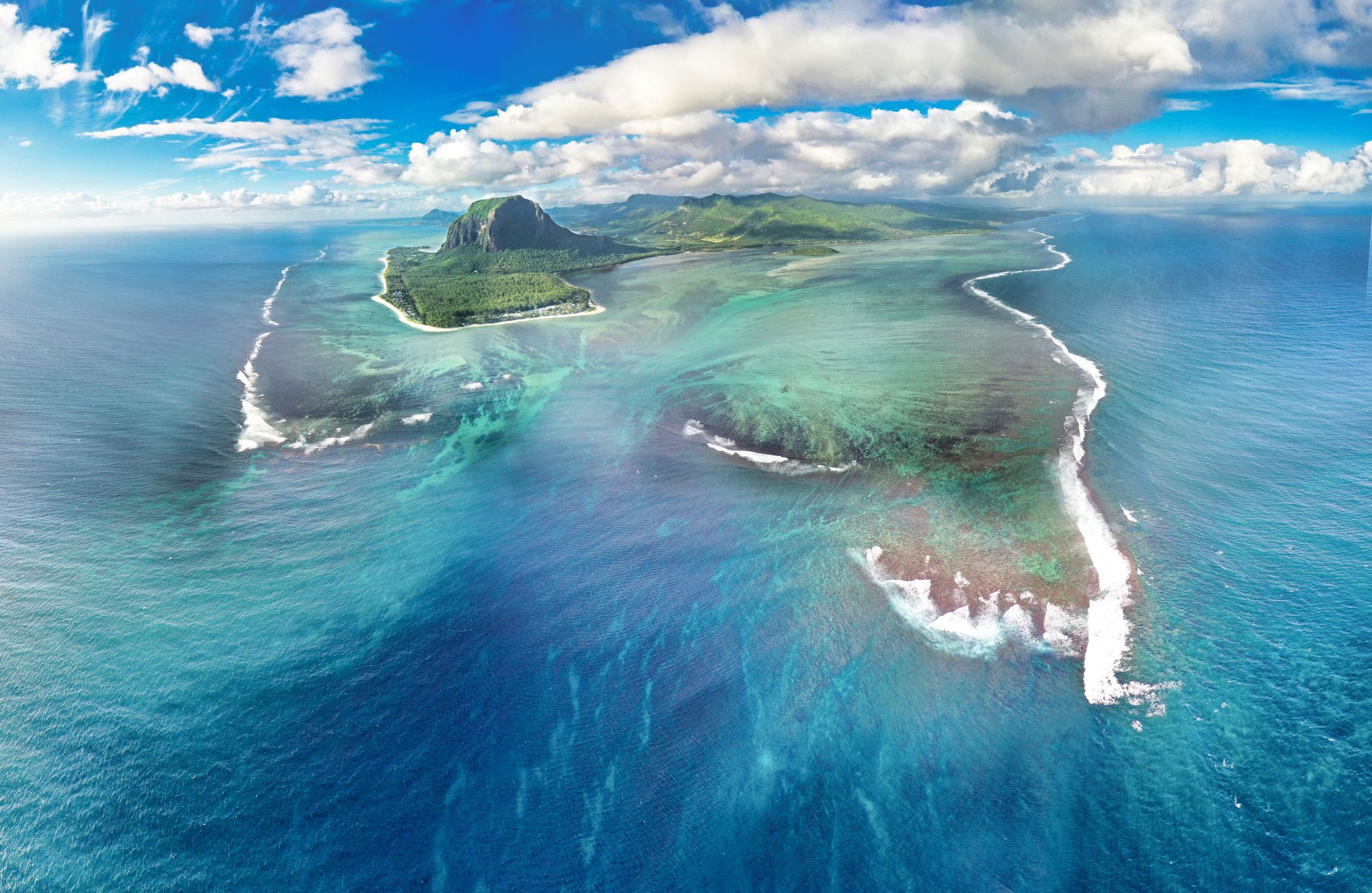
Mauritius is a volcanic island in the Indian Ocean, about 2,000 km off the coast of Africa, ringed by coral reefs and turquoise lagoons. It is small, about 65 km from north to south, so you can drive across it in a couple of hours and base yourself in one or two places for the whole trip.
It has a reputation as a luxury destination, and the five-star resorts are real. But Mauritius also works on a budget. All beaches are public by law, buses go almost everywhere for a few rupees, guesthouses and self-catering apartments are good value, and street food costs next to nothing.
The island's people are what make it special. Mauritians are descended from Indian, African, Chinese and European ancestors, and the result is a mix of Hindu temples, mosques, churches and pagodas, Kreol as the everyday language alongside French and English, and a cuisine that combines curries, Creole stews and Chinese noodles.
Beyond the beaches, the south-west is wild and mountainous, with the forests of Black River Gorges National Park, the waterfalls and coloured earth of Chamarel, and Le Morne Brabant, a UNESCO-listed mountain that was a refuge for escaped slaves. The capital, Port Louis, has markets, museums and the Aapravasi Ghat, where indentured labourers from India first arrived.
The main thing to plan around is the cyclone season, from November to May, and the cost of accommodation, which is the biggest expense. Hostelworld doesn't list any hostels on the island yet, so look at guesthouses and apartments.
From Mauritius, the Seychelles are a short flight away, and the two make a great combined trip.
Pick your kind of Mauritius trip
Mauritius suits different trips. Choose one or two of these and pick your base around them.
Beaches and lagoons in Mauritius
Snorkel the calm northern lagoons, catch the sunset at Flic en Flac and lie on the white sands of Belle Mare.
What to do
- Snorkelling
- Catamaran trip
- Glass-bottom boat
- Kitesurfing
- Sunset on the beach
Spots to visit
- Trou aux Biches
- Mont Choisy
- Flic en Flac
- Blue Bay
- Belle Mare
Hiking and the south-west in Mauritius
Hike the forests of Black River Gorges, climb Le Morne Brabant and see the waterfalls and coloured earth of Chamarel.
What to do
- Le Morne Brabant hike
- Black River Peak
- Chamarel waterfall
- Seven Coloured Earth
- Le Pouce
Spots to visit
- Le Morne Brabant
- Black River Gorges
- Chamarel
- Le Pouce
Food and Port Louis in Mauritius
Eat dholl puri, gateaux piments and briani at Port Louis market and street stalls across the island.
What to do
- Central Market
- Street food tour
- Rum tasting
- Chinatown
- Tea plantation
Spots to visit
- Port Louis Central Market
- Chinatown
- Chamarel rum distillery
Culture and history in Mauritius
Learn the island's story at the Aapravasi Ghat and Le Morne, both UNESCO sites, and visit temples, mosques and pagodas.
What to do
- Aapravasi Ghat
- Le Morne memorial
- Grand Bassin
- Pamplemousses garden
- Blue Penny Museum
Spots to visit
- Aapravasi Ghat
- Grand Bassin
- Pamplemousses
- Le Morne
Island road trip in Mauritius
Hire a car or ride the buses and Metro Express around the coast, from the north beaches to the wild south.
What to do
- Coastal drive
- Gris Gris cliffs
- Rochester Falls
- Metro Express
- Local markets
Spots to visit
- Gris Gris
- Rochester Falls
- Souillac
- Curepipe
Hop to the Seychelles in Mauritius
Fly north to the Seychelles for granite-boulder beaches, coco de mer forests and island-hopping by ferry and bike.
What to do
- Island-hopping by ferry
- Cycling on La Digue
- Vallée de Mai
- Snorkelling
- Mahé hikes
Spots to visit
- Anse Source d'Argent
- Vallée de Mai
- Anse Lazio
- Morne Seychellois
Lagoons, mountains and coloured earth
Start with the beaches, because they are free and fantastic. In the north, Trou aux Biches and Mont Choisy have calm lagoons for swimming and snorkelling. In the west, Flic en Flac is long and lively, and Le Morne has a wide lagoon and some of the best kitesurfing in the world. In the east, Belle Mare has long white sands, and in the south-east, Blue Bay is a marine park with excellent snorkelling.
The south-west is the wildest part of the island. Black River Gorges National Park protects the last native forest, with free hiking trails, viewpoints over waterfalls and gorges, and endemic birds. Black River Peak, the highest point on the island, is a moderate hike.
Nearby, Chamarel has the Seven Coloured Earth, a patch of bands of red, brown and purple sand, plus a tall waterfall. Non-residents pay about Rs800 for the geopark in 2026. The area also has a rum distillery and coffee plantations.
Le Morne Brabant is the island's most famous mountain, a UNESCO World Heritage site because escaped slaves hid on its slopes. The lower trail is open to walkers, and guided hikes to the top cost around US$50.
In Port Louis, visit the Central Market for street food and spices, the Aapravasi Ghat, a UNESCO site where hundreds of thousands of indentured labourers arrived from India, the Blue Penny Museum and the waterfront.
In the centre, Grand Bassin is a sacred crater lake surrounded by Hindu temples and a huge statue of Shiva. Also worth a visit are the Pamplemousses botanical garden, with its giant water lilies, and catamaran trips to Île aux Cerfs.
Dholl puri, briani and a lot of chilli
Mauritian food reflects the island's mixed history, and the street food is outstanding. The national snack is dholl puri, a thin flatbread made with split peas, filled with bean curry, rougaille (tomato sauce) and chutney. It costs a few rupees and is sold from stalls and carts all over the island. Roti, made the same way without the peas, is just as good.
Gateaux piments, small fried chilli and split pea fritters, are the snack you will eat every day. Farata, mine frite (fried noodles), boulettes (dumplings in broth) and briani, the Mauritian take on biryani, are all cheap and filling.
Creole dishes include rougaille with sausage or fish, vindaye (fish or octopus pickled in mustard, turmeric and garlic) and curries of every kind. Seafood is excellent on the coast.
For something sweet, try alouda, a cold milk drink with basil seeds and jelly, sold at Port Louis market.
Street snacks cost a few rupees, a local meal around €3 to €8, and a restaurant meal €10 to €25. Phoenix is the local beer, and Mauritian rum is excellent.
Grand Baie bars and beach sunsets
Mauritius is not a party island, but there is something for every taste. Grand Baie, in the north, has the liveliest nightlife, with bars, beach clubs and clubs that get busy at weekends.
On the west coast, Flic en Flac has beach bars and restaurants, and sunset drinks on the sand are a nightly ritual.
Sega, the island's traditional music and dance, born among enslaved Africans, is performed at hotels and cultural events. Look out for local sega nights rather than resort shows.
Port Louis is quiet at night outside the Caudan Waterfront.
Many Mauritians celebrate at home or in the open air: beach picnics, barbecues and music on public holidays and weekends are part of island life.
Drink-driving limits are strict, and taxis are expensive at night, so plan how you will get back. The UK advises against walking alone on beaches or in poorly lit areas at night.
Buses, the Metro Express and a hop to the Seychelles
Mauritius has a good, cheap bus network that reaches almost every village. Fares for most journeys are about Rs17 to Rs47, so a cross-island trip costs well under €1. Buses are slow and stop running in the early evening, especially in rural areas, so plan day trips around them.
The Metro Express, a modern light rail line, links Port Louis with Rose Hill, Quatre Bornes and Curepipe, and on to Réduit. Fares are about Rs32 to Rs55.
Many visitors hire a car for at least part of their stay, especially for the south-west. A small car costs about Rs1,200 to Rs2,500 a day before fuel. Traffic drives on the left, roads are narrow and busy, and the UK says hire companies may require a year's experience and sometimes an International Driving Permit. Scooters are cheap but risky.
Taxis are not metered, so agree the price before getting in. Ride-hailing apps such as Yugo are an alternative in some areas.
Sir Seewoosagur Ramgoolam International Airport is in the south-east, about an hour from the north and west coasts.
The Seychelles are a short flight to the north, with Air Mauritius and Air Seychelles connecting Mauritius and Mahé. Once in the Seychelles, ferries link Mahé, Praslin and La Digue: Mahé to Praslin takes about 55 minutes and costs about 600 rupees (Seychelles rupees) each way, and Praslin to La Digue about 15 minutes. On Mahé, buses cost only a few rupees, and on La Digue most people cycle.
What Mauritius costs in 2026
Mauritius uses the Mauritian rupee (MUR, Rs). In late September 2026, €1 bought about Rs54, so Rs1,000 is roughly €18.
Accommodation is the biggest cost. Hostelworld doesn't list any hostels in Mauritius yet, but guesthouses and self-catering apartments in less touristy areas start at about Rs1,700 to Rs3,500 a night, and comfortable hotels at about Rs4,000 to Rs8,000. Since October 2025, visitors aged 12 and over pay a tourist fee of €3 per night.
Food can be very cheap. Street snacks like dholl puri and gateaux piments cost a few rupees, and a simple local meal around Rs150 to Rs350. Restaurants in tourist areas cost much more.
Transport is cheap by bus and Metro Express, and car hire is good value if shared.
Activities are where costs rise: the Seven Coloured Earth costs about Rs800 for non-residents, a shared catamaran trip Rs2,200 to Rs3,200, and a guided Le Morne hike around US$50. Many of the best things, including beaches, hikes in Black River Gorges and Port Louis market, are free.
A budget day comes to around Rs3,000 to Rs4,500 (€55 to €85), less if you share a room or self-cater.
The Seychelles are much more expensive: allow around US$100 to US$130 a day as an independent traveller, more than twice what you need in Mauritius.
Staying safe in Mauritius
Mauritius is a safe, peaceful island, and most visits are trouble-free. Most crime is petty, such as theft of unattended bags and burglaries from villas, and it is most common in Port Louis, Grand Baie and Flic en Flac. Keep valuables in your room safe and don't leave bags on the beach.
The UK advises against walking alone at night on beaches or in poorly lit areas, especially the backstreets of Port Louis's business district. Use accommodation registered with the Mauritius Tourism Authority, and avoid buying from street and beach vendors.
Cyclones are the biggest natural risk. The season usually runs from November to May, peaking from January to March. During a cyclone warning you are not allowed to leave your accommodation, so check forecasts and follow the Mauritius Meteorological Services.
At sea, use licensed water sports operators with enough life jackets, swim inside the reef where possible, and wear reef shoes for stonefish and sea urchins.
Drug penalties are severe, with long prison sentences and little chance of bail. Cigarette papers are illegal. Same-sex relations were decriminalised in 2023, but attitudes are mixed, so be discreet.
On the roads, drive on the left, watch for pedestrians and unlit motorbikes, and never drink and drive: the limit is very low.
Visas, travel forms and the Seychelles
Most Hostelworld readers don't need a visa for Mauritius. UK passport holders can stay up to 60 days visa-free, and EU, US, Canadian and Australian passport holders can also visit visa-free for short stays; check how long applies to your passport. Your passport must be valid for your whole stay with a blank page, and you must show an onward or return ticket.
Before you fly, fill in the Mauritius All in One travel form online and print the QR code to show on arrival. If you don't, you will fill in a paper card at the airport.
Mauritius has strict health rules: travellers who have been in the DRC or South Sudan in the previous 21 days face entry restrictions because of Ebola, and arrivals from malaria countries may be asked for a blood test. Declare anything prohibited or taxable at customs.
For the Seychelles, apply online for a travel authorisation at seychelles.govtas.com up to 30 days before you arrive. You will need a return or onward ticket, proof of confirmed accommodation and enough money for your stay. On arrival, you get a free three-month visitor permit. Bring a yellow fever certificate if you are arriving from a country with yellow fever risk.
There is a tourist fee of €3 per person per night in Mauritius, charged since October 2025.
When to go to Mauritius
Mauritius is warm all year. May to December is the drier, cooler and less humid season, best for hiking and touring. January to March is hot, humid and wet, and the peak of the cyclone season, though also when the sea is warmest.
Temperatures are average daily highs in Port Louis (weather2travel climate data: 30°C January to March, 25°C June to August); other months are rounded between those. The central plateau is cooler and wetter. Crowd levels are our own rough estimate.
How much a day in Mauritius costs
Pick a travel style and the number of nights to see a rough total. Figures are per person per day in euros, based on guesthouse rooms or apartments, local food, buses and a mix of free and paid activities.
Rough figures for 2026, converted at about €1 = Rs54. Car hire, catamaran trips and the €3 nightly tourist fee push costs up. The Seychelles cost about twice as much.
- Beds—
- Food and drink—
- Getting around—
- Doing things—
Festivals and events in Mauritius
With Hindu, Muslim, Christian and Chinese communities, Mauritius has festivals almost every month, many of them public holidays. Dates for Hindu and Muslim festivals move with the lunar calendar.
Abolition of Slavery Day
Commemoration of the abolition of slavery in 1835.
Thaipoosam Cavadee
Tamil festival with devotees carrying decorated cavadees and piercing their bodies.
Chinese Spring Festival
Chinese New Year with dragon dances and fireworks.
Maha Shivaratri
Hundreds of thousands of pilgrims walk to the sacred lake, carrying decorated kanwars.
Independence Day
Public holiday marking independence in 1968 and the Republic in 1992.
Père Laval pilgrimage
Huge pilgrimage to the shrine of the "apostle of the poor".
Divali
Festival of lights, with oil lamps on every Hindu home.
Arrival of Indentured Labourers
Public holiday remembering the indentured labourers who came from India from 1834.
Mauritius travel FAQs
Entry, price and transport details were checked in October 2026. Rules change, so confirm with official sources before you travel.

Is Mauritius expensive?
Do I need a visa for Mauritius?
Are there hostels in Mauritius?
Can you get around Mauritius by bus?
When is the best time to visit Mauritius?
Where should I stay in Mauritius?
How do I get from Mauritius to the Seychelles?
Are the Seychelles more expensive than Mauritius?
Is Mauritius safe?
What is dholl puri?
Also trending this week

Say yes to hostels, meet the world
Compare Mauritius hostels: live prices, real reviews and free cancellation on most bookings. Then meet the people already there in the app.


 Get the App.