Zanzibar
Tanzania city guide

Zanzibar Travel Guide

Zanzibar gives you two trips on one island: the coral-stone lanes, night market and slave-trade history of Stone Town, then white-sand beaches an hour or two away by TSh 3,000 minibus. Sort the compulsory $44 island insurance before you fly, check the tide table before you pick a beach, and give it a week.

6
Hostels in the city
9.5
Average, from 1,849 reviews
$44
Compulsory Zanzibar insurance per adult
About 2 hrs
Fast ferry from Dar es Salaam
TSh 3,000
Dala-dala from Stone Town to the beaches

One island, two very different trips

Zanzibar usually means Unguja, the main island of the archipelago, about 35km off the Tanzanian coast. Most backpackers arrive on the fast ferry from Dar es Salaam or fly into Abeid Amani Karume airport, spend two or three nights in Stone Town, then split the rest of their time between the north coast (Nungwi and Kendwa) and the south-east (Paje and Jambiani).

Stone Town is the old Swahili and Omani trading port and a UNESCO World Heritage Site: a tangle of coral-stone houses, carved wooden doors, mosques, churches and Hindu temples. This is where the history is, from the Old Fort to the slave market memorial at Christ Church, and where the island eats at night, at the Forodhani waterfront market. It is also the transport hub, so you will pass through more than once.

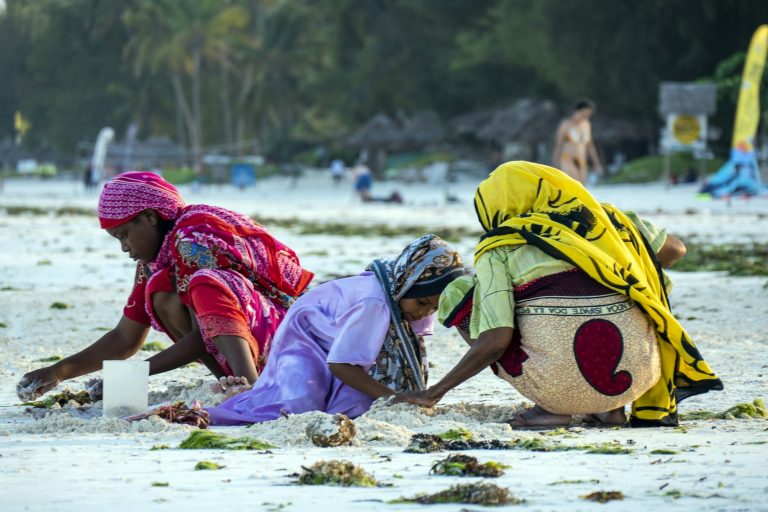
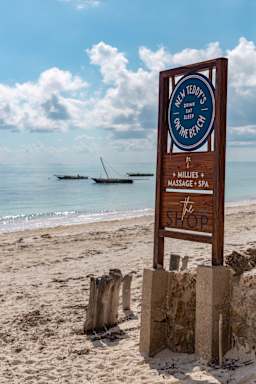
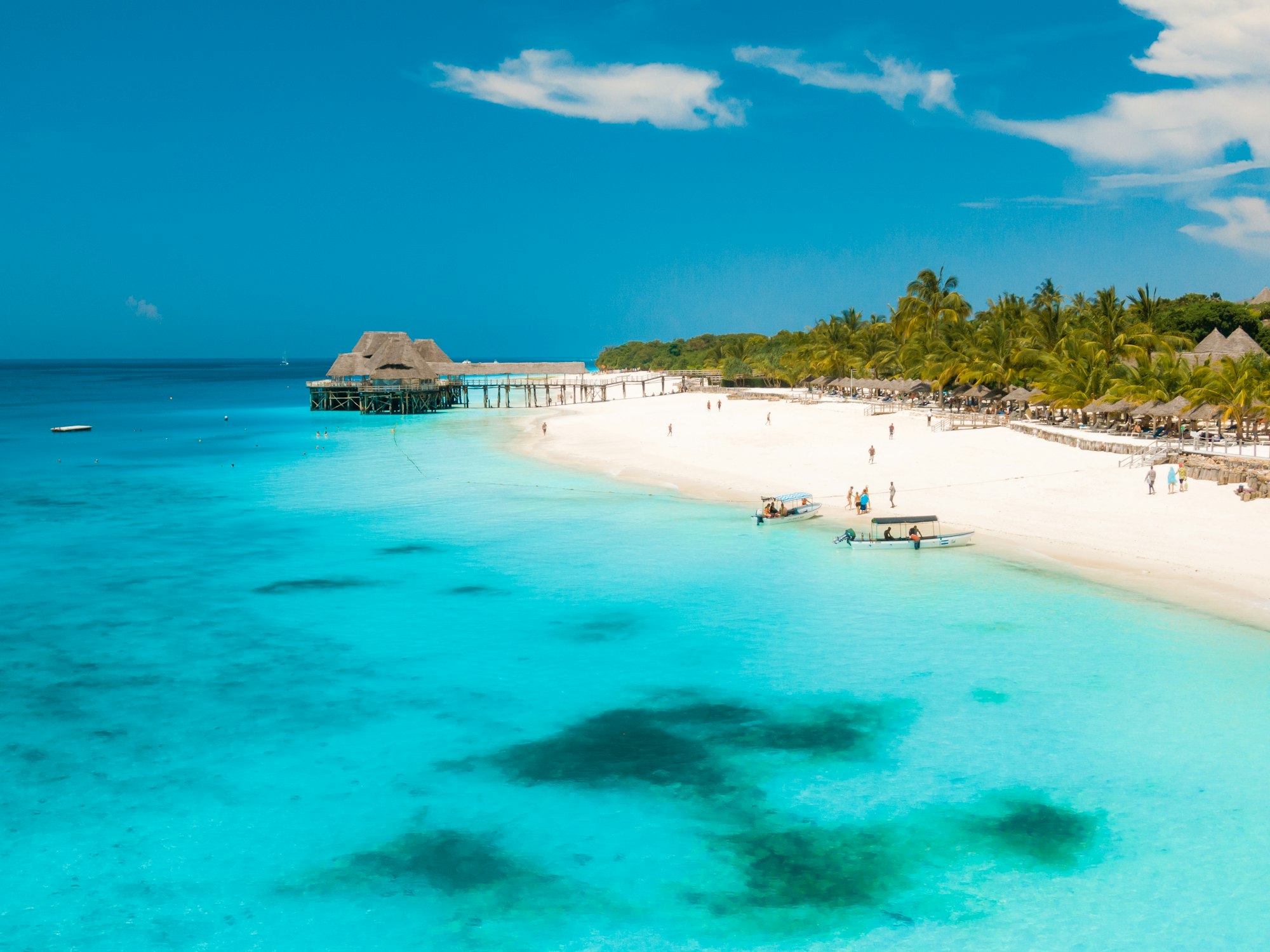
The beaches split by tide, and it matters more than people expect. On the north coast, Nungwi and Kendwa keep swimmable water for most of the day and face the sunset; Kendwa is calmer, Nungwi busier and more built up. On the east coast, Paje and Jambiani sit behind a distant reef, and at low tide the sea drains away for hundreds of metres, leaving seaweed farms, sandbanks and rock pools. That shallow lagoon is why Paje is one of Africa's best-known kitesurfing spots, and why swimmers sometimes feel short-changed.

Zanzibar is semi-autonomous and overwhelmingly Muslim, and it runs some of its own rules. Every foreign visitor needs the island's compulsory inbound insurance from the state insurer, bought online before arrival, and you clear Zanzibar immigration even when you come from the mainland. Away from the beach, cover your shoulders and knees. During Ramadan, expected from around 8 February to 9 March 2027, eating, drinking and smoking in public in daylight causes real offence in Stone Town and the villages.

Give it a week if you can: three nights in Stone Town, then two on each coast. Five days works if you choose one beach. It pairs naturally with a safari from Arusha, and many travellers finish a Tanzania trip here.

Stone Town or the beach?

Zanzibar's areas are spread around the whole island, not across one city, so think of this as choosing bases. Stone Town on the west coast has the history and the transport. The north (Nungwi and Kendwa) has swimmable water and sunsets. The south-east (Paje and Jambiani) has the kitesurfing, the tides and most of the backpacker hostels listed on Hostelworld.

Stone Town

History, food, first and last nights

The old town, ferry port and transport hub. Walk to the Old Fort, Forodhani and the slave market memorial, and eat well for a few euros. Hot, crowded and full of touts by day, and lanes can be dark at night.

Nungwi

Swimming, sunsets, nightlife

The northern tip of the island, about 1.5 hours from Stone Town. Deep water at most tides, dhow builders on the beach, and plenty of bars and dive shops. Built up and busy in July and August.

Kendwa

Beach days, sunsets, full-moon parties

Just south of Nungwi, with one of the island's best swimming beaches and a calmer feel. A good base for Mnemba trips. Fewer cheap beds than the south-east.

Paje

Kitesurfing, social hostels, backpackers

The main backpacker beach on the east coast and the island's kitesurfing centre. The lagoon empties at low tide, so swim around high water. Several of the best-rated hostels on Hostelworld are here.

Jambiani

Quiet beach time, village life, budget beds

A long fishing and seaweed-farming village south of Paje. Slower, cheaper and more local than Paje, with the same big tides. Expect long walks to the water at low tide.

Orange labels are neighbourhoods, dots are the 4 top-rated hostels. Map data from OpenStreetMap contributors.

Things to do

Stone Town, spice farms and the reef

Start in Stone Town, ideally with a local guide for your first morning, because the lanes are built to confuse. The Old Fort (Ngome Kongwe), built by the Omanis around 1700, sits on the waterfront; its courtyard holds craft stalls and the amphitheatre that hosts the island's festivals. Next door, the House of Wonders (Beit al-Ajaib), the sultan's ceremonial palace and the first building in East Africa with electricity, has been closed for years. Part of it collapsed in December 2020, Oman awarded a contract to rebuild it in 2023, and no reopening date has been announced, so for now you see it from the outside.

Give the slave market memorial at least an hour. Christ Church Anglican Cathedral was built on the site of the last open slave market in East Africa, which closed in 1873. Outside, a sculpture of five chained figures stands in a pit; inside the heritage centre are an exhibition on the East African slave trade and underground chambers where captives were held. A guide is included with entry.

Cloves made Zanzibar rich, and a spice tour is the easiest half day out of town. Farms around Kizimbani, about half an hour away, walk you through clove, nutmeg, vanilla and cinnamon plants, with fruit tastings and someone shinning up a coconut palm. Shared tours booked through hostels cost roughly $20–35 (€18–31); private tours start around $50 per person.

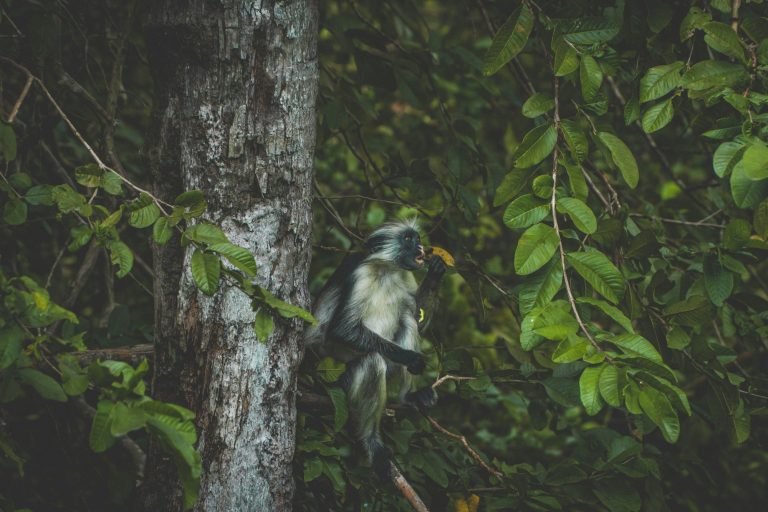
Jozani-Chwaka Bay National Park, in the middle of the island, is the place to see the endemic Zanzibar red colobus monkey up close, then walk a boardwalk through the mangroves. Entry is about $10 (€9) including a guide, and it is open 7.30am to 5pm.

For the reef, head to Mnemba Atoll off the north-east coast. The island itself is private, but the surrounding reef is protected and open to snorkellers. The conservation fee is $25, and shared half-day trips from Matemwe cost about $55–65 with the fee included. Go early: morning boats have the calmest water and the best chance of dolphins.

Free things

Tides, sunsets and Stone Town lanes

The best free thing on Zanzibar is simply walking Stone Town without a plan. Look out for the carved doors, some with brass studs, others with Indian-style arches and Arabic inscriptions, and for the stone benches (baraza) built along house walls, where older men sit and talk in the evening. Get lost, then head for the sea: in such a small town you will always reach the water or a main road within ten minutes.

Darajani market, on the edge of the old town, is the island's main food market: fish, spices, mountains of fruit and a lot of noise. It is free to wander, and a good place to buy spices at local rather than tourist prices. Be respectful when photographing people and stalls, and ask first.

At sunset, go to the Forodhani waterfront. Teenagers backflip off the sea wall into the harbour, dhows pass on the horizon, and the grills of the night market start smoking. You don't have to buy anything to enjoy it, although you probably will.

On the coasts, the beaches are public, and the tides do the entertaining. At low tide on the east coast you can walk out across the sand flats at Paje and Jambiani, past women tending seaweed farms, to the rock pools near the reef. Wear reef shoes, watch out for sea urchins, don't stand on coral, and start back as soon as the water turns. In Nungwi, look for boat builders working on wooden dhows on the beach, a tradition that still keeps the village busy.

Kendwa and Nungwi face west, so the sunsets are the north coast's free evening show. Walk the beach between the two at low tide, about 30–40 minutes. On the east coast, get up early instead: the sun rises out of the Indian Ocean behind the reef, and you will have the beach to yourself.

Food and drink

Zanzibar pizza, urojo and a fish on the grill

Forodhani Gardens night market is the obvious first meal. It sets up on the Stone Town waterfront from around 6pm, with long rows of grills piled with seafood, skewers and sugar cane. The thing to order is Zanzibar pizza, which is nothing like pizza: a thin dough parcel filled with minced meat, egg, onion, or banana and chocolate, fried on a hot plate for TSh 3,000–5,000 (€1–1.70). Mishkaki (grilled meat skewers) cost about TSh 2,000–4,000 each.

Forodhani is also where tourists overpay. Agree the price per skewer before the vendor starts grilling, ask for prices in shillings, and choose seafood that is cooked in front of you rather than seafood that has been sitting out since sunset. Pick stalls with queues of locals.

Away from the waterfront, try urojo, also called Zanzibar mix: a tangy, turmeric-yellow soup with bhajias, potatoes, crispy bits and chutney, sold for $1–2 at small stalls in the back lanes of Stone Town. For a sit-down local meal, Lukmaan is a long-running canteen where you point at pilau, biryani, curries and stews for about $3–5 (€2.70–4.50). It doesn't serve alcohol, and the Friday biryani goes fast.

On the beaches the food changes. In Paje, Jambiani, Nungwi and Kendwa, most menus are priced for tourists, often in dollars, and a grilled fish with chips can cost several times a Stone Town meal. Look for the small local cafés set back from the beach, where rice, beans and fish cost far less. The Rock, the restaurant on a rock in the sea near Michamvi, is the island's most photographed place to eat; go for the setting, not value.

Alcohol is easy to find in hotels, beach bars and some Stone Town restaurants, but Zanzibar is a Muslim island, so don't drink in the street. Kilimanjaro and Safari are the local lagers. During Ramadan, many local places close in daylight and reopen at sunset.

Nightlife

Sundowners and full-moon nights

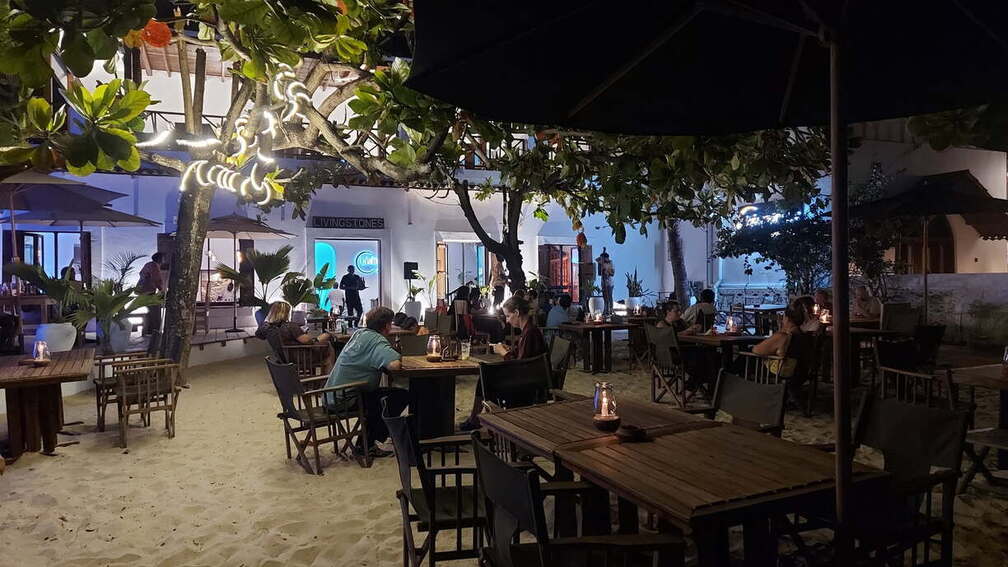
Zanzibar nightlife depends on where you sleep. Stone Town is conservative and most of it is quiet by midnight. The evening revolves around a sunset drink on a hotel or restaurant rooftop overlooking the harbour, then food at Forodhani, then a slow walk home. Rooftop bars charge European-style prices for beer and cocktails, so treat it as a once-or-twice thing.

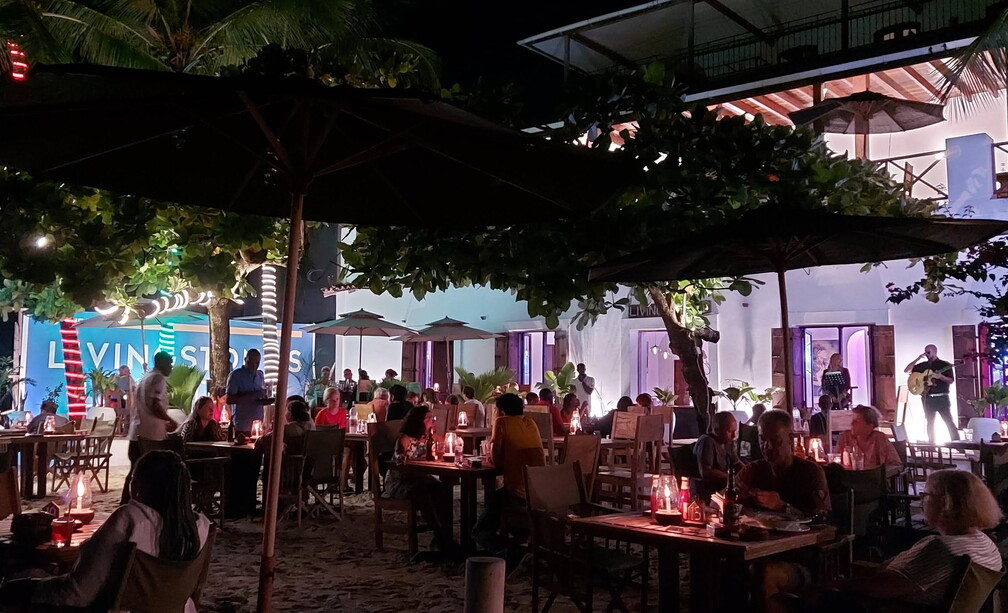
The north coast is where the parties are. Kendwa is known for its monthly full-moon parties on the beach, with DJs, fire dancers and people coming over from all over the island. Nungwi has a strip of beach bars with music most nights in high season, and it stays busier later than anywhere else. Check dates locally, because the party calendar shifts with the season and with Ramadan.

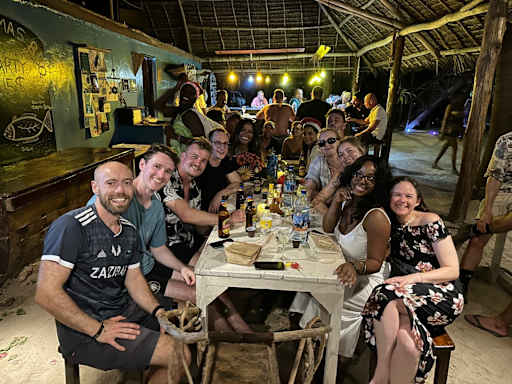
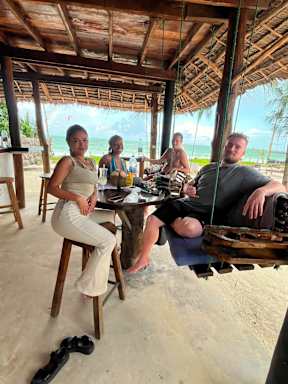
On the east coast, the social life is in the hostels. Paje has a kitesurf crowd who drink at beach bars after the wind drops, and several hostels run their own bar nights, quiz nights and barbecues. Jambiani is quieter, more about a beer on the sand and an early start for the low tide.

A few rules keep a night out easy. Drink in licensed places, not on the street or in village lanes. Carry only the cash you need, and get your hostel to call a driver for the ride home rather than walking along dark beach roads. Drug laws in Tanzania are strict and enforced, and beach boys who offer weed are a common route to a police shakedown.

During Ramadan, the beach bars at the resorts still serve, but the mood in the villages is subdued. At Eid at the end of Ramadan, Stone Town comes out to celebrate, with families in their best clothes, fairground rides and music in the streets for several days.

Getting around

Ferries, dala-dalas and the tide-proof taxi

Most people reach Zanzibar from Dar es Salaam on a fast ferry. Azam Marine runs the best-known service from the terminal on Sokoine Drive, with several sailings a day between roughly 7am and 4pm, and the crossing takes about 2 hours. Non-residents pay from about $35 (€31) in economy, more in business and VIP, in dollars or the shilling equivalent. Fares rose in May 2026 after fuel price increases, so check the operator's own site. Buy at the official office, not from touts outside, take morning boats to arrive in daylight, and expect porters in vests to grab your bag: you can say no. Flights from Dar take about 20 minutes, and there are direct flights from Arusha and Kilimanjaro.

On arrival you clear Zanzibar immigration, even from the mainland. Have your passport, visa and the compulsory Zanzibar insurance certificate ready. The policy costs $44 per adult, covers up to 92 days and must come from the Zanzibar Insurance Corporation. From 1 October 2026 mainland Tanzania has its own $44 scheme; the guidance so far is that one policy, bought for your first point of entry, covers both.

Dala-dalas are the cheapest way around: open-sided minibuses or converted trucks. For Nungwi and Kendwa they leave from Darajani in Stone Town; for Paje and Jambiani, from Mwanakwerekwe, about 5km out of town. Expect TSh 3,000 (about €1) for the long runs, TSh 500 for short hops, and a little extra for a big backpack. Most stop running around 7–8pm.

Bolt launched on the island in 2025 and works well in Stone Town, but drivers are scarce on the coasts. Taxis are unmetered, so agree the price first; hostels can book shared shuttles between the coasts. Hiring a scooter looks easy, but police checkpoints are common and you need the right local permit, so ask the rental shop exactly what you need.

Costs

What Zanzibar costs

The currency is the Tanzanian shilling (TSh). In October 2026 €1 bought about TSh 2,950 and $1 about TSh 2,640. Day-to-day costs are low, but Zanzibar runs on two price systems: shillings for dala-dalas, street food and local cafés, and US dollars for ferries, tours, insurance and many beach businesses. Carry both, and work out which is cheaper before you pay.

Beds are cheap by European standards. Dorms at Zanzibar's best-rated hostels on Hostelworld start at about $8–21 a night, many with breakfast, and private rooms in the same places are often only a little more. Some hostels add a small city or tourism levy of a couple of dollars per night on top of the booking price, so check the listing.

Food can be almost free or surprisingly expensive. A Forodhani dinner of Zanzibar pizza and skewers comes to €3–5, and a plate at a local canteen costs a few euros. Beach restaurants charge several times that. The real budget items are the extras: about $15–65 for airport taxis, $35 or more for each ferry crossing, $20–35 for a spice tour, $55–65 for a shared Mnemba trip and $10 for Jozani. Add the $44 insurance before you even land.

ATMs are easy to find in Stone Town and at the airport, but scarce in Jambiani and parts of the coast, so take out enough cash before you head to the beach. Cards work at larger hotels and some tour offices, often with a surcharge. Dollar notes need to be recent and in good condition, because older or torn notes are often refused.

Haggle for taxis, souvenirs and tours booked on the beach, and start well below the first price. Don't haggle hard over a skewer or a dala-dala fare: those are already local prices.

Safety

Beach boys, tides and dressing for Stone Town

Zanzibar is relaxed and most visits pass without problems. The hassle comes from touts, known in Stone Town as papasi, who meet the ferry, follow you through the lanes and offer tours, taxis and hotels on commission. On the beaches, the same job is done by beach boys selling boat trips and snorkelling. Some are fine, but you have no comeback if the trip turns out shorter, crowded or never happens, so book through your hostel or a licensed operator and pay at an office.

Petty theft is the main crime. Don't leave phones and bags on the sand when you swim, use your hostel's lockers, and avoid walking alone along dark beach roads or unlit Stone Town lanes late at night. Get your hostel to arrange a driver after dark.

Dress codes are real here. Zanzibar is overwhelmingly Muslim, and away from the beach and hotel grounds you are expected to cover your shoulders and knees, including in Stone Town and the villages. In 2021 the government warned that guides and tour operators can be fined if their clients go around in swimwear or skimpy clothes in public, and topless or nude sunbathing is not acceptable anywhere. Public kissing draws stares. During Ramadan, don't eat, drink or smoke in public in daylight.

The sea is the other risk. On the east coast the tide comes back in faster than you expect across the flats, and the reef edge has strong currents; check tide times and don't swim out to it. Sea urchins are everywhere, so wear reef shoes. On boat trips, make sure there are life jackets.

Same-sex relationships are illegal in Tanzania, including Zanzibar, so LGBTQ+ travellers should be discreet in public. Women travelling alone report persistent chat-up lines rather than danger; a firm "hapana, asante" (no, thank you) and walking on usually works. Keep your insurance certificate on your phone and on paper.

Day trips from Stone Town

The island is small enough that most day trips start and end in Stone Town. Book through your hostel or a licensed office, and check what is included, especially park and conservation fees.

Spice farms at Kizimbani

About 30 minutes · Tour or taxi

Clove, nutmeg and vanilla plants, fruit tastings and the story of how spices made Zanzibar rich. Shared tours about $20–35.

Prison Island (Changuu)

About 30 minutes · Boat

Giant Aldabra tortoises, a ruined quarantine station and snorkelling off the island. Trips cost about $25–40.

Jozani-Chwaka Bay National Park

Jozani-Chwaka Bay National Park

About 1 hour · Dala-dala or tour

Red colobus monkeys found only on Zanzibar, plus a mangrove boardwalk. About $10 with a guide.

Mnemba Atoll

About 1.5 hours to Matemwe · Tour and boat

The island's best snorkelling, with turtles and often dolphins. Shared half-day trips about $55–65 including the fee.

Nakupenda sandbank

About 30 minutes · Boat

A strip of white sand off Stone Town that appears at low tide. Go with the tide table, not the brochure.

Paje and Jambiani

Paje and Jambiani

About 1–1.5 hours · Dala-dala or shuttle

Kitesurfing, seaweed farms and the island's best-rated hostels. Better as an overnight stay than a day trip.

What's on

What's on in Zanzibar

Stone Town hosts East Africa's best-known music festival and a long-running film festival, and the Islamic calendar shapes the rest of the year. Ramadan and Eid move about 11 days earlier each year, so check the dates.

When to go to Zanzibar

June to October is the dry, breezy peak, with August the busiest month. December to February is hot and mostly dry. The long rains fall from March to May, when some beach places close and prices drop, and the short rains come in November.

32°
Jan
Hot and mostly dry. Revolution Day on 12 January
32°
Feb
Hot. Ramadan expected from around 8 February 2027
32°
Mar
Long rains begin. Eid al-Fitr, then Sauti za Busara
30°
Apr
Wettest month. Some beach places close
29°
May
Still rainy, cheapest beds of the year
29°
Jun
Dry season starts. Strong kitesurf wind
29°
Jul
ZIFF film festival, Mwaka Kogwa in Makunduchi
29°
Aug
Busiest month. Book beach hostels early
30°
Sep
Dry, clear water for diving and snorkelling
31°
Oct
Warm and dry, good visibility
31°
Nov
Short rains, quieter shoulder season
32°
Dec
Hot. Christmas and New Year crowds
Bar height is temperature. Colour is how busy it gets: quiet busy peak

Average daily highs for Zanzibar City from beach-weather.com, rounded to the nearest degree; the east coast is usually a little cooler with the breeze. Crowd levels are our own estimate from the high season, holidays and festival dates. Ramadan 2027 dates are approximate and depend on the moon.

Plan your Zanzibar budget

Pick a style and the number of nights. The fixed costs, insurance and ferries, sit on top of these daily figures, and tours are where the money goes.

Daily estimates in euros per person, based on October 2026 prices at about TSh 2,950 to €1 and $1.12 to €1. 'Doing' averages tours such as Mnemba, Jozani and a spice farm over several days. Add the $44 insurance and about $35 or more per ferry crossing. Treat these as a guide.

—
  • Beds—
  • Food and drink—
  • Getting around—
  • Doing things—

Zanzibar travel FAQs

Entry rules, fares and fees change. Check the official sources before you travel.

Do I need travel insurance to visit Zanzibar?
Yes. Every foreign non-resident needs Zanzibar's compulsory inbound insurance, $44 per adult, bought online from the Zanzibar Insurance Corporation before arrival and checked at entry. It is valid for up to 92 days. It doesn't replace your own travel insurance, which you still want for cancellations and bigger medical bills.
Do I need two insurance policies for mainland Tanzania and Zanzibar?
Mainland Tanzania introduced its own $44 compulsory policy from 1 October 2026. Guidance from the tourism industry so far is that one policy is enough, bought from the portal that matches your first point of entry, but this is new, so check the official portals before you buy.
Should I take the ferry or fly from Dar es Salaam to Zanzibar?
The fast ferry takes about 2 hours and costs from about $35 in economy for non-residents, and it drops you in Stone Town. Flights take about 20 minutes but cost more and land at the airport outside town. Most backpackers take the ferry, ideally a morning sailing.
How many days do you need in Zanzibar?
Five to seven days is ideal: two or three nights in Stone Town, then the rest on one or two coasts. With only three days, pick Stone Town plus one beach.
Which Zanzibar beach is best for swimming?
Kendwa and Nungwi on the north coast, because the water stays deep at most tides. On the east coast, at Paje and Jambiani, the sea goes out a long way at low tide, so you swim around high water.
Is the House of Wonders open?
No. The House of Wonders in Stone Town has been closed for years, part of it collapsed in December 2020, and it is being rebuilt with Omani funding. No reopening date had been announced by October 2026.
What should I wear in Zanzibar?
Swimwear is fine on the beach and at hotels. Everywhere else, including Stone Town and the villages, cover your shoulders and knees. Topless and nude sunbathing are not acceptable, and guides can be fined if clients ignore the dress code.
Can I visit Zanzibar during Ramadan?
Yes, and it is a good time to see local life, especially in the evenings. Don't eat, drink or smoke in public in daylight, expect some local cafés to close until sunset, and dress more conservatively. In 2027 Ramadan is expected around 8 February to 9 March.
Is Zanzibar safe?
Generally yes. The main problems are touts, overpriced tours sold on the beach and petty theft. Book through your hostel or a licensed office, keep valuables out of sight, use a driver after dark and respect the tides and the local dress code.
When is the best time to visit Zanzibar?
June to October is dry and breezy, and the best time for kitesurfing and diving, but August is the busiest month. December to February is hot and mostly dry. March to May is the rainy low season, when some places close.

Say yes to hostels, meet the world

Compare Zanzibar hostels — live prices, real reviews and free cancellation on most bookings. Then meet the people already there in the app.

Get the App. QRGet the App.
Get the App. QR  Get the App.
Scroll to Top