Muscat
12 hostels · dorms from €12
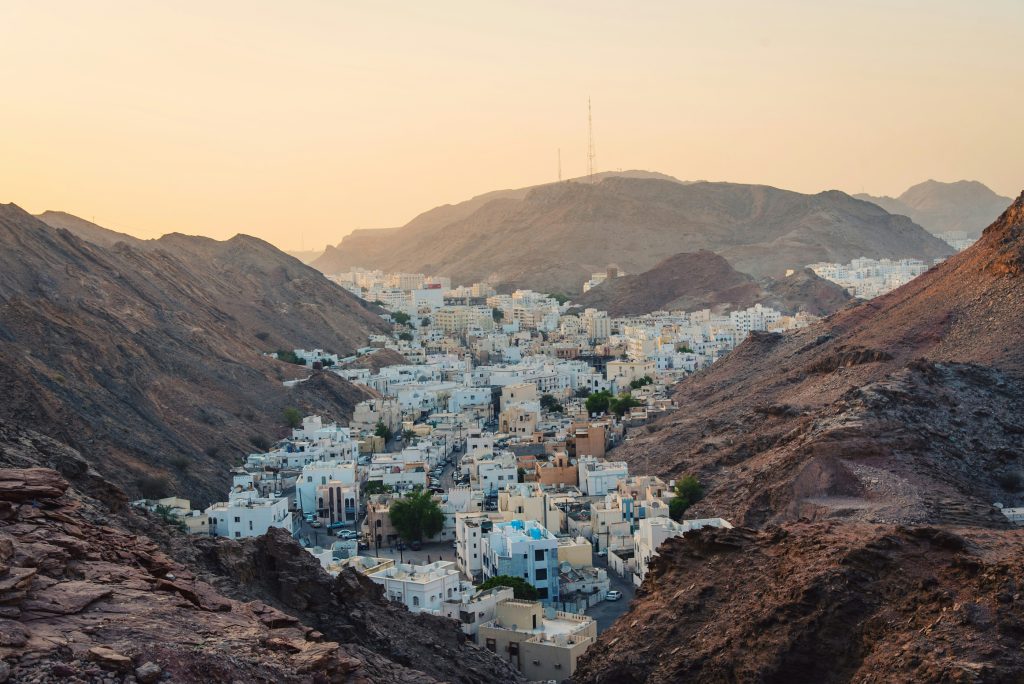
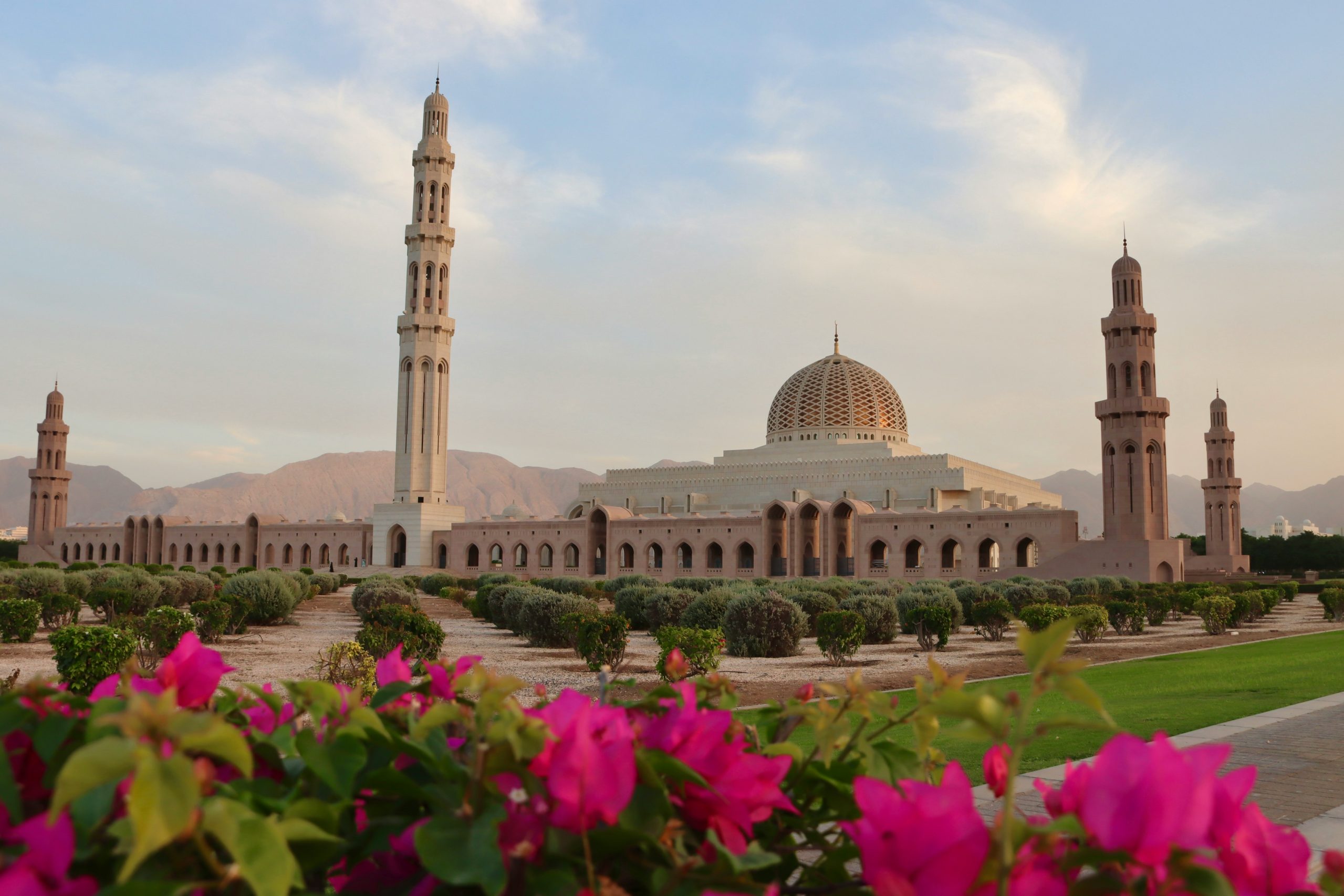
A low-rise capital on the coast: the Grand Mosque, Mutrah souq and a corniche below bare mountains.
Amazing trip nice people nice culture
A traveller, on Hostelworld

Wadis with turquoise pools between desert cliffs, a 3,000-metre mountain, and empty coastline. The Gulf without the skyscrapers, and far easier to travel than people assume.
Oman decided not to build the skyline its neighbours did, and the result is a country of forts, wadis and mountains where the tallest thing is usually a minaret. It is calm, orderly and genuinely welcoming, and it has become the Gulf country that independent travellers actually enjoy.
Muscat is a low-rise capital along the coast, with a souq, the Sultan Qaboos Grand Mosque and a corniche. Behind it the Hajar mountains rise to 3,000 metres, with Jebel Shams overlooking a canyon people call the Grand Canyon of Arabia, and the wadis cutting down from them hold pools you can swim in year-round.
South of that is the Wahiba Sands desert, the turtle beaches at Ras al Jinz, and eventually Salalah, which gets a monsoon and turns green in August while the rest of the peninsula bakes. Ten days covers the north; two weeks reaches Salalah.
A hire car is how almost everyone travels here. Distances are long and the roads are excellent.
A low-rise capital on the coast: the Grand Mosque, Mutrah souq and a corniche below bare mountains.
Amazing trip nice people nice culture
A traveller, on Hostelworld
Oman is a road trip country: wadis, mountains, desert and coast, linked by very good roads.
Wadis, canyons and a mountain you can drive up.
Three thousand kilometres of it, most of it empty.
Forts, souqs and frankincense.
Manageable if you camp and share a car.
Muscat over two or three days.
The wadis are the thing people remember. Wadi Shab involves a short boat ride, a forty-minute walk and then a swim through a slot canyon to a waterfall in a cave — it is the best few hours in the country. Wadi Bani Khalid is easier to reach and almost as good.
Jebel Shams has the Balcony Walk, a path cut along a cliff face above a 1,000-metre drop to an abandoned village, and it is straightforward in good weather. Nizwa's fort and its Friday livestock market are the cultural counterpart.
On the coast, turtles nest at Ras al Jinz year-round with the peak in summer, and viewing is managed through the reserve rather than done independently. The Daymaniyat Islands off Muscat have the best snorkelling and diving in the country, with whale sharks in season.
Salalah is the outlier: from June to September the khareef monsoon turns the southern hills green, which is when Gulf visitors arrive in numbers.
Omani food reflects a trading history that reached India and Zanzibar. Shuwa — meat marinated in spices and cooked underground for a day or more — is the celebration dish, majboos is the spiced rice and meat everyday version, and grilled fish is excellent everywhere along the coast.
The cheapest eating is at Indian and Pakistani canteens, which are everywhere because of the expatriate workforce: a thali or biryani costs €2 to €5, and they are open all day.
Karak tea, strong and sweet with condensed milk, is the roadside staple at a few cents a cup, and dates and halwa are offered constantly as hospitality. Alcohol is restricted to licensed hotels and is expensive.
There is very little, and that is the character of the country rather than a gap. Alcohol is sold only in licensed hotel bars and restaurants, prices are high at €8 to €14 a drink, and public drinking is illegal.
Muscat has a handful of hotel bars and a small live music scene, and that is genuinely the extent of nightlife in Oman.
What replaces it is the evening outdoors: the Mutrah corniche after dark, shisha cafés, and camping. Omanis themselves spend evenings with family, at the beach or in the mountains, and a night in the desert or on an empty beach with a fire is the country's actual version of a good night out.
A hire car is effectively necessary. Public transport between cities exists through Mwasalat buses and is cheap but infrequent, and it does not reach the wadis, mountains or beaches that are the reason to come.
Roads are excellent and well signed in Arabic and English, driving is on the right, and fuel is cheap. A 2WD is fine for most of the country; Jebel Shams, the Wahiba Sands and some wadi tracks need a 4WD, and hire companies are strict about where 2WDs may go.
Distances are long — Muscat to Salalah is over 1,000km and ten to twelve hours, so most people fly that leg for €60 to €120. Salalah is best treated as a separate trip.
Oman is more expensive than most of Asia and cheaper than the UAE for what you get. Dorms start around €15, but hostel supply is thin outside Muscat, and most travellers use guesthouses or camp.
Camping is the lever that changes everything. Wild camping is legal and normal almost anywhere away from private property — on beaches, in wadis, in the desert — and Omanis do it themselves at weekends. A tent turns an expensive country into a cheap one.
Car hire is €25 to €45 a day and fuel is very cheap. Alcohol at €8 to €14 a drink is the other budget risk, and most entry fees are modest. A day comes to €40 to €70 with a shared car.
Oman is one of the safest countries in the world, regularly ranked above most of Europe. Crime against visitors is very rare, and solo travellers including women generally report feeling comfortable, though attention in rural areas is more common than in Muscat.
The risks are environmental and driving-related. Flash floods in wadis are the serious one: a storm in the mountains can send water down a dry wadi with no warning, and people die this way most years. Never camp in a wadi bed, and do not cross flowing water in a vehicle.
Summer heat reaches 45°C and inland hiking becomes dangerous. Mountain roads are steep with drops and often require 4WD, and rescue in remote areas is slow. Respect the laws: public displays of affection, drinking in public and photographing people without permission are all offences.
Oman has made entry considerably easier in recent years: citizens of over a hundred countries, including most of Europe, the UK, US, Canada and Australia, can now enter visa-free for stays of up to 14 days, with e-visas available for longer.
Check the official Royal Oman Police visa portal before booking, because the visa-free list and duration have been revised more than once.
Passports need six months' validity. Dress modestly in public — shoulders and knees covered for everyone — and note that this is expected rather than merely appreciated, including in Muscat.
October to April, without much debate. Summer inland reaches 45°C, with the exception of Salalah, which gets a monsoon and is at its best in August.
Average highs for Muscat. Jebel Shams at 3,000m is far cooler and can freeze at night in winter. Salalah runs on its own calendar entirely, with the khareef monsoon from June to September turning the hills green.
Pick how you travel and how long for. Per night, for one person, assuming a shared hire car.
The shoestring bed line is zero because wild camping is legal almost anywhere. Transport assumes a share of a hire car at €25–45 a day plus fuel.
The khareef monsoon in Salalah is the one that draws crowds, and it is unlike anything else on the peninsula.
The southern hills turn green under monsoon cloud while the rest of Arabia bakes. Gulf visitors arrive in numbers.
No eating, drinking or smoking in public during daylight. Evenings become social.
The winter festival, formerly the Muscat Festival: weeks of crafts, food and performance in the capital.
Green turtles nesting on the beach, viewed on managed reserve tours.
A livestock auction that has run for generations, and the best morning in the interior.
Flags, decorations and public holidays across the country.
The highest-rated hostels in the country, live from Hostelworld. Supply is concentrated in Muscat — elsewhere, guesthouses, desert camps and wild camping are the norm.
The ones we get asked most.

Compare hostels across Oman — live prices, real reviews and free cancellation on most bookings. Then meet the people already there in the app.

 Get the App.
 Get the App.