
Sustainability Stories: Earth Day – What Casa en el Agua Teaches Us About Everyday Sustainability

Every day action. Intentional choices. Impact that lasts.
On Earth Day, it’s easy to focus on big promises and bold commitments. But during our recent fireside chat with Casa en el Agua, a simple but powerful message emerged: sustainability is built through intention, consistency, and everyday action.
Casa en el Agua is a hostel quite literally built in the middle of the Caribbean Sea. And what resonated most wasn’t just the innovation – from solar power, and desalinated water, to dry toilets, and mangrove restoration – but how those decisions were made.
Sustainability at Casa en el Agua didn’t start with a plan or long-term strategy. It started with a bold idea and a willingness to listen to the local community, to the environment, and to what was realistically possible.
As co-founder Ronald Hurtado put it best: “Sustainability doesn’t need to be perfect; it just needs to be intentional.” And whether at home or while travelling, small, conscious choices really do add up.
A Hostel Built on Listening
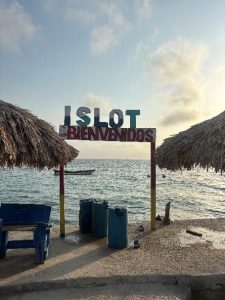
Located approximately two hours by boat from Cartagena, Casa en el Agua sits within Colombia’s San Bernardo Islands archipelago. Before it became a hostel, it was simply a house floating above the sea. When co- founder Ronald Hurtado and his partners first discovered it, sustainability wasn’t the goal, survival was.
“We didn’t know how to live in the middle of the ocean,” Ronald shared. “The local community did. So that’s where we started, by listening.”
The local community, primarily based on Islote Santa Cruz, have lived from the sea for hundreds of years. Building trust and learning from them shaped every decision that followed, from sourcing food and managing waste to energy, water, and employment.
Sustainability at Casa en el Agua wasn’t imposed; it was learned from those who had been there before.
Redefining ‘Normal’ Operations
Living above the sea leaves little room for shortcuts or traditional hostel operations. Early on, the team realised that what works on land simply wouldn’t work here.
Challenges included:
- Flush toilets sending waste directly into the ocean
- Diesel generators creating constant noise and pollution
- Fresh water being bought and carefully rationed using buckets
Practical solutions included:
- Dry toilets (inspired by systems on Colombia’s Pacific Coast) kept waste out of the sea.
- Diesel generators were replaced with solar power, allowing the hostel to run quietly and cleanly.
- Later, a desalination system was added to convert seawater into drinkable water, not only for guests, but also for staff and their families.
The trade‑off, while unfamiliar or even uncomfortable, was clear: protect the ecosystem they call home, or risk losing it altogether.
Protecting What’s Disappearing
One of the most powerful moments of the fireside chat came when Ronald spoke about nearby islands that have already disappeared due to erosion and climate change, most notably affecting the tides.
What was once an archipelago of over a dozen small islands has shrunk dramatically. Mangroves that once stabilised land have vanished, and migratory birds have fewer safe places to rest.
In response, Casa en el Agua began a mangrove‑planting initiative on the nearby island of Mangle, working alongside local communities, guests, and partners.
Progress is slow and intentional. “This isn’t something we’ll fix in a weekend,” Ronald said. “But if we don’t start, the island won’t exist.”
Guests as Conscious Participants
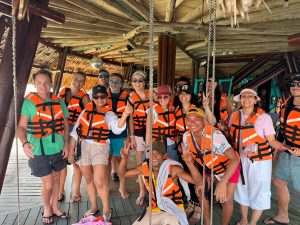
Casa en el Agua doesn’t expect guests to be sustainability experts, or to sacrifice enjoyment. Guests are there to relax, disconnect, and experience something special.
What is expected is awareness.
Each stay begins with an explanation of why things work differently, scheduled shower times, waste separation, and strict care around the surrounding environment. It’s not about rules, it’s about respect.
Many guests take these lessons home, using less water and being more mindful of their impact. Others resist at first, only to change their perspective later.
“We’re all guests here,” Ronald reminded us. “Not just at the hostel, on the planet.”
The BIGGEST Takeaway: Start Small, Start at Home
When asked what small, realistic change anyone could make beyond Earth Day, Ronald’s answer was simple: Start at home.
Take shorter showers, wash your clothes less often, turn off running taps, walk whenever possible, and do what you can to recycle properly, even when it’s inconvenient. Then take that same mindset with you when you travel.
Sustainability doesn’t put a pause on your holiday, if anything, travel often magnifies impact. Which makes conscious choices matter even more.
“Your sustainability doesn’t need to be perfect,” Ronald said. “It just needs to be intentional.”
A Reminder Worth Carrying Forward
Casa en el Agua shows what’s possible when sustainability, creativity, and community come together. Not as a campaign or marketing message, but as a way of living and operating.
As we reflect on Earth Day, their story offers something grounding:
Meaningful impact doesn’t start with notions of grandeur. It starts with everyday decisions, made thoughtfully, consistently, and with care for the people and places around us.
Every day can be Earth Day if we want it to be. 🌱


 Get the App.