Old town
First-timersInside the walls: stone lanes, small guesthouses, cafés and a few minutes from the square.

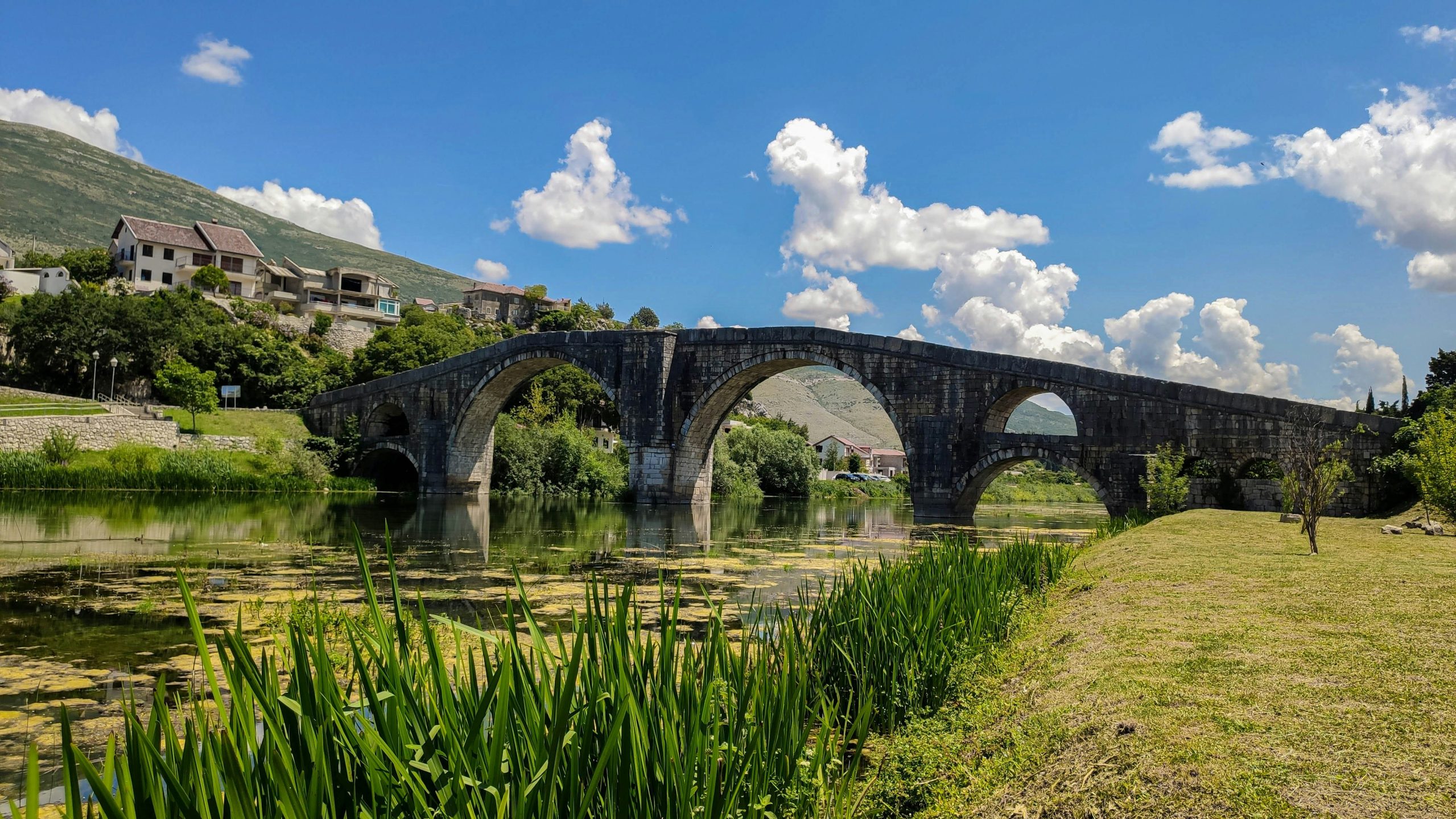
A sunny walled town in the far south, with plane trees over the square, wine from the hills around it, and Dubrovnik an hour away at a fraction of the price.
Trebinje sits in Herzegovina's southern corner, twenty-five kilometres from the Adriatic and an hour from Dubrovnik, in a valley of vineyards and stone.
The old town is small, walled and Ottoman, with plane trees shading a square where the entire town seems to sit from mid-morning onwards. A sixteenth-century bridge crosses the Trebišnjica, and the Hercegovačka Gračanica monastery on the hill above has the best view in the region.
What makes it worth a stop is the arithmetic. Dubrovnik in August is one of the most expensive cities in Europe; Trebinje is an hour away by bus, has a bed for €15, a bottle of local wine for €8, and the same sun.
A day and a night, or use it as a base to see Dubrovnik without paying Dubrovnik prices.
A small town. The old walls, the square, or the river.
Inside the walls: stone lanes, small guesthouses, cafés and a few minutes from the square.
The plane-tree square just outside the walls, where the market, the restaurants and most of the town's life are.
Along the Trebišnjica towards the old bridge, with walking paths and a slower pace.
Map data from OpenStreetMap contributors.
Sit on the square. That is not a joke — the plane-tree square is the centre of the town's life, a coffee costs a euro, and watching the place go by for two hours is what people come here to do.
Hercegovačka Gračanica, a monastery on the hill above town, is a 1990s replica of a fourteenth-century Kosovo original and holds the grave of the poet Jovan Dučić. The view down over the valley and the vineyards is the best in the region.
The Arslanagić bridge, a sixteenth-century Ottoman span, was moved stone by stone when a dam flooded its original site and rebuilt downstream.
The wine cellars in the hills — Vukoje, Tvrdoš, the last attached to a working monastery — run tastings from about €10 and are twenty minutes out.
The old town, the walls and the square cost nothing, and the Saturday market under the plane trees is free to wander and full of local produce.
Walking up to Hercegovačka Gračanica takes about forty minutes and the monastery grounds are free.
The Arslanagić bridge and the riverside paths along the Trebišnjica are free, and people swim in the river in summer.
The town is small enough that the whole of it — walls, bridge, square and river — is a two-hour walk, and the hills around it are open.
Herzegovinian food with more Mediterranean than Bosnian in it: grilled lamb, prosciutto from the karst villages, sheep cheese and olive oil.
A full meal with wine is €10 to €16, and the restaurants around the square are the good ones.
The wine is the thing. Vranac is the dark local red and Žilavka the white, both grown on the surrounding karst, and a glass is €2 to €3 against €7 or €8 an hour away in Dubrovnik.
Tvrdoš monastery has been making wine since the fifteenth century and sells it at the cellar door, which is a pleasant way to spend an afternoon.
Minimal, and that is accurate rather than a complaint. A handful of bars around the square and in the old town stay open into the evening, and in summer the terraces are full until midnight.
A beer is €1.50 to €2.50 and wine €2 to €3.
The evening here is the corzo — the walk around the square that happens in every town in the region — followed by a long dinner under the plane trees.
For anything more, Dubrovnik is an hour away, though the border queue makes a late return unappealing.
The town is small and walking covers it entirely.
Buses to Dubrovnik take about an hour and cost €10 to €15, crossing an EU external border — take your passport and expect queues in July and August, when the crossing can add an hour.
Mostar is two hours and Sarajevo four, both by bus.
The wine cellars and the karst villages need a taxi or a tour, arranged through guesthouses for €25 to €45.
Note that the last bus back from Dubrovnik is early evening, so a day trip needs planning around it.
Very cheap, and its main argument is the comparison. Beds are €10 to €22, a full meal €10 to €16, a glass of local wine €2 to €3, and a coffee €1.
A day is €25 to €40.
Dubrovnik, an hour away, runs three to four times that for accommodation in season. Staying here and day-tripping over the border is a well-established strategy, and the wine alone justifies the bus.
Cards work in the centre, cash is better in the villages, and the mark is pegged at about 1.96 to the euro.
Trebinje is very safe and quiet, with minimal crime and a town centre that is comfortable at any hour.
The summer heat is the main practical issue — this is one of the sunniest parts of the country and the karst holds the heat, with July and August regularly above 35 degrees and little shade outside the square.
The Trebišnjica is dam-controlled and water levels change without much warning; swim where locals swim.
Landmines remain in some rural areas of Herzegovina. Stay on marked paths and roads if you go walking in the hills, and take signs seriously.
Emergency numbers are 122 police, 124 ambulance.
Two countries and a wine region, all within an hour and a half.
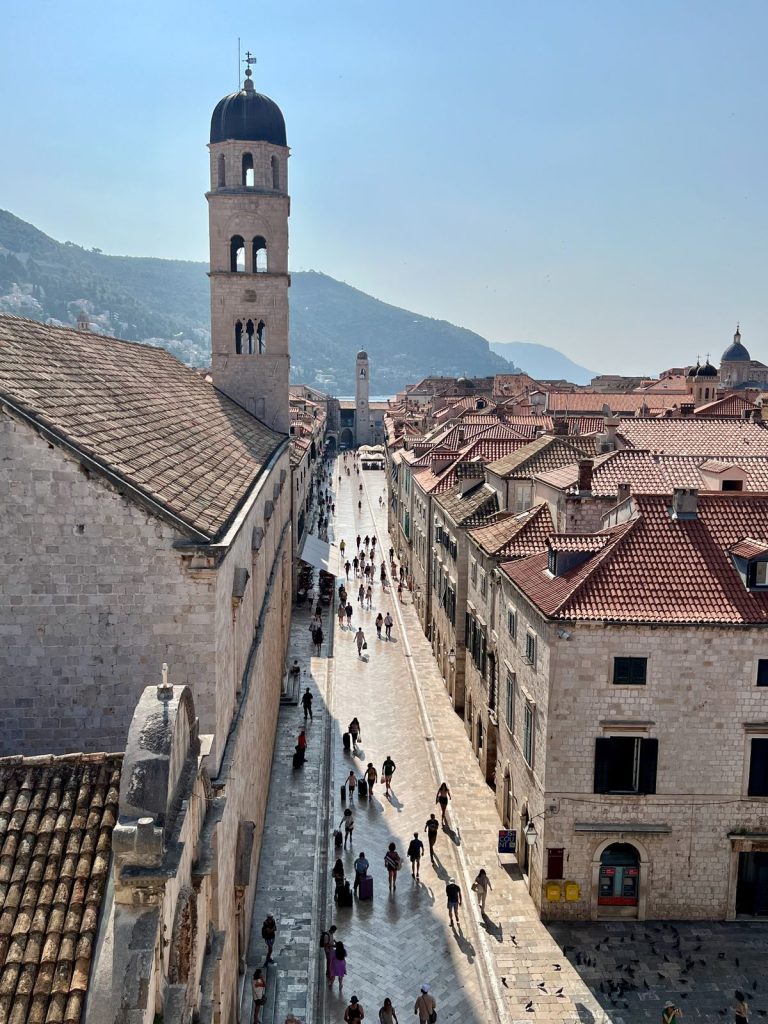
The walled city, an hour and an EU border away. Go for the day and sleep here instead.
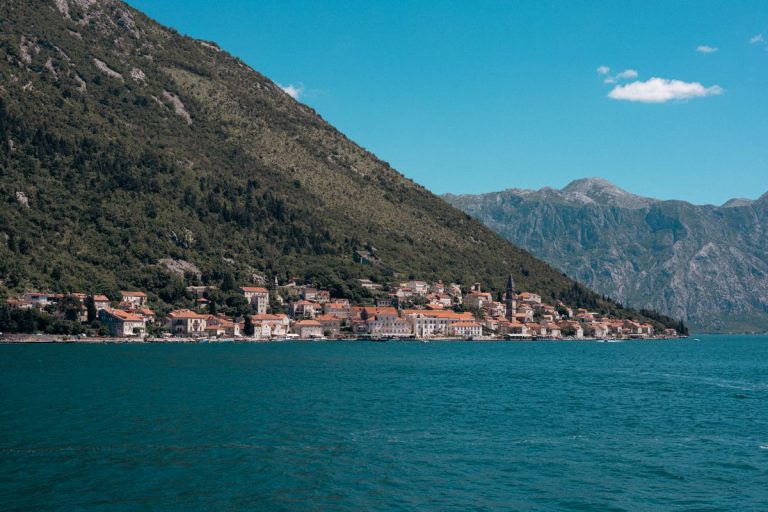
Montenegro's walled town on its fjord-like bay, as a long day or an onward stop.
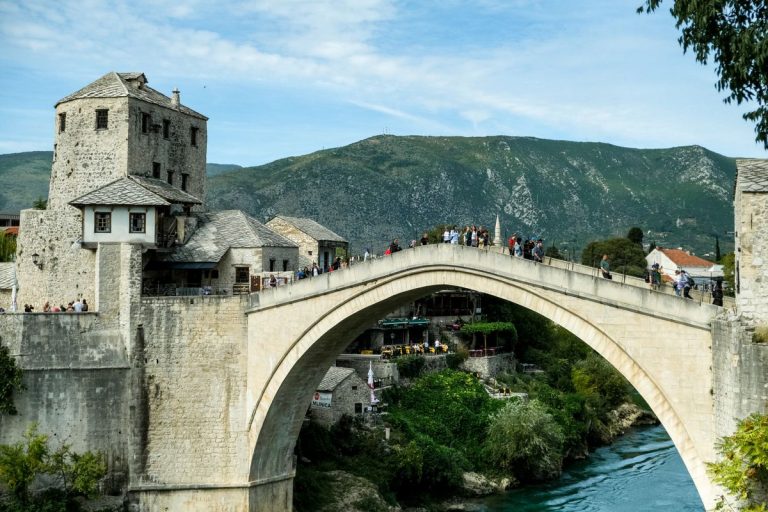
The rebuilt bridge and the old town, north through the karst.
A quiet calendar built around wine and summer evenings.
Vranac and Žilavka picked on the karst, with cellars open and long lunches.
Concerts, theatre and film in the warm months.
Local produce, cheese and prosciutto under the trees.
A poetry festival named for Jovan Dučić, who is buried at the monastery above the town.
Marked seriously here, with services at Gračanica on the hill.
May, June, September and October. July and August are very hot.
Average highs. Trebinje gets around 260 days of sun a year and is one of the warmest places in Bosnia and Herzegovina, with a Mediterranean climate rather than a continental one.
Pick how you travel. Per person per night, in euros.
A Dubrovnik day trip adds €20–30 in bus fares. Even with that, a day here costs a fraction of a night across the border.
The ones we get asked most.

Compare Trebinje guesthouses and hostels — live prices, real reviews and free cancellation on most bookings. Then meet the people already there in the app.

 Get the App.
 Get the App.