The square and the strip
NightlifeThe centre around the monastery and the club streets. Loud until dawn in season.

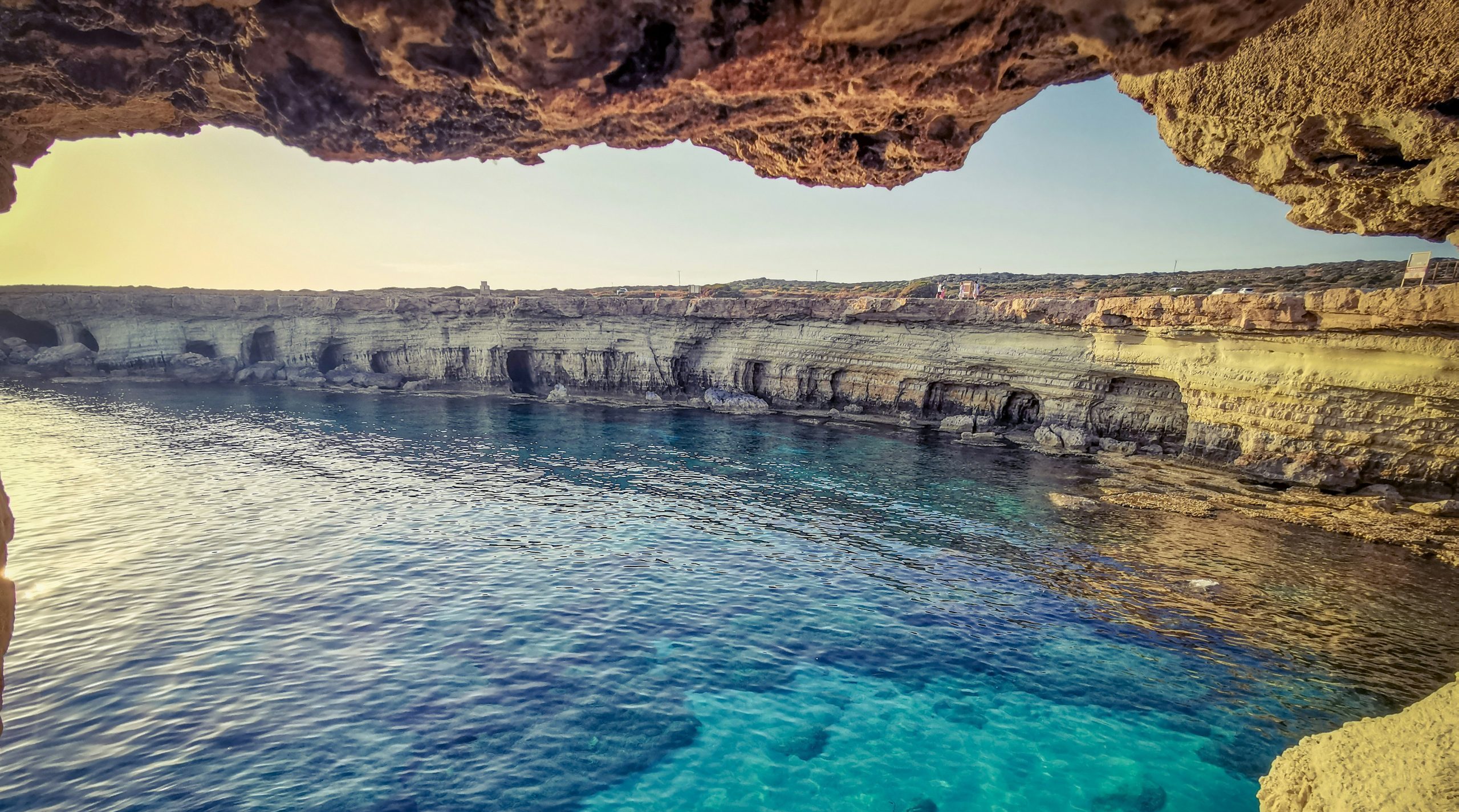
A fishing village that became a club resort, with the best sand in Cyprus, sea caves along the cape, and an underwater sculpture forest offshore.
Ayia Napa was a fishing village until the 1970s and is now a club resort with a reputation built in the garage music years, which it has spent the last decade trying to broaden.
The beaches are the reason it grew: Nissi Beach and Makronissos are the best sand in Cyprus, pale and shallow with water that genuinely is that colour.
Around the cape, the Ayia Napa Sculpture Park and the underwater Museum of Underwater Sculpture — 93 works sunk in a bay at 8 to 10 metres, planted as an artificial reef — are both unexpected and worth the trip.
Cape Greco national forest park, ten minutes east, has sea caves, cliffs, walking trails and none of the noise.
The season is June to September and the town closes almost entirely outside it. Three or four days.
The square and the strip, the beaches west, or the quieter harbour side.
The centre around the monastery and the club streets. Loud until dawn in season.
West of the centre: the best sand on the island, beach clubs and a bus or twenty-minute walk in.
East towards Cape Greco, with the fishing harbour, calmer beaches and sleep.
Orange labels are neighbourhoods, dots are the 3 top-rated hostels. Map © MapTiler © OpenStreetMap contributors.
Nissi Beach is the famous one — pale sand, shallow turquoise water and a sandbar to a small island — and it is packed from ten in the morning in season. Makronissos, a little further west, has the same water with more space.
The Museum of Underwater Sculpture is 93 works by Jason deCaires Taylor sunk at 8 to 10 metres in a bay east of town, forming an artificial reef of trees and figures. Snorkelling trips and dives both run out to it.
Cape Greco national forest park, ten minutes east, has sea caves you can swim into, cliff jumping spots, a natural rock bridge and coastal trails with no development.
The sixteenth-century monastery in the middle of the town square is a genuinely peaceful survivor, and it is free.
Every beach is free, including Nissi and Makronissos — only the loungers cost.
Cape Greco national forest park is free, with the sea caves, the rock bridge, the cliffs and the walking and cycling trails.
The Sculpture Park on the coast road east has around 200 works in an open-air setting and costs nothing.
The monastery in the town square is free and is a genuine curiosity in the middle of the nightlife.
The coastal path from the harbour east towards Cape Greco is free and takes about an hour.
The strip has the full-English and pizza economy, and it is exactly what it looks like.
The harbour has the fish tavernas, at €18 to €30 for a whole fish, and they are the better option in town.
Meze is available everywhere at €20 to €30 a head, and the versions in the village tavernas at Liopetri and Sotira inland are considerably better than the versions on the strip.
A beer is €4 to €6 on the strip and less at the harbour, and cocktails run €9 to €14 with the usual happy hours.
Self-catering is common here and the supermarkets are cheap.
This is why most people come. The square and the streets off it are wall-to-wall clubs and bars, running from about eleven until six in the morning through the season, with international DJs in July and August.
The crowd is overwhelmingly young, British, Scandinavian and Israeli, and the promoters on the street are relentless.
Beach clubs at Nissi run daytime parties, and the two scenes join up in the afternoon.
Cocktails are €9 to €14 with heavy happy hours, and drink prices on the strip vary wildly — check before ordering a round.
Outside June to September almost all of it is closed, and the town is a quiet, pleasant seaside village.
Buses from Larnaca airport take 45 minutes for about €5, and Paphos airport is two and a half hours away — book flights into Larnaca if you can.
The town is walkable, and buses run west to Nissi and Makronissos and east to Cape Greco and Protaras for about €1.50, with a day pass around €5.
In season a road train and open-top buses do the same routes at tourist prices.
Quad bikes and scooters are rented everywhere and are the single most common source of injury here.
Driving is on the left.
Expensive in July and August and cheap either side. Dorms are €18 to €45 with a sharp summer peak, a meal €12 to €25, and cocktails €9 to €14.
A day is €50 to €90 in season, considerably less in May or October.
Club entry runs €10 to €30 for bigger nights, and beach loungers €8 to €15 a pair.
The beaches, Cape Greco and the sculpture parks are free, which is most of what makes the place good in daylight.
The town is safe, and almost all the harm here is self-inflicted or vehicle-related.
Quad bike and scooter accidents are the main cause of injury, usually involving inexperienced riders, alcohol and the left-hand side of the road. Many travel insurance policies exclude quad bikes entirely — check before you rent.
Drink spiking and inflated bar bills both occur on the strip. Watch your drink, agree prices before ordering rounds, and be wary of promoters offering free entry plus drinks.
Cliff jumping at Cape Greco causes serious injuries every summer; depths vary and the rocks are not forgiving.
The sun here is strong and days start on a beach. Emergency number is 112.
Caves, a ghost town and the quieter resort next door.
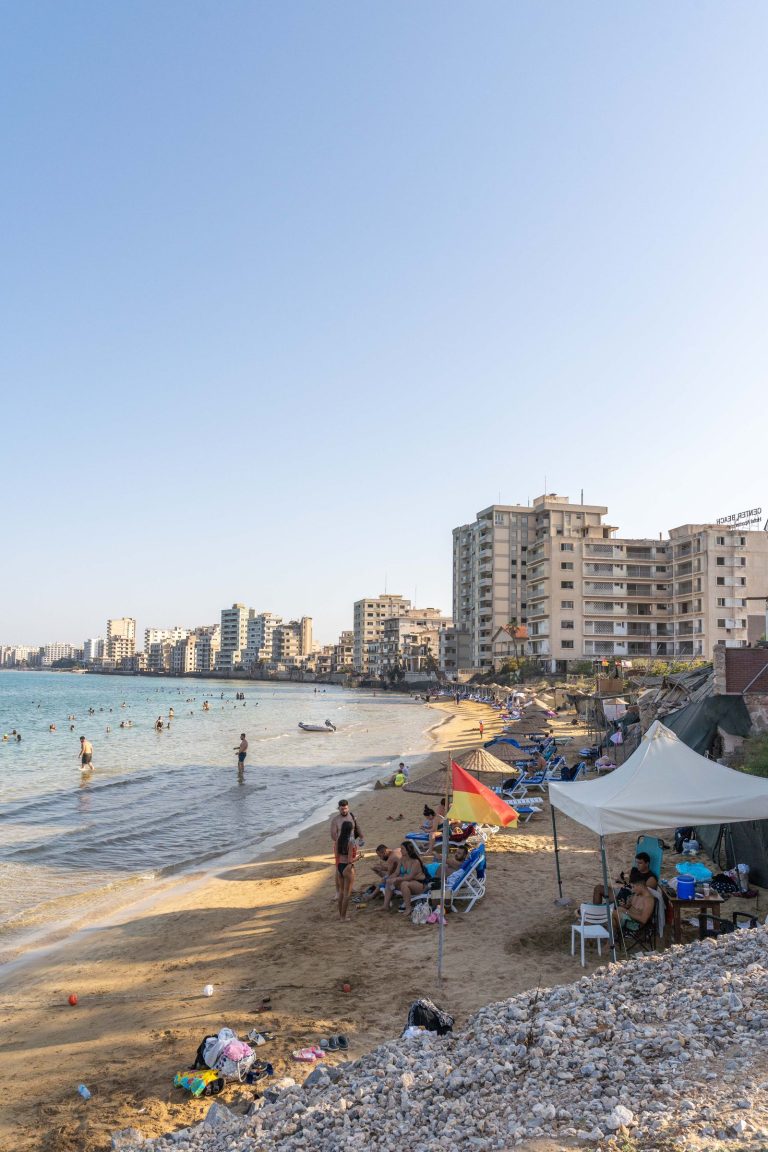
A walled Venetian city in the north, with the sealed resort suburb of Varosha, abandoned since 1974 and partly reopened.
A summer club season, and a flood festival in June.
International DJs and daily beach parties, running from about eleven until six.
The Cypriot festival of the flood, with water throwing, boat races and stalls.
A local festival of music and dance around the old monastery, at the end of the season.
Jousting and street performance in the old square, after the clubs close.
Loggerheads nest on some quieter beaches east of the resort.
A seasonal scene concentrated near the square and the beaches, largely closed outside summer. Live from Hostelworld.
June to September for the resort, May and October for the beaches without the noise.
Average highs. The season here is genuinely short and the town closes almost entirely from November to March, which is worth knowing before booking a spring trip.
Pick how you travel. Per person per night, in euros, in season.
July and August run well above these figures. May and October are roughly half for the same beaches.
The ones we get asked most.

Compare Ayia Napa hostels — live prices, real reviews and free cancellation on most bookings. Then meet the people already there in the app.

 Get the App.
 Get the App.