Kato Paphos
First-timersThe harbour and the archaeological park: mosaics, the castle, restaurants and most of the visitor beds.

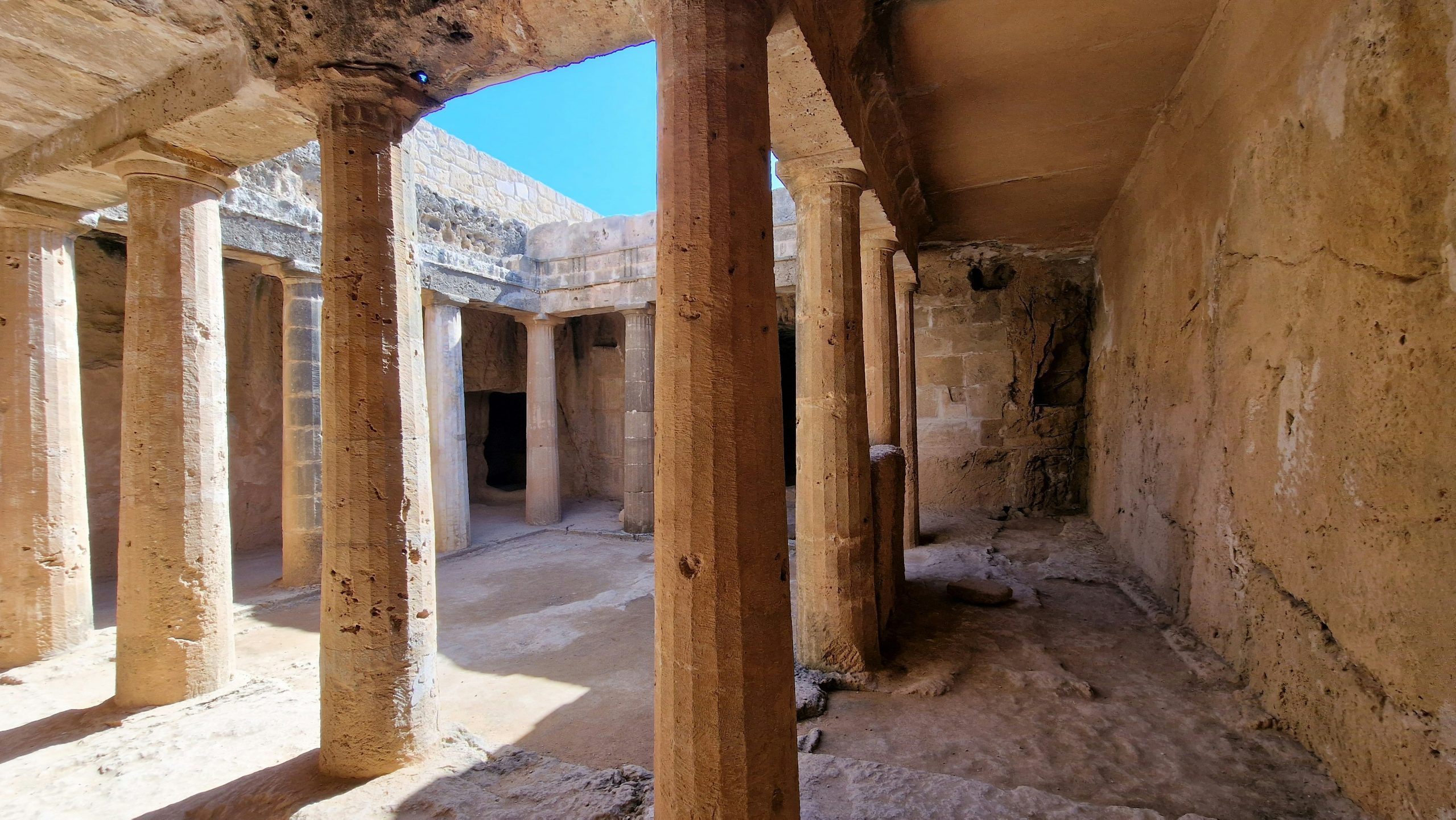
Roman mosaic floors under a harbour castle, a rock Aphrodite reportedly came out of, and tombs cut into the ground for kings who were never buried in them.
Paphos is the western corner of Cyprus and the part with the ruins. The entire town is UNESCO-listed, which is unusual, and the reason is the mosaic floors at Nea Paphos — fourth-century Roman villa floors showing scenes from myth, in remarkable condition and mostly still where they were laid.
The Tombs of the Kings, a kilometre north, are underground chambers cut into solid rock with Doric columns, built for officials rather than kings and impressive regardless.
The town has two halves: Kato Paphos by the harbour, which is the tourist strip, and Ktima up the hill, which is the working town with the market and the local prices.
Aphrodite is said to have emerged from the sea at Petra tou Romiou, half an hour east, which the island has monetised thoroughly.
Two days, more with the Akamas peninsula.
Harbour below, town above, and the quieter coast either side.
The harbour and the archaeological park: mosaics, the castle, restaurants and most of the visitor beds.
The upper town: the market, the old quarter, cheaper food and the bus station. Twenty minutes uphill.
Fifteen minutes north, with the best sandy beach in the area and a quieter resort strip.
Orange labels are neighbourhoods, dots are the 1 top-rated hostels. Map © MapTiler © OpenStreetMap contributors.
The archaeological park at Nea Paphos is the reason to come. Fourth-century Roman villa floors — the houses of Dionysus, Theseus and Aion — with mosaics showing mythological scenes in extraordinary detail, mostly in situ under shelters. Entry is about €4.50 and it takes two hours. There is no shade between the shelters, so go early.
The Tombs of the Kings, a kilometre north, are rock-cut underground chambers with Doric columns around sunken courtyards, built for senior officials in the Hellenistic period. About €2.50.
The harbour castle is small, a few euros, and the view from the roof takes in the whole bay.
Up the hill in Ktima, the market and the old quarter are where the town actually lives, and the Byzantine museum is quietly good.
The harbour and the coastal path east towards the lighthouse are free, and the path runs for kilometres along the sea.
The beaches — Coral Bay, Lighthouse Beach and the coves along the Akamas road — cost nothing.
Petra tou Romiou, the Aphrodite rock, is free to visit and the pebble beach below it is open to everyone.
Ktima's market and old quarter cost nothing to wander, and the Agia Solomoni catacomb with its wish-tree of tied handkerchiefs is free.
The Akamas peninsula has free walking trails, including the Aphrodite and Adonis routes from the Baths of Aphrodite.
The harbour restaurants have picture menus and people outside, and they are priced for package visitors — €20 to €35 a main.
Twenty minutes uphill in Ktima the same food is €10 to €18, and the tavernas there feed locals.
Meze is the format, fish or meat, at €20 to €30 a head. Kleftiko — lamb slow-cooked in a sealed clay oven for hours — is the Cypriot dish to order, and Paphos does it well.
Village tavernas in the hills behind the town, at Tsada and Letymbou, are the best eating in the region.
A beer is €3 to €4.50 and local wine €4 to €6 a glass.
Kato Paphos has the tourist strip — bars along the harbour and Bar Street, aimed at British package visitors, with karaoke and happy hours.
Ktima up the hill has the Cypriot version: quieter bars around the old market area with a local crowd and lower prices.
A beer is €3 to €4.50 on the strip and less uphill.
Paphos is a much calmer proposition than Ayia Napa or Limassol, and the crowd skews older and family-heavy in summer.
The Aphrodite Festival in September stages opera in front of the medieval castle, which is the best night of the year here.
Buses connect Kato Paphos and Ktima constantly for about €1.50, with a day pass around €5, and routes run north to Coral Bay and the Akamas road.
Paphos airport is twenty minutes away with a shuttle bus at about €2.50, which is remarkably cheap by European airport standards.
Intercity buses reach Limassol in an hour and Nicosia in two.
The Akamas peninsula, the Avakas gorge and the Baths of Aphrodite need a car or a tour — buses stop short and the last stretch to Lara Bay is unsurfaced and requires a 4x4 or a long walk.
Driving is on the left.
Reasonable, with a clear split between the harbour and the upper town. Dorms are €15 to €30, a main €20 to €35 at the harbour or €10 to €18 in Ktima, and a beer €3 to €4.50.
A day is €40 to €70.
The archaeological park is about €4.50 and the Tombs of the Kings €2.50, which is among the best value archaeology in the Mediterranean.
The beaches, the coastal path and the Akamas trails are free.
Paphos is very safe with low crime, and the main risks are sun and water.
The archaeological park has almost no shade between the mosaic shelters and people get heatstroke there in July and August — go at opening, take water and a hat.
The sea on this coast can be rough with strong currents, particularly on the west-facing beaches, and lifeguards work only the main stretches in season.
The Akamas tracks are rough and the route to Lara Bay is unsurfaced — hire car insurance is usually void on unsealed roads, which catches people out.
Driving is on the left. Emergency number is 112.
A wild peninsula, a gorge, and the mountains behind.
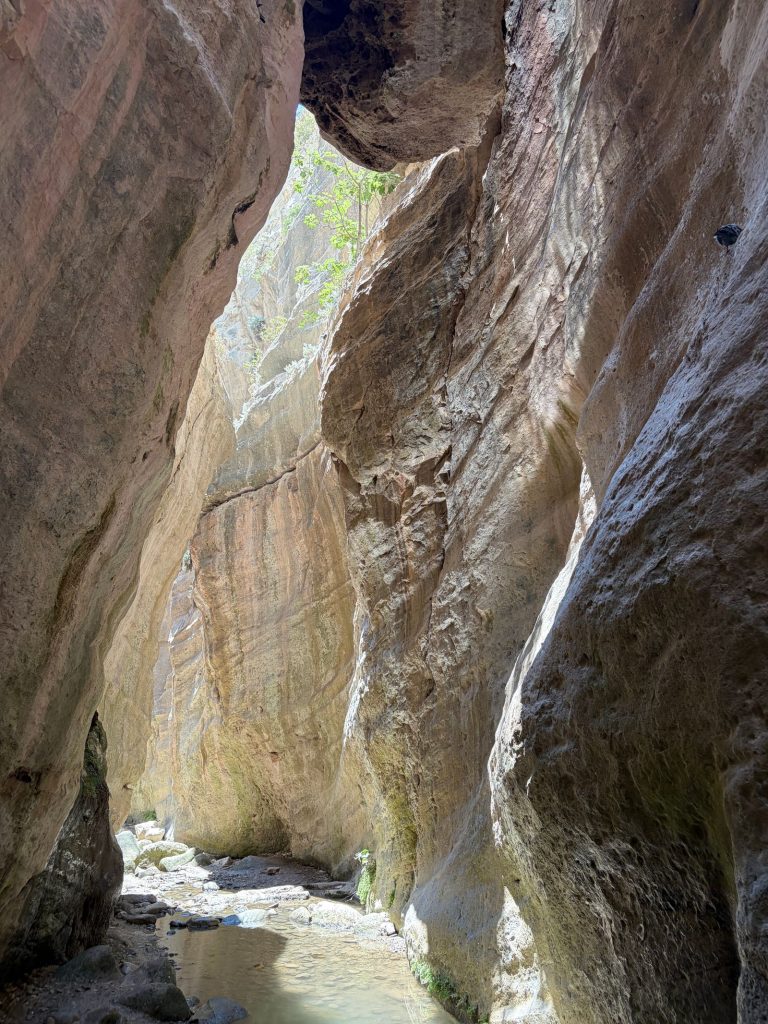
A limestone gorge narrowing to a few metres wide, walked along the streambed. Check conditions after rain.
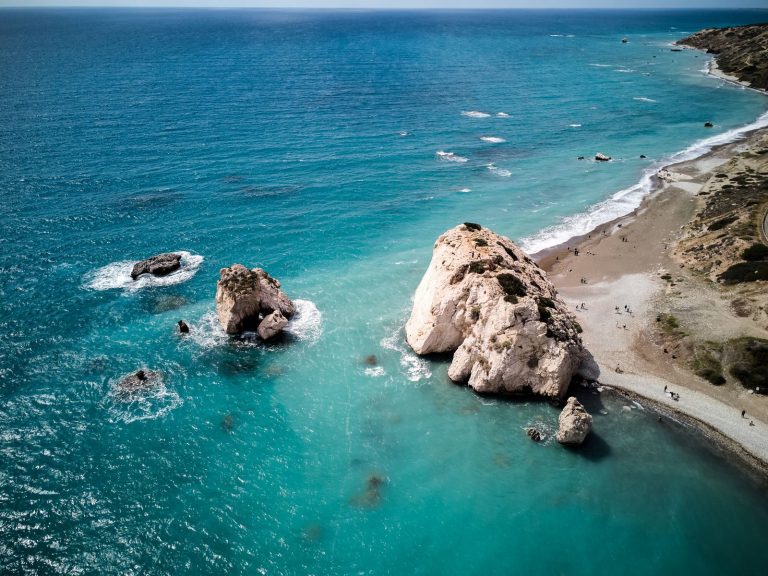
The sea stack where Aphrodite is said to have emerged, with a pebble beach below.
A quieter stretch of coast north, with a small town, a fishing harbour and boat trips to the Akamas.
Opera in front of a medieval castle, and turtles on the beach.
Opera staged in front of the medieval castle by the sea, and the best night of the Paphos year.
Green and loggerhead turtles nest on the protected beach in the Akamas, with hatching from August.
The festival of the flood, with water throwing, boat races and stalls along the seafront.
When the peninsula is green and covered in orchids and anemones.
A spring flower parade along the seafront.
A modest scene split between the harbour area and the upper town, with better value uphill. Live from Hostelworld.
April, May, October and November. The archaeology is punishing in high summer.
Average highs. Cyprus has the longest swimming season in the Mediterranean, from April into November, and the winter here is mild enough that the Akamas is at its best in February and March.
Pick how you travel. Per person per night, in euros.
A jeep tour of the Akamas at €40–70 is the main extra. The archaeological sites are unusually cheap at €2.50–4.50.
The ones we get asked most.

Compare Paphos hostels — live prices, real reviews and free cancellation on most bookings. Then meet the people already there in the app.

 Get the App.
 Get the App.