Town centre
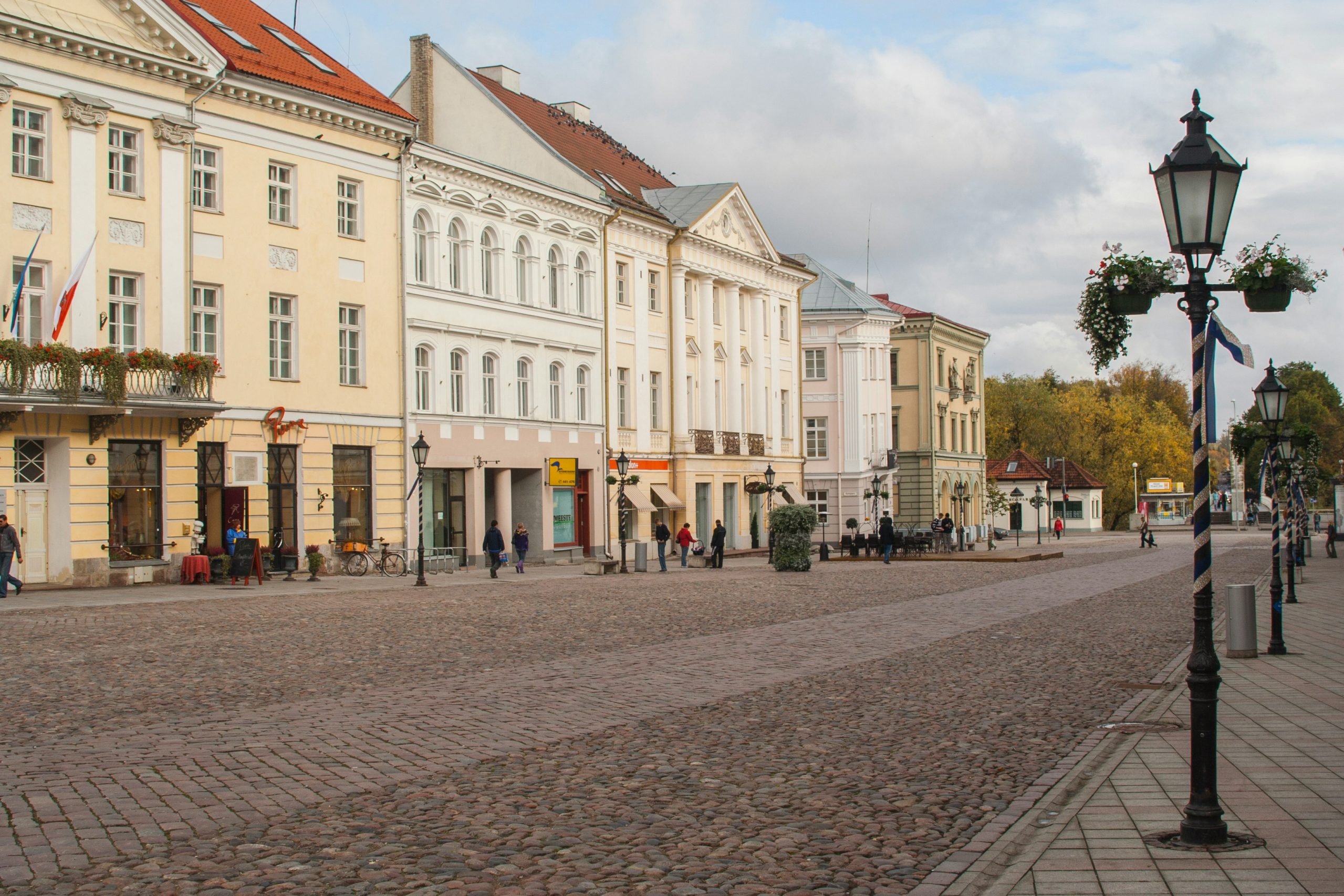
First-timersAround the town hall square and the river: the university, the bars and everything on foot.

Estonia's university city: a 400-year-old academic tradition, a hill of ruins and observatories, and a self-declared republic in one riverside district.
Estonians say Tallinn has the money and Tartu has the ideas, and Tartu is happy to repeat it. The university was founded in 1632 by the Swedes, and twenty thousand students in a city of ninety-five thousand set the tone completely.
The centre is small and neoclassical, built around a town hall square that slopes to the Emajõgi river, with the Kissing Students fountain in front of it.
Toomemägi, the cathedral hill above it, holds the ruins of a Gothic cathedral, two old observatories and a set of bridges, all in a park.
Supilinn — Soup Town, where the streets are named after vegetables — is a district of wooden houses that once declared itself an independent republic and still prints its own constitution.
It was European Capital of Culture in 2024. One or two days, and it pairs naturally with Tallinn.
A compact centre with the hill above it and two wooden-house districts either side.
Around the town hall square and the river: the university, the bars and everything on foot.
North-west along the river: unpaved lanes, timber cottages and the city's self-declared republic.
South: another wooden-house district, with cafés, studios and residents rather than visitors.
Orange labels are neighbourhoods, dots are the 1 top-rated hostels. Map © MapTiler © OpenStreetMap contributors.
Start on Toomemägi. The Gothic cathedral ruins at the top were left unfinished after the Reformation and part of them now houses the university museum; the hill also holds the old observatory, where the Struve Geodetic Arc — a nineteenth-century survey of the shape of the Earth, UNESCO-listed — was anchored.
The town hall square slopes down to the river with a leaning house at one end, the Barclay de Tolly building, tilted like a small Pisa.
The Estonian National Museum, in a building running off the end of a Soviet airfield runway, is the major museum here at about €14 and covers Estonian and wider Finno-Ugric life properly.
AHHAA is the country's science centre and unusually good for one, at about €18.
Walk Supilinn and Karlova for the wooden houses. Both are free and both are the real texture of the city.
Toomemägi is a public park and free: the cathedral ruins, the Angel's Bridge and Devil's Bridge, the observatory grounds and the views over the roofs.
The town hall square, the Kissing Students fountain and the leaning Barclay house cost nothing.
Supilinn and Karlova are free to walk, and the streets in Soup Town — Potato, Bean, Pea — are named the way the district's own residents insist on.
The riverbank along the Emajõgi is a long free walk, and the university's main building courtyard is open.
Tartu's street art is extensive and constantly renewed, with the largest concentration in Karlova and along the river.
Cheap, because students set the prices. A main is €10 to €16 and lunch specials in term time often run €6 to €8.
The Aparaaditehas, a former factory complex, holds restaurants, a bakery and small shops and is the best single place to eat.
The market hall by the river does produce and cheap counters, and Estonian food — black bread, smoked fish, sour cream on most things — is easy to find here without the medieval theming Tallinn puts on it.
A beer is €3.50 to €5, noticeably cheaper than the capital, and the local brewery has been running since 1826.
Coffee culture is strong and the cafés are where the city works.
Entirely student-driven, and lively out of proportion to the city's size during term.
The bars cluster around the town hall square and the streets behind it, and they are cheap — a beer €3.50 to €5, cocktails €7 to €10.
Student traditions here are formal and old: societies with colours and caps, initiation rituals, and a calendar of events outsiders mostly observe from the edge.
Aparaaditehas and a handful of venues near the river carry live music and club nights.
Out of term, particularly July and August, the city is noticeably quiet — which is pleasant if you want the hill and the wooden houses without company.
Walk. The centre is small and flat and everything listed here is within twenty-five minutes on foot, with Toomemägi the only climb.
City buses cost about €2, and a smartcard brings it down.
Buses from Tallinn take two and a half hours for €10 to €15 and run frequently, with wifi. Trains take about two hours and cost similar.
Riga is about four hours by bus.
Cycling works well — the city is flat and has good paths along the river, with hire at €10 to €15 a day.
Cheaper than Tallinn across the board. Dorms are €12 to €22, a main €10 to €16, and a beer €3.50 to €5.
A day is €30 to €55.
Toomemägi, the wooden-house districts and the riverbank are free. The two paid things worth doing are the Estonian National Museum at about €14 and AHHAA at about €18.
Term-time lunch specials at €6 to €8 are the cheapest good eating in the country.
Tartu is a very safe small city, and the risks are seasonal rather than criminal.
Winter brings ice on pavements and short days — about six hours of light in late December — and the riverbank paths are unlit in places.
The Emajõgi freezes, and people walk and skate on it. Ice thickness varies and the river has current; do not go out unless locals are already there in numbers.
Student nights at the weekend get boisterous around the town hall square but rarely more than that.
Ticks are present in the surrounding forests from spring to autumn, and tick-borne encephalitis exists in Estonia — check yourself after walks in long grass or woodland. Emergency number is 112.
A lake the size of a sea, a bog, and Estonia's southern hills.
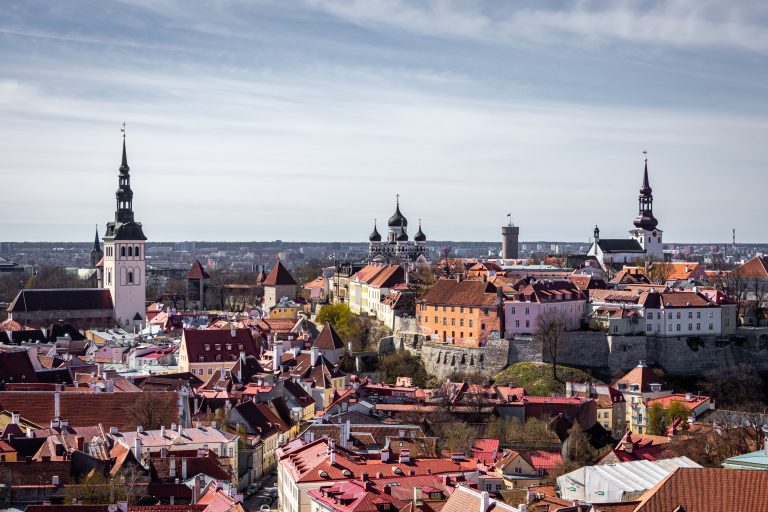
The capital, and easily done in either direction.
A student calendar of formal traditions, and a spring festival of student days.
A week of student festivities including boat races on the Emajõgi and events across the city.
A 63km cross-country race, one of the largest in Europe, drawing thousands of skiers.
Bonfires and all-night parties, with the city emptying to the countryside.
A medieval market and festival recalling the city's Hanseatic trading past.
When twenty thousand students are in and the city is at full strength.
A small scene at low prices, mostly in and around the centre. Live from Hostelworld.
September to May for the city at full strength. Summer is warm and empty.
Average highs. Tartu is inland and runs colder in winter and warmer in summer than coastal Tallinn — the difference is a few degrees either way but it is noticeable.
Pick how you travel. Per person per night, in euros.
One of the cheapest university cities in Europe. Toomemägi and the wooden-house districts cost nothing.
The ones we get asked most.

Compare Tartu hostels — live prices, real reviews and free cancellation on most bookings. Then meet the people already there in the app.

 Get the App.
 Get the App.