City centre
First-timersAround Mother Teresa Boulevard: the cafés, the monuments, the bars and most beds.

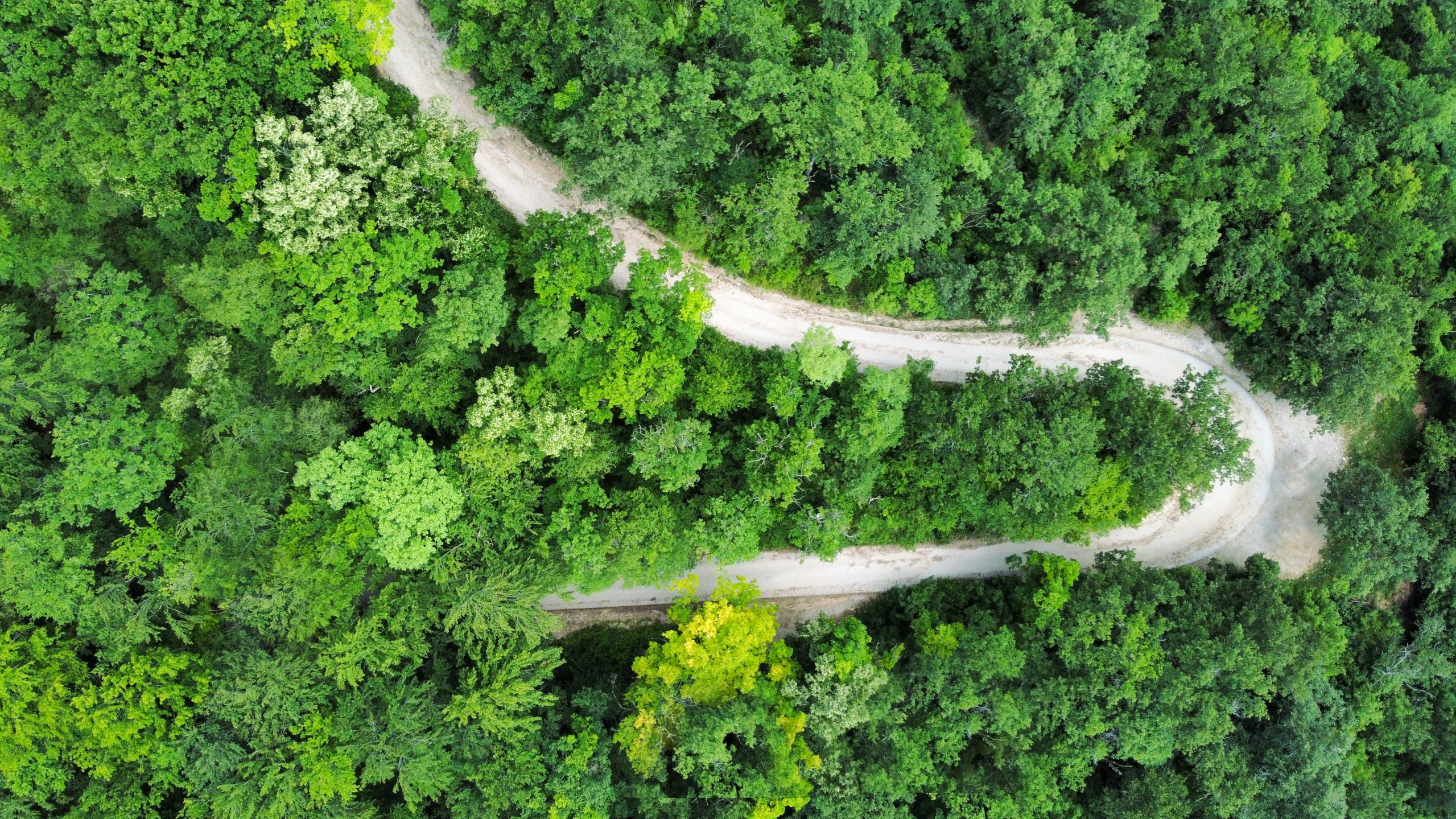
Europe's youngest capital in every sense: independent since 2008, a median age around thirty, brutalist architecture nobody else would defend, and coffee taken very seriously.
Kosovo declared independence in 2008 and Pristina has been building and arguing about itself ever since. It is not a beautiful city and it does not pretend to be. What it has is energy, an extremely young population and a café culture that would embarrass most of southern Europe.
The National Library is the building everyone photographs: a lattice of metal over ninety-nine domes, regularly voted one of the ugliest buildings in the world, and genuinely extraordinary in person. Opinion in the city is divided and everyone has one.
NEWBORN, the typographic monument unveiled on the day independence was declared, is repainted every year with a new design reflecting whatever the country is dealing with. It is the most direct piece of public commentary in any European capital.
The coffee is not incidental. A macchiato costs around a euro, cafés are full at every hour, and the social life of the city happens in them.
Two days. It pairs with Prizren, which is the prettier half of the country.
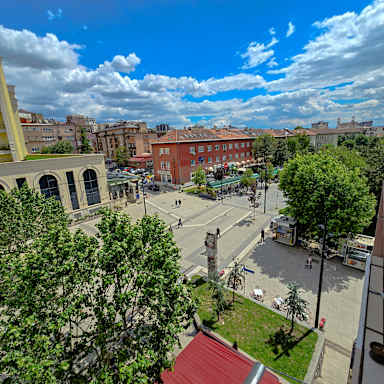
A compact centre you can cross on foot in twenty minutes.
Around Mother Teresa Boulevard: the cafés, the monuments, the bars and most beds.
West of the centre: a low-rise district of café terraces, small restaurants and residential streets.
North: the library, the student quarter and the cheapest rooms.
Orange labels are neighbourhoods, dots are the 10 top-rated hostels. Map © MapTiler © OpenStreetMap contributors.
The routes we would walk, in the order we would walk them.
Start with the architecture, because it is the story. The National Library, finished in 1982, wraps ninety-nine domes in a white metal lattice and is free to walk around. The Youth and Sports Palace and the Grand Hotel are the other Yugoslav-era set pieces, in varying states of repair.
NEWBORN is free, a short walk from the centre, and repainted annually — past designs have covered the flags of recognising states, barbed wire, and EU visa liberalisation.
The Heroinat memorial, made of twenty thousand pins forming a woman's face, commemorates the women raped during the 1998–99 war. It is quiet, well done and free.
The Kosovo Museum and the Ethnological Museum in an Ottoman compound cover the deeper history, both for a couple of euros.
Bear Sanctuary Prishtina, twenty minutes out, houses bears rescued from restaurant cages, and entry is about €2.50.
And drink coffee. It is not a filler activity here; it is what the city does.
NEWBORN, the Heroinat memorial and the Bill Clinton statue on the boulevard named after him are all free, and together they cover most of what the city wants to tell you about itself.
The National Library grounds and the university campus around it are free to walk.
Mother Teresa Boulevard is a long pedestrian street and the evening promenade — the xhiro, when the whole city walks up and down it — costs nothing and is the best hour of the day here.
Gracanica monastery, a UNESCO-listed Serbian Orthodox monastery from 1321, is fifteen minutes out and free to enter. It sits in a Serb-majority village and is a working monastery, so dress modestly.
Germia Park on the eastern edge is large, free and where the city walks at weekends.
Cheap and generous. A main is €4 to €9 and you will struggle to spend more without trying.
Flia is the national dish: thin layers of batter cooked in a pan under a lid over several hours, served with sour cream. It takes so long that it is usually a weekend or a special-occasion food.
Grilled meat is the everyday option — qebapa, pleskavica, and the Balkan repertoire generally, with bread and ajvar.
Burek from a bakery is €1 to €2 and is breakfast.
Coffee is the real institution. A macchiato is about €1, the standard is high, and cafés are full from morning to night — sitting for two hours over one cup is completely normal and nobody will hurry you.
A beer is €1.50 to €3, and Rahovec produces decent local wine.
Disproportionate to the city's size, because the population is so young. The median age is around thirty and the bars reflect that.
The centre and Pejton hold most of it, with bar terraces spilling onto the streets from early evening.
A beer is €1.50 to €3 and cocktails €4 to €7, which is among the cheapest in Europe.
Live music is common and the scene is genuinely good — Kosovo produces a lot of musicians relative to its size.
The evening starts with the xhiro, the promenade along Mother Teresa Boulevard, then moves to a terrace, then somewhere later. Things run to two or three.
Pristina is not a stag destination and does not feel like one, which is part of why it is pleasant.
The centre is small and walkable, and most of what you want is within twenty minutes on foot.
City buses cost around €0.50 and taxis within the city are €2 to €5 — use a metered one or an app rather than negotiating.
The airport is twenty minutes out and a taxi is €15 to €20. There is a bus but it is infrequent.
Buses connect the country cheaply: Prizren in about ninety minutes for €4, Peja in ninety minutes, Gjakova similar. The bus station is a short ride from the centre.
Internationally, Skopje is two hours, Tirana about five, and Belgrade is reachable but see the safety section first — the border situation with Serbia is the one genuine planning complication in Kosovo.
One of the cheapest capitals in Europe. Dorms are €8 to €18, a main €4 to €9, a coffee €1, and a beer €1.50 to €3.
A day is €20 to €40.
Kosovo uses the euro unilaterally — it adopted it without being in the eurozone or the EU — so prices are directly comparable and there is no exchange to worry about.
Cards are accepted in the centre but cash is useful, particularly for buses, small cafés and anything outside the capital. ATMs are widespread in Pristina.
Almost everything worth seeing is free, and the paid sites cost a euro or two, so the doing line here is close to nothing.
Pristina is a safe city with low crime and visitors are treated well — Kosovo is unusually welcoming to foreigners.
The complication is the Serbian border, and it is worth understanding before you book anything. Serbia does not recognise Kosovo's independence and treats its borders with Albania, North Macedonia and Montenegro as unrecognised crossings. If you enter Kosovo from one of those countries or by air and then try to cross directly into Serbia, Serbian officials have refused entry on the grounds that you entered the country irregularly. The usual advice is to enter Kosovo from Serbia and leave the same way, or to exit Kosovo to a third country and enter Serbia from there. Rules and practice have shifted over time — check your own foreign ministry's current guidance before routing a trip.
Northern Mitrovica, where the Serb-majority area sits across the river, has seen periodic tension and occasional unrest. It is usually calm and it is not somewhere to wander into during a flare-up.
Kosovo was cleared of most mines and unexploded ordnance after 1999, but some remote border and mountain areas remain flagged. Stay on marked paths when hiking.
Emergency number is 112.
A UNESCO monastery, an Ottoman town and mountains within two hours.
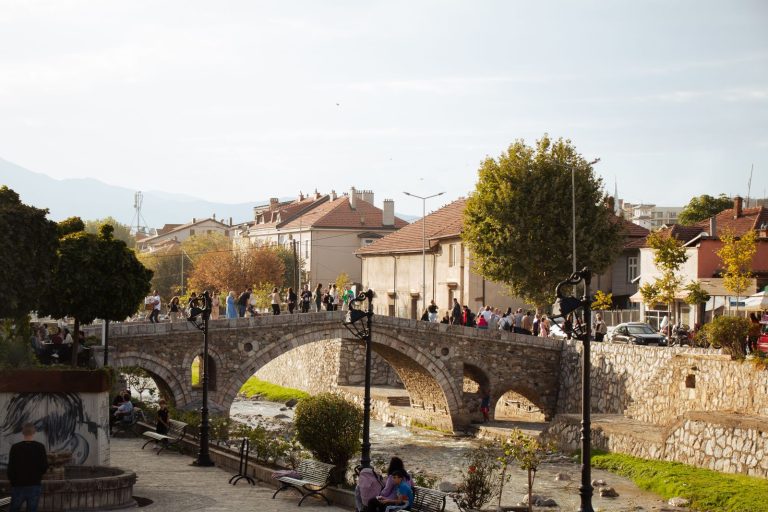
The prettiest town in Kosovo: Ottoman houses under a fortress, with a mosque, an Orthodox church and a Catholic cathedral on the same walk.
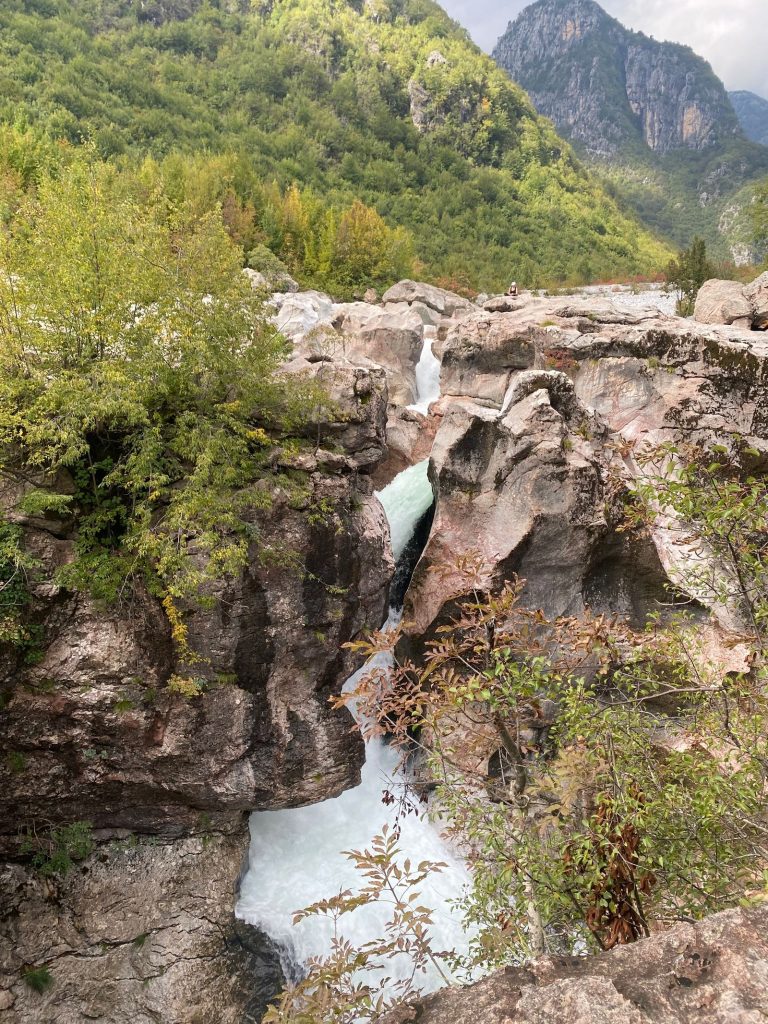
The Patriarchate of Pec monastery, UNESCO-listed, and the Rugova gorge with via ferrata and hiking behind it.
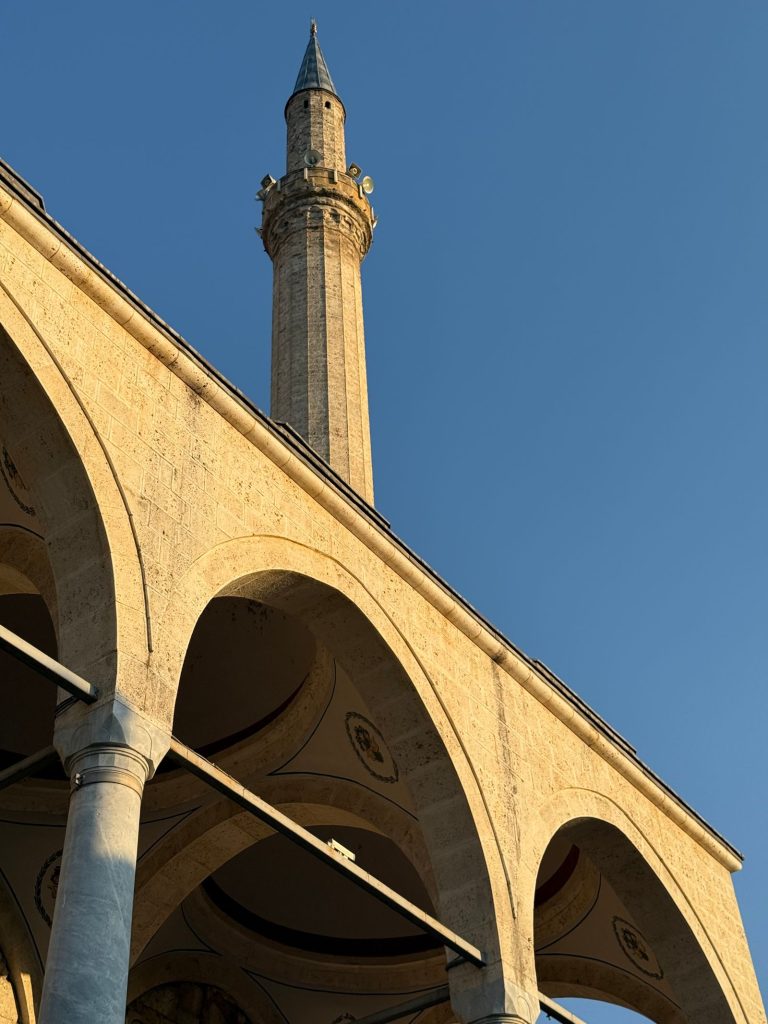
A restored Ottoman bazaar, one of the largest in the Balkans, rebuilt after being burned in 1999.
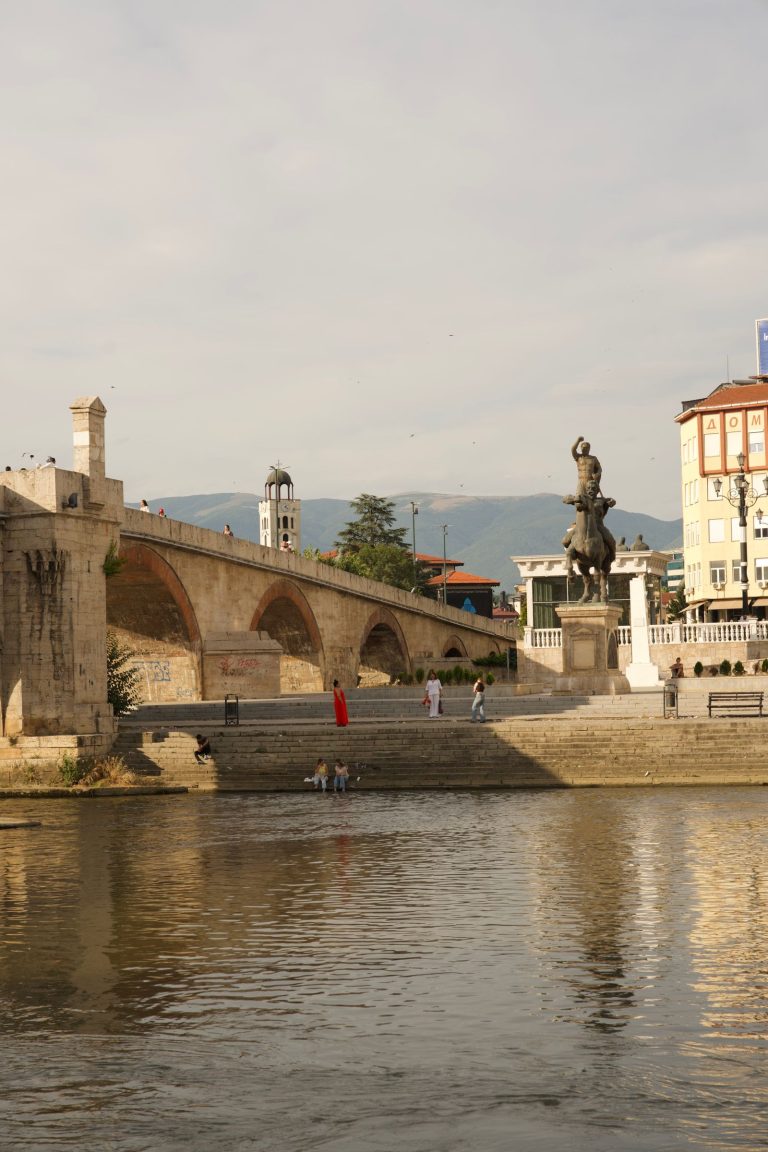
A capital of enormous and contested statuary, and an easy border crossing.
An independence anniversary in February and a film festival in Prizren in August.
The anniversary of the 2008 declaration, with NEWBORN repainted for the occasion each year.
A documentary and short film festival with open-air screenings including in the river and at the fortress. The biggest cultural event in the country.
A growing film festival with open-air screenings across the capital.
A large music festival founded by Dua Lipa, who has Kosovar Albanian heritage. Dates and lineup vary by year.
The nightly promenade, when the whole city walks the pedestrian boulevard.
A small scene in and around the centre, at some of the lowest prices in Europe. Live from Hostelworld.
April to June and September to October. Summer is hot and winter is cold and grey.
Average highs. Winter air quality in Pristina is genuinely poor — coal heating and a valley position combine badly between roughly November and February, which is worth knowing if you have respiratory problems.
Pick how you travel. Per person per night, in euros — which is what Kosovo uses.
Kosovo uses the euro directly, so these are the prices you will actually pay. Almost everything worth seeing here is free.
The ones we get asked most.
Compare Pristina hostels — live prices, real reviews and free cancellation on most bookings. Then meet the people already there in the app.

 Get the App.
 Get the App.