City centre
First-timersThe nineteenth-century grid around Rigas iela: shops, restaurants, Church Hill and most beds.

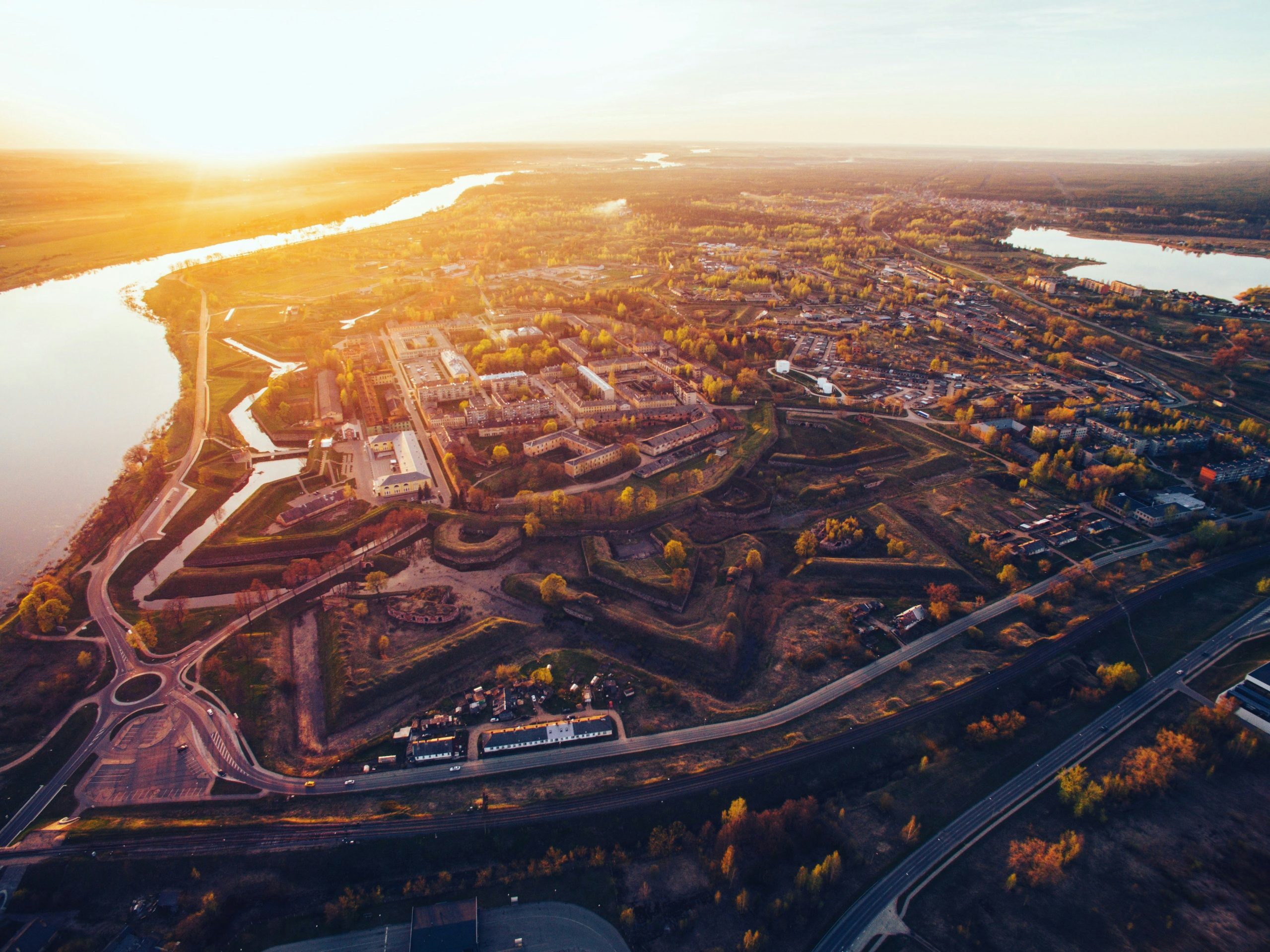
Latvia's second city, in the far east: an enormous tsarist fortress that people still live in, a Mark Rothko centre inside it, and four faiths on one hill.
Daugavpils is Latvia's second city, sits in the far south-east near both the Lithuanian and Belarusian borders, and has been Polish, Swedish, Russian, Soviet and Latvian at various points. It is majority Russian-speaking and feels distinctly different from Riga.
The fortress is the thing. Construction began in 1810 to hold back Napoleon, it was never seriously attacked, and it survives as one of the most complete early nineteenth-century fortresses in Europe — ramparts, moats, gates and a full grid of barracks and officers' housing inside. People live in it. It is a functioning residential district that happens to be a military fortification.
Inside its arsenal building is the Mark Rothko Art Centre. Rothko was born here in 1903 as Markus Rotkovics and left at ten; the centre holds a small group of original works, lent by his family, and is the only place in eastern Europe where you can see them.
Church Hill has Catholic, Lutheran, Orthodox and Old Believer churches within sight of each other, which says a good deal about the city.
One or two days.
A grid-planned centre with the fortress a short ride north-west.
The nineteenth-century grid around Rigas iela: shops, restaurants, Church Hill and most beds.
North-west: guesthouses in and around the fortress district, beside the Rothko Centre.
Map © MapTiler © OpenStreetMap contributors.
Walk the fortress. It is free, it is enormous, and it is inhabited — you walk through a working residential district laid out on a military grid, past barracks blocks that are now flats, along ramparts and over moats. The scale takes an hour or two to absorb and very few people are ever there.
The Mark Rothko Art Centre, about €10, sits inside the fortress arsenal. It holds original Rothko works on loan from his family alongside contemporary exhibitions, and it is the only place in eastern Europe showing his originals. It closes on Mondays.
Church Hill is a short walk from the centre and holds a Catholic basilica, a Lutheran church, an Orthodox cathedral and an Old Believer prayer house within a few hundred metres. All are free.
The Daugava riverbank and the embankment walk below the fortress are free and quiet.
Then look at the city itself — the centre is a coherent nineteenth-century brick grid, with art nouveau details scattered through it, largely unrestored and genuinely unvisited.
The fortress is free and open — ramparts, gates, moats and the whole residential grid inside.
Church Hill is free, with all four buildings open to visitors at ordinary hours and modest dress expected.
The Daugava embankment below the fortress is free and gives the best view of the walls from outside.
Rigas iela, the pedestrian main street, and the nineteenth-century brick centre around it cost nothing to walk.
The city's Soviet-era mosaics and murals survive in places and are free to find, which is the kind of thing Daugavpils does better than anywhere else in Latvia.
Cheaper than Riga, with a strong Russian and Belarusian influence reflecting who lives here.
A main is €6 to €12, and the market does considerably less.
Pelmeni, borscht, blini and pickled everything sit alongside Latvian rye bread and grey peas, which is the honest picture of eastern Latvia.
The central market is the best cheap eating and where the city shops.
A beer is €2.50 to €4, and local kvass — the fermented rye drink, mildly alcoholic at most — is sold from tanks in summer.
Menus are often in Latvian and Russian, with English less common than in Riga.
Limited. This is a city of about eighty thousand with a handful of bars, mostly along and around Rigas iela.
A beer is €2.50 to €4 and cocktails €5 to €8.
There is a university and term time brings a student crowd, but nobody travels here for the evening.
The Rothko Centre runs occasional events and concerts, and the city has a theatre, which is realistically the cultural programme.
If you want a night out in Latvia, it is in Riga, three hours west. Daugavpils is for the fortress and the daylight hours.
The centre is a walkable grid and Church Hill is ten minutes from it.
Trams cost around €0.70 and are the way to reach the fortress, which is a few kilometres north-west of the centre — a tram and a short walk, or a cheap taxi.
Trains from Riga take about three hours and cost around €10, several times a day. Buses are similar.
Daugavpils sits close to both the Lithuanian and Belarusian borders. Vilnius is about three hours by bus. The Belarusian border is nearby but crossing there is not a routine tourist matter — check current entry requirements and your own foreign ministry's advice before considering it.
Within Latvia, this is the far end of the country and journeys are longer than the map suggests.
The cheapest city in Latvia. Beds are €9 to €22, a main €6 to €12, and a beer €2.50 to €4.
A day is €25 to €45.
The fortress, Church Hill and the city centre are free, and the Rothko Centre at about €10 is the only real entry.
Carry some cash. Cards work in the centre but less reliably than in Riga, and the market and smaller places prefer cash.
Latvia uses the euro, so there is no exchange involved and prices are directly comparable with the rest of the country.
Daugavpils is a safe city and crime against visitors is low.
The fortress needs some judgement. It is a residential district rather than a museum — people live in the barracks blocks, hang washing and go about their day. Walk it as you would any neighbourhood, and photograph buildings rather than residents or their windows.
Parts of the fortification are unrestored, with crumbling brickwork, unfenced drops from the ramparts and overgrown moats. Stay on the obvious routes and keep off the walls.
Winter here is colder than Riga — this is inland eastern Latvia — with ice on pavements and short days.
The Belarusian border is close. Do not approach or attempt to cross it casually, and check current guidance before any plan involving it.
Emergency number is 112.
Lakes, a pottery region and two borders.
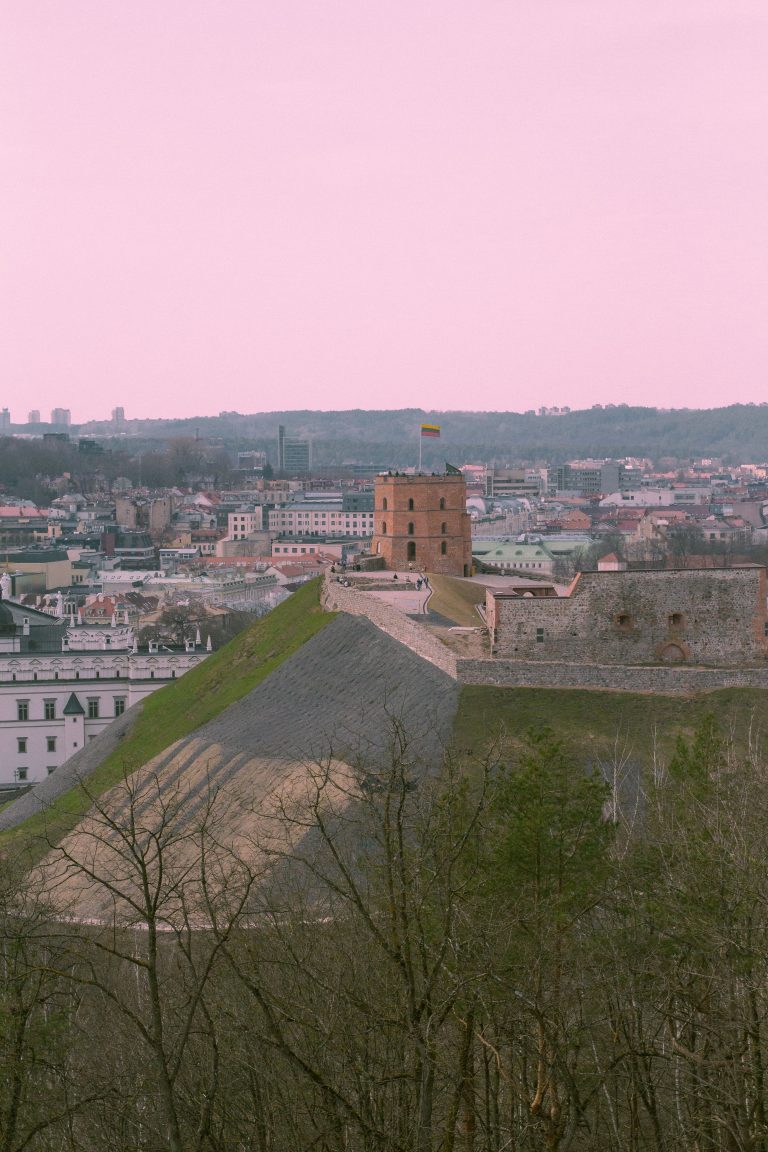
A different country, and closer from here than Riga is to some of Latvia.
A pilgrimage in August and a quiet city the rest of the year.
Latvia's main Catholic pilgrimage, drawing tens of thousands to the basilica for the Assumption.
Rotating contemporary shows alongside the permanent Rothko originals. Closed Mondays.
The city's own days, with music and events across the centre.
Bonfires and all-night celebrations, with the city emptying to the lakes.
When the eastern lake district is warm enough for swimming.
May to September. Winter is colder and darker than the coast.
Average highs. Daugavpils is inland and continental, so it runs several degrees colder than Riga in winter and warmer in summer — the fortress under snow is genuinely striking, if you are dressed for minus ten.
Pick how you travel. Per person per night, in euros — Latvia uses them.
Latvia is in the eurozone, so these are the prices you will pay. The shoestring doing line is zero because the fortress costs nothing.
The ones we get asked most.

Compare Daugavpils guesthouses and hostels — live prices, real reviews and free cancellation on most bookings. Then meet the people already there in the app.

 Get the App.
 Get the App.