
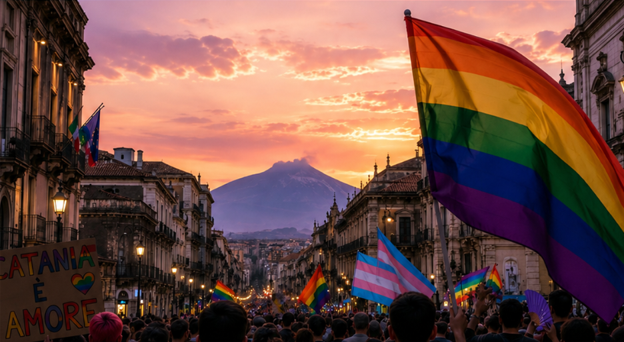

Catania, Italy. Home to Mt Etna, Baroque architecture, vibrant street food and a coastline many consider to be paradise on earth. But beyond the city’s historic landmarks and Mediterranean lifestyle lies another story, shaped by inclusivity, activism and urban memory.
It’s a story many travellers never encounter. One that rarely appears in traditional guidebooks, yet has helped shape the city and the people who call it home. Queer Catania was created to help bring that story to life through the places, people and experiences that form part of Catania’s LGBTQIA+ history, community and cultural life.
Welcome to Queer Catania.
Where it all began: opening the hostel to the community
From a simple belief: a hostel should be more than a place to sleep.
It can be a space where travellers and local communities meet, share experiences and discover a destination through the people who actually live there. With that in mind Ostello degli Elefanti opened its spaces to the community, creating genuine encounters between those travelling to Catania and those who call the city home.
Reflecting on the hostel’s journey, co-founder Marcello Ranno explains:
“A defining part of our journey: The relationship between the hostel’s international dimension and Catania’s local community gradually became one of the most important elements of Ostello degli Elefanti’s identity.”
Community events and partnerships
As the community grew, so did the ideas, initiatives and opportunities for people to get involved within the hostel.
Alongside local LGBTQIA+ associations, activists and community groups, Ostello degli Elefanti hosted events including AperiDrag, Bingo Pride and UltraLove Fest, exhibitions, public discussions, HIV awareness campaigns, and many other cultural and social events.
These initiatives brought together people of all ages, identities, backgrounds and life experiences, creating a natural conversation between the city, its residents and those visiting it.
And so Queer Catania was born.
“Not as a one-off Pride campaign or a single event, but as the latest project in a long-term journey developed by the hostel, together with Catania’s LGBTQIA+ community.”
Creating Queer Catania: from community experience to urban memory
The Queer Catania guide was the natural next step in the journey.
Rather than creating another guide to venues and events, the aim was to reveal a side of Catania that is rarely explored.
Drawing on the participation of the hostel team, their knowledge, shared stories and local experiences, the route connects places of memory, activism, community, and contemporary cultural life. It brings together the past and present to offer travellers a deeper understanding of the city and the people who shape it.
“A city is more than its monuments. Queer Catania honours places of memory, community, resistance, friendship and pride. It was created to help travellers discover a side of the city that is often overlooked, yet deeply connected to its history, culture and people.”
Project snapshot
Queer Catania is available as:
- An editorial PDF guide (Queer_Catania_Guide_Updated.pdf)
- An interactive mobile audio experience
Features include:
- Six self-guided stops
- Audio storytelling
- Community history
- LGBTQIA+ cultural heritage
- Mobile-friendly route
🗺️ Explore the guide:
Scan the QR code to visit the mobile guide and discover Queer Catania while walking through the city.

Youth travel & meaningful connections
When asked why Queer Catania has resonated so strongly with both travellers and local communities, particularly young travellers seeking more authentic and community-led travel experiences, Marcello pointed to something many travellers are looking for but don’t always find: a genuine connection with the place they visit.
“Young travellers today are not only looking for monuments, food and nightlife. Many of them want to understand the place they are visiting through the people who live there, through hidden stories, and through perspectives that are not always included in traditional guidebooks.”
For Marcello, Queer Catania offers young travellers a different way to experience the city. Rather than presenting Catania through its postcard moments alone, the guide encourages visitors to discover the people, places and stories that have shaped its identity.
As he explains, every city is more complex than its headline attractions. By sharing overlooked stories and perspectives, Queer Catania helps travellers understand the city in a more human way, while giving visibility to the histories and communities that are often left out of traditional tourism narratives.
“For us, this is meaningful travel: when a guest leaves Catania not only with beautiful photos, but with a deeper understanding of the city and the communities that make it alive.”
It is also a reminder that tourism can do more than showcase a destination – it can support local identity rather than flatten it, creating experiences that are meaningful for both travellers and the communities that call a place home.
A story that stays with you
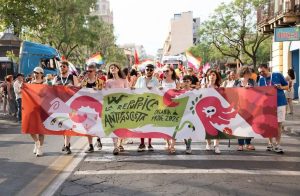
Of the many stories and memories created over the years, one moment stood out to Marcello when reflecting on the impact of Queer Catania.
“One moment that really stayed with me happened during Pride Week. We started talking about how much of Catania’s queer history is still unknown to most visitors. With help from members of the local LGBTQIA+ community, we started collecting stories and references connected to that history. What started as a simple conversation quickly became the idea for a self-guided experience.
He continued:
“After the Pride events, local volunteers also left some of their materials at the hostel. That may sound like a small detail, but for us it was very meaningful. It showed that the hostel had naturally become a trusted and welcoming support point for the community, not only a place where travellers sleep. That is when I felt the project really mattered. It was not just about creating content. It was about recognising the role a hostel can play in the life of a city.”
The impact: connected results, not isolated actions
🌍 Community
- Thousands of people engaged over the years
- Events consistently well attended, with the hostel’s spaces often at full capacity
- A place recognised as open, welcoming, safe and accessible 24 hours a day
🤝 Relationships
- New relationships between international travellers and the local community
- Long-term collaborations with associations, artists, performers and activists
💡 Opportunity
- Three local activists joining the team after first connecting through community initiatives
- Community relationships evolved into new projects, partnerships and professional opportunities
📖 Legacy
- A permanent guide dedicated to the city’s queer history and living community
- A free mobile tool allowing travellers to discover Catania through its history and communities
✨ Recognition
- Submitted Queer Hospitality in the heart of Catania to the WYSE Global Youth Travel Awards (Best Local Community Engagement)
- Publication and international exposure through Europe’s Famous Hostels
While not selected among the finalists, the experience reinforced the team’s belief that the project’s greatest value lies in the relationships, participation and opportunities created through years of collaboration with Catania’s LGBTQIA+ community.
From community to opportunity
One of the most meaningful outcomes of the project has not been the number of events or participants, but the relationships created along the way.
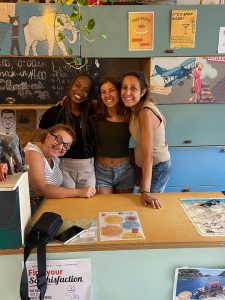
Today, Anna, Grazianna and Gigi, three local activists whom Ostello degli Elefanti first met through community initiatives hosted at the hostel, are part of the team.
Reflecting on the journey, Marcello explained:
“For me, this is one of the most important parts of the story. When people first connect with the hostel through community initiatives and later become part of the team, it shows that hospitality can create real opportunities. It means the hostel is not separated from the city around it. It is part of a living community.”
For Marcello, this journey represents the trust, collaboration and sense of belonging that grew through years of community engagement. It also demonstrates how inclusion can create real opportunities, helping people find a workplace where their identity, experience and community knowledge are recognised as strengths.
“This is what community-led hospitality means to us: creating a space where relationships can grow into projects, projects can grow into opportunities, and opportunities can create long-term impact.”
Creating inclusive spaces
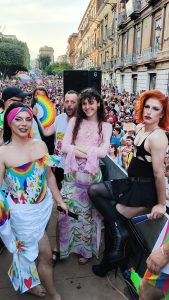
When asked what creating an inclusive environment looks like in practice, day to day, Marcello explained that it starts with everyday actions.
“It means welcoming guests, staff and volunteers as they are, without making them feel they have to explain or justify themselves. It means creating a space where people from different countries, cultures, backgrounds, identities and orientations can meet with respect.”
For Ostello degli Elefanti, inclusion is not a statement on a website. It is reflected in the atmosphere of the hostel, the events it hosts, and the relationships it has built with local organisations and communities.
During Pride Week, for example, the team supported colleagues involved in local Pride activities, created the Queer Catania guide, and offered the hostel as an informal support point for volunteers. But inclusion is not limited to specific events or moments during the year.
As Marcello explains:
“It is about making sure LGBTQ+ travellers, staff members and local people feel that they are not “special guests” for a campaign, but simply part of the life of the hostel.”
Over time, this approach helped transform the hostel into a trusted point of reference for many people in the local community.
Today Ostello degli Elefanti is recognised as an open, welcoming and safe place. Located in the heart of Catania’s historic centre and open 24 hours a day, it has become somewhere people can meet, seek support and experience the city while feeling welcome.
“We did not decide around a table to label ourselves a “safe space”. This meaning grew from the community’s presence, the continuity of the initiatives and the trust built through years of shared experiences.”
Pride, inclusion & sustainable tourism
Community, inclusion and representation are essential to creating a more sustainable tourism industry.
As Marcello explains:
“Sustainability is not only environmental. There is also social and cultural sustainability: protecting local memory, supporting communities, creating respectful encounters, and making sure that tourism benefits the people who live in the destination. Inclusive tourism helps travellers feel safe and welcome, but it also helps local communities feel seen and respected.”
For Ostello degli Elefanti, Queer Catania demonstrated how travel can connect travellers with local people, stories and culture, creating value for both visitors and the communities that shape a destination.
Advice for the travel industry
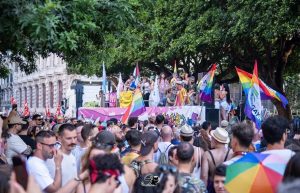
When asked what one thing hostels and the wider travel industry could do better when creating more inclusive travel experiences, Marcello’s advice was simple:
“Listen before communicating. Inclusion cannot only be a message or a logo during Pride Month. It has to come from real relationships (involvement, conversations) with the people and communities around you.”
“Travellers can immediately feel the difference between a campaign and something authentic. We have to stop seeing inclusion as an extra and start seeing it as part of good hospitality.”
A project still evolving
Queer Catania is not a finished project. The guide will continue to grow through new testimonies, photographs, historical materials and collaborations with associations, activists and members of the local community.
The aim is to keep it alive, accessible and rooted in the real city, ensuring that it never becomes a tourism product detached from the people who made it possible.
If you’re visiting Catania, here are a few of Marcello’s local recommendations:
📍 Explore beyond the landmarks
Spend time in Catania’s historic centre, especially places like the Alessi Steps on Via Crociferi, Villa Pacini and other locations connected to the city’s queer history and community memory.
🏳️🌈 Connect with the local community
Learn more about Catania Pride and local LGBTQ+ organisations such as Open Catania and Arcigay Catania. Marcello also recommends following local event projects such as Karma and Fallo è Bello to discover what is happening during your stay.
💬 Travel with curiosity & respect
Catania is a city with strong traditions, diverse communities and contrasting perspectives. One of the best ways to experience it authentically is to listen to local people, support independent businesses and engage with community-led initiatives.
Sometimes the most important travel experience begins with a simple conversation.

 Get the App.
Comments