

Switzerland has a reputation for draining wallets, and that’s fair: a coffee can cost what a meal does elsewhere. But here’s the good news for hikers. The best hikes in Switzerland cost nothing to walk. The trails are free, beautifully signposted and reachable by public transport. What eats your budget is everything around them: the cable cars, the trains and the mountain-hut lunches.
This guide gives you six classic day hikes, from turquoise lakes to a guesthouse built into a cliff. For each one you’ll get the season, the official distance and time, and what the lifts cost in 2026. You’ll also get the one famous ridge most people should skip, and the passes that halve your transport bill.
Base yourself in a hostel in the mountains and you’ll be at the trailhead before the day-trippers arrive. Our Switzerland travel guides cover the rest of the country, and these mountain hostels with views show what a room with an Alpine view can look like.
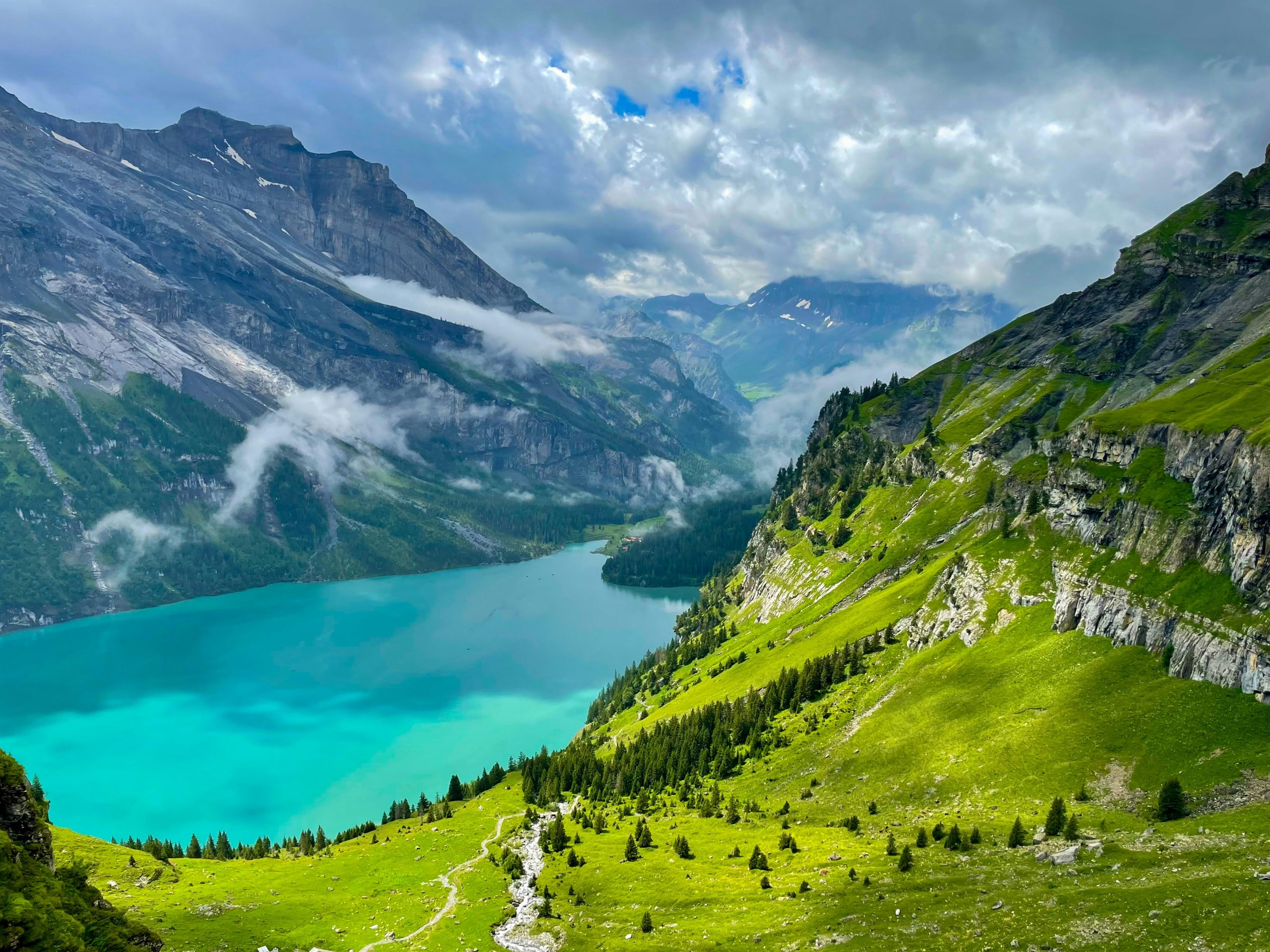
When is the best time to hike in Switzerland?
Summer. The high trails are generally snow-free from about June to September, and that’s when most mountain lifts run their full timetables. Switzerland Tourism lists the Five Lakes Walk in Zermatt as a June to September hike, which is a good rule of thumb for anything above the treeline.
Lifts set the real calendar. The Grindelwald-First gondola’s 2026 summer season ran from 1 May to 25 October, according to MySwissAlps, but higher trails can hold snow well into June.
Late May and October bring fewer crowds and cheaper beds, though some lifts close for maintenance between seasons. Coming in the colder months instead? Swap the boots for one of these cheap winter sun destinations.
Quick tip: check the lift operator’s timetable for your exact dates before you book. A closed gondola can add hours of climbing to your day.
How do you read Swiss trail signs?
Swiss paths are colour-coded by difficulty, so the signpost tells you whether a trail suits you before you take a step. Swiss Family Fun’s hiking guide breaks it down like this:
- Yellow: hiking trails. Mostly wide, well kept and easy to moderate (graded T1). Fine in trainers on a dry day.
- White-red-white: mountain trails. Steeper and narrower, sometimes exposed, so you need to be sure-footed and wear proper boots (T2 to T3). Most of the classic day hikes in this guide use them.
- White-blue-white: alpine routes over scree, snow or glacier. Not for casual hikers; leave these to people with alpine experience and the right gear.
Before you set off, check your route on the free SwitzerlandMobility app or website, which shows the official routes by colour. New to mountain hiking? Warm up on the gentler options in our day trips from Geneva.
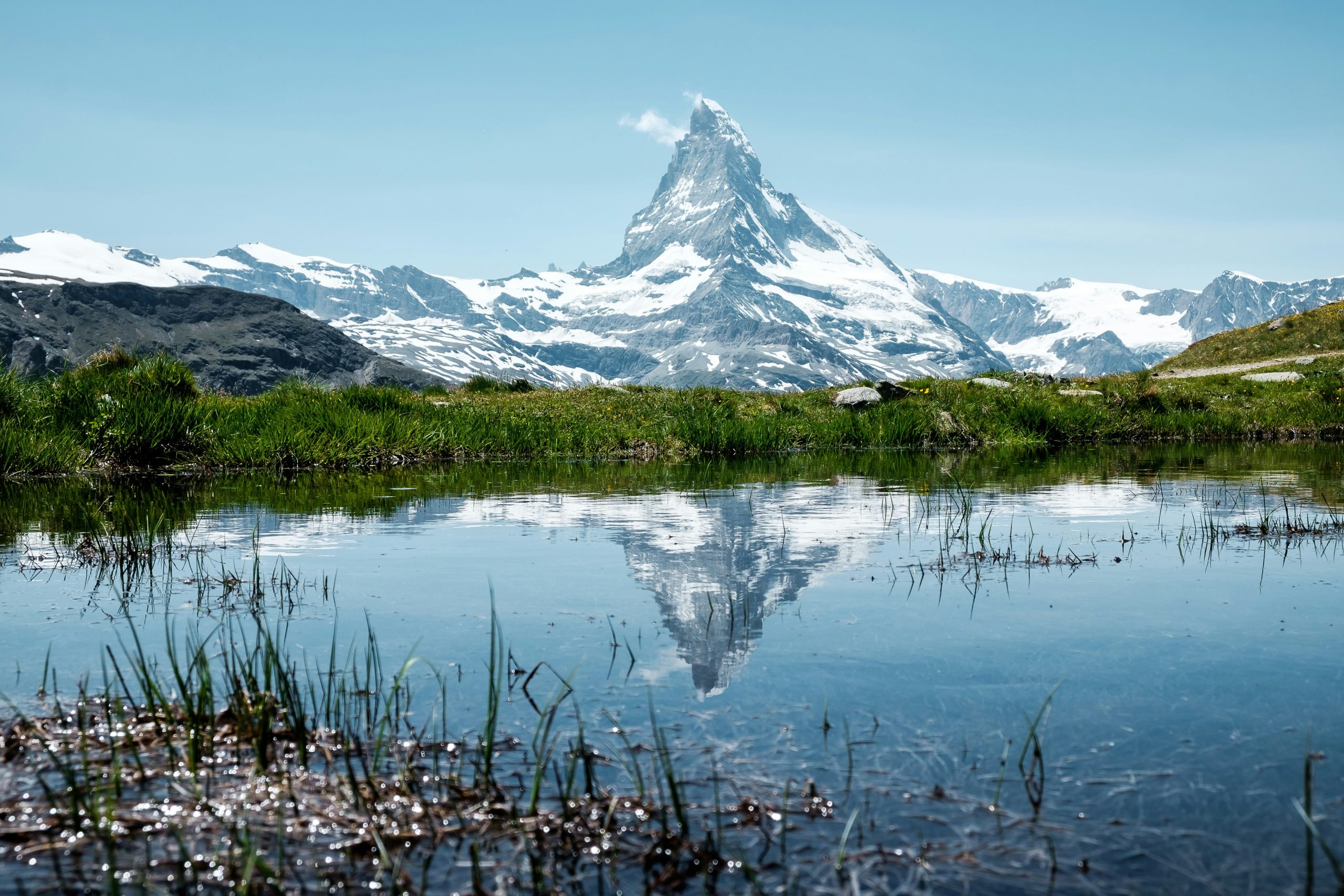
Five Lakes Walk, Zermatt: Matterhorn reflections
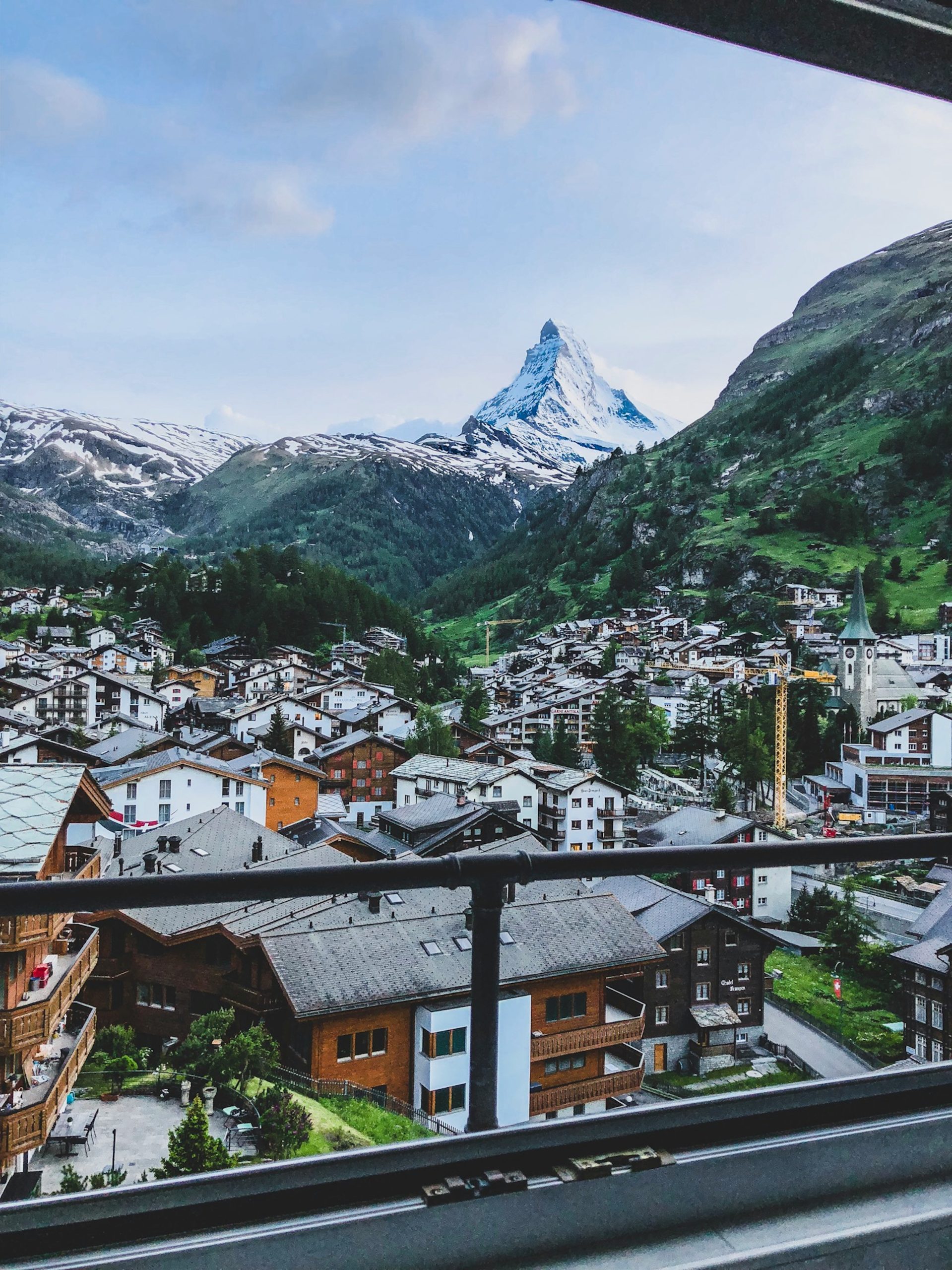
If you only do one hike in Switzerland, make it this one. The Five Lakes Walk (5-Seenweg) links Stellisee, Grindjisee, Grünsee, Moosjisee and Leisee, and on a still morning the Matterhorn appears upside down in several of them.
Switzerland Tourism lists it at about 11 km from Blauherd to Sunnegga, around 3 hours 15 minutes, with 380 m of climbing and 660 m of descent, rated medium. That’s a white-red-white mountain trail, but a gentle one: mostly downhill, with no exposed sections.
To start, take the Sunnegga funicular up from Zermatt, then the gondola to Blauherd. Check lift times and fares on the operator’s site for your dates. Go early: before the wind picks up, the water is still and the reflections are at their sharpest. Pack a picnic, since mountain restaurants add up fast.
Zermatt has only one hostel on Hostelworld (checked October 2026), so book well ahead for summer. Our Zermatt travel guide covers the rest of the village.
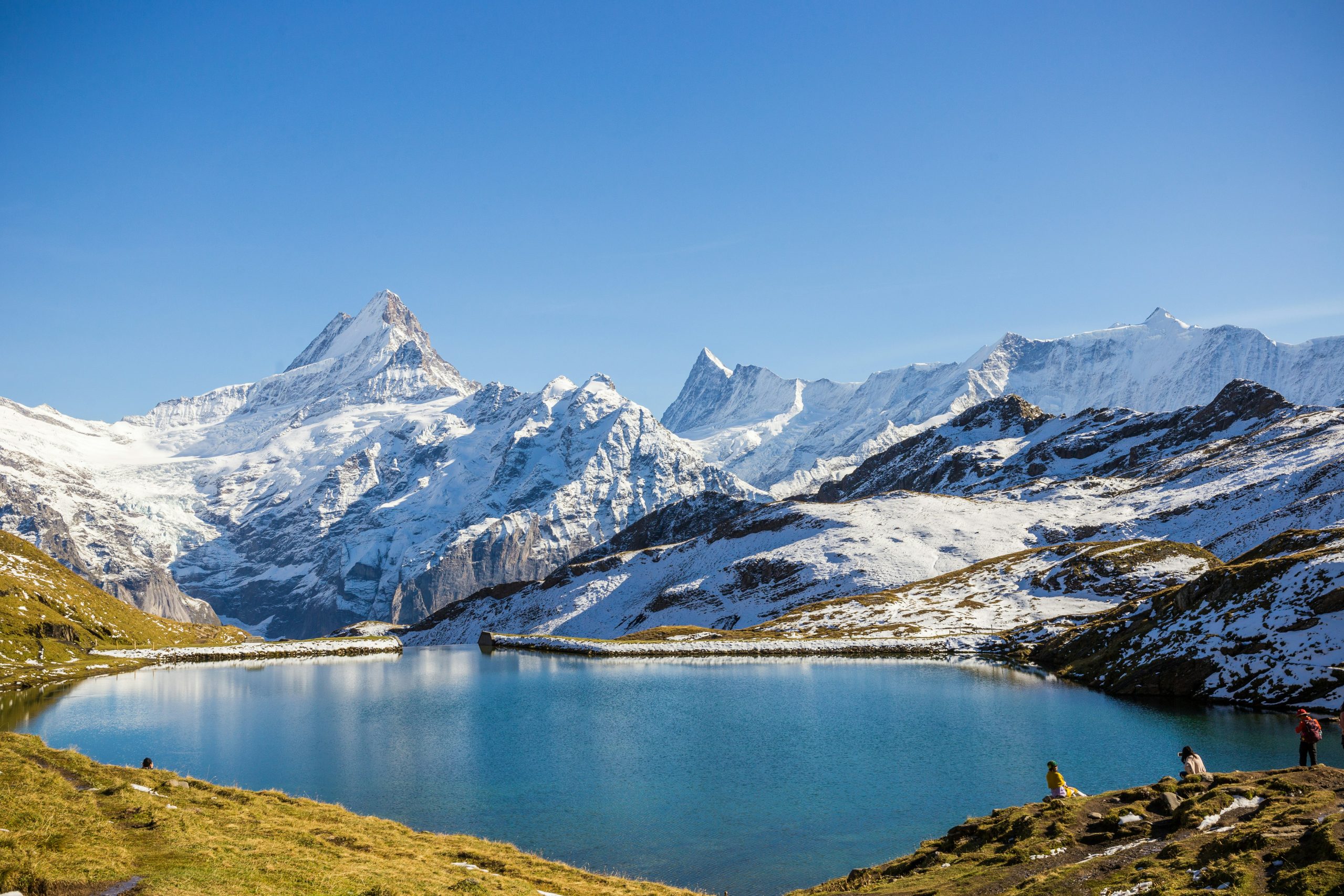
Bachalpsee from Grindelwald First: the easy classic
If you’re new to mountain hiking, start here. From Grindelwald, the First gondola climbs above the village in about 25 minutes, and from the top station a wide, well-marked path leads to Bachalpsee, a lake that mirrors the Schreckhorn and Wetterhorn on a calm day.
Interlaken Tourism lists the round trip from First at about 5.9 km and 1 hour 48 minutes, with 188 m of climbing. Allow longer for photo stops.
This is also the clearest example of how a pass halves your costs. The 2026 First gondola return was CHF 76 at full fare, or CHF 38 with a Swiss Travel Pass or Half Fare Card, according to MySwissAlps. That’s roughly €81 or €41 at October 2026 rates. Save more by walking down the last stretch instead of riding.
Grindelwald is an easy train ride from Interlaken; our Interlaken city guide covers the base most backpackers use.
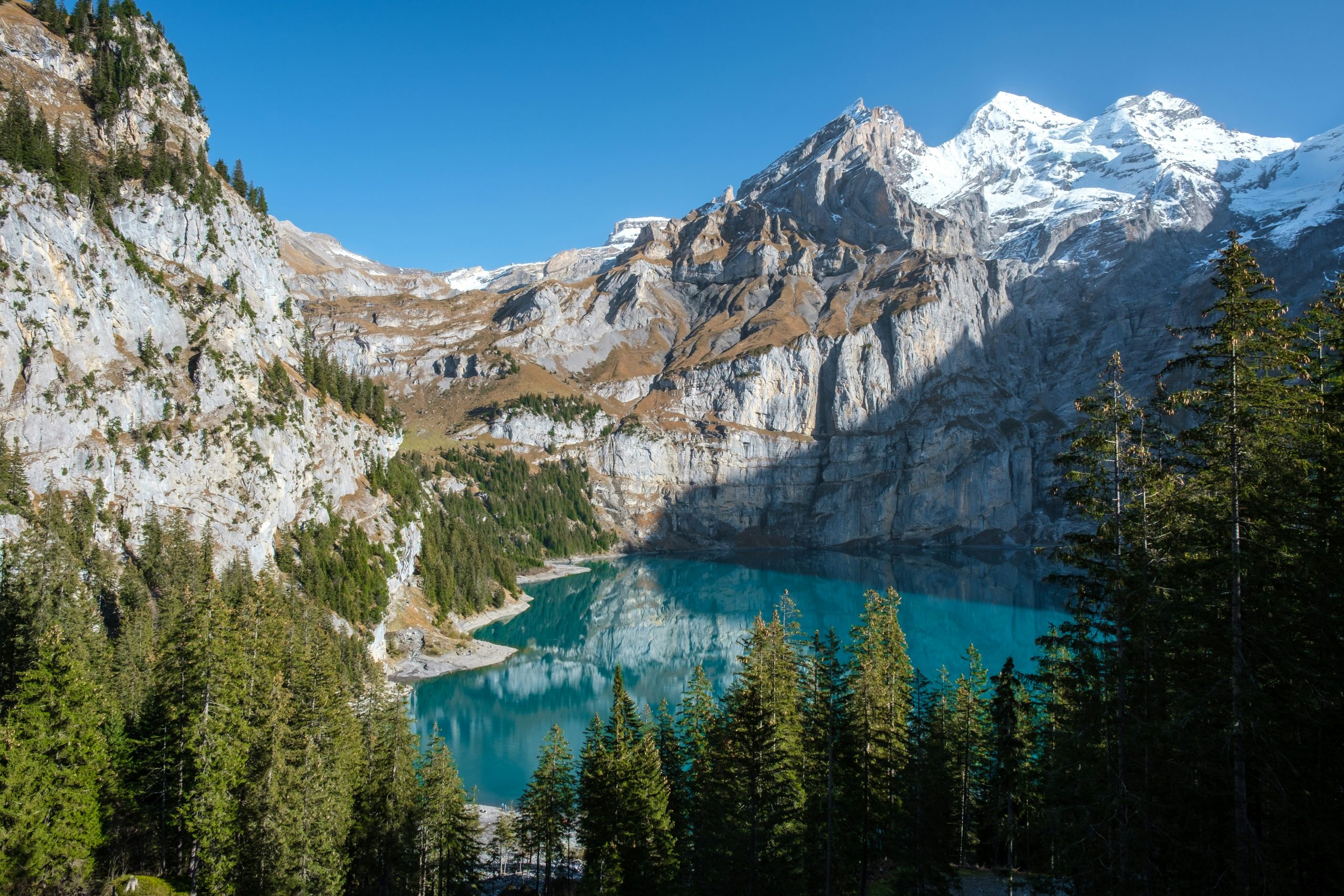
Oeschinensee, Kandersteg: is the lake worth the day trip?
Yes. Oeschinensee is the turquoise lake from half the Swiss photos you’ve seen, ringed by cliffs and waterfalls above the village of Kandersteg. There’s an easy walk to the shore from the top of the gondola, and a longer, steeper loop above the lake if you want the classic view from above.
The cost: in 2025, an adult return on the Kandersteg gondola was CHF 36 or 40 depending on the date (about €39 to €43 at October 2026 rates), with the highest prices from mid-June to mid-August, according to Swiss Family Fun. Summer 2026 prices hadn’t been confirmed when we checked, so look on the operator’s site before you go. To save money, ride up and walk down, which takes you back to the village on foot instead of paying for the return.
Where to stay: Kandersteg has no hostels on Hostelworld (checked October 2026), so do it as a day trip by train from Interlaken. Planning more mountain day trips? Our day trips from Zurich has more lakes and peaks.
Lauterbrunnen valley: the free, flat option
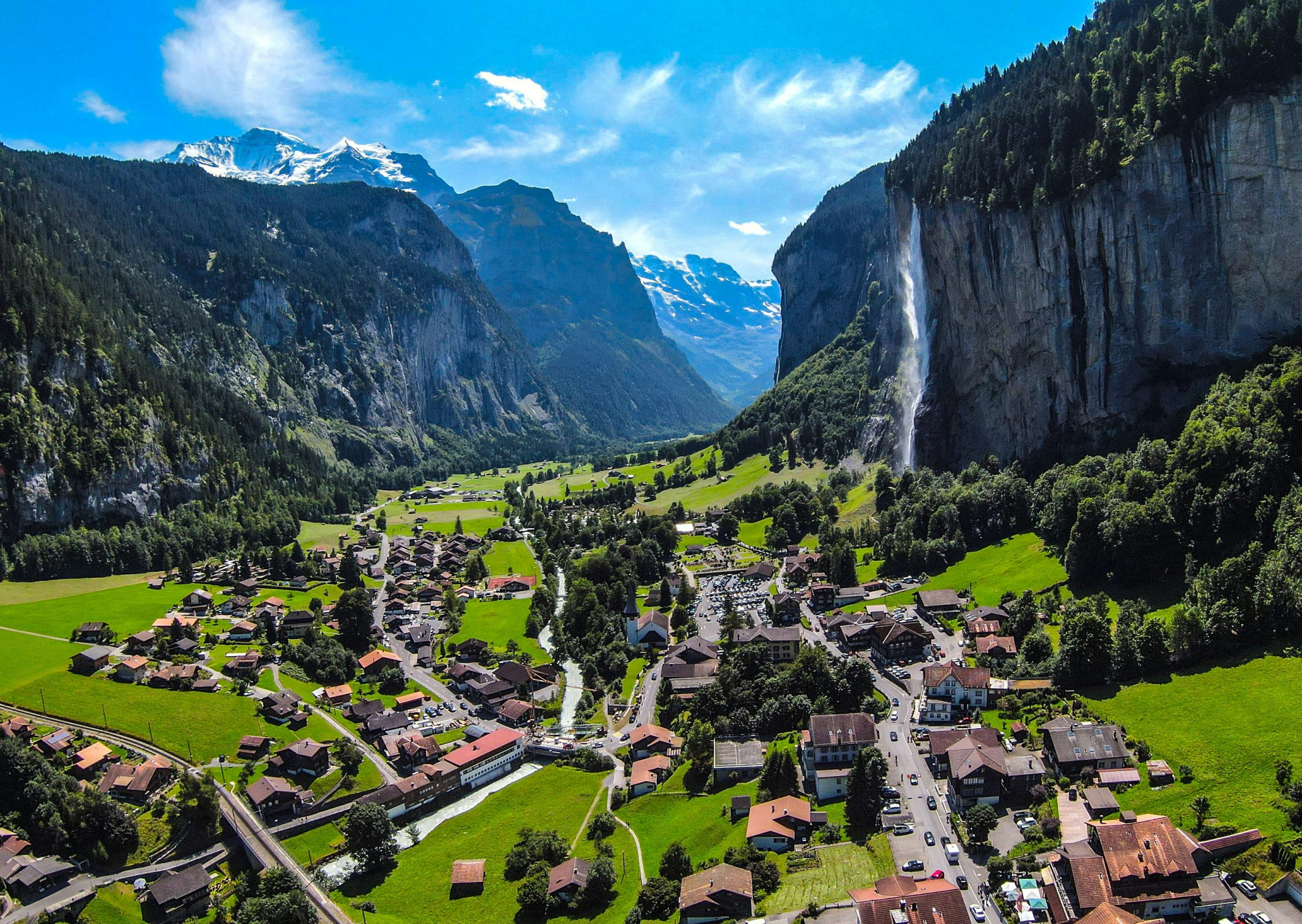
Not every great Swiss hike needs a cable car. The valley-floor walk from Lauterbrunnen village to Stechelberg runs about 7 to 8 km, roughly two hours, with barely any climbing, according to Switzerlanding. You pass Staubbach Falls right by the village, then follow the river beneath sheer cliffs streaked with waterfalls. It costs nothing, and a postbus brings you back from Stechelberg if your legs are done.
It’s the perfect cloudy-day plan. When mist hides the views from the top, the waterfalls are at their most dramatic down here. Halfway along, Trümmelbach Falls thunders through the inside of the mountain; it charges an entry fee, so check current prices before you go.
Lauterbrunnen also makes a quieter base than Interlaken, with trains up to Wengen and Mürren. Our Lauterbrunnen travel guide has more.
Aescher and Seealpsee: the cliffside hut hike
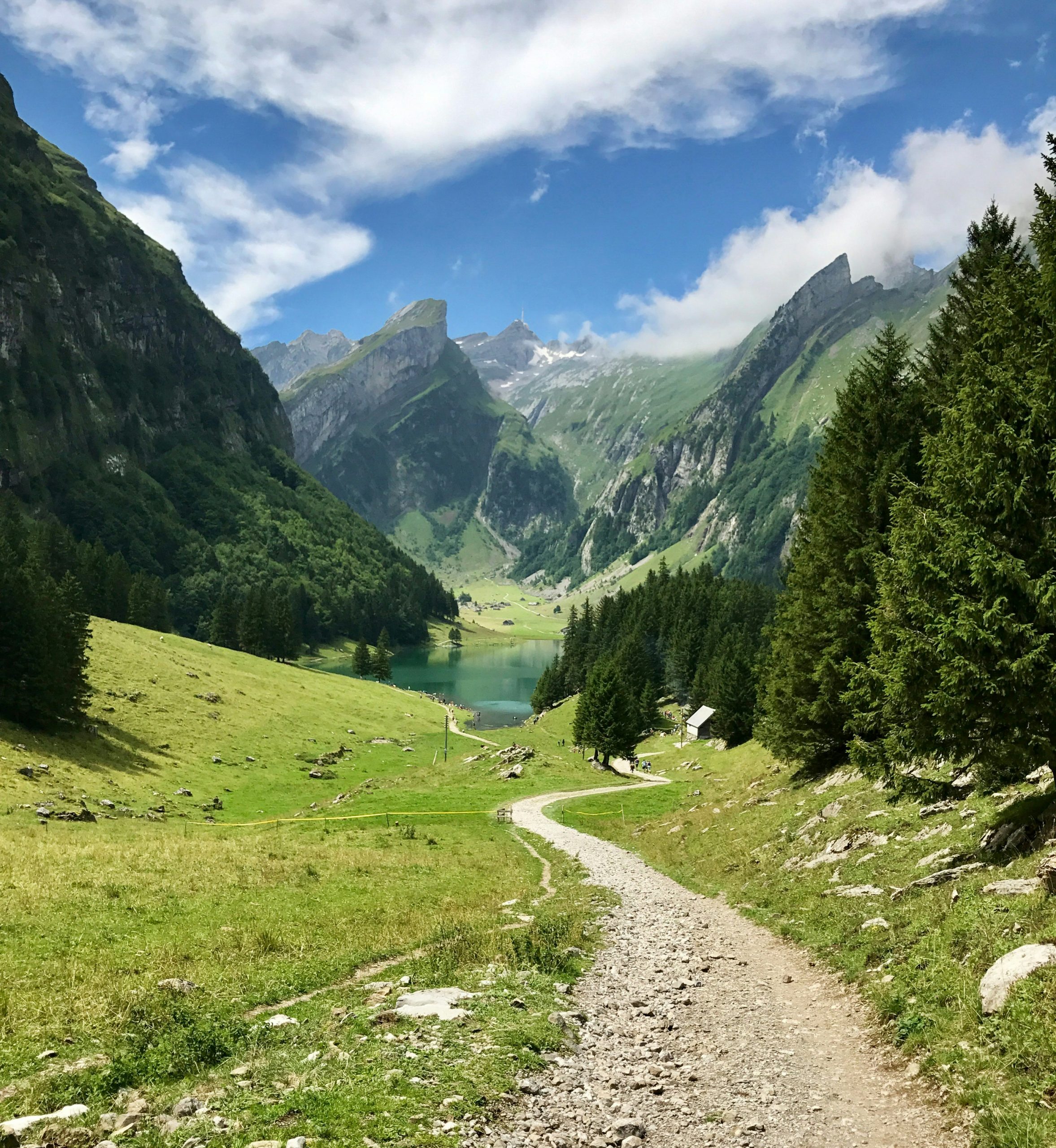
You’ve probably seen it on Instagram: a wooden guesthouse tucked under an overhanging cliff in the Alpstein mountains of Appenzell. Getting there on foot is a proper workout. Switzerland Tourism lists the route from Wasserauen up to the Ebenalp top station at about 7 km and 3 hours 11 minutes, with 859 m of climbing, passing the Seealpsee lake on the way.
The lake is the easy part. The climb from Seealpsee up to Aescher is the steepest stretch, according to The Photo Hikes, so take it slowly and wear proper boots. It’s a white-red-white mountain trail.
Save your knees: walk up and ride the Ebenalp cable car back down to Wasserauen. There are no hostels nearby, so most backpackers do it as a long day trip by train from Zurich or Lucerne. The walking itself costs nothing, like many of these free things to do in Europe.
Which famous Swiss hike should you skip?
The Hardergrat. This knife-edge ridge above Interlaken looks incredible in photos, but it’s graded T5, near the top of the Swiss difficulty scale, and takes around 11 hours end to end, according to Switzerlanding. Much of it is steep, exposed grass with long drops on both sides and few ways off.
Falls there have been fatal. In August 2025, a 23-year-old woman died after falling about 70 m on the ridge, blue News reported.
Unless you’re an experienced alpine hiker with the right gear and a clear forecast, skip it. For the same views over Lake Thun and Lake Brienz, ride the funicular up to Harder Kulm from Interlaken instead, and save your legs for the trails earlier in this guide.
How do you save money on hiking in Switzerland?
The trails are free; it’s the lifts and trains that hurt. Four ways to cut the bill:
- Get the Swiss Half Fare Card if you’re riding a few lifts. It went up to CHF 150 (about €161) on 1 January 2026, the Switzerland Travel Centre says, and halves most train, bus and many lift fares for a month.
- Compare the Swiss Travel Pass for train-heavy trips. In 2026 it starts at CHF 254 (about €272) for three consecutive days in second class, or CHF 179 (about €192) if you’re under 25, per this 2026 pass comparison. Check sbb.ch before you buy.
- Hike one way, ride the other. A single lift ticket costs far less than a return.
- Picnic. Stock up at Coop or Migros and refill your bottle at village fountains.
For more ways to stretch your money, see our cheap travel deals guide. Euro prices use October 2026 rates.
| Half Fare Card (1 month) | 150 CHF |
| Travel Pass 3 days, 2nd class | 254 CHF |
| Travel Pass 3 days, youth | 179 CHF |
Source: Switzerland Travel Centre; Chara Across the World (checked October 2026)
Where should you stay for hiking in Switzerland?
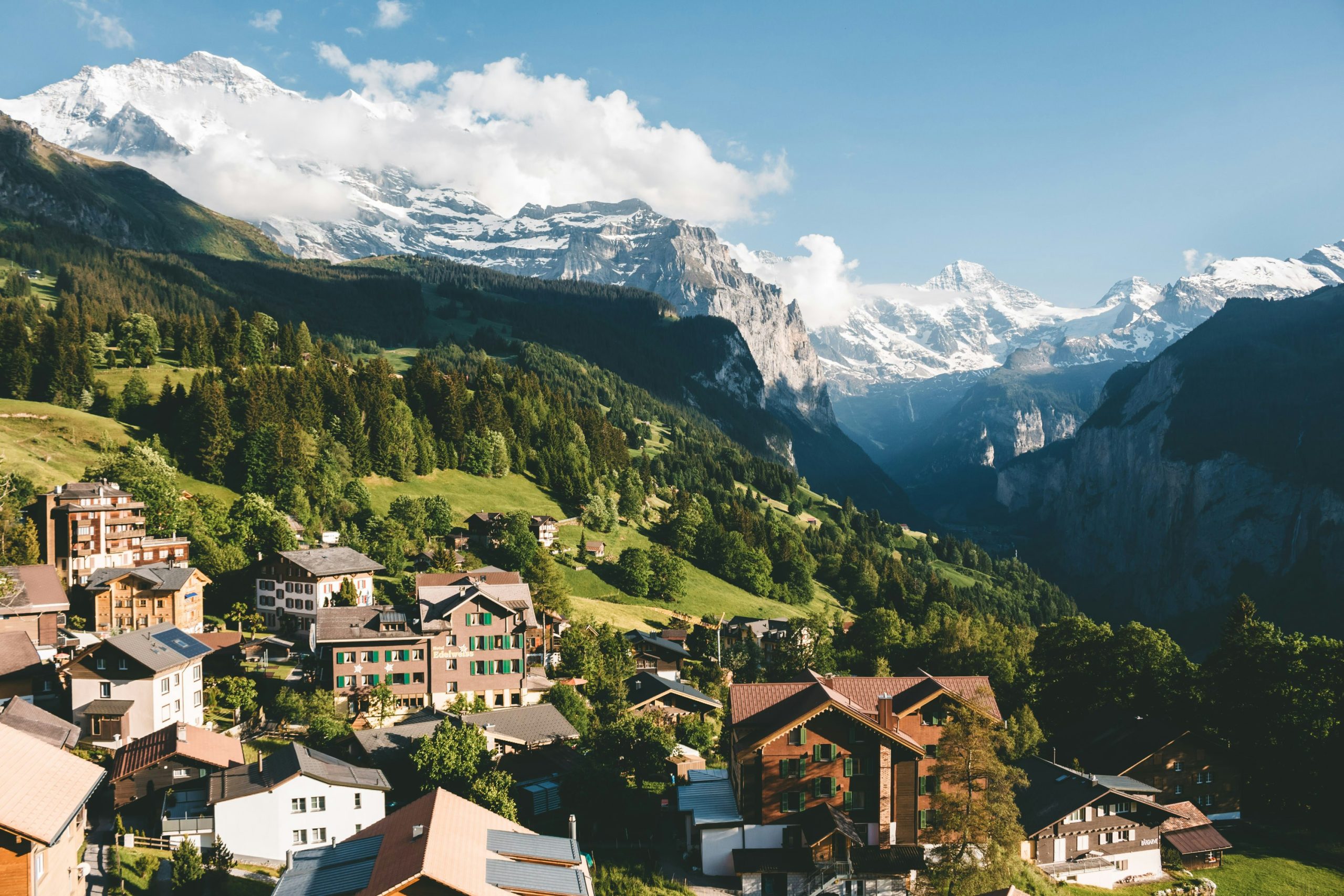
Interlaken is the cheapest and most social base for the Jungfrau region, with trains to Grindelwald, Lauterbrunnen and the Bachalpsee trailhead, and the biggest choice of beds.
Grindelwald and Lauterbrunnen put you closer to the trails and away from the crowds, but have fewer hostels, so book early for summer. Zermatt has just one hostel on Hostelworld (checked October 2026), so lock it in first if the Five Lakes Walk is on your list.
Lucerne works for Rigi and Pilatus, and it’s the handiest link to Appenzell for the Aescher hike. Fancy something a step up from a dorm? Our pick of Europe’s boutique hostels has more ideas.
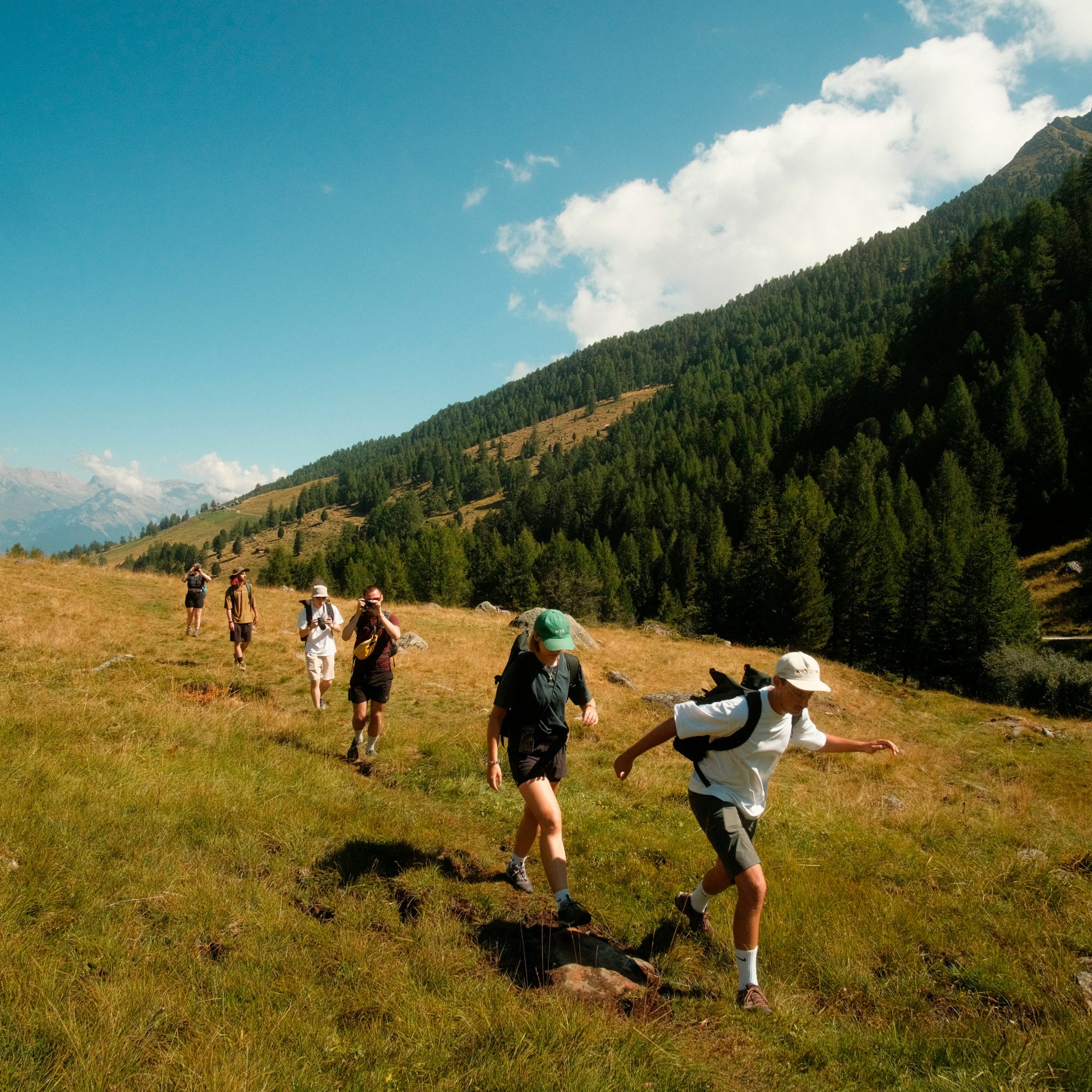
How do you find people to hike with?
Hiking solo in the Alps is fine on busy, waymarked trails, but it’s more fun (and safer) with company. The Hostelworld app makes that easy:
- City Chats: City Chats connect you with travellers at any hostel in town, so you can ask who’s heading up to First or Oeschinensee tomorrow.
- Linkups: hostels and travellers set up Linkups such as group hikes and sunrise walks, and you can join them from 14 days before check-in.
- Social Pass: not booked yet? Social Pass opens the chats anyway.
For bigger things on in town, like festivals and markets, check the Events pages.
Conclusion: Which Swiss hike should you do first?
The best hikes in Switzerland don’t cost a franc to walk. If it’s your first time in the Alps, start with Bachalpsee from Grindelwald First. If you want the big postcard view, save a clear morning for the Five Lakes Walk under the Matterhorn. And when the clouds roll in, the flat Lauterbrunnen valley walk is free and at its best in the mist.
Book a hostel base early, work out whether a Half Fare Card or Swiss Travel Pass pays off before you buy your first lift ticket, then go early and walk one way.

 Get the App.
Comments