Baščaršija
First-timersThe Ottoman bazaar: copper workshops, ćevapi grills, mosques and most of the hostels. The heart of the city.

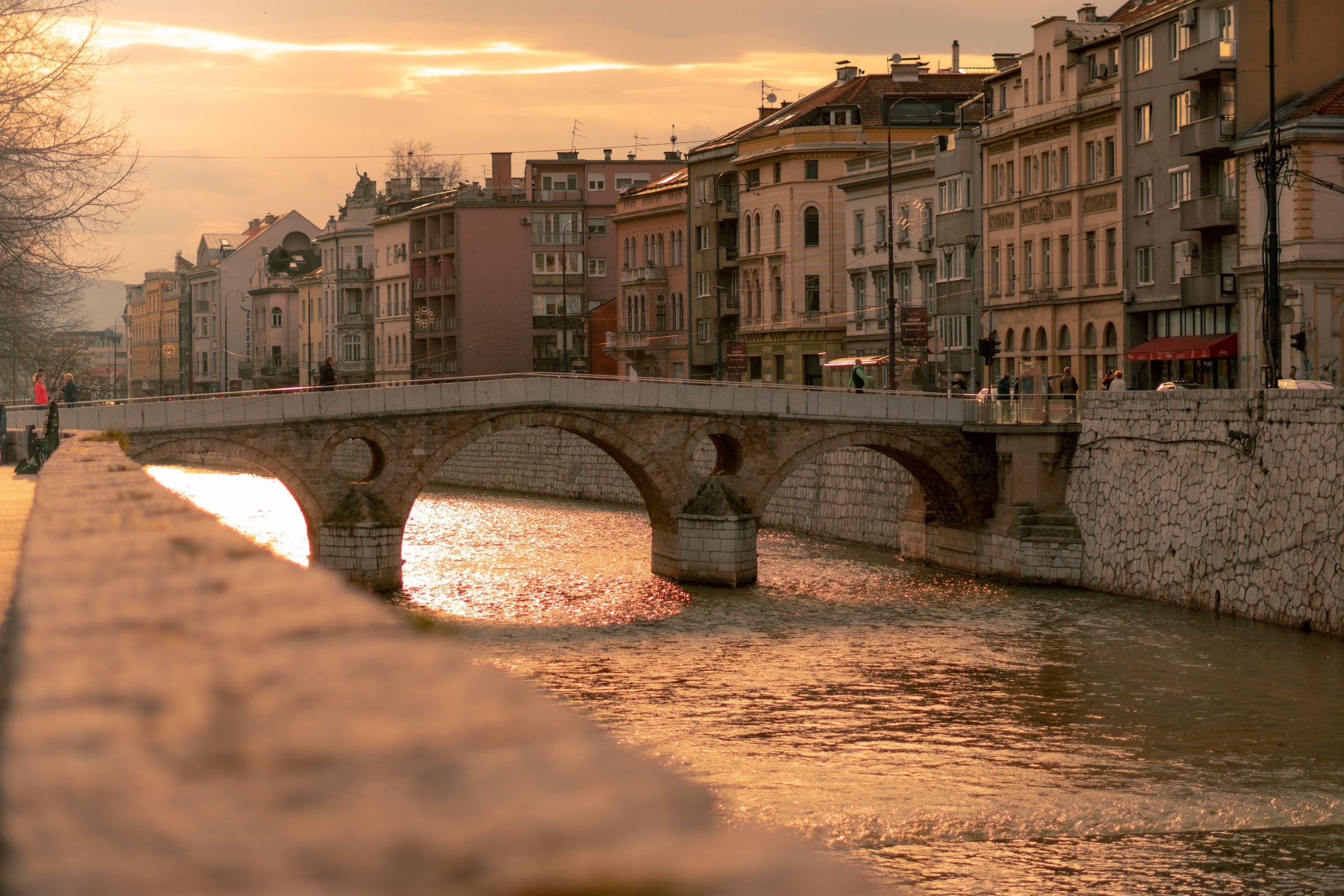
A city where an Ottoman bazaar meets Austro-Hungarian boulevards on one street corner, ringed by mountains that held the longest siege in modern European history.
Sarajevo is built along a narrow valley, and walking east to west takes you through four centuries in about twenty minutes: the Ottoman bazaar of Baščaršija, then a line in the pavement marked "Sarajevo Meeting of Cultures", then Austro-Hungarian facades, then Yugoslav concrete.
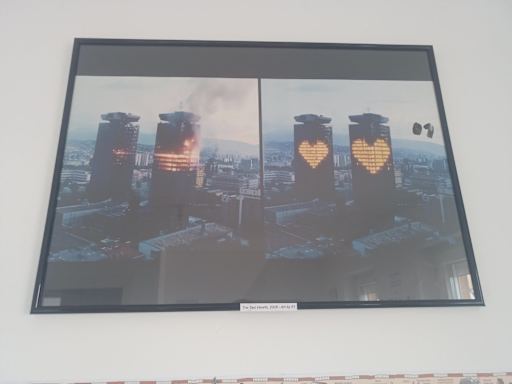
Franz Ferdinand was shot here in 1914 on a corner you can stand on. The 1984 Winter Olympics happened on the mountains above. And between 1992 and 1996 the city was besieged for 1,425 days — the longest siege of a capital in modern warfare — which is still visible in the shell scars on buildings and the red resin "Sarajevo Roses" filled into mortar craters in the pavement.
It is also a warm, funny, extremely cheap city where a coffee costs a euro and the evening is spent walking.
Three days, and it deserves them.
The city runs along one valley. East is Ottoman, west is Austro-Hungarian and beyond.
The Ottoman bazaar: copper workshops, ćevapi grills, mosques and most of the hostels. The heart of the city.
The pedestrian spine west of the bazaar, with Austro-Hungarian facades, cafés and the cathedral.
The slopes above the old town: steep streets, the yellow fortress and the best views down the valley.
West along the river, residential and cheaper, with trams into the centre in ten minutes.
Orange labels are neighbourhoods, dots are the 10 top-rated hostels. Map data from OpenStreetMap contributors.
The Tunnel of Hope is the essential one. During the siege, a 800-metre tunnel was dug under the airport runway to bring in food, weapons and people — the only link to the outside world. A section is preserved as a museum with a house at the entrance still pocked with shrapnel. Entry is about €6 and it is a 20-minute drive out.
The Gallery 11/07/95 is a photographic memorial to Srebrenica, and it is difficult and important in equal measure.
In the centre, Baščaršija is a working bazaar rather than a souvenir strip — coppersmiths still hammer in the same lane they have for centuries — and the Latin Bridge corner where Franz Ferdinand was shot is twenty metres from a normal café.
Take the cable car up Trebević, the 1984 Olympic mountain, where the abandoned bobsleigh track is now covered in graffiti and you can walk down it.
The Meeting of Cultures line in the pavement, where Ottoman Sarajevo meets Austro-Hungarian Sarajevo in one step, costs nothing and explains the whole city.
The Sarajevo Roses — mortar craters filled with red resin where people died — are marked across the centre and are free to find.
Walking up to the Yellow Fortress at sunset is free and is what locals do, especially during Ramadan when the cannon fires to break the fast.
Baščaršija, the Gazi Husrev-beg mosque courtyard, the Catholic cathedral and the Orthodox church are all free and all within five minutes of each other, which is the point people make about this city.
The war tunnel is paid, but the shell scars and rebuilt facades along Sniper Alley are visible from any tram.
Ćevapi are the national dish and Sarajevo's version is the one people argue for: small grilled minced-beef sausages in a somun flatbread with raw onion and kajmak. Ten pieces costs €4 to €6 and it is a full meal.
Burek here means meat only — cheese is sirnica, spinach is zeljanica — and correcting a visitor on this is a minor national pastime. A portion is €2 to €3.
Bosnian coffee arrives in a copper džezva with a copper cup, a sugar cube and a piece of rahat lokum, and it is served to be sat over for an hour. About €1.
The city is majority Muslim and alcohol is available but less central than in the Balkans generally. Sarajevsko is the local beer at €1.50 to €2.50, and rakija is everywhere.
More than the city's reputation suggests. The bars along Ferhadija and in the streets behind it fill in the evening, and Sarajevo has a strong live music and alternative scene — Kino Bosna on a Monday, an old cinema where an accordion band plays and the whole room sings, is the one to try.
Baščaršija itself is more café than bar, with sitting over coffee as the main evening activity.
A beer is €1.50 to €2.50 and rakija less.
Ramadan changes the rhythm significantly — restaurants fill at sunset, the cannon fires from the fortress, and the streets are busier at 10pm than at 10am.
The centre is walkable end to end in half an hour, and that walk is the best introduction to the city.
Trams run the length of the valley for about €0.90, bought from a kiosk and validated on board. The route along the river is the old Sniper Alley.
The airport is 20 minutes out; taxis cost about €10 and should use the meter.
Buses to Mostar take two and a half hours for about €10 through the Neretva gorge, which is one of the best bus journeys in Europe — sit on the right leaving Sarajevo. The train on the same route is slower, cheaper and even more scenic when it runs.
One of the cheapest capitals in Europe. Dorms are €9 to €18, ćevapi €4 to €6, a coffee €1, and a beer €1.50 to €2.50.
A day is €25 to €40.
The convertible mark is pegged to the euro at about 1.96, so mental arithmetic is easy — halve the price and you have euros.
Museums are €5 to €8 and the Tunnel of Hope about €6 including transport on most tours. Cash is used widely; ATMs are plentiful in the centre but check the fee before withdrawing.
Sarajevo is a safe city with low crime, and travellers routinely say they felt more comfortable here than in much of western Europe.
Two things are worth knowing. Landmines remain in some rural areas of the country — not in the city or on marked trails, but do not wander off paths in the hills, and take signs seriously.
Second, the war is recent and personal. People are generally open about it if asked respectfully, and equally entitled not to be. Avoid assuming who was on which side, and be careful with the shorthand of Serb, Croat and Bosniak in casual conversation.
Traffic is assertive and trams have priority. Emergency number is 122 for police, 124 for ambulance.
Mountains above the city, and the gorge road south.
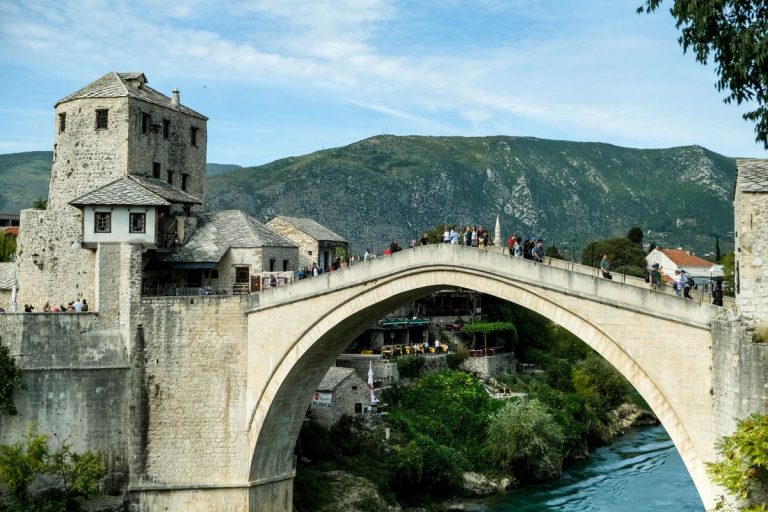
The rebuilt bridge and the old town. Long as a day trip, better as an overnight, and the journey is half the point.
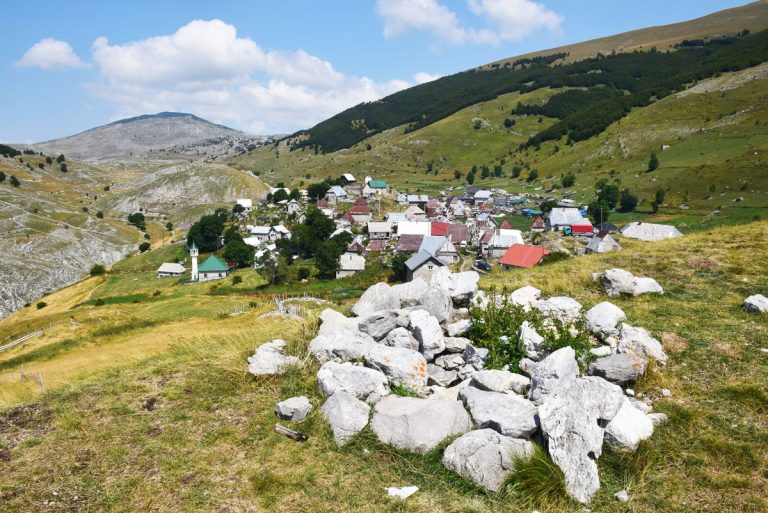
The Olympic ski mountain, and the highest village in Bosnia, with stone houses and shepherds on a plateau.
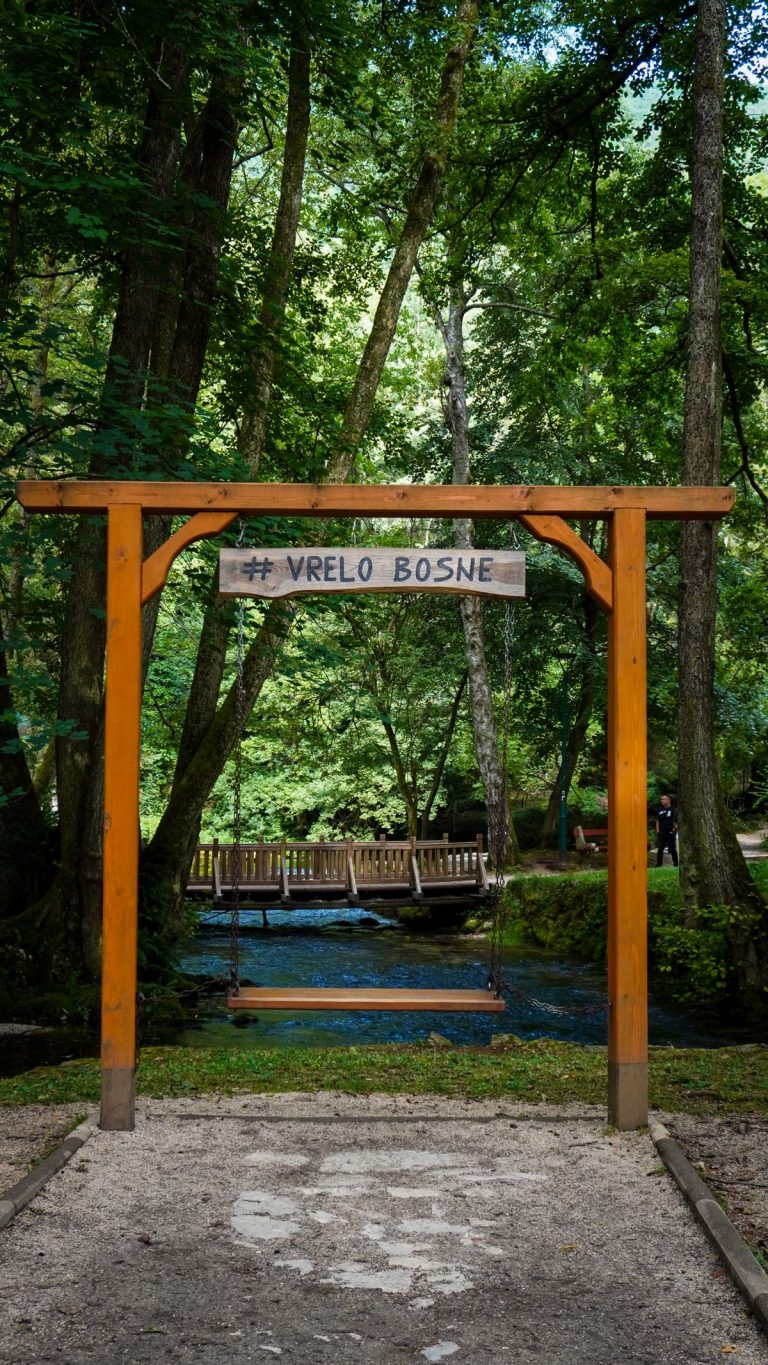
The source of the river Bosna in a park at the edge of the city, with springs and a tree-lined avenue.
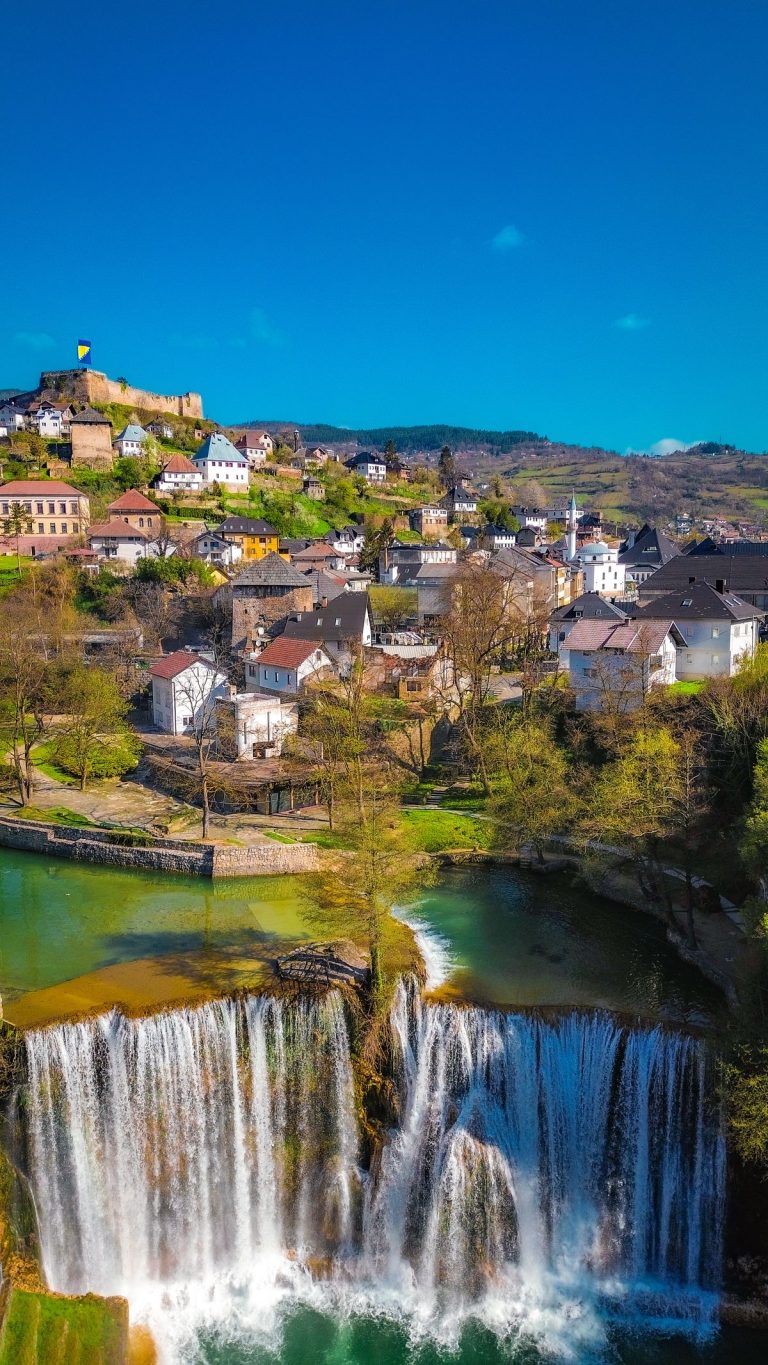
A town with a waterfall in the middle of it, a fortress above and watermills on the lake.
The film festival began during the siege and is now the biggest in the region.
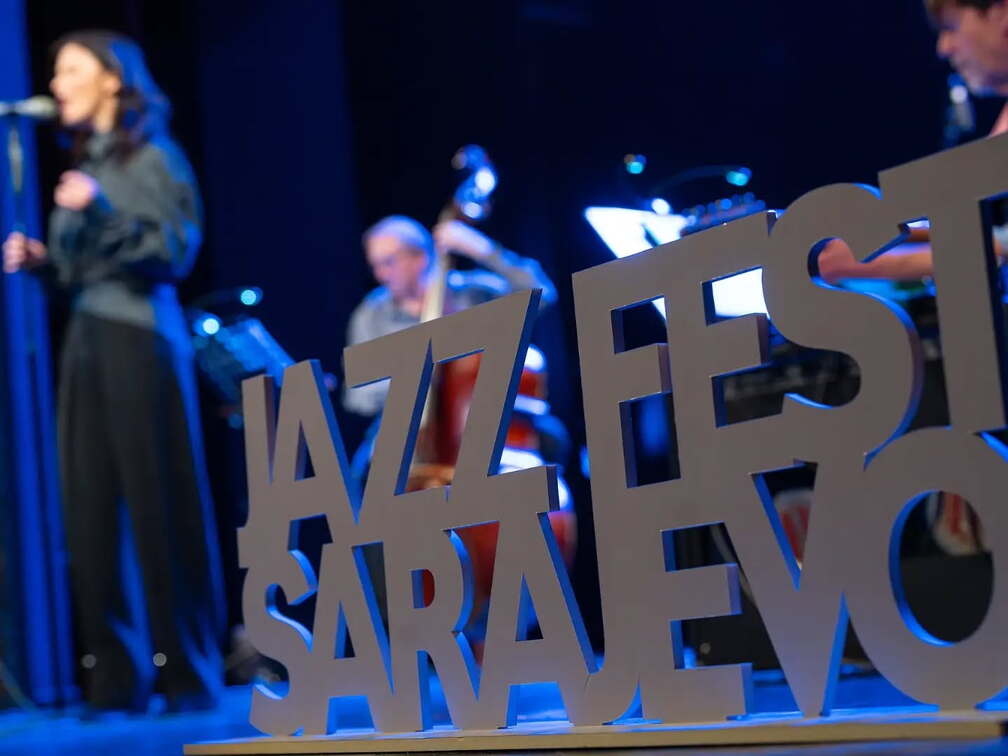 Staff pick
Jazz Fest Sarajevo, held in Sarajevo, Bosnia and Herzegovina, is the country’s oldest international music festival and a cornerstone of its cultural scene since…
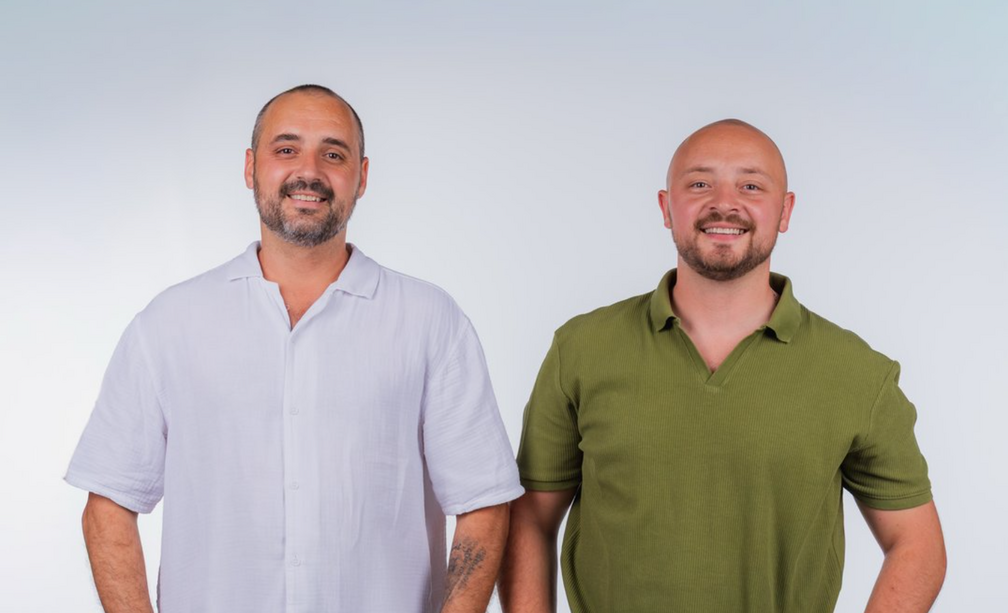
When relatives, neighbors, and self-appointed experts all decide to weigh in on love and wedding planning, chaos is guaranteed. This comedy by the Suković…
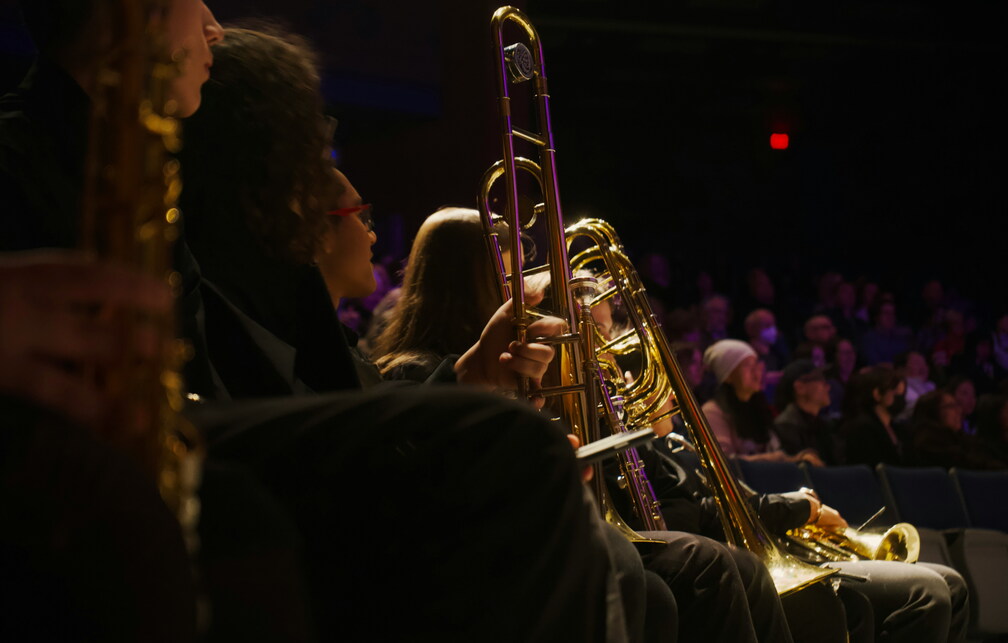
Jazz Fest Sarajevo celebrates its 30th anniversary this year, having brought over 1,000 musicians from 65 countries to perform in the heart of the…
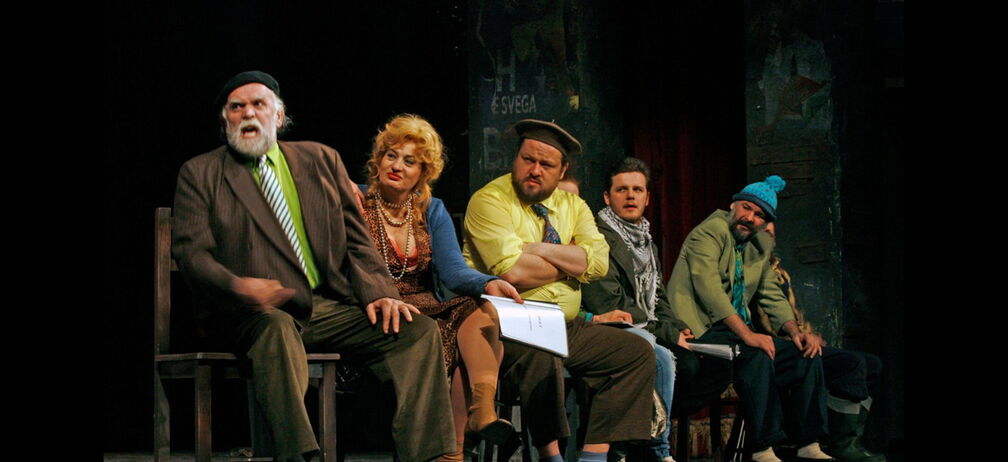
Hamlet in the Village of Mrduša Donja, or Hamlet Knows What the People Do Not Know, is a dramatic play written by Croatian playwright…
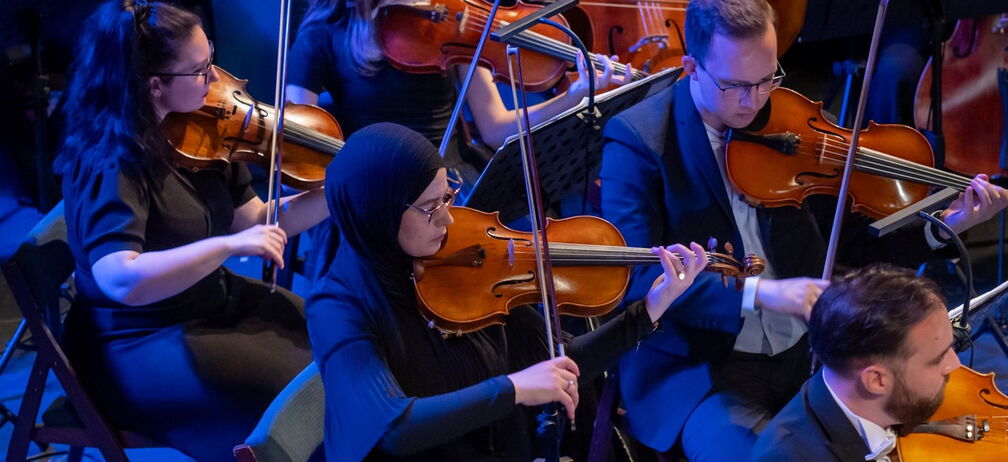
Prokofiev's Piano Concerto No. 3 opens the evening with young pianist Arsen Dalibaltayan at the keys, a work known for its brilliant virtuosity and…
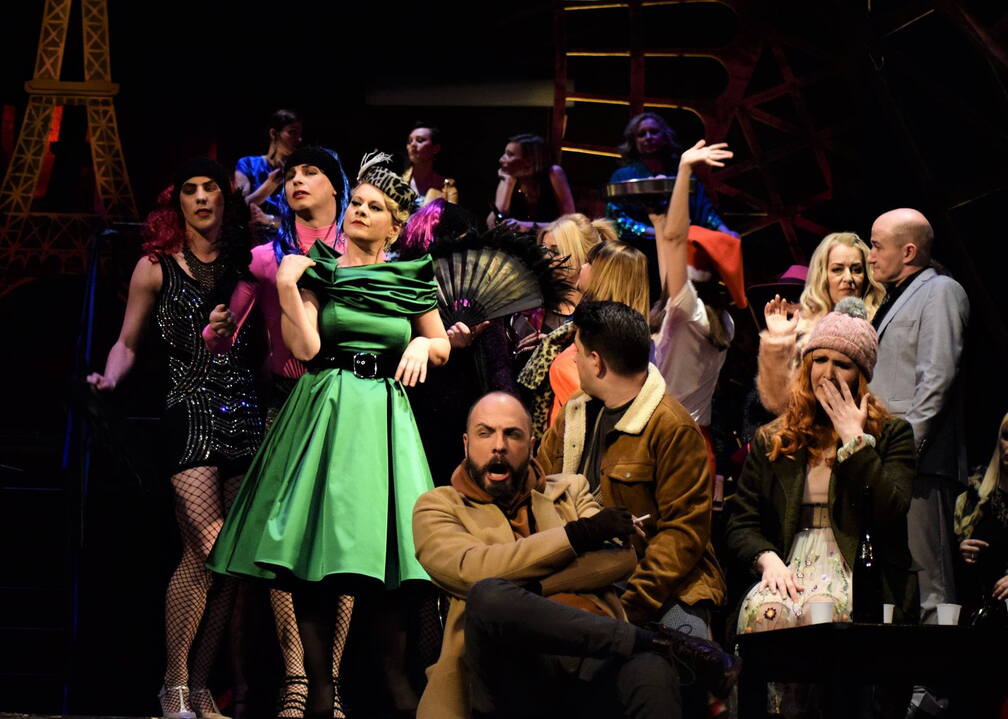
Puccini's beloved opera brings to life the world of 19th-century dreamers artists living on passion rather than possessions, fiercely devoted to love and beauty…
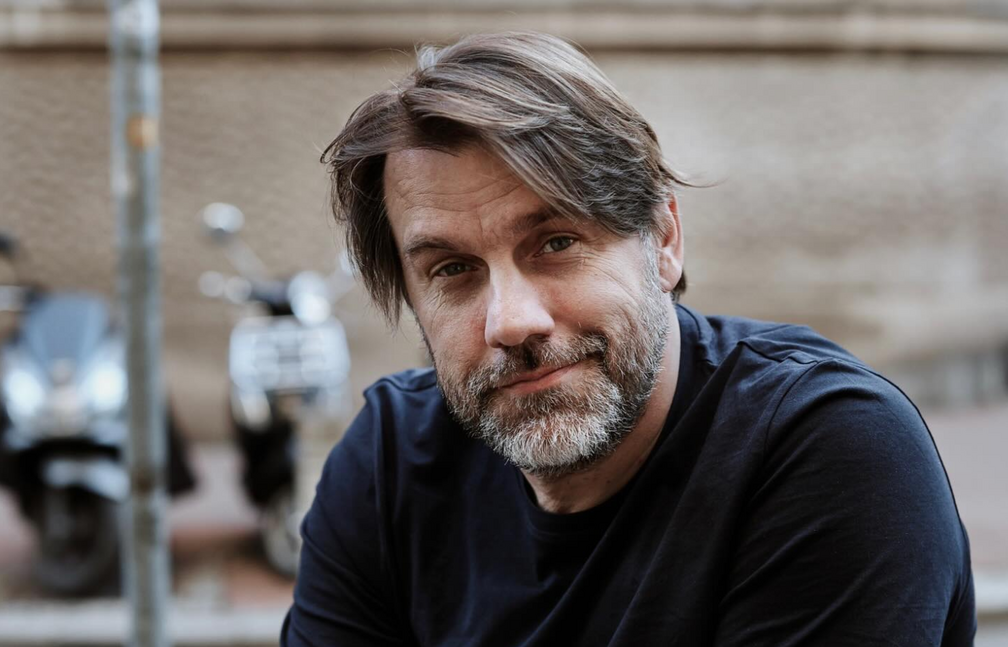
Marko Milošević brings an evening of poetry and verse to the Bosnian Cultural Center, performing works that blend spoken word with musical expression. The…
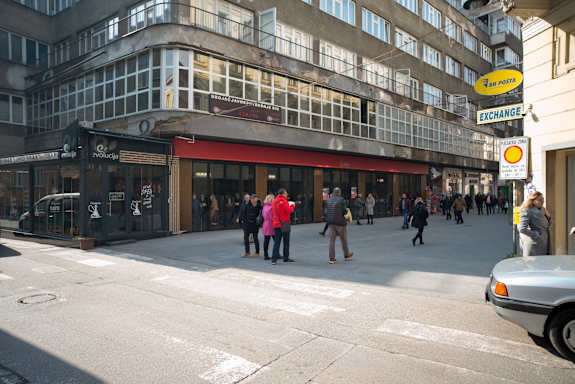
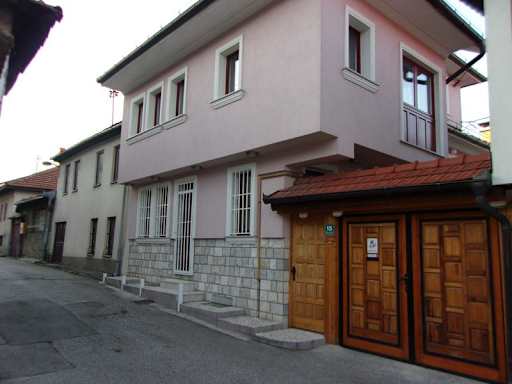
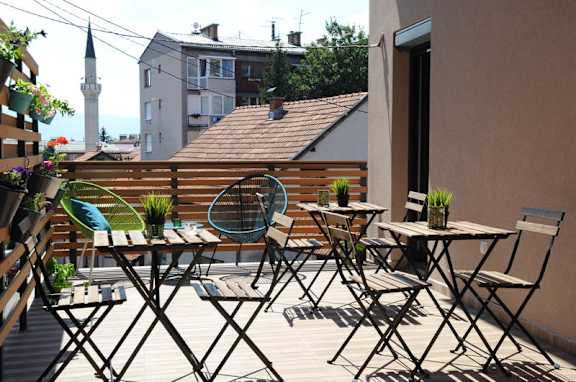
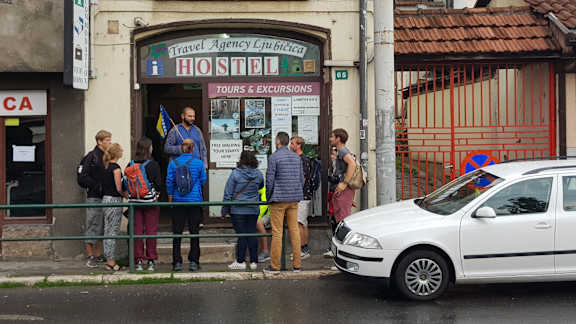
A cheap, sociable scene concentrated in and around Baščaršija, much of it in converted family houses. Live from Hostelworld.
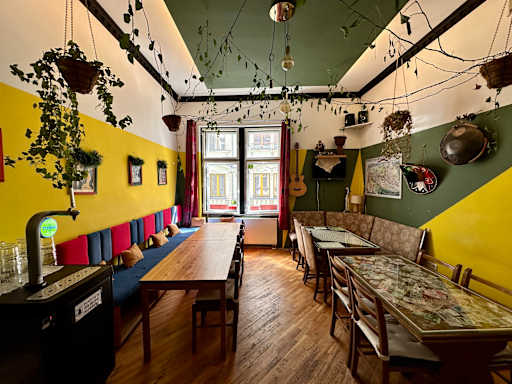
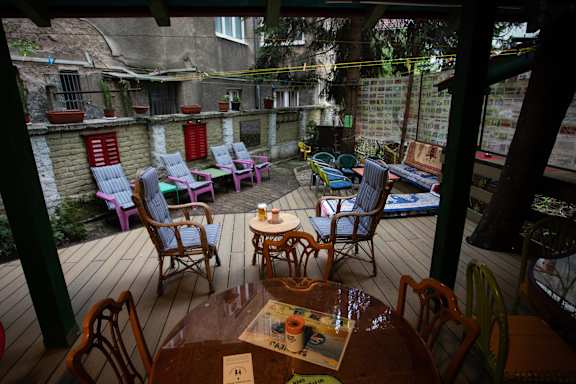
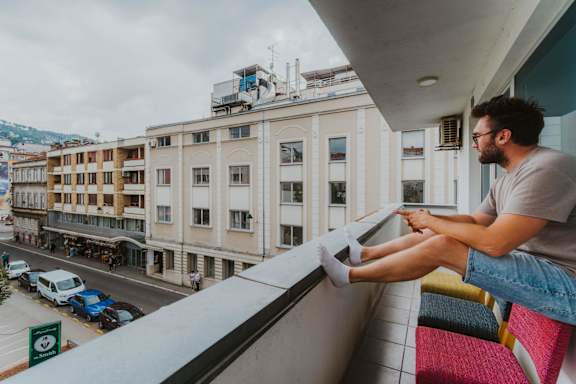
Spring and autumn for the city, winter for cheap skiing on the Olympic mountains.
Average highs. Sarajevo sits in a valley at 500m ringed by mountains, which traps cold air and, in winter, some of the worst air pollution in Europe during still weather.
Pick how you travel. Per person per night, in euros.
Prices are in convertible marks on the ground, pegged at about 1.96 to the euro. The Tunnel of Hope with transport is about €15 on a tour.
The ones we get asked most.

Compare Sarajevo hostels — live prices, real reviews and free cancellation on most bookings. Then meet the people already there in the app.

 Get the App.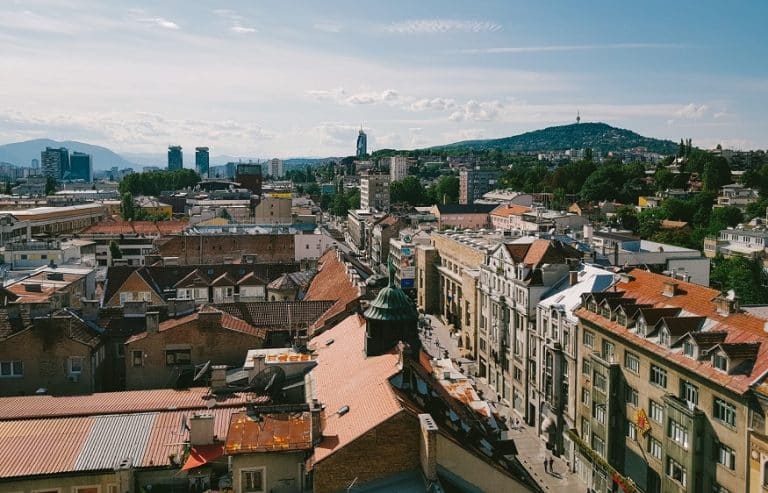
 Get the App.