Waterfront
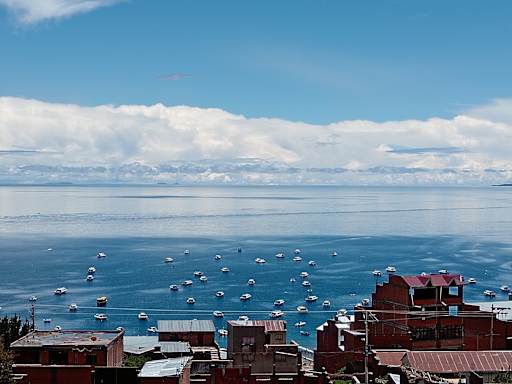
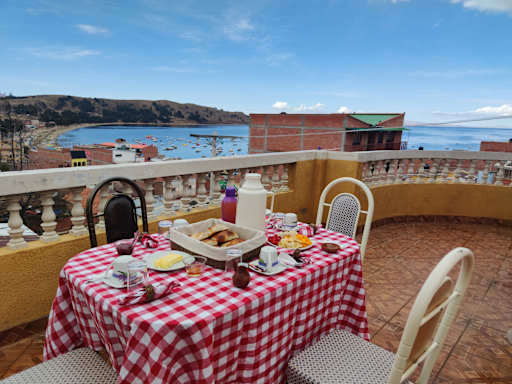
Lake views, boatsAlong the beach, where the boats leave for the islands and the trout stalls line up.

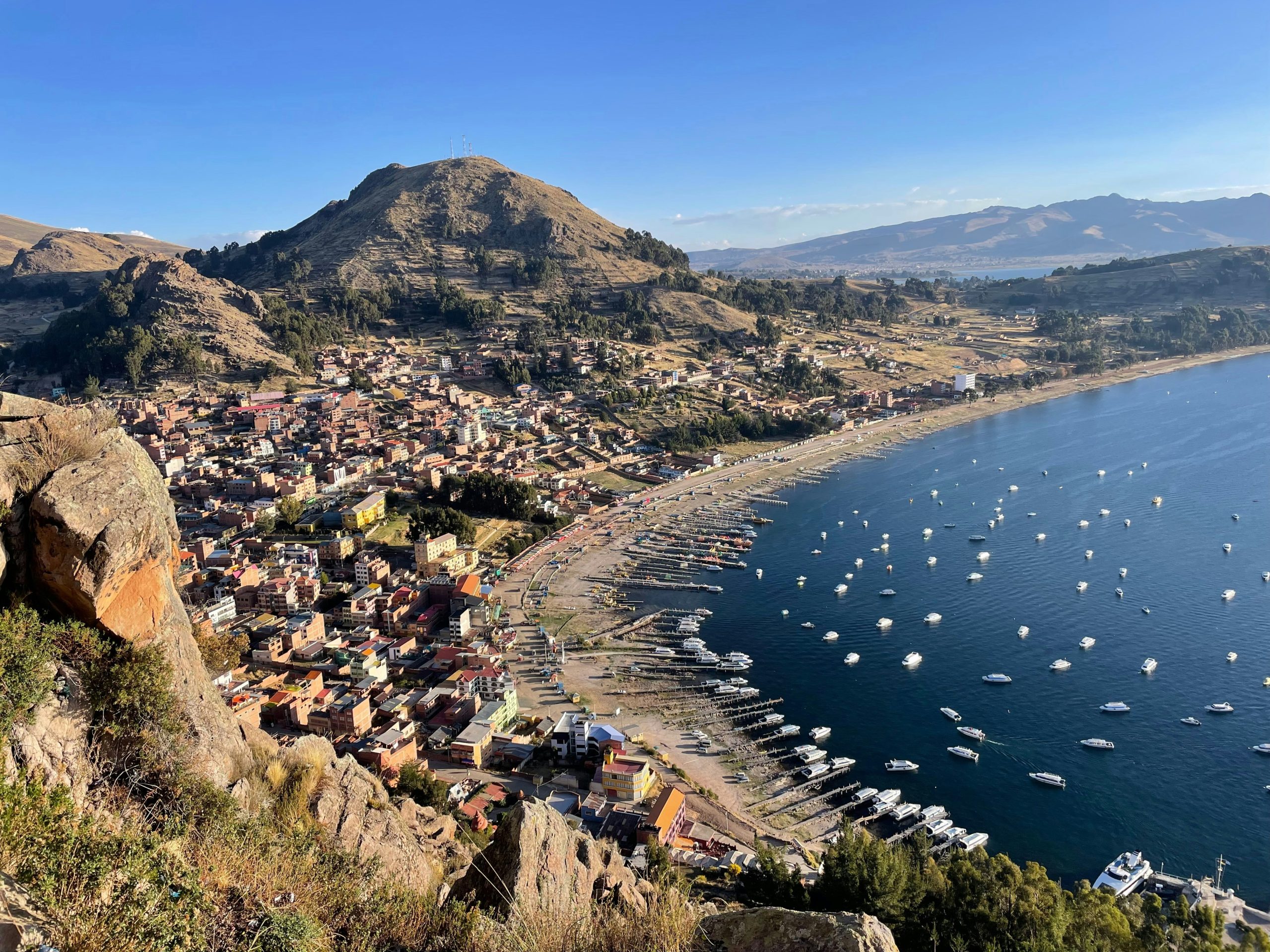
A pilgrimage town on the shore of Lake Titicaca, at around 3,840 metres, with Isla del Sol a boat ride away. Deep blue water, Inca legends and sunsets from a hill of crosses.
Copacabana sits on a peninsula on the Bolivian side of Lake Titicaca, the highest large navigable lake in the world. The town is small and easy-going, built around a white Moorish-style basilica that houses the Virgin of Copacabana, Bolivia's patron saint, and a waterfront lined with pedal boats and trout restaurants.
Most visitors come for Isla del Sol, the Island of the Sun, which Inca legend holds as the birthplace of the sun and of the first Inca. Boats leave town every morning for the island's villages, with terraced hillsides, ruins and paths along a ridge high above the water. Staying a night on the island is the best way to see it, after the day boats leave.
Copacabana is also the natural stop between La Paz and Puno in Peru, which makes it a popular border crossing. Two or three days is ideal: one in town and up Cerro Calvario for sunset, one or two on Isla del Sol.
Copacabana is small enough to walk end to end. Stay near the waterfront or on the streets between the basilica and the lake.
Along the beach, where the boats leave for the islands and the trout stalls line up.
The streets between the basilica and the lake, with most hostels and restaurants.
The village on the south of the island, with lodges on the hillside above the Inca stairway.
Orange labels are neighbourhoods, dots are the 12 top-rated hostels. Map data from OpenStreetMap contributors.
Climb Cerro Calvario, the hill north of town lined with the Stations of the Cross, for sunset over the lake. The path is steep and the altitude is real, so go slowly, but the view across the water to the islands is one of the finest in Bolivia. The basilica is worth visiting too, and at weekends you may see the blessing of cars, when owners bring decorated vehicles to be blessed with flowers and beer.
Isla del Sol is the main trip. Boats leave in the morning for the south of the island at Yumani, with its Inca stairway, terraces and lodges, and some continue to the north. The island's communities have restricted access to some areas in recent years, especially the north, so ask in town which parts are open before you go, and bring small change for the community fees on the paths.
On the water, kayaks and pedal boats are for hire along the beach, and Isla de la Luna, a smaller island with the ruins of a temple, can be combined with Isla del Sol on a boat tour.
Copacabana's best things are free. The climb up Cerro Calvario costs nothing but your breath, and the sunset from the top is the highlight of many trips to the lake.
The basilica and its courtyard are free to visit, and the waterfront is a lovely place for a slow walk, watching fishing boats and families on the beach. The Horca del Inca, an ancient stone structure on a hill at the other end of town, is another climb with a view.
On Isla del Sol, the paths themselves are the attraction, with small community fees to pay along the way.
Trout is what you eat in Copacabana. Lake Titicaca trout is farmed and fished all around the lake, and the waterfront stalls and restaurants serve it in every way: fried, grilled, with garlic, with chilli, in a sandwich. A plate with rice, potatoes and salad is cheap and filling.
The main street has plenty of restaurants aimed at travellers, with pizza, pasta and vegetarian options, and the market has the cheapest almuerzos in town.
On Isla del Sol, food is simple and served in family-run lodges and restaurants, usually trout, soups and quinoa. Bring snacks and water for the walks.
Copacabana is quiet after dark. A few bars on the main street have happy hours, live music and fireplaces, and hostels are the social centre for travellers between La Paz and Peru.
Nights are cold by the lake at this altitude, so evenings are mostly about a warm meal and a drink rather than going out late.
On clear nights, the stars over the lake are spectacular, especially from Isla del Sol, where there is almost no light.
The town is small and walkable, and boats to the islands leave from the beach. Boat services to Isla del Sol run in the morning and early afternoon, taking around one and a half to two hours to the south of the island, and cost a few euros each way.
Buses from La Paz take around three and a half to four hours. On the way, the road crosses the Strait of Tiquina: passengers cross on a small boat while the bus goes over on a barge, with a small fare for the crossing.
Puno in Peru is around three hours away, with the border crossing at Kasani a short ride from town. Bring your passport, and check for blockades before travelling in either direction.
Copacabana is cheap. Dorm beds run from around €5 to €10, a trout lunch costs a few euros, and boats to Isla del Sol are inexpensive.
On Isla del Sol, community fees are charged along the paths, usually a small amount at each checkpoint, so carry change. Lodges on the island are simple and good value.
ATMs in town are limited and can run dry, especially at weekends. Bring enough cash in small notes from La Paz or Peru, and check current exchange advice before you travel.
Copacabana is a safe, small town. Take normal care with belongings at the bus stop and on the beach, and watch out at the border, where money changers may offer poor rates.
Altitude and sun are the real issues. At around 3,840 metres, the climbs up Cerro Calvario and on Isla del Sol are hard work, and the sun reflects off the lake. Wear sun cream and a hat, and drink plenty of water.
The lake is cold, even on sunny days, and boats are basic, so wear warm clothes on the water. Access to parts of Isla del Sol has been affected by disputes between communities, so ask locally before you go. In an emergency, call 110 for police or 118 for an ambulance.
The islands are the reason to come.
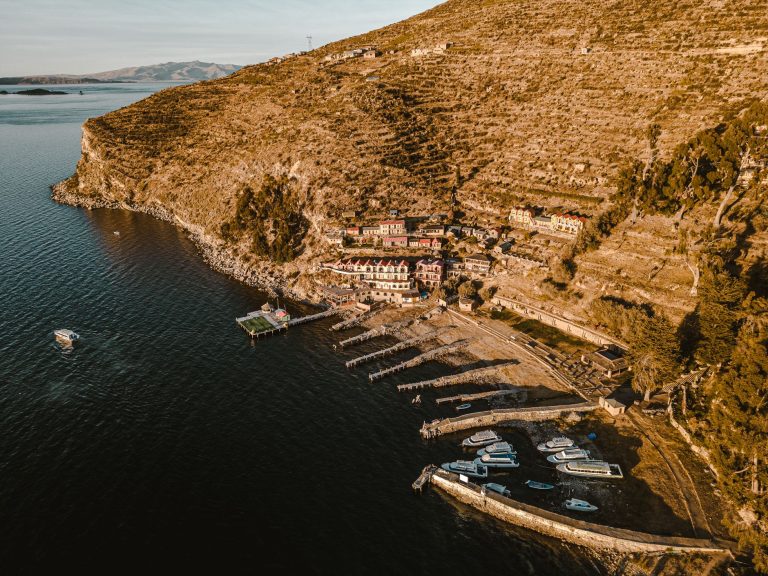
Inca ruins, terraces and ridge paths high above the lake. Stay a night.
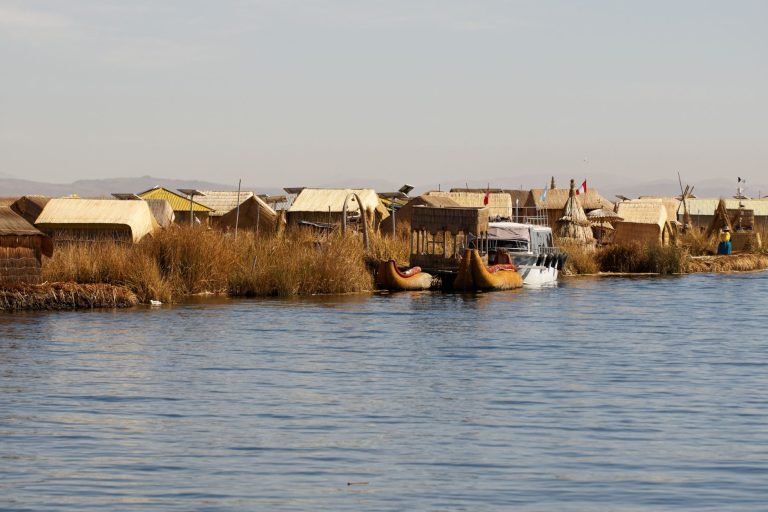
The Peruvian side of the lake and the floating Uros islands.
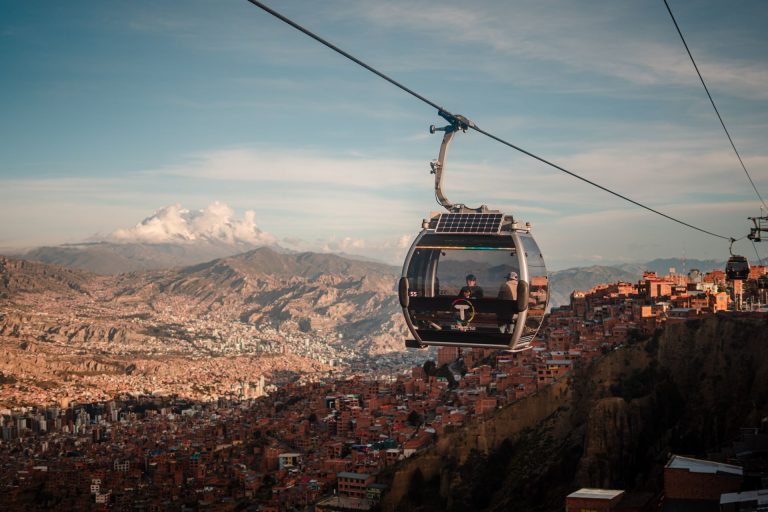
Back to the city in the canyon.
Pilgrimages to the Virgin of Copacabana fill the town several times a year.
The feast of the town's Virgin, with dancing, music and pilgrims.
Thousands of pilgrims, many walking from La Paz, arrive for Holy Week.
The town's biggest festival, around Bolivia's Independence Day.
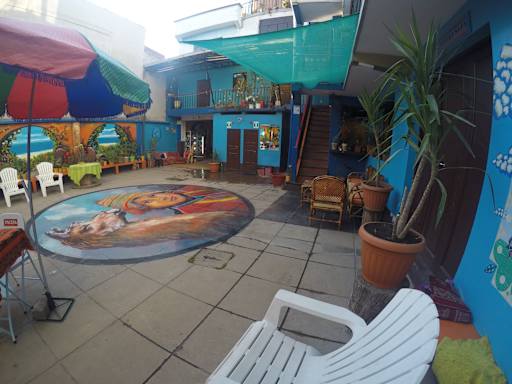
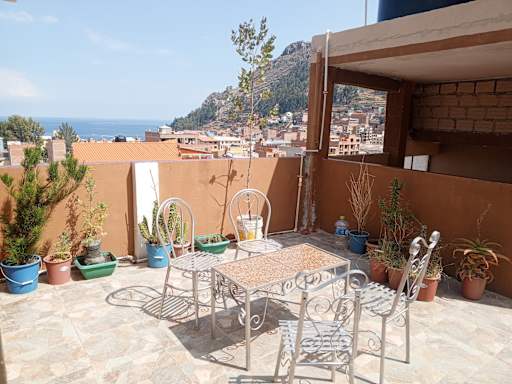
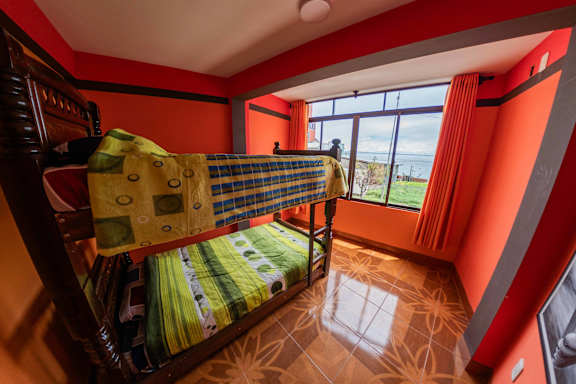
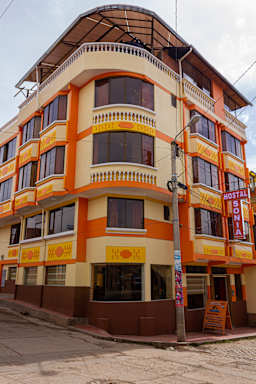
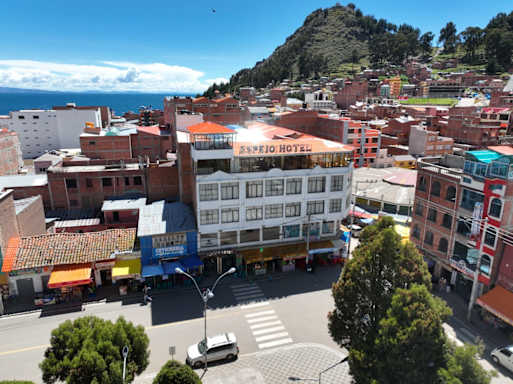
The highest-rated hostels in Copacabana, straight from Hostelworld. Prices and availability are live on each property page.





May to October is dry and sunny, with very cold nights. November to March brings rain and fewer visitors. Copacabana's big festival is in early August.
Average highs, rounded. Nights are near or below freezing much of the year.
Per night, for one person, based on Copacabana prices.
Treat these as a guide, as prices and exchange rates have moved a lot.
The ones we get asked most.

Compare hostels in Copacabana: live prices, real reviews and free cancellation on most bookings. Then meet the people heading your way in the app.

 Get the App.



 Get the App.