Huanchaco
Beach, surf, hostelsA relaxed fishing and surf village 20 minutes from the city, where most travellers stay.

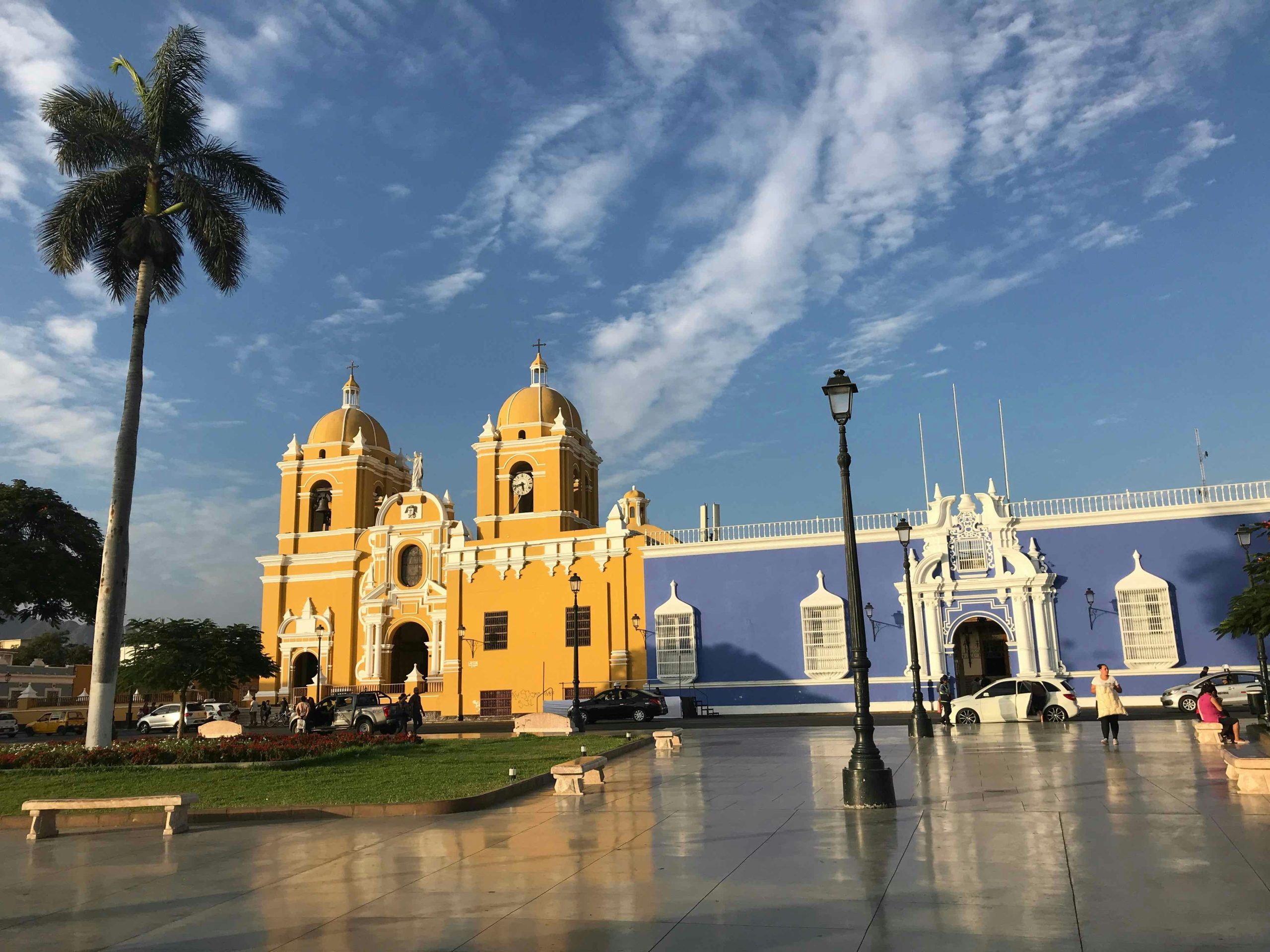
A colonial city on Peru's north coast, surrounded by the ruins of civilisations older than the Incas, with the surf village of Huanchaco and its reed boats 20 minutes away.
Trujillo is Peru's third-largest city, on the desert coast in the north. Its centre is one of the most attractive in the country, with a wide Plaza de Armas and colonial mansions painted in bright colours, with wrought-iron window grilles. It is known as the city of eternal spring for its mild, sunny climate.
The area around it was the heartland of two great pre-Inca civilisations. The Moche built the huge adobe pyramids of the Huaca del Sol and Huaca de la Luna, decorated with painted reliefs, and the Chimú built Chan Chan, the largest adobe city in the Americas and a UNESCO World Heritage Site. Further north, El Brujo has the tomb of the Señora de Cao, a tattooed Moche ruler.
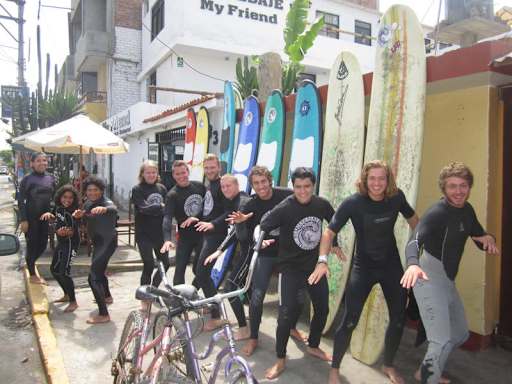
Most travellers stay in Huanchaco, a relaxed beach village 20 minutes from the city, where fishermen still ride caballitos de totora, reed boats used for thousands of years, and the waves are good for learning to surf. Give the area three or four days. Trujillo has been under repeated states of emergency over extortion crime, so stay in Huanchaco or the centre and check current advice.
Most travellers stay in Huanchaco, by the beach. The historic centre of Trujillo is convenient for the city, but quiet at night.
A relaxed fishing and surf village 20 minutes from the city, where most travellers stay.
The streets around the Plaza de Armas, convenient for the city, quiet at night.
Orange labels are neighbourhoods, dots are the 2 top-rated hostels. Map data from OpenStreetMap contributors.
Visit Chan Chan, the capital of the Chimú kingdom, a vast adobe city of walled palaces decorated with fish, birds and waves. The Tschudi palace is restored and open to visitors, and the ticket also covers the site museum and the Huaca Arco Iris and Huaca Esmeralda temples. Go with a guide to understand what you are seeing.
The Huacas del Sol y de la Luna, around 20 minutes south of the city, are Moche pyramids built over centuries. The Huaca de la Luna has layers of brightly painted reliefs of gods and warriors, and a good museum. El Brujo, around an hour and a half north, has the museum of the Señora de Cao, a powerful Moche woman whose tattooed mummy was found in 2005.
In the city, walk the Plaza de Armas and the colonial mansions around it, some open to visitors. In Huanchaco, take a surf lesson, watch the fishermen bring in their caballitos de totora in the afternoon, and walk the pier at sunset.
The Plaza de Armas and the colonial streets of the centre are free, and some mansions, run by banks, can be visited for free.
In Huanchaco, the beach, the pier at sunset and watching the reed boats come in are free. The church on the hill above the village has views over the coast.
The archaeological sites charge entry.
The north coast has some of Peru's best food. Ceviche in Huanchaco is excellent and cheap, made with the morning's catch. Try shambar, a hearty bean and wheat soup traditionally eaten on Mondays, and cabrito, slow-cooked goat, a northern classic.
Huanchaco's seafront has cevicherías and cafés for travellers, and the city has cheap menús.
King kong, a giant biscuit layered with sweets, is the city's famous treat.
Huanchaco has a relaxed nightlife, with bars on the seafront and hostel parties, busiest at weekends and in summer.
Trujillo's centre has a few bars and clubs, but it is quiet at night, and most travellers stay in Huanchaco.
Use taxis or apps between the city and Huanchaco at night.
Huanchaco is walkable. Colectivos and taxis link it to the city in around 20 minutes, and taxis and apps are the easiest way to the archaeological sites.
The airport is near Huanchaco, with flights to Lima in around an hour. Buses to Lima take around nine hours, with comfortable overnight services. Buses go north to Chiclayo and Máncora and east into the mountains.
Chan Chan sits between the city and Huanchaco, and the Huacas del Sol y de la Luna are around 20 minutes south.
Trujillo and Huanchaco are cheap. Dorm beds start around €7, with well-rated hostels in Huanchaco from €8 to €14. A menú costs a few euros, and ceviche in Huanchaco is good value.
Each archaeological site charges an entry fee, and guides are extra. Surf lessons and board hire are cheap.
Carry cash in soles for colectivos, markets and small restaurants.
Trujillo has been under repeated states of emergency over extortion and organised crime, mostly targeting local businesses and transport. Take care: stay in Huanchaco or the historic centre, use taxis or apps, especially at night, and check current government advice.
Phone and bag theft happen in the city and on the beach. Keep valuables hidden and do not walk the area between the city and Huanchaco, or around Chan Chan, alone.
The sea has currents, so surf with a school at first. In an emergency, call 105 for police or 106 for an ambulance.
Pyramids, palaces and a tattooed queen.
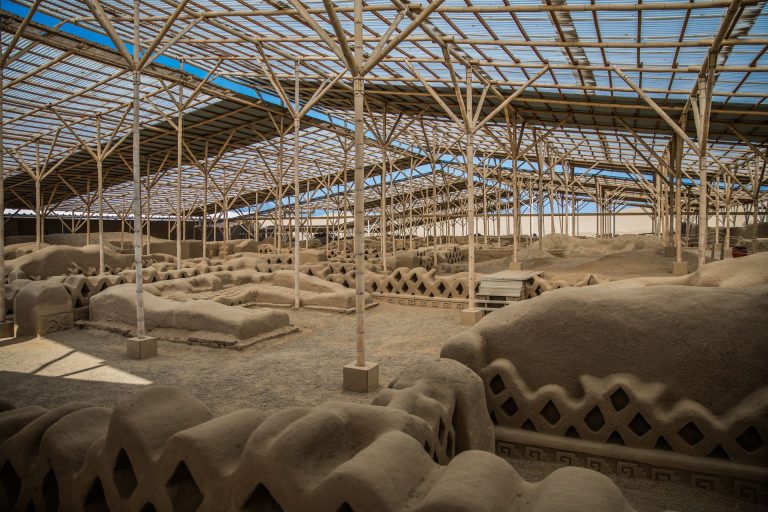
The Chimú adobe capital, UNESCO-listed.
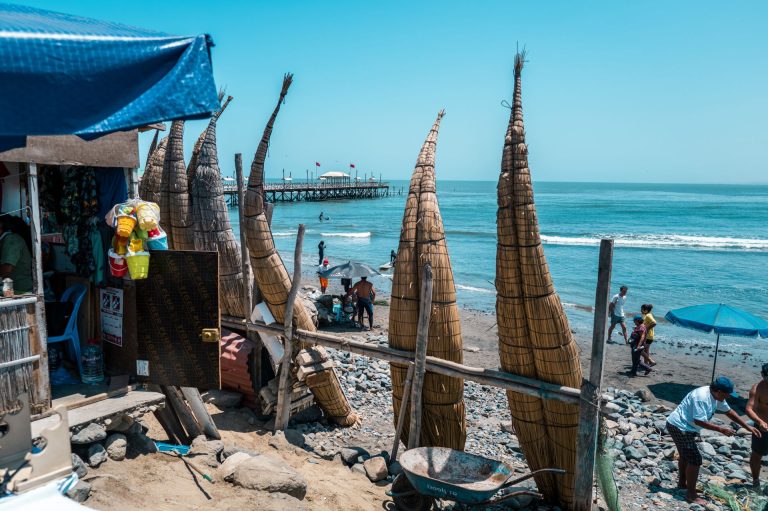
Surf, ceviche and reed boats.
Dance festivals and the spring parade.
Peru's national dance, with competitions and parades.
The spring festival, with a big parade.
The highest-rated hostels in Trujillo, straight from Hostelworld. Prices and availability are live on each property page.
Trujillo is mild and dry all year. December to April is sunny and warm, the best time for the beach and surfing. June to October is cooler and greyer.
Average highs, rounded. It almost never rains.
Per night, for one person, based on Trujillo and Huanchaco prices.
Treat these as a guide. Site tickets and guides cost extra.
The ones we get asked most.

Compare hostels in Trujillo and Huanchaco: live prices, real reviews and free cancellation on most bookings. Then meet the people already there in the app.

 Get the App.




 Get the App.