Terre-de-Haut village
Restaurants, ferryOn the bay.

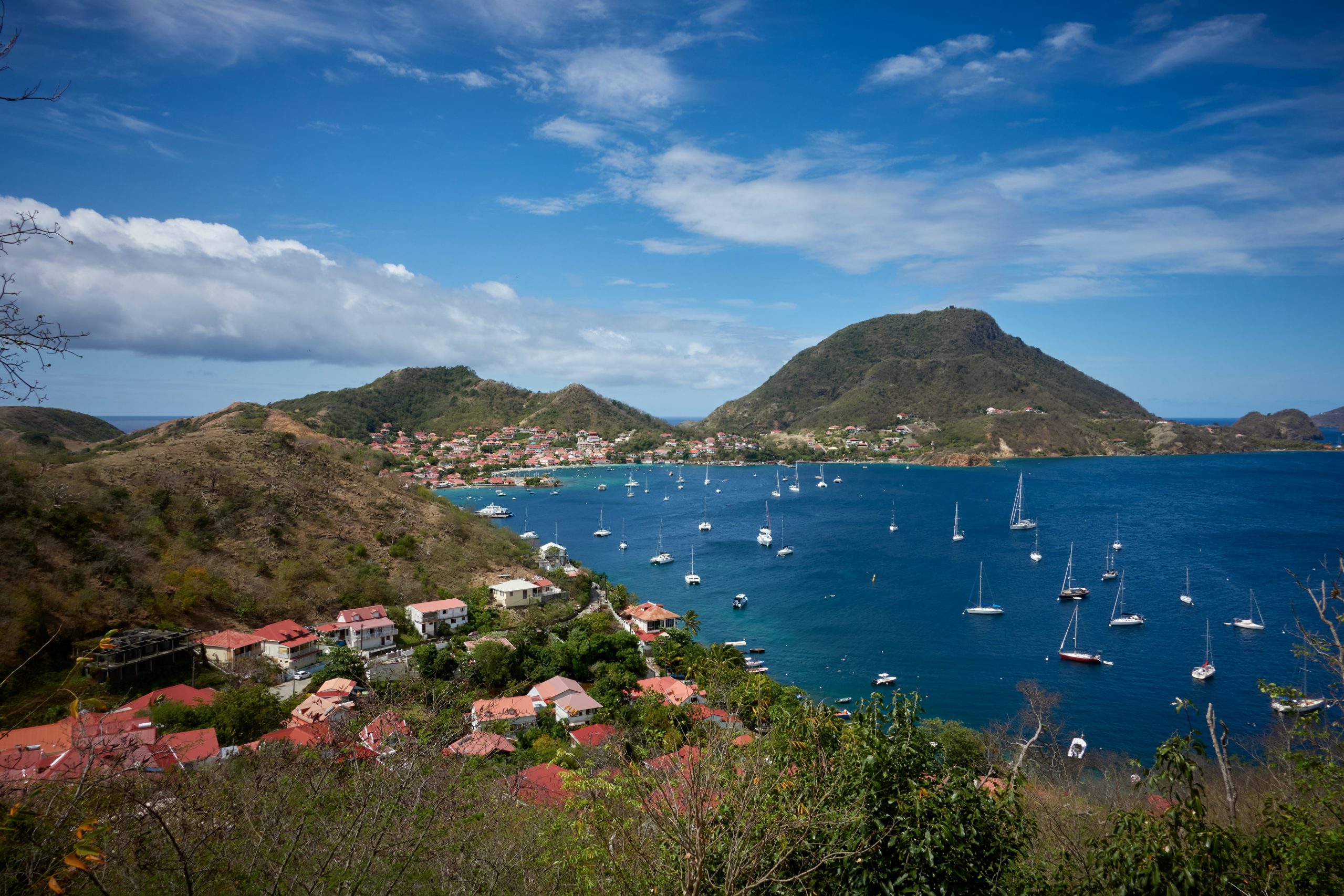
A small archipelago south of Basse-Terre with one of the most beautiful bays in the world: the fishing village of Terre-de-Haut, Fort Napoléon, snorkelling at the Pain de Sucre, and no cars to speak of.
Les Saintes is a group of nine small islands about 10 kilometres off the southern tip of Basse-Terre, of which only two are inhabited: Terre-de-Haut and Terre-de-Bas. Most visitors go to Terre-de-Haut, a hilly island of around 1,500 people, settled by Breton and Norman fishermen, whose descendants still fish in the bay.
The Baie des Saintes is a member of the Most Beautiful Bays in the World club, and the view over it from Fort Napoléon, a 19th-century fort on the hill above the village, is the best on the island. The village has painted wooden houses, small restaurants and boutiques, and there are few cars: people get around on foot, by electric scooter or by golf cart.
Beaches such as Pompierre and Pain de Sucre offer calm water and snorkelling, and Le Chameau, the highest point, has a lookout tower. Many visit on a day trip, but staying overnight is far better. Give it two days.
The village of Terre-de-Haut for restaurants and the ferry, or Terre-de-Bas for real quiet.
On the bay.
A horseshoe bay to the north-east.
The other inhabited island.
Map data from OpenStreetMap contributors.
Walk up to Fort Napoléon for the view over the bay and its museum, and climb Le Chameau, the island's highest point at about 300 metres, for a view of all the islands.
Swim and snorkel at the Plage de Pompierre, a sheltered horseshoe beach, and at the Pain de Sucre, a basalt headland with clear water and fish. Kayak or paddleboard in the bay.
Try a tourment d'amour, the coconut cake sold at the ferry, and take the small boat across to Terre-de-Bas for quiet beaches and walking trails.
The beaches, the village and the walk up Le Chameau are free.
Watching the boats and the sunset over the bay costs nothing.
Fort Napoléon charges a small fee, and scooter and kayak rental cost extra.
Restaurants around the bay serve fresh fish, lobster and Creole dishes, with mains at €18 to €30. Snack bars sell sandwiches, bokits and accras for less.
The tourment d'amour, a pastry filled with coconut jam, is the island speciality.
Service is included in restaurant prices, as in France; leaving a little extra for good service is appreciated but not expected.
Once the day-trippers leave, Terre-de-Haut is peaceful. A few bars by the water serve ti-punch and cocktails at sunset.
Evenings are for dinner and a walk along the waterfront.
Beer costs €3 to €5.
Ferries run from Trois-Rivières on Basse-Terre in about 20 minutes, and from Pointe-à-Pitre in about an hour, with several sailings daily. Book ahead in high season.
On Terre-de-Haut, walk, or rent an electric scooter or golf cart. The hills are steep.
Small boats link Terre-de-Haut and Terre-de-Bas.
Les Saintes is expensive. Guesthouses start at around €40 to €80 a night. Mains cost €18 to €30.
Return ferries cost about €30 to €50, and scooter rental about €25 to €35 a day.
Cards work in most places, and there is a cash machine in the village.
Les Saintes is very safe. Ride scooters carefully on the steep, narrow roads, and wear a helmet.
Bring sun protection and water for the walks, as there is little shade on the hills.
Tap water is treated, but supply cuts and quality notices are common, so many people drink bottled water. In an emergency, call 112.
Village festivals and holidays.
The village festival.
Calm, sunny days.
December to April is the dry season and the busiest time. Les Saintes is drier than Basse-Terre. June to November is the wet season, with hurricane risk.
Average highs, rounded. Warm and breezy.
Per night, for one person, based on Les Saintes prices.
Treat these as a guide. Ferries cost extra.
The ones we get asked most.

Compare places to stay across Guadeloupe: live prices, real reviews and free cancellation on most bookings. Then meet the people already there in the app.

 Get the App.



 Get the App.