Central Diani
First-timers, beach barsThe middle of Diani Beach Road, around Forty Thieves and the main shopping centres. Easy tuk-tuks, the most restaurants and the busiest stretch of sand.

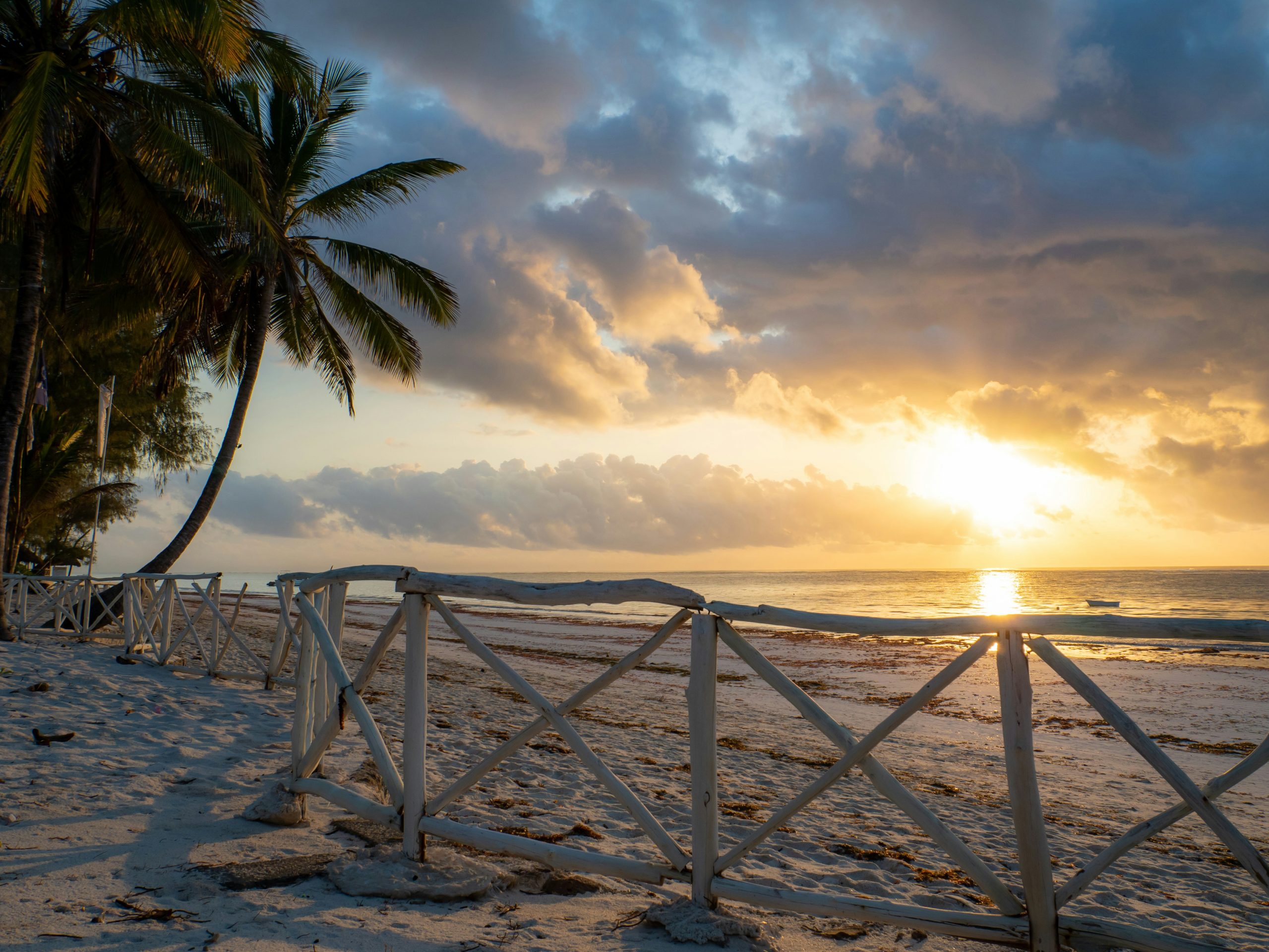
Diani is 17km of white sand south of Mombasa, protected by a coral reef and backed by forest full of colobus monkeys. Come for the kitesurfing, dhow trips to Kisite's dolphins and a slow few days after a safari, and plan your swims around the tide.
Diani Beach sits about 30km south of Mombasa in Kwale County, on the stretch of the Kenyan coast most people mean when they talk about a beach break after safari. The beach is long, flat and white, with an offshore coral reef that keeps the water calm inside the lagoon and turns the outside into one of Africa's best kitesurfing spots.
Everything runs along one road. Diani Beach Road leaves the main Mombasa–Tanzania highway at Ukunda, the busy market town with the banks, supermarkets and matatu stage, and follows the coast for kilometres past hotels, cafés, kite schools and backpacker places. North of the road's start are Tiwi Beach and the old Kongo Mosque. To the south, the beach becomes Galu and Kinondo, quieter and more spread out.
A first visit usually looks like this. A couple of lazy beach days, timed around low tide, when the sea pulls back and you can wade out over the reef flats. A morning at Colobus Conservation learning about the monkeys you'll see on the electric wires outside. A full day on a dhow from Shimoni to snorkel at Kisite-Mpunguti Marine Park and eat lunch on Wasini Island. If you've got time, add a ranger-led walk to Sheldrick Falls in Shimba Hills or a kite lesson. Most people stay four to seven days, and kiters stay for weeks.
Diani is hot and humid. Average highs are 28°C in July and August and 32–33°C from December to March. The long rains fall from April to June, with May the wettest month, and some places close or quieten down then. Late December and the European summer holidays are the busiest times, and prices climb.
Two things catch people out. The tide changes the beach completely, so check a tide table: at high tide the sand narrows and in some months seaweed washes up. And the beach boys selling boat trips, curios and more can be persistent. A polite, firm no works, and booking trips through your hostel avoids most of it.
Diani is one long strip, so where you stay decides how far you'll ride in tuk-tuks. The centre near Ukunda has the shops, banks and most budget beds. Head south to Galu for kitesurfing and quiet, or north to Tiwi for a slower, simpler beach.
The middle of Diani Beach Road, around Forty Thieves and the main shopping centres. Easy tuk-tuks, the most restaurants and the busiest stretch of sand.
The market town at the top of Diani Beach Road, with banks, supermarkets, the matatu stage and the airstrip. Not on the beach, but cheap and real.
The southern end of the beach, where the main kite schools and Colobus Conservation are. Wide sand, fewer people, and a tuk-tuk ride to most restaurants.
North of Diani across the Kongo River, with cottages, rock pools at low tide and very little nightlife. Bring supplies from Ukunda.
Map data from OpenStreetMap contributors.
Kitesurfing is what put Diani on the backpacker map. The reef makes a flat, shallow lagoon that's ideal for learning, and there are two wind seasons. The Kaskazi blows from the north-east from roughly December to March, at about 20 knots on average, warm and reliable, often picking up mid-morning and dropping at sunset. The Kusi blows from the south from around June to September, stronger at 25 knots or more, with bigger swell outside the reef. April, May, October and November are lighter and less predictable. Low tide in the morning gives the flattest water. Established schools include Kenyaways and the Quest IKO centre at Diani Sea Lodge.
The best day trip is the dhow to Kisite-Mpunguti Marine Park. You drive about 1.5 hours south to Shimoni, sail out past Wasini Island looking for dolphins, snorkel the reef for a couple of hours, then stop for a seafood lunch on Wasini. The KWS marine park fee for non-residents is US$25. Organised trips from Diani with transfers, lunch and park fees start at about US$145. Whale sharks pass along this coast from about January to March.
Colobus Conservation, on Diani Beach Road at the Galu end, rescues and rehabilitates the Angolan black-and-white colobus and other primates. It builds the rope bridges, called colobridges, that help monkeys cross the road, and insulates power lines. The guided walk takes about 1.5 hours, runs daily from 8am to 5pm and costs around KSh 1,000 (€7) as a donation. Bring cash or M-Pesa.
Inland, Shimba Hills National Reserve is under an hour's drive away. It's the only place in Kenya with sable antelope, and it has elephants, buffalo and coastal forest. Rangers lead free walks down to Sheldrick Falls at 10am and 2pm. Entry is US$50 for non-residents.
On the beach, time your swims by the tide table. At low tide the sea pulls back and you can walk out over the reef flats and rock pools. Wear reef shoes, because sea urchins are common.
The beach is the main event, and it costs nothing. Kenyan beaches are public, so you can walk the length of Diani from Tiwi to Galu along the sand regardless of which hotel you're in front of. The best time is early morning at low tide, when the sea pulls back hundreds of metres, local fishers come in, and the rock pools at the edge of the reef fill with starfish and small fish. Ask your hostel for the day's tide times, because at high tide parts of the beach almost disappear.
Watch the monkeys. You don't need to pay to see them: Angolan colobus, Sykes' monkeys, vervets and yellow baboons live in the strips of forest along Diani Beach Road. Look up at the rope colobridges over the road. Keep food out of sight, because the baboons and Sykes' monkeys will take it from your hands.
The Kongo Mosque at the mouth of the Kongo River, north of Diani near Tiwi, is a centuries-old Swahili mosque under baobab trees. It's still a place of worship, so dress modestly, ask before you enter and don't visit during prayers. The river mouth next to it is a good place to watch the tide come in.
Sunsets aren't over the sea here, because the beach faces east, but sunrise is. Head down at about 6am, take a coffee and have the beach almost to yourself. In the kite season, watching the kiters launch from the Galu end on a windy afternoon is entertainment in itself.
For a taste of everyday coastal life, walk through Ukunda market in the morning. You'll find stalls of mangoes, coconuts, cassava and fish, and it's where locals actually shop. Bargaining is gentle. If you're there on a Friday, the town fills up around midday prayers. One free thing to skip: walking the beach after dark. Take a tuk-tuk instead.
The Kenyan coast eats differently from the rest of the country. Centuries of trade with Arabia, Persia and India have made Swahili food rich in coconut, tamarind, cardamom and chilli, and Diani is a good place to try it.
Start with the classics. Pilau is spiced rice, often cooked with beef. Biryani here is closer to its Indian roots, with the rice and the curry served side by side. Samaki wa kupaka is grilled fish in a coconut and tamarind sauce, and it's the dish to order if you see it. Breakfast is mahamri (cardamom-scented fried dough, like a triangular doughnut) with sweet chai, sold from roadside stalls in Ukunda for small change. In the afternoon, look for viazi karai (spiced, battered potatoes), mishkaki (grilled meat skewers) and cassava crisps sprinkled with chilli powder and lime. Fresh coconut water, called madafu, is sold straight from the nut on the roadside.
For the cheapest meals, eat in Ukunda. The small cafés around the market serve pilau, beans, chapati and fish at local prices. Along Diani Beach Road, prices rise to European levels at the hotel restaurants and beach bars, though there are still cafés and takeaways in the shopping centres in between. The supermarkets at the Ukunda end are handy if your hostel has a kitchen.
Seafood is the reason to splurge. Grilled prawns, lobster, crab and catch of the day are on most menus. Ali Barbour's Cave Restaurant serves dinner inside a natural coral cave open to the stars. It's expensive, but it's a once-a-trip place to book ahead for.
Fruit is excellent and cheap. Mangoes peak around the start of the year, and there are passion fruit, papaya and small sweet bananas all year. Buy from market stalls and peel it yourself. Respect local customs during Ramadan, when many cafés in Ukunda close during the day. Eating discreetly is appreciated. Alcohol is easy to find in the beach bars and hotels.
Diani isn't a party town in the way Zanzibar's Nungwi can be, but there's enough going on to fill a few nights, especially in high season and over Christmas and New Year. Forty Thieves Beach Bar is the place most backpackers end up. It's the longest-running evening venue on the beach, with Tusker on tap, live music and a mix of locals, expats and travellers. It's the easiest place in Diani to meet people, and it's right on the sand in the centre of the strip.
For dancing, Shakatak is the long-running club, known for its DJs and mirror-lined dance floor, with a cover charge on busy nights. Tandoori Baharini and Manyatta are roadside club-lounges with DJs, big screens for football and a mostly local crowd. Reviews mention sex workers in some of these clubs and the odd billing dispute, so check your bill and keep an eye on your drink.
Many beach hotels and kite lodges run their own bars with sunset drinks, and some host DJs or live bands in season. Kite spots like Kenyaways have a social crowd in the afternoons when the wind is up. Ask at your hostel what's on that week, because Diani's best nights tend to be one-off parties advertised on posters and WhatsApp groups.
A few practical points. Take a tuk-tuk or Bolt home rather than walking along the road or the beach after dark. Tuk-tuks are fine for short hops, but for longer rides late at night a taxi or ride-hailing app is safer. Keep valuables in your room. The beach boys who hang around bars can be friendly company or persistent sellers, so be clear about what you want.
Remember that the coast is mainly Muslim. Beach clothes are fine at the bars on the sand, but cover up when you head into Ukunda. Drink-wise, stick to sealed bottles and branded spirits: the FCDO warns about spiking and methanol-contaminated alcohol in Kenya.
Most backpackers come from Nairobi by train. The Madaraka Express (SGR) runs from Nairobi Terminus to Mombasa's Miritini terminus in about five hours, with trains at 8am, 3pm and 10pm. Economy costs KSh 1,500 (€10). From Miritini you have two road options to Diani.
The Dongo Kundu bypass opened in 2024 and changed the trip. It's a 17.5km toll-free road that skirts west of Mombasa Island and links Miritini directly to Kwale County, cutting the drive from Miritini to Diani to about 45 minutes. Uber and Bolt both run this route. One traveller paid about KSh 2,000 (€14) from Mombasa, but check the app on the day.
The old way is through Mombasa and across the Likoni ferry, the crossing between the island and the south coast. Pedestrians and cyclists travel free, and cars pay a small toll. Queues can take anything from ten minutes to an hour, and it's packed at rush hour. The FCDO lists the Likoni ferry area as higher-risk for crime, so keep your bag in front of you and your phone away. On the south side, matatus run from Likoni to Ukunda, and tuk-tuks take you on from there. It's the cheapest route, but it's slow and hard work with a backpack.
If you're short on time, fly. Ukunda airstrip is about 15 minutes by road from most of Diani. Safarilink flies from Nairobi's Wilson Airport and Jambojet from JKIA, and the flight takes about an hour. One 2026 report put Safarilink fares from about KSh 6,500 (€45). From Moi International Airport in Mombasa, a pre-booked transfer is the easiest option.
In Diani itself, tuk-tuks are the way to get around. Flag one on Diani Beach Road and agree the price first: KSh 100–300 (€0.70–2) covers most hops. Matatus run along the road to Ukunda for less. Uber and Bolt work and are better at night. Boda bodas (motorbike taxis) are quick but not recommended. Bikes are available from some hostels and shops, but there are no cycle lanes.
At around KSh 145 to €1 (October 2026), Diani can be cheap or expensive depending on which end of the road you eat at. Ukunda's cafés and markets charge local prices, while the beach restaurants and hotel bars charge close to European prices. Most backpackers mix the two.
Getting there is affordable if you take the train. An economy SGR seat from Nairobi costs KSh 1,500 (€10), and the ride from Miritini to Diani is roughly KSh 2,000 (€14) by Uber or Bolt, less if you share. Flying costs several times that.
The activities are where the money goes. A Kisite dhow trip with transfers, lunch and park fees from a Diani operator starts at about US$145. Shimba Hills costs US$50 for non-residents plus transport, so share a car with others from your hostel. Colobus Conservation is about KSh 1,000 (€7). Kitesurfing lessons are the biggest expense of all, so compare schools and ask about multi-day packages.
Day to day, a tuk-tuk hop costs KSh 100–300 (€0.70–2), a local lunch in Ukunda a few hundred shillings, and a beer at a beach bar noticeably more than in town. Supermarkets in Ukunda make self-catering easy if your hostel has a kitchen. Prices rise around Christmas and New Year, when Nairobians head to the coast, and in July and August with the European holidays. April to June is low season and the cheapest time to come, though some places close.
M-Pesa is used everywhere, including by tuk-tuk drivers and small cafés, so a Safaricom SIM makes life easier. Cards work in supermarkets, hotels and bigger restaurants. Bring cash for markets, tips and the Colobus donation, and use the ATMs in Ukunda's shopping centres. Haggle with beach sellers, and agree tuk-tuk fares before getting in.
Diani is one of the more relaxed places in Kenya, and most visitors have no problems beyond persistent sellers. Still, a few things are worth knowing.
The beach boys are the first thing you'll notice. They sell boat trips, curios, massages and sometimes drugs, and they can be hard to shake off. A firm, friendly no and walking on usually works. Don't buy drugs: penalties in Kenya are severe. Book boat trips through your hostel or a known operator, because some cheap beach deals skip the park fee or use poorly kept boats.
Don't walk on the beach or along Diani Beach Road after dark. Muggings on quiet stretches at night are the main crime risk, so take a tuk-tuk, Bolt or Uber for even short distances. Keep valuables in a locker and carry only what you need to the beach. Never leave anything unattended on the sand.
The sea has its own risks. At low tide the reef flats are covered in sea urchins, so wear reef shoes. Currents can be strong near the gaps in the reef, especially with the Kusi wind from June to September, so swim near others and ask locally before swimming at high tide. Check the tide table before heading out on foot to the reef, so you're not caught by the incoming water. The monkeys are cute but cheeky. Baboons and Sykes' monkeys will grab food and bags, and they can bite. Don't feed them.
On the way in, the FCDO lists Mombasa Old Town and the area around the Likoni ferry as higher-risk for crime, so keep your bag in front of you and your phone out of sight on the crossing. The FCDO advises against travel to parts of the far north coast, but this doesn't include Diani or Kwale. The coast is mainly Muslim, so dress modestly away from the beach, especially in Ukunda and Mombasa. Emergency numbers are 999 and 112.
The best trips go south to the marine park or inland to the hills. Your hostel can usually put a group together to share transport.
Look for dolphins from a dhow, snorkel the marine park's reefs, then have a seafood lunch on Wasini Island. US$25 park fee.
Coastal forest, elephants and Kenya's only sable antelope, with a free ranger-led walk to Sheldrick Falls at 10am or 2pm. US$50 park fee.
Narrow Swahili streets, carved doors and the 16th-century Portuguese fort. Go with a local guide and keep valuables hidden.
A sacred Mijikenda forest on the south end of Diani, visited with a community guide who explains its rituals and plants.
A quieter beach north of Diani with rock pools at low tide, plus the old Kongo Mosque at the river mouth.
Diani's calendar follows the seasons, with kite gatherings in the wind months and a busy party season from Christmas to New Year. Book beds early for late December.
A skydiving gathering with kitesurfing, water sports and concerts, running into the festive season.
Nairobians head to the coast, and beach bars and hotels run parties and live music. Book beds early.
A family day of kite flying over the ocean, held during the windy months.
Races in ngalawas, the traditional outrigger canoes of the Swahili coast.
Kenya's Independence Day, a public holiday that kicks off the coast's busiest weeks.
Coastal towns celebrate the end of the fasting month with family meals and new clothes. Expect some closures.
Diani has a small number of hostels, mostly a short walk from the beach between Ukunda and Galu, and many have a pool and a kitchen. Kiters often stay at the kite lodges on the beach, which have dorm-style rooms. Book well ahead for late December.
 Only you can see this. The live feed returned nothing — check the Hostelworld city name under Settings.
December to March is hot, dry and windy from the north-east, the best time for beach days, snorkelling and learning to kite. June to September brings the stronger Kusi wind and a cooler sea. April to June is the long rains, when Diani is cheapest and quietest.
Average highs come from weather2travel.com's Diani Beach figures, converted from °F and rounded. Crowd scores are our own rough guide, based on Kenyan and European holidays. Wind seasons are approximate and vary year to year.
Choose a style and the number of nights for a rough total. Dhow trips, park fees and kite lessons come on top on the days you do them.
Our estimates in euros per day at around KSh 145 to €1. They cover a dorm or private room, a mix of Ukunda cafés and beach restaurants, and tuk-tuks. Activities priced in US dollars, like Kisite and Shimba Hills, aren't included. Prices rise in late December and July–August.
Prices, tides and safety advice change. Check the official sources before you travel.

Compare Diani hostels — live prices, real reviews and free cancellation on most bookings. Then meet the people already there in the app.

 Get the App.


 Get the App.