Outa el Hammam
First-timersThe main square with the kasbah, the Grand Mosque and cafés. Central, lively in the evening and the easiest place to find.

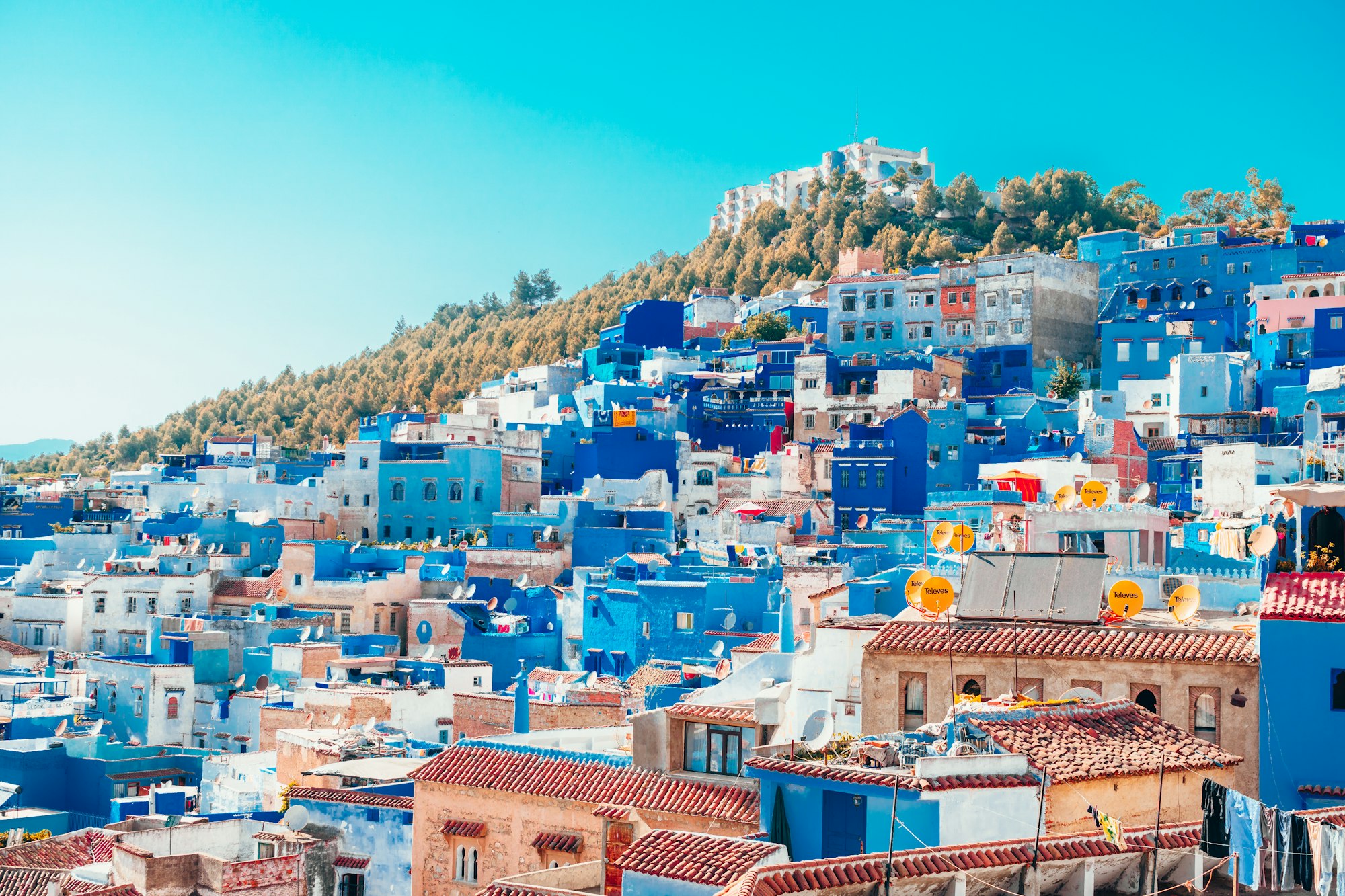
Chefchaouen is the blue-washed town tucked into the Rif mountains, with steep lanes in every shade of indigo, a kasbah on the main square and hiking trails starting right from the edge of the medina. Come for the photos, stay for the slow pace, the mountain air and the walk to the Akchour waterfalls.
Chefchaouen, often shortened to Chaouen, sits high in the Rif mountains of northern Morocco, about 2½ hours from Tangier and 4 to 5 hours from Fes by bus. The town was founded in 1471 as a fortress against Portuguese raids, and its compact medina climbs the hillside below two peaks. Almost every wall, door and staircase is painted blue. Nobody fully agrees why, and you will hear several stories, but it makes the whole town look like a film set.
It is a small place. You can walk from one side of the medina to the other in 15 minutes, and the centre of everything is Place Outa el Hammam, the main square with the kasbah, the Grand Mosque and a ring of cafés. From there, lanes lead uphill to Ras el Maa, the spring where the town's water comes out of the mountain, and on to the Spanish Mosque on the hill opposite.
After Fes or Marrakech, Chefchaouen feels like a deep breath. The hassle is much lower, the air is cooler and the pace is slow. Most people spend their days wandering, taking photos, drinking mint tea on the square, hiking up for sunset and eating goat's cheese from the surrounding hills. That said, it is firmly on the tourist trail: the main lanes are lined with souvenir stalls, and the famous photo spots get crowded, especially at weekends and in summer.
The Rif mountains around town are the real bonus. Talassemtane National Park stretches to the east, and the Akchour waterfalls and God's Bridge rock arch are an easy day trip by shared taxi. Hikers can stay a week; most travellers are happy with two or three nights.
Be aware that the Rif is Morocco's main cannabis-growing region. You will be offered hashish, often quite openly. Recreational use is still illegal in Morocco, so the simplest answer is a polite no.
Stay in the medina. It is small enough that anywhere inside the walls is walkable, but the higher you go, the better the views and the steeper the climb with a backpack. The new town below is cheaper and flatter but has none of the blue.
The main square with the kasbah, the Grand Mosque and cafés. Central, lively in the evening and the easiest place to find.
The main gate at the lower end of the medina, closest to taxis and the road from the bus station. Less climbing with luggage.
The upper medina by the spring, with the bluest lanes and the start of the path to the Spanish Mosque. Expect steps.
The hill east of town with the abandoned mosque and the best view of Chefchaouen. Not a place to stay, but a must for one evening.
Below the medina, around Place Mohammed V and the bus station. ATMs, markets and cheaper food, but little blue.
Orange labels are neighbourhoods, dots are the 8 top-rated hostels. Map data from OpenStreetMap contributors.
Start at Place Outa el Hammam, the cobbled main square. The kasbah on one side, built in the 15th century, has a small ethnographic museum and a garden, and you can climb its watchtower for a view over the rooftops. Entry is a small fee paid in cash at the gate. The Grand Mosque with its octagonal minaret stands next door; non-Muslims can admire it from outside.
Then just wander. The prettiest lanes are in the upper medina, in the Souika and Sebbanine quarters around Ras el Maa, where the blue is deepest and the stairways are lined with potted plants. Go early, before 9 am, if you want photos without crowds or people posing on every doorstep. Some residents now ask for a small tip if you photograph their door, and it is polite to ask before photographing people.
Ras el Maa is the spring and stream at the eastern edge of the medina, where women still wash clothes in the stone basins and cafés sit beside the water. From there, a well-trodden path climbs the hill opposite to the Spanish Mosque, built during the Spanish protectorate and never really used. It takes about 20 to 30 minutes and is the spot for sunset over the whole town. It gets busy at sundown, so go a little early and take a torch for the walk down.
If you have a full day, head to Akchour. Shared grand taxis leave from town for about 25 MAD per seat and take around 45 minutes. From the car park, it is about 45 minutes' walk to God's Bridge, a natural rock arch over the river, and about two hours to the big waterfall. Small cafés along the trail sell tagines and drinks, and in summer you can swim in the pools.
More serious hikers can climb Jebel el Kelaa, the mountain behind town, or arrange guided treks through Talassemtane National Park. Ask your hostel: several run group hikes and know local guides.
The best of Chefchaouen costs nothing. The blue medina is the attraction, and wandering it is free at any time of day. The upper lanes around Ras el Maa and the Souika quarter are the most photogenic, and early morning is when they are empty and the light is soft.
Place Outa el Hammam is free to sit in and watch, with the kasbah walls and the Grand Mosque's minaret as a backdrop. In the evening, families come out, the cafés fill up and the square is at its most lively.
Ras el Maa, the mountain spring at the top of the medina, is a nice place to cool your feet and watch daily life. It is also the start of the free walk to the Spanish Mosque, about 20 to 30 minutes uphill, which gives you the classic view of the whole blue town spread across the hillside. Sunset is the busiest time; sunrise is just as good and you will often have it to yourself.
Keep walking beyond the Spanish Mosque and the paths continue into the hills, with views back over the town and up to the peaks. Plenty of travellers spend a free morning on these trails. Bring water and proper shoes, and tell your hostel where you are going if you go far.
The market in the new town, around Avenue Hassan II, is free to browse and gives you a better idea of normal life than the souvenir lanes of the medina. Rif farmers bring cheese, olives and produce down from the hills to sell.
Chefchaouen's food is simple mountain cooking, and that is part of its charm. The local speciality is jben, fresh goat's or cow's cheese from the farms of the Rif, sold in markets and served at breakfast with olive oil, bread and honey. Look out for it in salads and omelettes, too.
Bissara, the thick fava bean soup topped with olive oil and cumin, is a northern Morocco staple and the cheapest breakfast in town. Tagines and couscous are on every menu, and goat tanjia, slow-cooked meat in a clay pot, is worth trying if you see it. Fresh orange juice and mint tea cost very little.
The restaurants on Place Outa el Hammam have the best location and the most predictable menus. They are fine for a drink and people-watching, but prices are higher and quality is mixed. For cheaper and better local food, walk a few minutes away from the square, or eat in the new town, where snack bars serve sandwiches, grilled meat and tagines to locals.
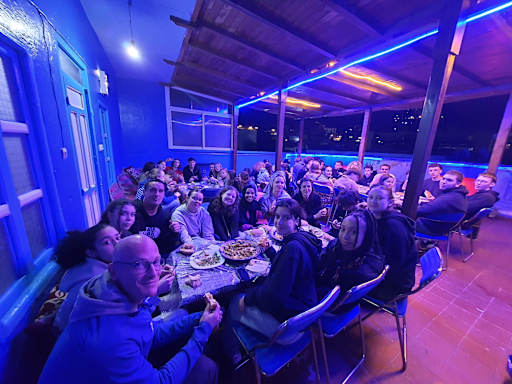
Many hostels in Chefchaouen cook family-style dinners for guests, often tagine or couscous at a set price. It is good value and the easiest way to meet other travellers. Some also offer cooking classes.
Chefchaouen is a dry town for the most part. A small number of hotels may serve alcohol, but do not count on finding a bar. Bring something from Tangier or Fes if you want a drink, and be discreet. If you are hiking, stock up before you leave town: bread, cheese, olives and fruit from the new town market make a cheap picnic, and the cafés at Akchour serve simple tagines and omelettes by the river.
There is almost no nightlife in Chefchaouen in the bar-and-club sense, and that is fine: it is not why people come. The town is quiet after about 10 pm, and evenings are for sunsets, long dinners and chatting on hostel roofs.
The best part of the evening is the walk up to the Spanish Mosque for sunset, followed by dinner on or near Place Outa el Hammam. The square stays lively until late, with families strolling, kids playing and cafés serving mint tea and juices.
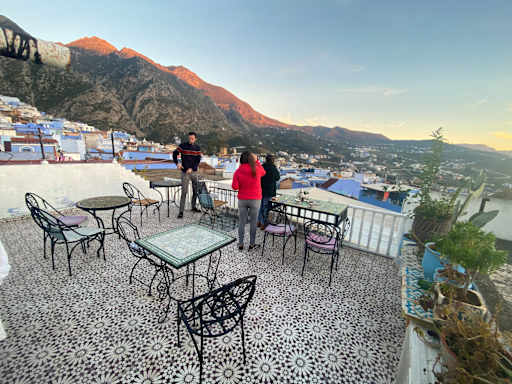
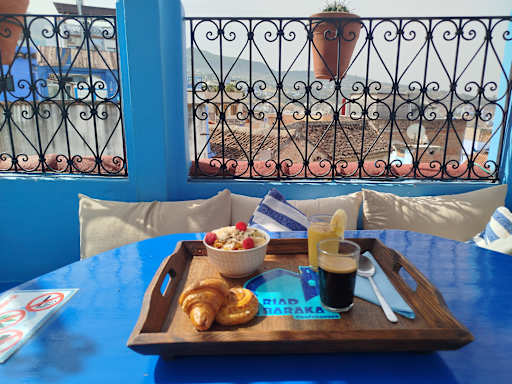
Hostel roof terraces are where travellers gather after dark. Several hostels have large terraces with views over the medina, and some host shared dinners, music or games nights. If you want company, choose a social hostel with a good terrace.
Alcohol is very hard to find, and you should not expect a bar scene. You will also be offered hashish in the evenings, sometimes repeatedly. Cannabis for recreational use is illegal in Morocco, and police do arrest people, so say no.
During Ramadan, Chefchaouen is quiet in the day and much busier after sunset, when the square and the cafés fill with locals breaking their fast. Summer weekends are the liveliest time, with lots of Moroccan visitors in town. If you are craving a proper night out, plan it for Tangier or the Ville Nouvelle in Fes and treat Chefchaouen as the rest stop between them. Most travellers find the early nights suit a town where the best light, and the emptiest lanes, come first thing in the morning.
Chefchaouen has no airport or train station. The nearest airport is Tangier Ibn Battouta, and most people arrive by bus. CTM runs about five buses a day from Tangier, taking roughly 2¼ to 2¾ hours, with fares from about 60 MAD. From Fes, CTM runs several buses a day taking about 4 to 5 hours, for roughly €15 to €20. Book a day or two ahead in summer and around Eid, when buses sell out.
The bus station (gare routière) is on Avenue Maghreb Arabi in the new town, below the medina. From there, it is a 15-minute uphill walk to Bab el Ain, the main gate into the old town, or about 20 MAD by petit taxi. With a heavy pack, take the taxi.
Shared grand taxis are the other option, especially for shorter trips. From Tangier, a seat costs from about 70 MAD and the taxi leaves when it is full. A whole taxi from Tangier airport to Chefchaouen costs around 1,200 MAD, so it only makes sense split between a group.
Inside the medina, you walk. Lanes are steep and stepped, and cars cannot enter. Hostels near the top of the town are a real climb with luggage, so check the location before you book if mobility is an issue.
For Akchour, shared taxis leave from near the roundabout by the police station off Avenue Hassan II and cost about 25 MAD per person each way. A private return trip costs around 400 MAD. Leave Akchour by late afternoon; return taxis thin out later in the day.
Chefchaouen is cheap, even by Moroccan standards. At about 10.9 MAD to €1 (October 2026), a bowl of bissara is a few dirhams, a tagine in a local place costs around 40 to 60 MAD, and a meal on the main square closer to 80 to 120 MAD. Fresh orange juice and mint tea are a few dirhams each.
Dorm beds in well-rated hostels usually cost about €7 to €12 a night, often with breakfast. Private rooms in hostels and small guesthouses are good value too, which makes Chefchaouen a good place to treat yourself to a room with a view.
Most of what you do here is free: wandering, the Spanish Mosque walk and the hills. The kasbah charges a small entry fee. A day at Akchour costs about 50 MAD in shared taxis plus lunch on the trail, and guided treks in the national park vary with group size.
Shopping is where the money goes. Chefchaouen is known for woven blankets, wool jellabas and painted souvenirs. Prices are negotiable, and the same items are often cheaper in the new town or in the smaller shops away from the square.
There are ATMs in the new town around Place Mohammed V and a couple near the medina, but they can run low on busy weekends. Bring enough cash from Tangier or Fes, as most small shops, taxis and restaurants take dirhams only. Put together, a shoestring day here, with a dorm bed, local food and no paid activities, comes to around €20. Even a comfortable day with a private room, restaurant meals and a guided hike rarely tops €100.
Chefchaouen is one of the most relaxed places in Morocco to travel, and serious crime against tourists is rare. Hassle levels are much lower than in Fes or Marrakech, and many solo travellers, including women, find it the easiest stop of their trip.
The one thing you will notice is hashish. The Rif is Morocco's main cannabis-growing area, and offers in the medina and on the trails are common. Possession is still illegal for recreational use, plain-clothes police operate in town, and a drugs arrest in Morocco is serious. Say no and keep walking. Be wary of anyone offering to take you to visit a farm.
Faux guides exist here too, especially around the bus station and on the paths into the hills. You do not need a guide for the medina or the Spanish Mosque walk. For longer hikes, book a guide through your hostel rather than someone who approaches you.
On the trails, the risks are practical: steep, slippery paths, sun, and getting lost. Carry water, wear proper shoes, and do not hike alone far from town. At Akchour, the river can rise quickly after rain, so take care at the pools.
Winters in the mountains are cold and wet, and many guesthouses have little heating, so pack warm layers between November and March. In an emergency, call 19 for the police or 15 for an ambulance. Outside town, the Royal Gendarmerie is on 177. Finally, a note on photos. Chefchaouen is a real town where people live, not a set. Ask before photographing people, keep your voice down in the residential lanes early in the morning, and do not climb on steps, doorways or plant pots for a shot.
Chefchaouen is a base for the Rif mountains. Akchour is the classic day out; Tetouan is the easiest city trip.
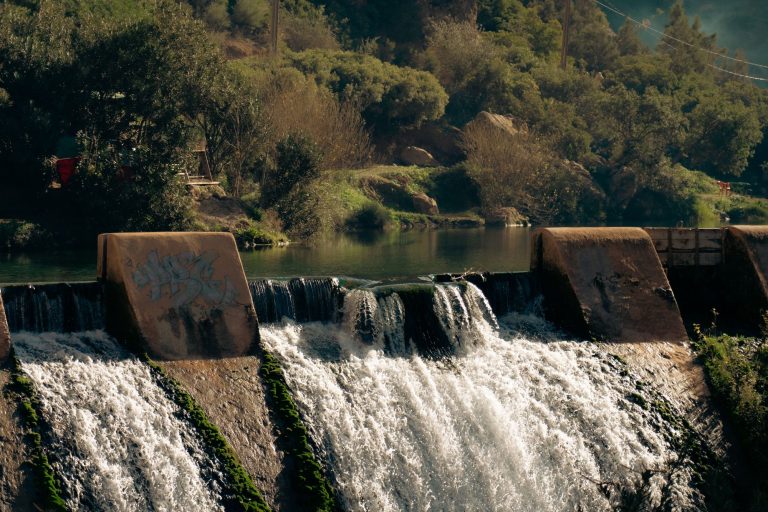
Riverside hike to a natural rock arch (about 45 minutes) and a big waterfall (about 2 hours), with cafés on the trail and summer swimming.
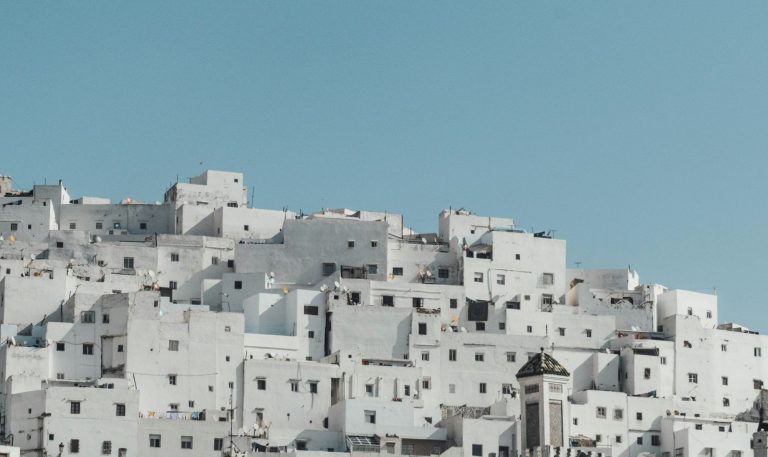
UNESCO-listed medina with strong Andalusian and Spanish influence, far fewer tourists than Chefchaouen, and the white-walled Ensanche district.
Fir and cedar forest, limestone peaks and Rif villages in the mountains east of town.
The mountain behind Chefchaouen, with big views over the Rif. A tough climb; go with a guide or a group.
Chefchaouen is a small town with a quiet calendar. The busiest times are summer weekends and Moroccan holidays, when visitors from across the country arrive.
Quiet days and busy evenings, with the square full after sunset.
Family holiday; buses fill up, so book ahead.
The town fills with Moroccan visitors; weekends are especially busy.
Local music festival held in past years; check whether it is running before you plan around it.
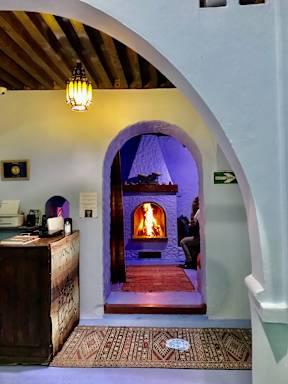
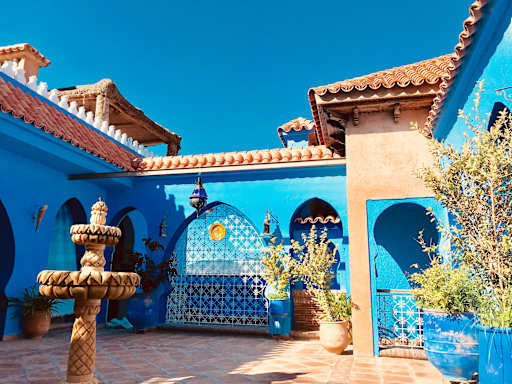
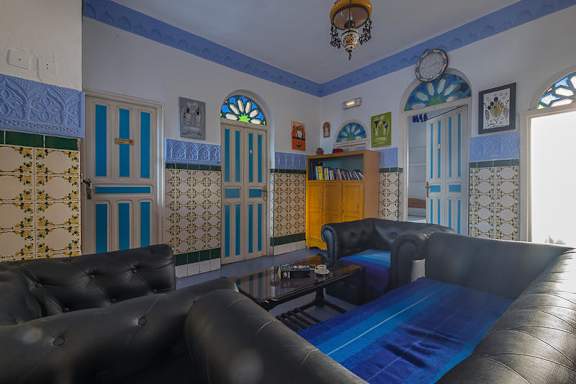
Chefchaouen's hostels are small, friendly and mostly inside the blue medina, with roof terraces over the town and breakfast included. Some of the best-reviewed hostels in Morocco are here. Live prices and reviews below.
More than 2,700 reviews and a 9.2 rating on Hostelworld; a riad-style hostel in the medina with a big roof terrace.
A 9.8 rating from nearly 900 reviews, in the heart of the medina.
A 9.6 rating from about 900 reviews, in the Souika quarter of the upper medina near Ras el Maa.
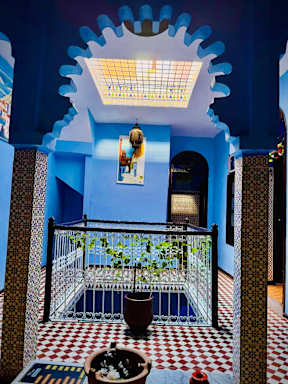
April to June and September to October bring warm days, cool evenings and green hills. Summer is hot and crowded with domestic visitors; winter is cold and wet, but the waterfalls are at their best.
Average daily highs for Chefchaouen from bestdateweather. The town sits at altitude, so nights are much cooler than the highs suggest, especially from November to April. Crowd numbers are our own estimate. Ramadan 2027 is expected roughly 8 February to 9 March.
Pick a style and a number of nights for a rough total. Figures are per person per day in euros: a bed, food, local transport, and sights or activities.
Our estimates at about €1 = 10.9 MAD (October 2026), built from current dorm prices and local food and taxi prices. Buses in and out of town are extra.
Prices and timetables were checked in October 2026 and change often. Confirm the essentials before you travel.

Compare Chefchaouen hostels — live prices, real reviews and free cancellation on most bookings. Then meet the people already there in the app.

 Get the App.

 Get the App.