Medina and Place Moulay Hassan
First-timers and social travellersThe heart of town, between the port and the ramparts, with most of the riad hostels, café terraces and the evening musicians.

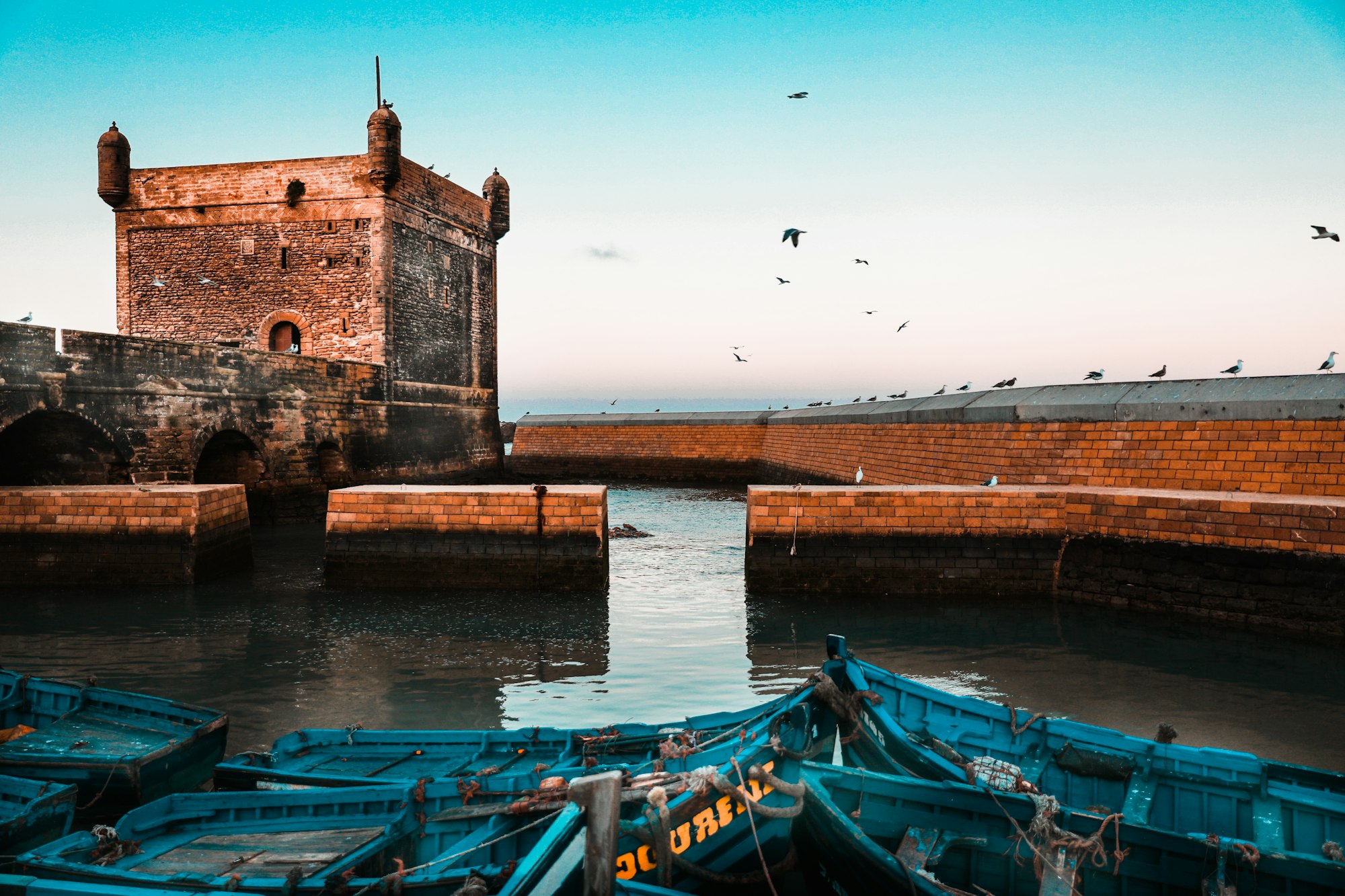
Essaouira is where people go to breathe out after Marrakech: a whitewashed, blue-shuttered medina on the Atlantic, grilled fish at the port and a wind that never quite stops. It's about three hours from Marrakech by bus, and most backpackers plan two nights and stay four.
Essaouira, once called Mogador, is a fortified port town on Morocco's Atlantic coast, built in its current form in the 18th century and listed by UNESCO for its medina. It's small, walkable and noticeably calmer than Marrakech or Fes. The medina is almost entirely car-free, you can cross it in 20 minutes, and the sellers in the souks mostly let you browse.
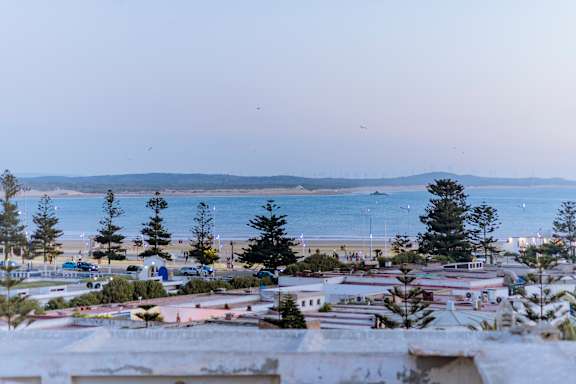
Life runs between three places. The port, at the south-west corner of the medina, is all blue fishing boats, gulls and charcoal grills. Place Moulay Hassan, just inside the walls, is the main square, with café terraces and musicians in the evening. And the long beach curves south from the walls towards Diabat, with kitesurfers on one side and camels on the other.
The wind is the thing to understand before you come. The trade winds blow most reliably from April to September, which makes Essaouira one of Morocco's best kitesurfing and windsurfing spots, but it also means the beach is rarely a sunbathing beach and evenings on the ramparts get cold. Highs stay between about 18°C in winter and 23°C in summer, so it's a good escape when Marrakech is baking.
Two or three nights is the right amount for most people: a day for the medina, ramparts and port, a day on the beach or on a kite lesson, and an evening of Gnaoua music. Stay longer if you're learning to kite or surf, or if you want a slow day out to Sidi Kaouki or Diabat. The Gnaoua and World Music Festival, in late June, is the one time the town gets truly packed.
Almost every backpacker stays inside the medina, in a riad hostel with a roof terrace. It puts you within a few minutes of the port, the square and the beach, and the bus station is a short walk or taxi ride from Bab Doukkala.
Essaouira is compact, so the choice is really between the medina, for atmosphere and walking distance to everything, and the beach side, for space and the kite schools. Diabat and Sidi Kaouki suit longer, quieter stays.
The heart of town, between the port and the ramparts, with most of the riad hostels, café terraces and the evening musicians.
The north-west corner along the sea rampart, quieter lanes, roof terraces over the Atlantic and the thuya workshops.
The old Jewish quarter in the north-east of the medina. More local and a bit scruffier, but cheap and close to the bus station.
Wide streets and apartments along Boulevard Mohammed V, a few minutes from the medina and right by the kite schools.
Small village about 4 km south, past the river and the ruined fort, with a couple of hostels and a much slower pace.
Orange labels are neighbourhoods, dots are the 8 top-rated hostels. Map data from OpenStreetMap contributors.
Start at the port in the morning, when the boats unload and the fish market restocks; it's free to wander and the best show in town. Next to it, the Skala du Port is a fortified bastion with cannons and the classic view back over the medina and the blue boats. It charges a small entry fee, around 30–60 MAD, and is open from about 9am to late afternoon.
Then walk north into the medina along the Skala de la Ville, the sea rampart with its line of bronze cannons and waves breaking below. Beneath it, in the old arches, thuya-wood workshops make boxes and carvings from the local tree, and you can watch them work without buying. From there, lose an hour or two in the souks around the grain market and Avenue Sidi Mohammed Ben Abdallah, then head to the Mellah, the old Jewish quarter in the north-east of the medina. Bayt Dakira, a restored house and synagogue, tells the story of the town's Jewish community.
Essaouira is one of Morocco's main wind-sport spots. From April to September the trade winds make the main beach a kitesurfing and windsurfing playground, and schools along the beach run group kite lessons from around €55 for two hours. In winter, when the wind drops and the swell arrives, surfers head to Sidi Kaouki, about 25 km south.
Walk or take a short taxi to Diabat, a village about 4 km south across the river, to see the sand-swallowed ruins of the Borj el-Berod fort, which local lore links to Jimi Hendrix. On the way back, the argan cooperatives on the Agadir road show how the oil is pressed. In the evening, listen out for Gnaoua musicians around Place Moulay Hassan: hypnotic iron castanets, the three-stringed guembri and long trance-like songs.
Essaouira is one of the cheapest places in Morocco to do nothing in particular, and that's a compliment. The best free thing is the port at breakfast time: fishermen hauling in crates of sardines, gulls fighting over the scraps and boatbuilders working on wooden hulls in the yard.
The medina itself costs nothing. Walk the length of the Skala de la Ville rampart and watch the waves explode against the rocks below, poke your head into the thuya workshops in the arches, and wander the Mellah, which is quieter and more lived-in than the souks. The old gates, Bab Doukkala, Bab Marrakech and Bab Sbaa, are all worth a look.
The beach stretches several kilometres south from the walls. Walk it at low tide to Diabat and the ruined fort, around two to three hours there and back, and watch the kitesurfers on the way. Sunset from the port or the ramparts is free and spectacular, but bring a jumper: the wind gets cold as soon as the sun drops.
Evenings in Place Moulay Hassan are free entertainment, especially at weekends, when musicians gather. During the Gnaoua festival in June, the big outdoor stages are the main event in town.
From the port, look out to the Île de Mogador, the island just offshore. Boat trips run around the bay, but landing is generally prohibited, as it's a protected nesting site for Eleonora's falcons. On the Agadir road south of town, the argan cooperatives are usually free to visit, and buying their oil is optional.
Food in Essaouira starts at the port. The system is simple: buy your fish from a vendor at the market, then hand it to one of the charcoal grill stalls next to it, who cook it and charge a grilling fee of around 20–30 MAD per person. Sardines, sea bream, squid and prawns are the usual picks. Some stalls sell set plates instead, which is easier but usually costs a bit more. A full lunch of fish, bread and salad works out at roughly 50–80 MAD (about €5–7).
The trick is to agree the price before anything goes on the grill, and to ask whether it's per fish or per kilo. Touts at the entrance will try to steer you to a particular stall: pick the one where the fish looks freshest instead. Arrive around 10:30–11:30, when the grills are fired up and before the lunchtime rush. Lunch is the big meal at the port, so go then rather than in the evening, when choice thins out.
Inside the medina, small tagine and couscous places around Rue Mohammed el Qory do cheap set meals, while restaurants around Place Moulay Hassan charge more, roughly 150–300 MAD for a sit-down dinner. Friday is couscous day across Morocco, and Essaouira's fish tagines are worth ordering anywhere you see them.
For breakfast, look for msemen (flaky griddle bread) with honey and amlou, the local spread of argan oil, almonds and honey. Mint tea is everywhere and cheap. Alcohol is available in licensed restaurants and a few bars, but it's not part of street life here.
Essaouira isn't a party town, and most people like it that way. Evenings start with sunset on the ramparts or at the port, then dinner on a terrace around Place Moulay Hassan, which fills up between about 7pm and 9pm. Musicians often play in and around the square, especially at weekends.
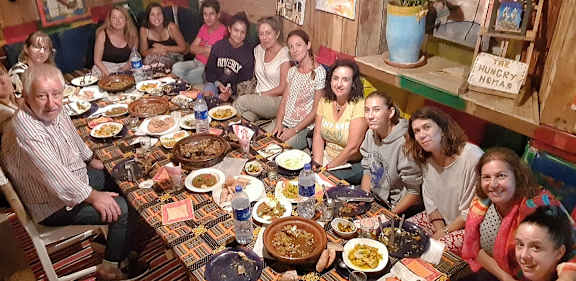
Gnaoua music is the soundtrack of the town. It's spiritual trance music brought to Morocco by people of West African descent, built on the guembri bass lute and clattering iron qraqeb, and you'll hear it drifting out of cafés, hostels and doorways most nights. Some hostels and riads put on informal sessions; ask at yours.
There are a handful of licensed bars and restaurants with drinks in the medina and along the beachfront, and hostel roof terraces are often the most social place to spend an evening. Don't expect clubs.
The exception is the Gnaoua and World Music Festival in late June (24–26 June 2027), when Gnaoua masters jam with jazz, blues and world musicians on stages across town, crowds pour in from all over Morocco, and the medina stays up all night. Book your bed well ahead.
Two practical things. Evenings are cooler than you'd expect, because the wind picks up as the sun drops, so bring a jacket even in summer. And during Ramadan, bars and some restaurants close or stop serving alcohol, but the medina gets busy after iftar, with families out walking and cafés open late. Most hostel rooftops are the easiest place to find people to go out with.
Most people arrive by bus from Marrakech. Supratours and CTM both run the route, taking about 2 hours 45 minutes to 3 hours, with fares around 90–100 MAD (about €8–9). Supratours has more departures. Buses from Agadir take roughly 2.5–3 hours and cost around 80–100 MAD, which is also the way to reach Taghazout, 152 km south: bus to Agadir, then the local 32 or 33 bus up the coast.
Essaouira-Mogador Airport is about 15 km south-east of town, with limited, mostly seasonal flights from Europe, including Ryanair. Taxis charge a fixed 150 MAD to the centre (about 200 MAD to Diabat), and a 6 MAD airport bus runs on a timetable tied to flights. Most visitors still fly into Marrakech and take the bus.
Once you're here, you walk. The medina is car-free and compact, and the beach is under ten minutes on foot from the walls. Blue-and-white petit taxis use the meter for trips to the bus station or the new town, and most short rides cost 15–20 MAD. Taxis can't enter the medina, so they drop you at the nearest gate.
For Sidi Kaouki, about 25–27 km south, there's no reliable bus: a grand taxi costs around 150–200 MAD each way, so it's worth sharing with people from your hostel. Diabat is a 20–30 MAD taxi or a beach walk at low tide. Book a day ahead in summer and around the Gnaoua festival, when buses fill up, and expect a small luggage fee of around 5 MAD for bags in the hold.
Essaouira is one of the cheaper stops on a Morocco trip. Hostelworld lists dorm beds in the medina from roughly €5, with the best-rated hostels around €15, and many include breakfast on the roof. Expect a city tax of about 22 MAD (€2) per person per night on top of some bookings.
Food is the real bargain. A port lunch of grilled fish, bread and salad costs about 50–80 MAD (€5–7), a tagine in a small medina restaurant is cheap, and mint tea costs very little. Sit-down dinners around the main square are where the bill climbs, at roughly 150–300 MAD.
Sightseeing is mostly free. The Skala du Port is about 30–60 MAD and the small museums are cheap. The big spend is wind sports: around €55 for a two-hour group kite lesson, about €260 for a ten-hour course and around €50 for a half-day of equipment hire.
The dirham is a closed currency, so you can't get it before you arrive. ATMs are easy to find around the medina gates and in the new town, and €1 is about 10.9 MAD (October 2026). Carry cash: small restaurants, taxis and the port grills don't take cards.
For a rough idea, a cheap day here looks like a dorm bed in the medina, a port lunch of grilled sardines, a tagine for dinner and a walk along the ramparts and beach, and it can come in at well under €25. Add a kite lesson and you'll more than double that. Remember the city tax at some hostels.
Essaouira is one of the most relaxed places in Morocco, and most visitors never have a problem. The medina is calm by Moroccan standards and the main square stays busy late. As anywhere, avoid the quietest, unlit back lanes on the edge of the medina after midnight, and keep valuables out of sight on the beach.
The scams are low-level and familiar. Unofficial guides offer to show you the way and then steer you to a shop that pays commission; a polite no and an offline map solve that. 'Free' henna or a photo with an animal turns into a demand for money, so agree a price first or decline. Taxi drivers waiting at the bus station sometimes quote tourist fares: insist on the meter, as a short daytime ride should cost only a few dirhams. And at the port grills, agree the price per fish or per kilo before cooking.
The sea deserves respect. The water can look calm but have a strong undertow, and the wind whips up sand in summer. Swim where others swim, and book water sports with an established school that gives you a proper briefing. The sun is stronger than the cool wind makes it feel, with UV levels reaching extreme in July, so wear sunscreen even when you don't feel hot.
Dress is more relaxed than in Marrakech, but covering shoulders and knees in the medina is still appreciated. Police are on 19 (190 from a mobile) and an ambulance on 15. Drink bottled or filtered water rather than tap water.
Most trips from Essaouira are short and slow: a beach walk to Diabat, a taxi down the coast to Sidi Kaouki or an afternoon at an argan cooperative.
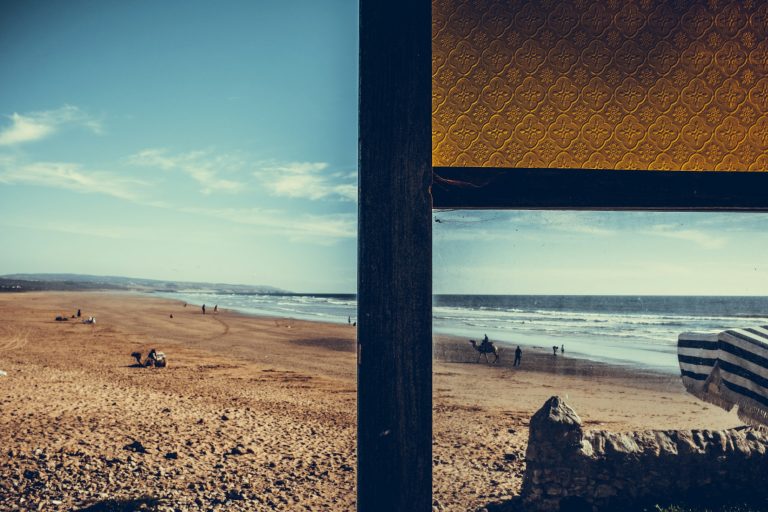
Long, wild beach about 25 km south with surf in winter and kitesurfing in summer, plus a few cafés. Share a taxi.
Village and sand-swallowed fort ruins across the river, linked by local lore to Jimi Hendrix.
Women's cooperatives on the Agadir road where you can watch argan oil being cracked and pressed. Usually free to visit.
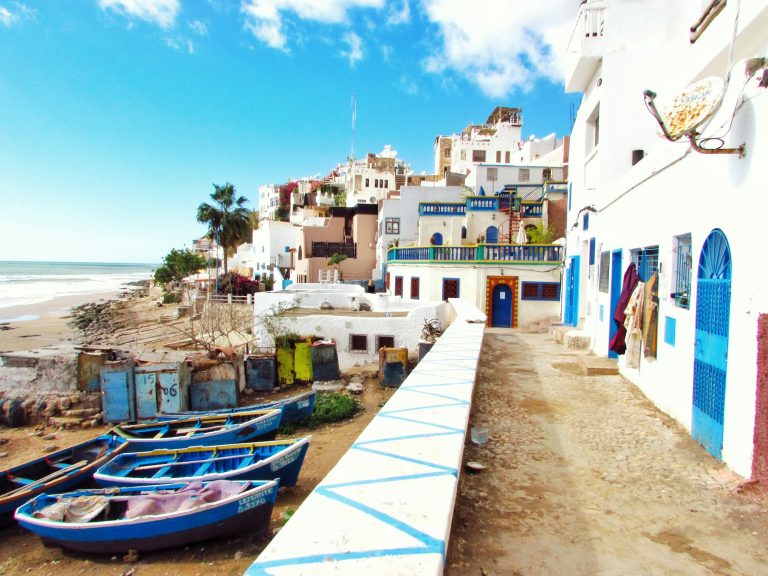
Morocco's best-known surf village, 152 km south. Better as an onward stop than a day trip.
Essaouira's big date is the Gnaoua festival in June. The rest of the year, religious holidays shape the town's rhythm.
Gnaoua masters and international musicians on stages across town. The busiest weekend of the year.
Quiet days, then busy streets and cafés after sunset.
The end of Ramadan; some shops close for a day or two.
Public holiday for the king's accession, with flags and celebrations.
National public holiday.
National public holiday marking independence in 1956.
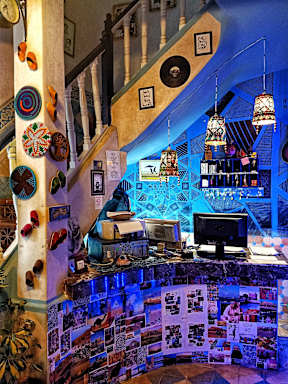
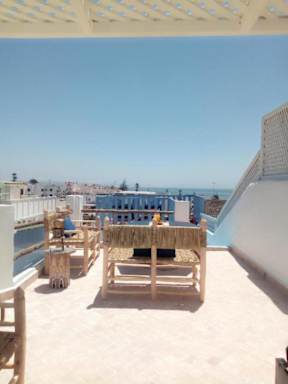
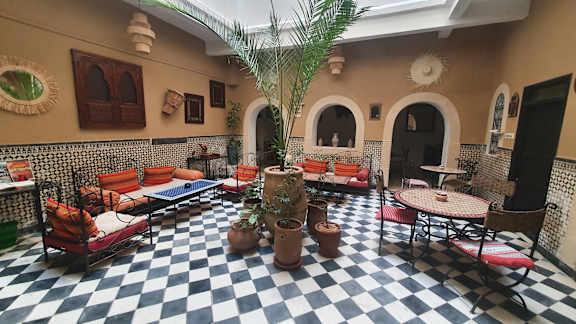
Essaouira's hostels are mostly riads in the medina, with dorms around a courtyard and roof terraces looking out over the Atlantic. Most can book surf and kite lessons and airport taxis.
Rated 9.5 from almost 1,000 reviews, in the medina five minutes from the beach, with free breakfast, daily tea time and a high roof terrace.
Over 3,400 reviews, a big rooftop over the medina and surf trips from reception. Lively rather than spotless.
Rated 8.7 from about 500 reviews, right in the centre, with some of the lowest dorm prices in town.

Essaouira is mild all year, with highs between 18°C and 23°C. April to September is windy, which kitesurfers love, while winter is calmer, wetter and better for surf at Sidi Kaouki. Late June brings the Gnaoua festival crowds.
Average daily highs from weather2travel's Essaouira climate data. Crowd levels are our rough guide. Ramadan 2027 is expected from about 8 February to 8 March.
Pick a style and a number of nights for a rough total, per person, in euros.
Estimates. Beds are based on Hostelworld's listed prices for Essaouira in October 2026; doing is an average across free days and paid ones like a kite lesson, which costs more on its own.
Prices and timetables change. Check before you travel.

Compare Essaouira hostels — live prices, real reviews and free cancellation on most bookings. Then meet the people already there in the app.

 Get the App.

 Get the App.