Old town (Souika)
History and atmosphereThe medina on the rock, with the Ahmed Bey Palace, the souks and Constantine's Hostelworld hostel. Some lanes are run-down.

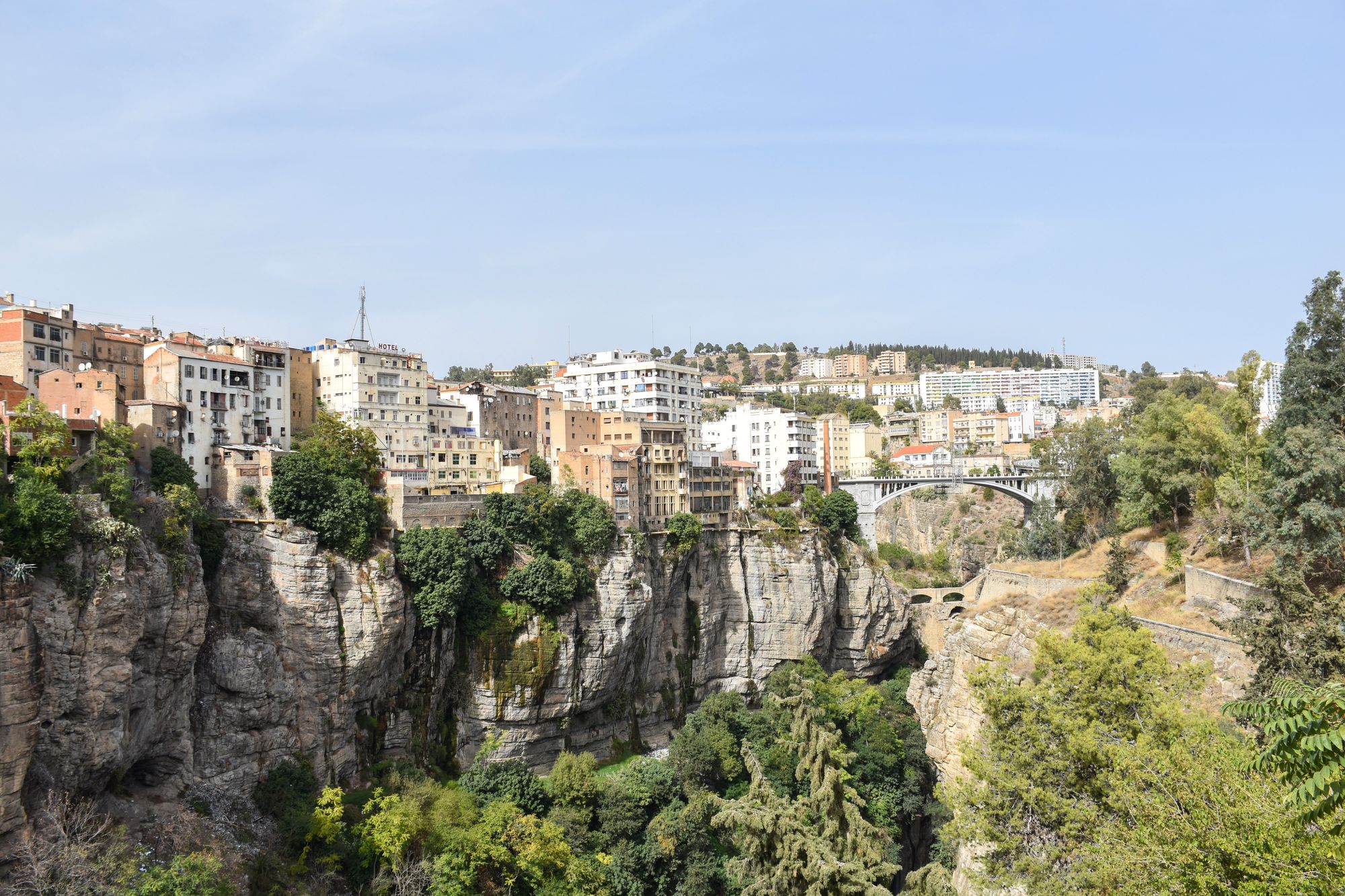
Constantine is built on a slab of rock above the Rhumel gorge, with bridges strung across the ravine up to 175 m above the river. Come for the old town, an Ottoman palace and Roman ruins within a day's reach, and stay two or three nights.
Constantine is Algeria's third-largest city, in the north-east of the country, about 390 km east of Algiers by road. It sits at around 640 to 690 m above sea level, on a rocky plateau almost cut off by the gorge of the Rhumel river. The ravine is the reason the city looks the way it does: houses stand right on the cliff edge, and a series of bridges, from a 19th-century iron arch to a cable-stayed viaduct opened in 2014, link the old town to the rest of the city.
It is one of the oldest cities in North Africa. As Cirta, it was the capital of the Numidian king Massinissa in the 2nd century BC. It was destroyed in AD 311 and rebuilt two years later by the Roman emperor Constantine, who gave it its name. Later it was ruled by Muslim dynasties and the Ottomans, whose last bey, Ahmed, built the palace that is now the city's finest sight, before the French took the city in 1837.
The old town on the rock is the heart of it: the Souika quarter, with its lanes, markets and copper workshops, the Ahmed Bey Palace and the Grand Mosque. Many old houses are in poor repair, and a local guide helps. Around it, the French-era centre has the regional theatre and the squares around Place du 1er Novembre, while the newer districts spread south and west, linked by a tram line.
Constantine is also the best base in eastern Algeria for Roman ruins. Tiddis is a half-day trip, and the UNESCO-listed cities of Djémila and Timgad are long day trips or overnight stops.
Very few foreign tourists come, so expect curiosity, little English (French is widely understood) and the odd police checkpoint on the roads. Two or three nights is about right: one day for the bridges and old town, one for the palace and museums, and one for a trip to the ruins.
Stay on or near the rock if you can: the old town and the streets around Place du 1er Novembre put the bridges, the palace and the souks within walking distance. The newer districts are linked by tram but feel far from the sights.
The medina on the rock, with the Ahmed Bey Palace, the souks and Constantine's Hostelworld hostel. Some lanes are run-down.
The central square at the edge of the old town, a short walk from the Ahmed Bey Palace and the bridges.
Across the gorge from the old town by the iron arch bridge, next to the railway station.
A residential district south-west of the centre, on the tram line and a walk from the Emir Abdelkader Mosque.
The new town about 12 km south, at the end of the tram line; modern but far from the sights.
Orange labels are neighbourhoods, dots are the 1 top-rated hostels. Map data from OpenStreetMap contributors.
Start with the bridges. The Sidi M'Cid suspension bridge, opened in 1912, hangs 175 m above the Rhumel and was once the highest bridge in the world. Walk across it, then climb to the Monument aux Morts on the hill above, a 21 m arch modelled on Trajan's Arch at Timgad and inaugurated in 1930, for the best view over the gorge and the city. It is open-air and free.
Back on the rock, the Mellah Slimane footbridge, opened in 1925, is 125 m long and only 2.4 m wide, for pedestrians only, with a lift at one end up to the old town. Bab El Kantara, at the oldest crossing point, is an iron arch built in the 1860s, and the Sidi Rached viaduct, finished in 1912, carries the road over the gorge on 27 stone arches. The newest, the cable-stayed Salah Bey viaduct, opened in 2014. The cable car across the gorge reopened in April 2025 after years out of service, and gives another view of the ravine.
The Ahmed Bey Palace, built between 1825 and 1835 for the last Ottoman bey, is Constantine's best sight: courtyards, gardens, about 47,000 glazed tiles and brightly painted walls. It reopened in 2009 after a long restoration. Allow about an hour; entry costs a few hundred dinars, and it is often closed on Fridays.
Walk down from the palace into Souika, the old medina. Its main street, Rue Mellah Slimane, and the lanes around it have markets and copper and brass workshops. Many houses are crumbling, so go in the morning, and consider a local guide. The Grand Mosque, Djamaa El Kebir, dates from the 12th century and stands on the site of a Roman temple.
The Cirta National Museum, opened in 1930, has prehistoric, Numidian, Roman and Ottoman finds and a large collection of paintings. South of the centre, the Emir Abdelkader Mosque, opened in 1994, is one of the largest in Algeria, with two minarets 107 m tall. Visit outside prayer times and dress modestly; women should bring a headscarf.
The Chemin des Touristes, a path along the bottom of the gorge built in the 19th century, has been closed since 1958. A restoration project was relaunched in late 2024, but no reopening date has been announced.
The best things in Constantine cost nothing. Walking the bridges is free, and you can cross the Sidi M'Cid, Mellah Slimane and Bab El Kantara bridges in a morning, looking straight down into the gorge.
Climb to the Monument aux Morts above the Sidi M'Cid bridge. There is no ticket, and the view takes in the gorge, the old town and the plateau around it. Late afternoon light is best.
Wander Souika and the markets of the old town. Browsing the copper workshops and food stalls costs nothing, though most shops close on Friday until after midday prayer.
Visit the Emir Abdelkader Mosque outside prayer times, and the Grand Mosque in the old town. Entry is free, but dress modestly.
Ride the lift at the end of the Mellah Slimane footbridge, and look out for viewpoints all along the edge of the rock. The few paid sights, such as the Ahmed Bey Palace and the Cirta Museum, cost only a few hundred dinars each.
Constantine has its own cooking, and it is one of the best reasons to come. The city's signature dish is chakhchoukha: small pieces of flatbread soaked in a spiced sauce, usually served with meat. It is nothing like the tomato and egg dish of the same name elsewhere in North Africa.
Jari, the local name for chorba frik, a soup of cracked green wheat and lamb, is on every table during Ramadan. Look also for trida, mhajeb (stuffed square flatbreads), couscous and slow-cooked tagines.
The city is famous for sweets. Djouzia, a sticky nougat of honey and walnuts, is a Constantine speciality: Djawziyat Constantine, next to the Mellah Slimane bridge, makes its own and sells gift boxes. Makroud (semolina and dates), kalb el louz and baklava are sold in every pastry shop.
A main dish in a local restaurant costs about 600 to 1,200 DZD. For a meal with a view, Restaurant Igherssan serves traditional dishes overlooking the cliffs, though it can be touristy.
Most restaurants don't serve alcohol. Beer and wine are found mainly in the big hotels, such as the Marriott, Novotel and ibis, and a local beer costs around 1,000 DZD.
Constantine is not a nightlife city. Evenings are about cafés, pastry shops and a walk across the bridges.
The city's music is malouf, an Andalusian-rooted classical tradition. The best chance to hear it is the International Malouf Festival at the Mohamed Tahar Fergani regional theatre; the 2025 edition ran from 20 to 24 September, but dates change from year to year.
For a drink, head to the hotel bars: the Novotel has a lounge, and the ibis, Marriott and Protea serve beer and wine. Shops selling alcohol are found outside the city.
During Ramadan, the city comes alive after iftar, with cafés and pastry shops open late.
Winter nights are cold, at around 640 to 690 m above sea level, so bring a warm layer from November to March. Ask your hotel to call a taxi if you are out late.
The quickest way from Algiers is by air. Air Algérie flies between Algiers and Constantine's Mohamed Boudiaf Airport in about an hour, and fares on comparison sites are often under €40 return. There are also direct international flights, including from Paris, Marseille, Lyon, Geneva and Istanbul. The airport is about 9 to 12 km south of the centre and isn't on the tram line, so take a taxi and agree the fare first.
By train, SNTF runs a direct service from Algiers Agha at 06:30 on Saturdays, Mondays and Wednesdays, arriving at 13:14, and back from Constantine at 06:40 on Sundays, Tuesdays and Thursdays. Buy your ticket a day ahead, and check the timetable, as it changes. The station is just east of the gorge, across the Bab El Kantara bridge from the old town.
Buses from Algiers take about five hours, and shared taxis (taxis collectifs) leave when full. Buses also run to Sétif in about two hours.
In town, the old town and the bridges are best on foot. The tram, opened in 2013 and extended in 2019 and 2021, runs about 18 km from the city centre south to Zouaghi and the new town of Ali Mendjeli; buy tickets at the stops. The cable car crosses the gorge, and taxis are cheap: agree the price before you get in, or use Yassir.
For the Roman ruins, hire a car with a driver through your hotel. Public transport to Djémila and Timgad is slow and involves changes in Sétif, El Eulma or Batna. Expect police checkpoints on the main roads, and keep your passport with you.
Constantine is cheap for food and transport, but beds are the big cost. Hostelworld lists one hostel in the city, Hostel Le Rhumel, with dorms from around €20. Budget hotels booked online start at about €32 to €46 a night, the ibis at about €50, the Novotel at about €90 to €110 and the Marriott at €170 or more. Online prices are charged at the official rate.
Food costs little. A main dish in a local restaurant costs about 600 to 1,200 DZD, and street food, coffee and pastries less. A local beer in a hotel bar is around 1,000 DZD.
Sights are cheap: the Ahmed Bey Palace and the Cirta Museum cost a few hundred dinars each, and the bridges and the Monument aux Morts are free.
The bigger costs are getting around the region. A car with a driver for a day trip to the ruins is the easiest option; agree the price through your hotel the day before. Flights from Algiers are good value.
The official rate is about 151 dinars to €1 (October 2026). Most travellers bring euros and change them on the informal market, where 2026 reports put the rate at around 250 to 275 dinars to the euro. It is widespread but unofficial: count every note, and remember you can't change dinars back without an official receipt. Cards are accepted only in larger hotels and are charged at the official rate, so carry cash. At official rates, a shoestring day with a hostel bed and local food comes to around €30.
Constantine is generally calm, and travellers who write about it describe feeling safe, even walking after dark. The city is not in any area where the UK advises against travel.
The UK does say the terrorist threat is higher in rural, and particularly mountainous, areas in the north and between Tunisia and Algiers, which covers the countryside around Constantine. Stick to main roads for day trips, travel by day, and use a driver your hotel recommends. The UK advises against all but essential travel within 30 km of the Tunisian border, which matters if you head east towards Tunisia.
In the city, watch for pickpockets in crowds and markets, and avoid unfamiliar suburbs after dark. Take hotel-recommended taxis rather than accepting lifts from strangers.
Expect police interest: checkpoints on main roads are normal, and you may be asked where you are going. Carry your passport and keep copies of it and your visa separately.
Some lanes in the old town are run-down and confusing, so go by day, and consider a guide. Dress modestly, especially at mosques, and don't drink alcohol in public, which is illegal. Drones need authorisation.
In an emergency, call the police on 17 or 1548, an ambulance on 1021, or the fire service on 14.
Constantine is the gateway to Algeria's Roman east: Tiddis is close by, while Djémila and Timgad, both on the UNESCO list, are long day trips best done with a driver.
The Roman town of Castellum Tidditanorum, north-west of the city, one of the most important archaeological sites in the region.
UNESCO-listed Roman town on a mountain ridge, with temples, baths, a theatre and a museum of mosaics. Allow at least three hours on site.
Trajan's colony of AD 100: a vast grid of streets, a theatre and a triumphal arch. UNESCO-listed; consider a night in Batna.
Numidian mausoleum about 15 km south-east, from the 2nd century BC, often called Massinissa's tomb.
Forested hills above the city, at 880–1,120 m, planted from 1906, with four small lakes.
Constantine's big cultural event is the International Malouf Festival, held each year at the regional theatre. Ramadan and Eid change the rhythm of the city.
Daytime fasting and busy nights; jari soup on every table at iftar.
The festival marking the end of Ramadan; the exact date depends on the moon.
Public holiday marking independence from France in 1962.
Malouf, the city's Andalusian-rooted music, with performers from Algeria and abroad. The 2025 edition ran 20–24 September; check this year's dates.
Anniversary of the start of the war of independence in 1954.
Constantine has one hostel on Hostelworld, in the old town, with live prices below. Otherwise, choose from budget and chain hotels.
Constantine is high up and inland, so it has hot summers and cold winters. July and August average about 34 to 35°C, while winter days reach only about 13°C, with cold nights and occasional snow. Spring (March to May) and autumn (September to November) are the best times.
Highs from timeanddate.com's Constantine climate data (CustomWeather, Constantine Airport weather station, 1992–2021), converted from Fahrenheit and rounded. Crowd levels are our rough guide.
Pick a style and a number of nights for a rough total, per person, in euros.
Estimates at the official rate. Beds are based on Hostelworld and hotel booking-site prices; you will spend less on food and transport if you change money informally.
Prices and timetables change. Check before you travel.

Compare Constantine hostels: live prices, real reviews and free cancellation on most bookings. Then meet the people already there in the app.

 Get the App.

 Get the App.