Historic centre
First-timers and walkersThe old core around the Great Mosque, Place de l'Émir Abdelkader and El Mechouar, with markets, cafés and older hotels.

Tlemcen sits 842 m up in the hills of north-west Algeria, a former royal capital with some of the finest medieval Islamic architecture in the country: an Almoravid Great Mosque, the rebuilt Zayyanid palace of El Mechouar and the lonely minaret of Mansourah. Come for the monuments, Andalusian music and the cable car to Lalla Setti, and stay two or three nights.
Tlemcen is the second city of north-west Algeria after Oran, about 150 km away by road, and lies close to the closed border with Morocco. It sits on a terrace at 842 m, below the cliffs of the Lalla Setti plateau.
For three centuries it was a capital. The Almoravid ruler Yusuf ibn Tashfin founded the town of Tagrart here in 1082, and from the 13th to the 16th century it was the seat of the Zayyanid kingdom, which merged the older settlement of Agadir with Tagrart and built its palaces inside the Mechouar citadel. The Marinids of Morocco besieged the city and built a rival town, Mansourah, on its western edge.
The Andalusian link runs deep. Tlemcen is known as the capital of Andalusian art in Algeria, and of Arab-Andalusian music in particular, including the hawzi style. Its wedding costume, the chedda, is on UNESCO's list of intangible heritage.
Today it is a university city of around 200,000 people, more relaxed than Oran, and you will meet few foreign tourists. The old centre around the Great Mosque and Place de l'Émir Abdelkader is compact and walkable, and the cable car, waterfalls and caves are a short ride away.
Two or three nights is about right: one day for the centre, one for Mansourah, Sidi Boumediene and Lalla Setti, and a half-day for the El Ourit waterfalls and the Beni Add caves.
Tlemcen is small enough to walk. Stay in the historic centre near the Great Mosque, or in one of the hotels near the Grand Bassin or up on the Lalla Setti plateau if you want views and don't mind taxis.
The old core around the Great Mosque, Place de l'Émir Abdelkader and El Mechouar, with markets, cafés and older hotels.
The eastern edge of the centre around the railway station, on the site of the oldest settlement, a short walk from the mosque.
The plateau above the city, reached by cable car or taxi, with a park, a lake, cafés and upmarket hotels.
The village on the eastern slope around the Sidi Boumediene mosque and shrine; quiet, residential and traditional.
The western district around the Marinid minaret and walls, now surrounded by the modern town spreading west.
Map data from OpenStreetMap contributors.
Start at the Great Mosque in the old centre. Founded in 1082 and decorated under Ali ibn Yusuf, it is one of the most important Almoravid buildings anywhere: the ribbed dome in front of the mihrab was finished in 1136, and the prayer hall is a forest of horseshoe arches across 13 aisles. The brick minaret was added in 1236 by Yaghmurasen, founder of the Zayyanid dynasty. Entry is free, but non-Muslims cannot go in at prayer times, so dress modestly and come between prayers.
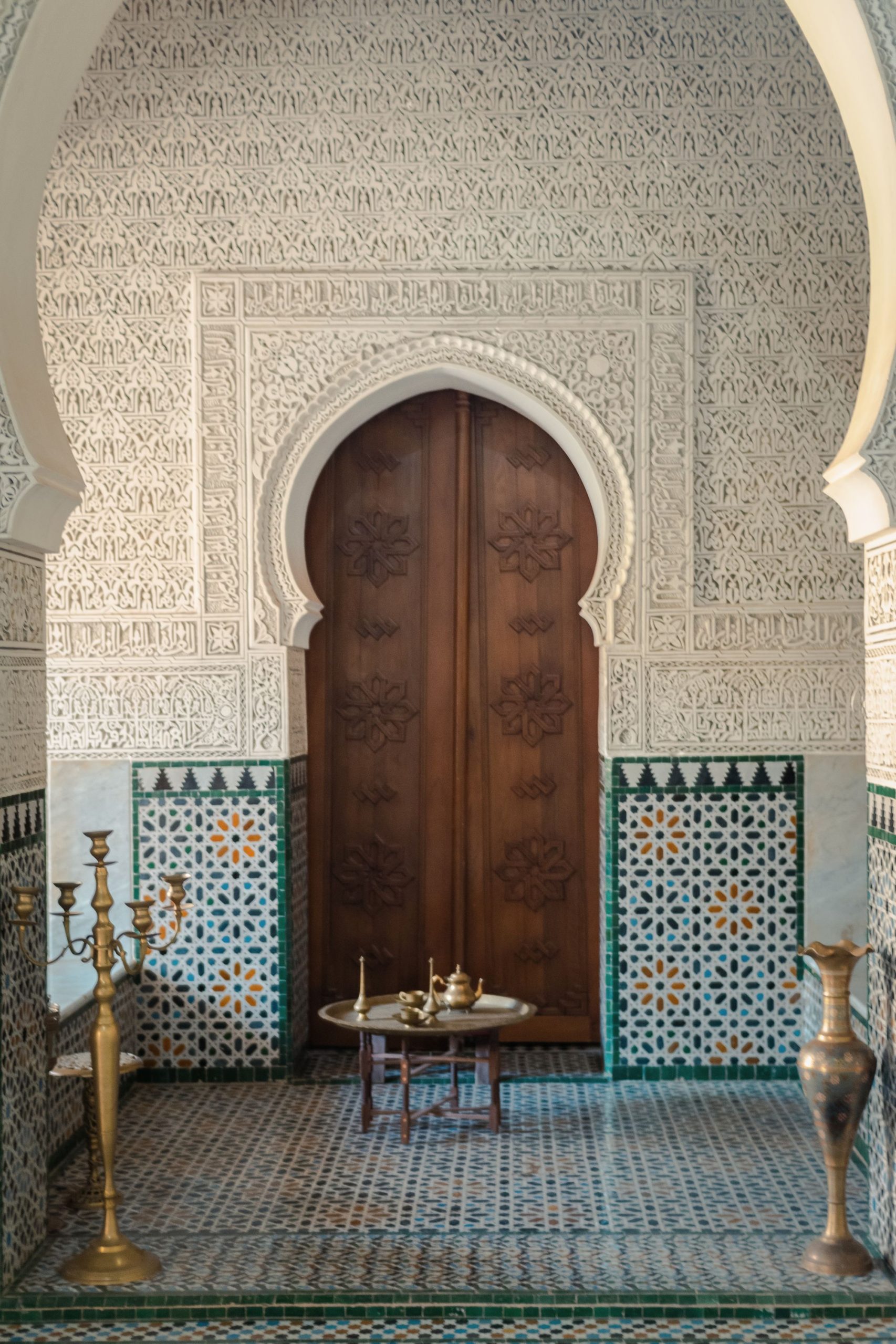
A few minutes' walk south is El Mechouar, the walled citadel of the Zayyanid sultans. One of its palaces was excavated in 2008 and almost completely rebuilt in 2010–2011, so what you see is a reconstruction, but the courtyards, carved wood and tiles give a good idea of court life. A January 2024 visitor reports short guided visits for a tip and a small museum of traditional costume.
On the eastern edge of town, in the village of El Eubbad, the Sidi Boumediene complex is the city's most atmospheric place. It grew around the tomb of Abu Madyan, a Sufi saint from Seville, with a mosque built in 1339 and a madrasa where Ibn Khaldun is said to have taught.
To the west, the ruins of Mansourah are what remains of the town the Marinids built during their siege of Tlemcen. Its mosque was completed in 1301–1302; today only three sides of its 38 m minaret still stand, rising alone above the walls and olive trees. It is a great place at sunset.
Finally, ride the cable car from the Grand Bassin, a 14th-century reservoir, up to the Lalla Setti plateau. The ride takes about five minutes and the views over the city and the plain are the best in Tlemcen. Up top is a park with an artificial lake, cafés and walking paths.
Many of Tlemcen's best sights cost nothing. The Great Mosque and Sidi Boumediene are free to enter outside prayer times; just dress modestly, take your shoes off and be respectful.
Walk the old centre from Place de l'Émir Abdelkader through the covered market streets, where shops sell embroidery, textiles, jewellery and ceramics. Browsing is free and the lanes are at their liveliest in the late afternoon.
The Mansourah ruins are open ground around the minaret and walls, and are a pleasant walk or short taxi ride west of the centre.
The Grand Bassin, the huge Zayyanid-era reservoir at the bottom of the cable car, is a park where local families stroll in the evening.
The cable car is nearly free too: one 2024 visitor paid 50 dinars, well under €1. Once on the Lalla Setti plateau, the paths around the lake and along the cliff edge are free.
Tlemcen eats like the rest of western Algeria, with couscous, grilled meat, soups and lots of bread. Look for seffa, a sweet couscous steamed and served with cinnamon, almonds and raisins, and harira, a tomato and chickpea soup that becomes the evening staple in Ramadan.
Karantika, the chickpea flan of Oran and the west, is sold by the slice in bread from small counters around the old centre. Mhajeb, square flatbreads filled with spicy tomato and onion, are everywhere too.
The city is known for its biscuits and pastries. Bakeries sell kaak, ring-shaped aniseed biscuits that make a good gift, alongside makroud and other semolina and date sweets.
Eating is cheap at informal exchange rates: a simple meal in a local restaurant costs a few euros, and street snacks much less. Cafés serve strong coffee, and mint tea is the standard drink of hospitality.
Alcohol is limited to licensed hotels and a few restaurants. Don't drink in public, which is illegal.
Tlemcen is quiet at night. Evenings revolve around cafés and tea rooms, where men gather for coffee and conversation, and around the Grand Bassin and the Lalla Setti plateau, where families walk and eat ice cream on summer evenings.
The best night out is music. Tlemcen is the home of Arab-Andalusian music and hawzi in Algeria, and concerts are held at the Palais de la Culture and, in summer, at the open-air Théâtre de Verdure. The national hawzi festival has been held in both December and July in recent years, so check what is on when you visit.
Bars are found only in a few licensed hotels. During Ramadan, the city stays up late after iftar, with cafés and pastry shops open into the night.
Taxis are scarce after dark, as across Algeria, so ask your hotel to book one and arrange your ride back in advance.
Tlemcen's airport, Zenata – Messali El Hadj, is about 17 km north-west of the city. Air Algérie flies from Algiers, and there are seasonal or regular flights from France and Belgium with Air Algérie, Transavia, Volotea, ASL Airlines France and TUI fly Belgium, which makes Tlemcen an easy way into western Algeria from Europe. A taxi into town takes about 25 to 30 minutes.
From Oran, about 150 km away, the easiest option is a shared taxi from Oran's inter-wilaya taxi station. A January 2024 traveller paid 500 dinars a seat for the journey of about two hours; cars leave when all seven seats are full.
SNTF runs a night train from Algiers to Tlemcen, introduced in September 2025, leaving Algiers at 22:00 and arriving at 06:52, with stops including Oran and Sidi Bel Abbès. The return leaves Tlemcen at 19:30. Timetables change by season, so check sntf.dz or at the station. The train station is on the edge of the old centre.
In town, the centre is walkable. City taxis are cheap; agree a fare first if there is no meter. Buses are cash-only and wind down in the early evening. For the Beni Add caves and the El Ourit waterfalls, take a taxi and agree a return trip with waiting time; one 2024 traveller arranged this through the Heetch app.
The land border with Morocco, west of Tlemcen, is closed. Do not try to cross it.
Tlemcen is cheap for food, transport and sights, and costs more for beds, as everywhere in Algeria. There are no hostels. A traveller paid 8,000 dinars a night at the Grand Bassin hotel next to the cable car in January 2024, and booking sites list three-star hotels, including the ibis, from about £29–37 a night.
Sights cost very little. The Great Mosque and Sidi Boumediene are free, the Beni Add caves charged 50 dinars for adults plus 30 dinars for a guide in 2023 (a 2024 visitor paid about 100 dinars), and the cable car cost 50 dinars in 2024.
Getting here is cheap too: a shared taxi from Oran was 500 dinars a seat in 2024.
At the official rate of about 151 dinars to €1 (October 2026), an 8,000-dinar room is about €53. Most travellers change euros on the informal market, where 2026 reports give up to about 250 dinars to the euro, which makes everything paid in cash much cheaper. Cards are accepted in bigger hotels, but are charged at the official rate. Carry cash for everything else.
A budget day with a cheap hotel, local food and a few sights comes to roughly €35 to €50 at informal rates, most of it the room.
Tlemcen is calm, and the UK government's advice against travel does not cover the city or the Tlemcen region: its no-go zones are near the borders with Libya, Tunisia, Mali, Niger and Mauritania, far to the east and south. The UK still says terrorist attacks in Algeria are likely, with a higher threat in rural and mountainous areas of the north, so check the latest advice before heading into the hills.
The Moroccan border, west of Tlemcen, is closed, and the UK says not to try to cross it. Expect police checkpoints on the roads, and carry your passport.
Algerian authorities keep an eye on foreign visitors, and you may notice police interest in your movements. Be patient and polite.
In town, watch for pickpockets in crowded markets and stick to well-lit streets at night. Taxis are hard to find after dark, so book through your hotel.
Dress modestly, especially at the mosques and in Sidi Boumediene, and ask before photographing people. Drones and binoculars need authorisation. During Ramadan, don't eat, drink or smoke in public during the day.
Emergency numbers are 17 or 1548 for the police, 14 for the fire service and 1021 for an ambulance.
Waterfalls and caves just outside town, the old town of Nedroma, the coast at Honaine and the big city of Oran are all within reach. There are no Roman sites to match the east nearby; Tlemcen's own monuments are the draw.
Pine-covered gorge with waterfalls about 7 km from town, then a guided show cave near Aïn Fezza. Go on a weekday morning; weekends are busy.
Forests of Ifri, Zariffet and Aïn Fezza around the city, good for walks and picnics. Check the latest advice on rural areas first.
Old town founded by the Almohads, on UNESCO's tentative list, with a historic Great Mosque and lanes in the Trara hills.
Former port of the Zayyanid kings with ramparts, a casbah and watchtower above the sea, plus several beaches.
Algeria's second city, with Santa Cruz fort, the seafront and raï music. Better as an overnight.
Tlemcen's calendar is about music and religious holidays: the national hawzi music festival, Ramadan nights, Yennayer and the national days.
Amazigh New Year, a public holiday, with family feasts.
Quiet days and late nights after iftar; some restaurants close by day.
Algeria's festival of hawzi and Andalusian music, held in December 2024 and July 2026.
Public holiday marking independence from France in 1962.
Anniversary of the start of the war of independence in 1954.
Spring and autumn are best: April, May, October and November bring warm days for walking the monuments. July and August average about 32–33°C, and winters are mild by day but chilly at night at this altitude.
Highs from WeatherSpark's climate data for Tlemcen Zenata airport, rounded (16°C in January, 25°C in May, 33°C in August, 26°C in October); weather2travel has no page for Tlemcen. The city sits higher than the airport, so it can be a little cooler. Crowd levels are our rough guide.
Pick a style and a number of nights for a rough total, per person, in euros.
Estimates at informal rates of around 220–250 dinars to €1, as on the Algeria guide. With no hostels in Tlemcen, beds are based on budget and three-star hotel prices; hotels paid by card are charged at the official rate (about 151 dinars to €1) and cost more.
Prices and timetables change. Check before you travel.

Compare Algeria hostels: live prices, real reviews and free cancellation on most bookings. Then meet the people already there in the app.

 Get the App.

 Get the App.