Downtown (Wust el-Balad)
Backpackers, first-timers, foodThe centre of budget Cairo, with faded belle époque buildings, most of the city's hostels, the Egyptian Museum on Tahrir Square and two metro lines.

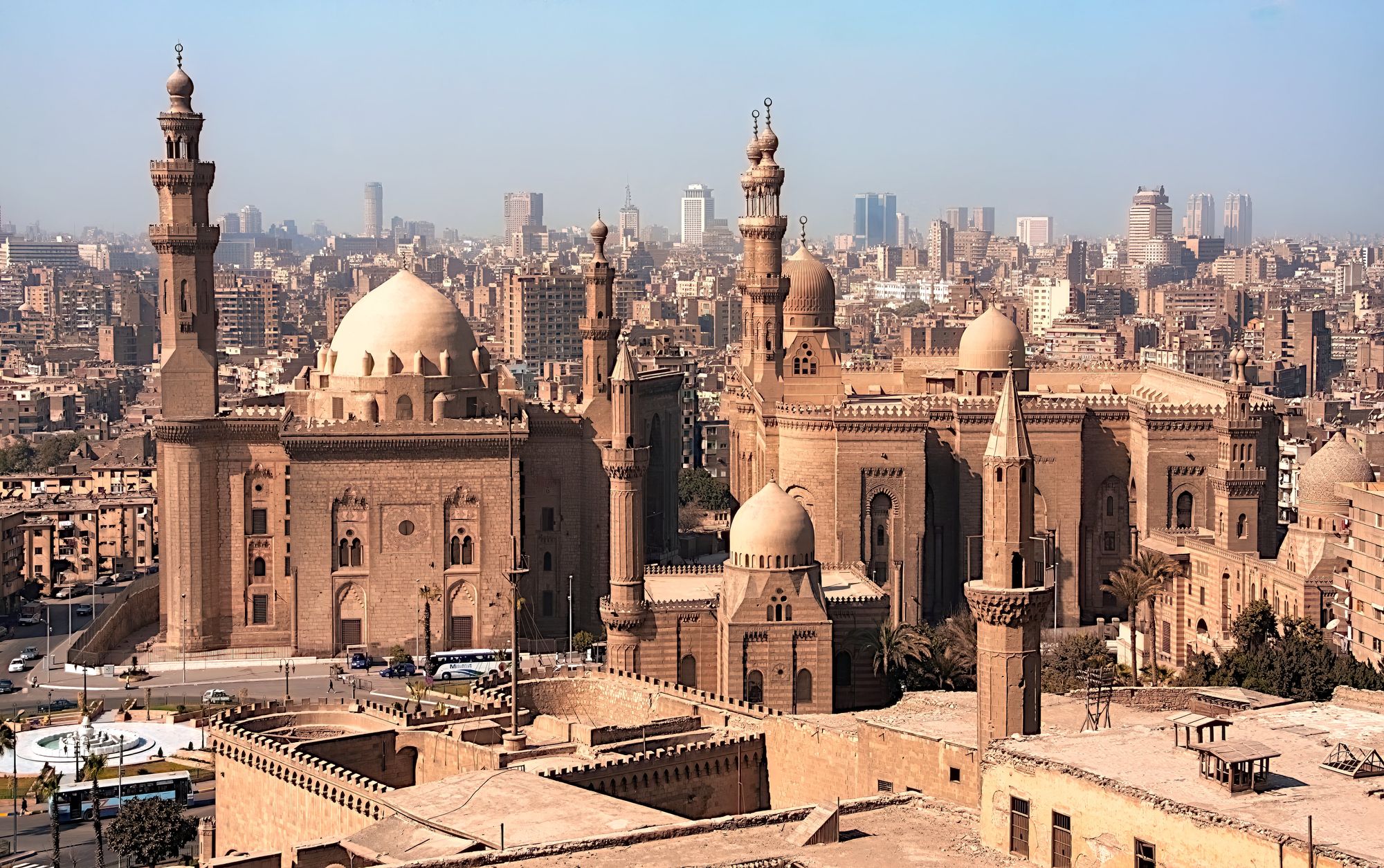
Cairo is loud, dusty, chaotic and one of the great cities of the world, with the pyramids on its western edge and a thousand years of mosques, markets and coffee houses in its old core. Give it three or four days, take the metro, eat koshary for a euro and let it grow on you.
Cairo is the biggest city in the Arab world and Africa, a sprawl of more than twenty million people on both banks of the Nile. First impressions can be overwhelming: traffic that never stops, horns, dust, touts and heat. Then you find a quiet courtyard in a 14th-century mosque, drink sugary tea in a street café as the call to prayer echoes between minarets, or turn a corner and see the Great Pyramid at the end of the road, and it starts to make sense.
The city splits into a few areas that matter to travellers. Downtown (Wust el-Balad), built in the 19th century in a European style, is where most hostels are, around Tahrir Square and Talaat Harb Street, close to the Egyptian Museum and the metro. Zamalek is a leafy island in the Nile with cafés, galleries and bars. Islamic Cairo, to the east, is the medieval city: Al-Azhar Mosque, the Khan el-Khalili bazaar, Al-Muizz Street and the Citadel. Coptic Cairo, to the south, has some of the oldest churches in Egypt. And Giza, on the west bank, is home to the pyramids and the new Grand Egyptian Museum.
A good first trip runs over three or four days. One day for Giza and the Grand Egyptian Museum, which sit next to each other. One for Islamic Cairo, from the Citadel to Khan el-Khalili. One for the Egyptian Museum in Tahrir, the National Museum of Egyptian Civilization and Coptic Cairo. Add Saqqara and Dahshur, the older pyramid sites south of the city, if you have time.
Cairo is also the hub for the rest of the country. Sleeper trains leave every evening for Luxor and Aswan, buses run overnight to Dahab and the Red Sea coast, and trains reach Alexandria in a few hours.
Getting around is easier than it looks. The metro is cheap and fast, and Uber, Careem and inDrive all work, which takes the stress out of taxis. Most big sites now take card payments only. The best months to visit are October to April; from June to August average highs reach 35°C.
Cairo is vast, but travellers spend most of their time in a handful of areas, all linked by metro or a short ride-hail. Downtown is the obvious base; Giza only makes sense if you want to wake up next to the pyramids.
The centre of budget Cairo, with faded belle époque buildings, most of the city's hostels, the Egyptian Museum on Tahrir Square and two metro lines.
A green, upmarket island in the Nile with tree-lined streets, embassies, cafés and some of Cairo's best bars. Quieter than Downtown and a short ride away.
The medieval city around Khan el-Khalili, Al-Azhar and Al-Muizz Street. Fascinating to explore on foot, though there are few places to stay.
Curving, leafy streets of old villas and embassies just south of Tahrir, within walking distance of Downtown and the Corniche.
The old Christian quarter in the south of the city, with the Hanging Church, the Coptic Museum and Ben Ezra Synagogue. On metro Line 1 at Mar Girgis.
Guesthouses with rooftop views of the pyramids. Convenient for the plateau and the Grand Egyptian Museum, but far from everything else.
Orange labels are neighbourhoods, dots are the 10 top-rated hostels. Map data from OpenStreetMap contributors.
Start at Giza. The plateau ticket costs EGP 700 (about €12, students half) and covers the outside of the three pyramids and the Sphinx. Going inside the Great Pyramid of Khufu is an extra EGP 1,500: a steep, hot, narrow climb to an empty granite chamber, worth it for some and an anticlimax for others. The site now has a main entrance and visitor centre on the Fayoum road side, and electric buses loop between the pyramids and the panoramic viewpoint, included in your ticket. Get there at the 7am opening, before the heat and the coaches.
The Grand Egyptian Museum, which fully opened in November 2025, is a few minutes from the pyramids and is now the main home of ancient Egypt's treasures, including the complete Tutankhamun collection. Foreign adults pay about EGP 1,700, and it deserves at least half a day. Book online. The older Egyptian Museum on Tahrir Square (EGP 550) still has a huge collection in a wonderfully dusty building, and the National Museum of Egyptian Civilization (EGP 550) displays the royal mummies in a darkened hall.
Islamic Cairo is the other half of the city's story. Walk Al-Muizz Street from Bab al-Futuh to Khan el-Khalili, past Mamluk mosques, madrasas and old merchants' houses. Al-Azhar Mosque, founded in 970, is free to visit; dress modestly, and women should cover their hair. Climb up to the Citadel of Saladin (EGP 550) for the Muhammad Ali Mosque and a view over a sea of minarets, and if you have the energy, walk down to the huge Sultan Hassan Mosque below it.
Coptic Cairo, a short metro ride south, has the Hanging Church, built over a Roman gate, the Coptic Museum and Ben Ezra Synagogue, all in a few quiet lanes.
For something different, the Al Tannoura troupe performs Egyptian Sufi whirling at Wekalet El Ghouri, near Al-Azhar, on several evenings a week; ask locally for the current schedule. South of the city, Saqqara's Step Pyramid and Dahshur's Bent and Red pyramids make an excellent, much quieter day trip.
Cairo's biggest sights have tickets, but much of what makes the city memorable is free. Al-Azhar Mosque, one of the oldest universities in the world, is free to enter: leave your shoes at the door, cover your shoulders and knees, and women should bring a scarf for their hair. The marble courtyard is calm in a way the streets outside are not.
Walking Al-Muizz Street, the spine of medieval Cairo, costs nothing. Some of the monuments along it have tickets, but the street itself, lined with domes, minarets, carved doorways and workshops, is an open-air museum. Carry on into Khan el-Khalili, the bazaar that has traded here since the 14th century. Browsing is free; buying takes negotiation.
Coptic Cairo's churches, including the Hanging Church, are free to visit, though the Coptic Museum charges. The lanes between them, sunk below street level, are among the quietest corners of the city. Take metro Line 1 to Mar Girgis for the cost of a single fare.
The Nile is free too. Walk across Qasr el-Nil Bridge from Tahrir to Zamalek at sunset, when the city's young couples and families come out to lean on the railings and buy roasted corn and sweet potatoes from street carts. The Corniche in Garden City and around Zamalek is pleasant in the evening breeze.
Downtown itself rewards walking. Look up at the crumbling belle époque facades around Talaat Harb Square and Qasr el-Nil Street, wander through the book stalls and old cinemas, and stop in an ahwa, a street café, for tea that costs very little. Cairo is a city of people-watching, and the best seats are plastic chairs on the pavement.
Cairo is one of the best cities in the region for cheap eating. Koshary, the national dish, is the place to start: rice, lentils, pasta and chickpeas topped with spicy tomato sauce, garlic vinegar and crispy onions, served in big metal bowls at specialist koshary shops all over Downtown for EGP 50–100. Abou Tarek, a multi-storey koshary institution in Downtown, is the famous one, but any busy shop will do.
Breakfast is ful medames, slow-cooked fava beans with oil, cumin and lemon, and ta'ameya, Egyptian falafel made with fava beans and herbs, stuffed into baladi bread from street carts for a few pounds. Look for hawawshi, bread stuffed with spiced minced meat and baked, and feteer, a buttery layered pastry filled with cheese, meat or sweet toppings. Molokhia, a garlicky green soup, and mahshi, stuffed vine leaves and vegetables, are home-cooking staples you will find in local restaurants.
Grilled meat restaurants, serving kofta and kebab by weight with bread, salads and tahini, are a step up in price. Pigeon stuffed with rice is a Cairo speciality. For dessert, try basbousa (semolina cake soaked in syrup), konafa and om ali, a warm bread pudding with nuts and milk.
Coffee-house culture runs deep. Ahwas, street cafés with plastic chairs and shisha, are everywhere, and tea is cheap and sweet. El Fishawy in Khan el-Khalili has been serving tea for over two centuries and is touristy but atmospheric. Zamalek and Downtown also have plenty of modern cafés for good coffee and Wi-Fi.
Alcohol is legal in licensed bars, hotels and restaurants, and Stella and Sakara are the local beers, but most everyday restaurants do not serve it. During Ramadan, the whole city eats together at sunset, and charity tables called mawa'id al-rahman feed passers-by for free.
Cairo is a night city. In summer especially, life shifts to the cooler hours, and it is normal for families to be out at midnight, for cafés to be busy until 2am and for traffic jams to happen at 11pm. You do not need a bar to enjoy it: a seat at an ahwa, a walk across a Nile bridge and a late plate of koshary are a good Cairo night.
For drinks and music, Zamalek is the most relaxed area, with rooftop bars and restaurants overlooking the Nile; Crimson is a well-known rooftop with views, at prices to match. Pier 88, also in Zamalek, turns from a Nile-view restaurant into a lounge on some nights. Cairo Jazz Club in Agouza, across the river, has run for more than 15 years and hosts live bands and DJs almost every night; check the schedule and book ahead at weekends.
Downtown has a scattering of old-school bars, which are smoky, cheap and almost all-male, and a growing number of cafés and cultural spaces that host concerts and talks. Hostel rooftops are an easy place to meet other travellers for a beer.
Culture is a big part of Cairo's evenings. The Cairo Opera House in Zamalek has ballet, classical and Arabic music, and the Al Tannoura Sufi dance show performs at Wekalet El Ghouri near Al-Azhar. In autumn, the Cairo Jazz Festival and the Cairo International Film Festival fill venues across the city.
The weekend in Egypt is Friday and Saturday, so Thursday night is the big night out. Clubs and bars can be strict about door policies and couples, and prices in upmarket venues are close to European levels. Use Uber or Careem to get home late.
Cairo International Airport is about 25–45 minutes from Downtown by car, depending on traffic. Uber and Careem work from the airport and cost roughly EGP 150–300 to the centre, with the fare fixed in the app; this is the easiest option. Official taxis also run, but agree the fare or insist on the meter. Public buses are much cheaper and much slower.
The metro is the best way to cross the city. Three lines run, and fares since March 2026 are EGP 10 for up to nine stations, EGP 12 for up to 16, EGP 15 for up to 23 and EGP 20 for longer trips. Useful stops include Sadat (Tahrir Square and the Egyptian Museum), Attaba (for Islamic Cairo), Mar Girgis (Coptic Cairo) and Al Shohadaa (Ramses railway station). The two middle carriages of each train are reserved for women, which many women travellers appreciate at rush hour.
For everything else, use Uber, Careem or inDrive. They are cheap, the fare is set before you get in, and they remove the haggling. For Giza, a ride-hail from Downtown takes 30–60 minutes depending on traffic. Crossing the road on foot is a skill: walk steadily, never run, and cross with locals.
Leaving Cairo, the Abela sleeper train runs to Luxor (about 10–11 hours) and Aswan (about 13–14 hours) every evening from Cairo and Giza stations, for $110–125 per person in a shared cabin; book online. Day trains to Luxor and Aswan are cheaper but foreigners generally need to buy at the station. Trains to Alexandria take a few hours from Ramses station. Go Bus and other companies run comfortable buses to Dahab (about 9–10 hours), Hurghada and Luxor, and EgyptAir connects Cairo with Luxor, Aswan and Sharm el-Sheikh in about an hour.
The Egyptian pound (EGP) was worth about EGP 58 to €1 in October 2026. Cairo is very cheap for food and transport and fairly expensive for its headline sights, which are priced for foreigners. Plan your museum and pyramid tickets first; they are most of your spending.
A realistic sightseeing budget for three days might include the Giza plateau (EGP 700), the Grand Egyptian Museum (about EGP 1,700), the Egyptian Museum (EGP 550), the NMEC (EGP 550) and the Citadel (EGP 550). That is about EGP 4,050, or €70, before adding the Great Pyramid's interior (EGP 1,500). Students with an ISIC card pay around half at most sites.
Everything else is cheap. Hostel dorms in Downtown typically cost about $7–16 a night on Hostelworld, often with breakfast, and Cairo has some of the highest-rated hostels in Africa. Koshary costs EGP 50–100, a street sandwich a few pounds, and a metro ride EGP 10–20. Uber trips across Downtown are usually a euro or two.
Most ticket offices only take cards, so carry a Visa or Mastercard, ideally one without foreign transaction fees. Cash is still king for food, cafés, taxis and tips, and ATMs are everywhere in Downtown and Zamalek. Carry small notes: drivers and shopkeepers rarely have change for EGP 200.
Haggling is normal in markets such as Khan el-Khalili and with anyone offering a camel or horse at Giza. Start well below the first price, stay friendly and be ready to walk away. Restaurants usually add service charge and tax to the bill, so check the menu for 'prices subject to' before ordering.
Cairo is a huge city, but serious crime against tourists is rare and you will see police and tourist police at every major site. What you need are street smarts for scams, traffic and heat. The UK Foreign Office's general warning about terrorism applies to Egypt as a whole, and its advice is to stay alert in crowds and avoid demonstrations.
The scams are well known. At Giza, men may tell you the entrance is closed or that you need a guide, horse or camel to see the pyramids, then lead you to a stable. Ignore them, use the official entrance and the free electric buses, and only take an animal ride if you want one, from a licensed handler at an agreed price. Downtown, a friendly stranger who 'works at your hotel' or wants to practise his English often ends up at a papyrus or perfume shop. It is fine to say no and walk on.
Traffic is the biggest physical danger. Pavements are uneven or blocked, and drivers rarely stop for pedestrians. Cross with locals, and use the metro and ride-hailing apps to avoid long walks along main roads. Air pollution can be heavy, so people with asthma should bring their inhalers.
Women travellers frequently report staring, comments and some groping in crowded places. Dressing conservatively, sitting in the women-only metro carriages, using ride-hailing apps and sharing your live location helps. Ask before photographing people, never photograph military or police buildings, and do not fly a drone: it needs military permission and can bring a prison sentence.
In summer, heat at Giza is intense and there is little shade, so go at opening. Drug laws are extremely severe. For emergencies, call the tourist police on 126, police on 122 or an ambulance on 123.
Some of Egypt's oldest pyramids are an hour south of the city, and the Mediterranean is a train ride away. Hire a driver for the day, or use a ride-hail for the closer sites.
The Step Pyramid of Djoser, decorated tombs, and the Bent and Red pyramids at Dahshur, with a fraction of Giza's crowds. Memphis can be added on the way.
Egypt's Mediterranean city: the Corniche, the Bibliotheca Alexandrina, catacombs and fresh seafood.
An oasis south-west of Cairo with lakes, waterfalls and desert, plus fossil whales at Wadi al-Hitan, a UNESCO site.
Camp among chalk formations in the White Desert. Permits and an official guide are required.
Cairo's cultural calendar peaks in autumn, with film and jazz festivals, and the religious calendar shapes the rest of the year. Ramadan nights are an experience in themselves.
The Arab world's oldest international film festival; the 47th edition runs 11–20 November 2026.
Two or three nights of jazz from Egypt and abroad; the 2026 edition is at the AUC Tahrir campus.
Lanterns in the streets, iftar at sunset and a city that stays awake until dawn.
Three days of celebration at the end of Ramadan; parks and the Nile banks fill with families.
The feast of sacrifice and a major public holiday.
Midnight mass and celebrations in Egypt's Christian community.
An ancient spring festival: picnics, coloured eggs and salted fish.
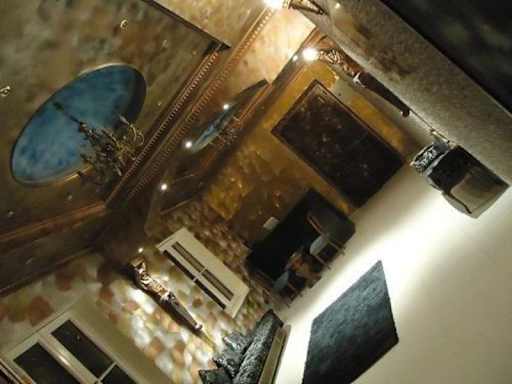
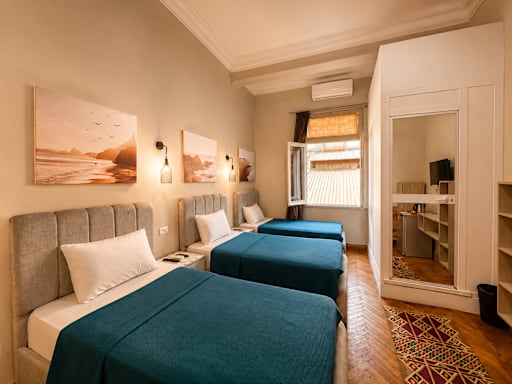
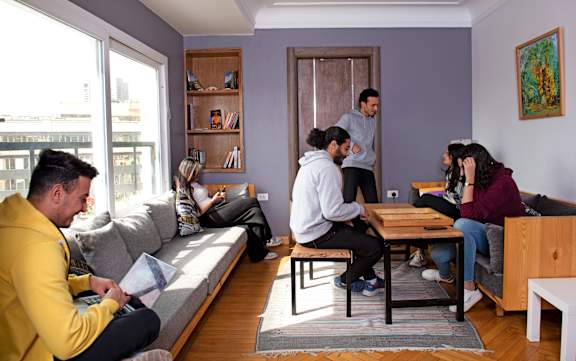
Downtown Cairo has some of the best-rated hostels in Africa, often in high-ceilinged old apartments with rooftop terraces. Most can arrange airport pick-ups and train tickets.
Rated 9.6 from over 2,500 reviews, with rooftop huts and a social terrace, three minutes' walk from the Egyptian Museum.
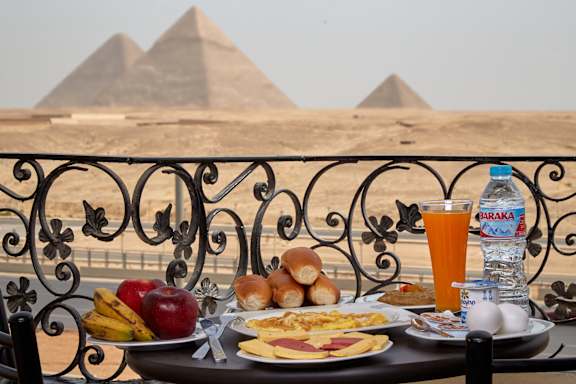
Rated 9.9 from over 2,000 reviews, central Downtown, with a generous free breakfast and staff praised for helping guests navigate Cairo.
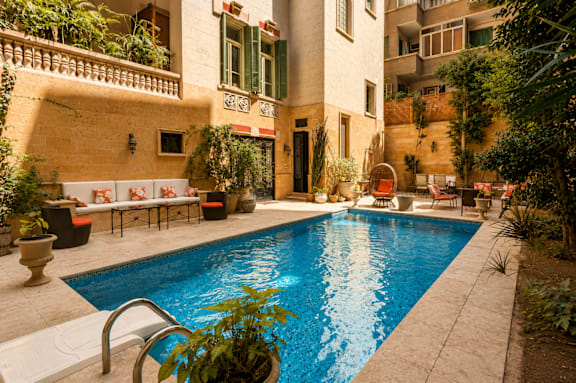
A historic building in El Sayeda Zeinab with a garden and pool, rated 9.8 with perfect scores for staff.
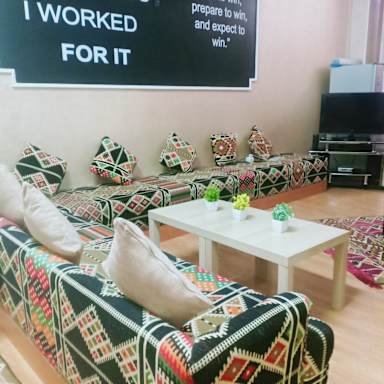



October to April is the best time, with highs of 19–30°C. Summer is hot (around 35°C), humid and hazy, but the city keeps going at night. Ramadan changes the rhythm of the whole city.
Average daily highs for Cairo from Weatherspark, rounded to the nearest degree. Crowd levels are our estimate based on the winter high season and Egyptian holidays.
Choose your style and the number of nights. 'Doing' is where the money goes, because the museums and pyramids are priced for foreigners.
Daily estimates in euros per person at about EGP 58 to €1 (October 2026). 'Doing' averages the big sights over three days; going inside the Great Pyramid or taking tours costs more. Treat these as a guide.
Prices checked October 2026. Site fees in Egypt change often.

Compare Cairo hostels — live prices, real reviews and free cancellation on most bookings. Then meet the people already there in the app.

 Get the App.

 Get the App.