Osu
First-timers and social travellersAccra's busiest nightlife and dining area, centred on Oxford Street, with bars, street food and easy ride-hailing in every direction.

Accra is hot, loud, traffic-jammed and far more fun than first impressions suggest. Ghana's capital has the old fishing quarter of Jamestown, the memorial to independence leader Kwame Nkrumah, a beach scene that comes alive at weekends and the best nightlife in the country. Give it two or three nights before heading for the coast.
Accra is a sprawling city of several million people stretched along the Gulf of Guinea, and it does not have a single centre so much as a series of neighbourhoods linked by very busy roads. Most travellers base themselves in Osu, which has the bars, cafés and restaurants, and make trips out from there.
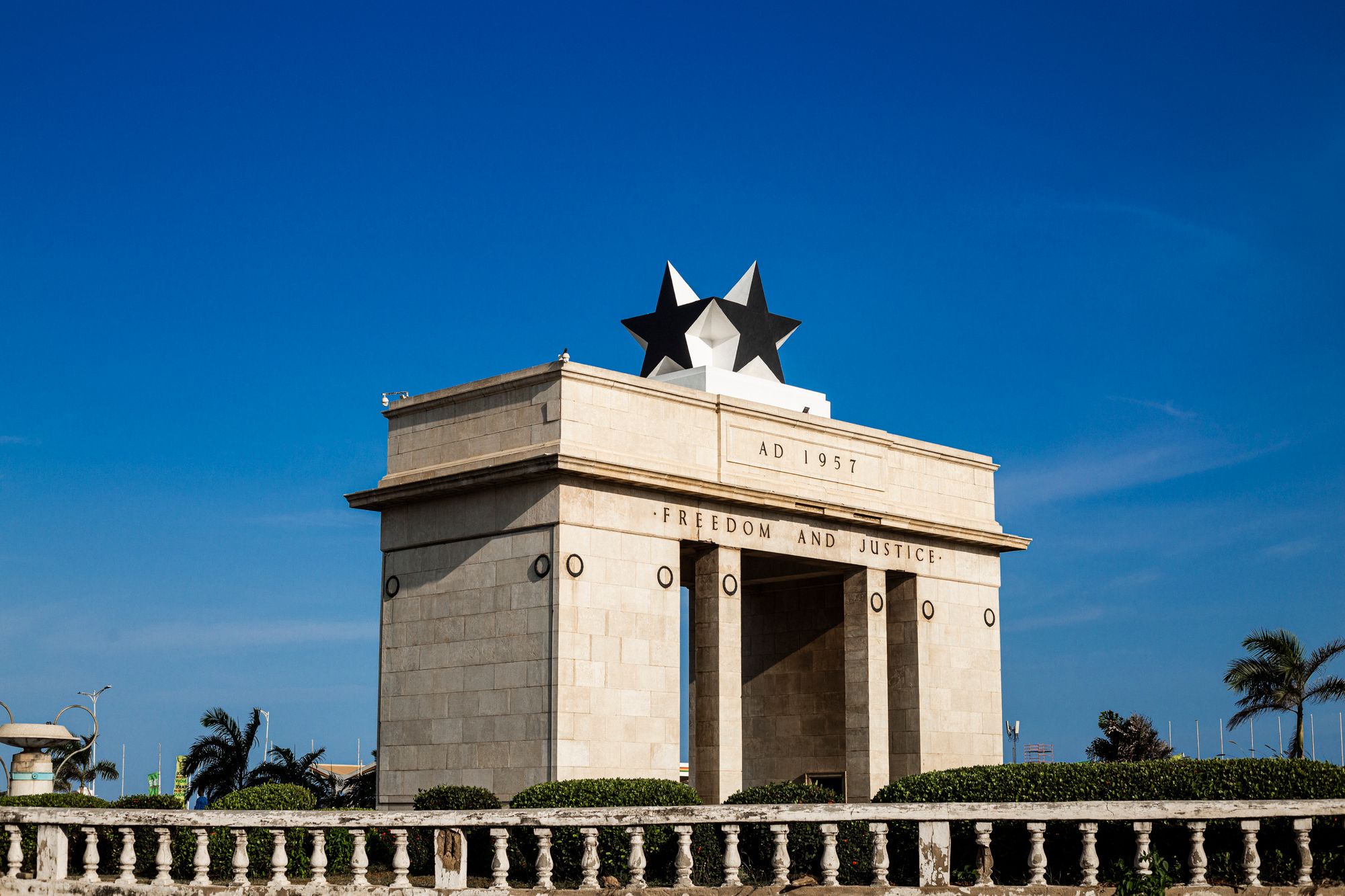
The history sits by the sea. Jamestown and Ussher Town, the old Ga fishing quarters, grew up around British and Dutch forts in the 17th century, and the lighthouse, canoe beach and boxing gyms are still there. A short drive east is Independence Square, built for Ghana's independence from Britain in 1957, and the Kwame Nkrumah Memorial Park, where the country's first president is buried.
Accra is not a walking city. Pavements come and go, open drains line the roads and the midday heat is intense, so most visitors move around by Bolt, Uber or Yango, which are cheap and easy. Walk in the mornings and late afternoons, and in the neighbourhoods rather than between them.
The city is at its best after dark and at weekends. Osu's bars fill up from early evening, Labadi Beach throbs with music on Sundays, and December brings the diaspora home for weeks of concerts and parties.
Two or three nights is enough for most people: one day for Jamestown and the independence sites, one for markets, galleries and the beach, and evenings in Osu. With longer, take day trips to the Aburi hills or the beach at Kokrobite.
Accra is spread out, so pick a base and use ride-hailing for the rest. Osu suits most first-timers; Labone and Cantonments are calmer; Jamestown is for history; and Kokrobite is a beach alternative outside the city.
Accra's busiest nightlife and dining area, centred on Oxford Street, with bars, street food and easy ride-hailing in every direction.
Quieter residential streets next to Osu, with cafés, embassies and some of the city's nicer guesthouses.
The old Ga fishing quarters by the sea, with the lighthouse, forts and canoe beach. Better to visit than to stay.
The busiest city beach, east of Osu, with bars and weekend parties on the sand.
Upmarket suburb north-east of the centre near the University of Ghana, with malls, restaurants and newer hotels.
Older, busier area just north of the business district, with cheap hotels and close to the Kwame Nkrumah Circle bus stations.
Orange labels are neighbourhoods, dots are the 8 top-rated hostels. Map data from OpenStreetMap contributors.
Start in Jamestown, ideally on a guided walk with a local, because the lanes make far more sense with someone who lives there. You will pass the colonial-era lighthouse, which you can usually climb for a small fee, the ruins of Ussher Fort and James Fort, the canoe beach where fishermen land their catch, and the boxing gyms that have produced several world champions. Mornings are best, when the boats come in.
Next, head east to the independence sites. The Kwame Nkrumah Memorial Park holds the mausoleum of Ghana's first president, a museum of his life and the spot where he declared independence in 1957. Entry is GH₵100 for non-Ghanaian adults and GH₵60 for tertiary students, and it opens daily from 9am (10am on Sundays) to 7pm. Independence Square, with its Black Star Gate and Independence Arch, is a short walk along the seafront.
Makola Market is a crush of cloth, beads, spices and everything else, and worth an hour if you can handle the crowds. For crafts, the Centre for National Culture, known as the Arts Centre, sells carvings, drums and kente, but bargain hard.
Accra has a lively contemporary art scene. Look out for gallery openings, and if you are here in August, Chale Wote turns Jamestown and Osu into an outdoor gallery for a week. The W.E.B. Du Bois Centre, the home and burial place of the African American writer, tells the story of the diaspora's links with Ghana.
For a break from the heat, the beaches east of the centre, especially Labadi, fill up at weekends, and the University of Ghana campus at Legon is a green, quiet place to wander.
Some of Accra's best experiences cost nothing. Walking Jamestown is free, although a local guide is worth a tip, and the canoe beach at sunrise is one of the great sights of the city.
Independence Square, the Black Star Gate and the Independence Arch are open to wander around, and the seafront road nearby is one of the few places in the city where you can walk comfortably in the late afternoon.
Markets are free entertainment. Makola is the biggest and busiest, while Osu's Oxford Street is good for people-watching from a roadside stall. In the evenings, the Osu night food stalls are some of the cheapest meals in town, with kelewele and grilled meat for a few cedis.
The University of Ghana campus at Legon is open to visitors, with leafy roads and the striking Balme Library. Churches welcome visitors on Sunday mornings, and services with choirs and drums are an experience even if you are not religious; dress smartly.
If your trip lines up with the Chale Wote Street Art Festival in August, most of its street art, performances and parades are free.
Accra eats from roadside stalls and chop bars, and the best food is rarely in the smartest restaurants. Breakfast is waakye, rice and beans cooked with sorghum leaves, served from a big pot with spaghetti, boiled egg, gari and shito, the black pepper sauce. Lunch is jollof rice, or fufu with light soup or groundnut soup at a chop bar.
The Ga coastal dish is kenkey with fried fish and pepper, and Jamestown is the place to try it. Banku with grilled tilapia, eaten with your hands, is a classic evening meal at the grill spots around the city.
In the evenings, look for kelewele, cubes of plantain fried with ginger and chilli, and suya-style grilled meat on sticks. Osu's night stalls are the easiest place to find both.
A plate at a chop bar or street stall usually costs a few euros, while a sit-down meal in Osu, Labone or East Legon costs more like €8 to €15, and international restaurants charge European prices.
Drink bottled water or factory-sealed sachets. Fresh coconuts sold from carts are a cheap, safe way to cool down, and Star and Club are the local beers. Wash your hands before eating with them: most chop bars have a bowl of water ready.
Accra has the best nightlife in Ghana and some of the best in West Africa. Osu is where most nights start, with bars spilling onto the pavements around Oxford Street, live music in small venues and food stalls until late. It is the most convenient area for travellers and the best place to meet people.
Republic Bar and Grill in Osu has long been known for its live highlife and its cocktails made with local spirits, and it is a good place to hear Ghana's classic guitar music. For clubs, Accra's scene moves between Osu, Labone, Airport and East Legon, and Friday and Saturday are the big nights.
Sundays are for the beach. Labadi Beach fills with music, dancing, horse rides and drinks on the sand from the afternoon, and it is a very local, very lively scene.
December is something else. "Detty December" brings concerts, parties and festivals almost every night, ending with AfroFuture at the end of the month. Prices rise and beds sell out, so book well ahead.
Take Bolt, Uber or a registered taxi home rather than walking, even short distances. Buy sealed drinks and keep an eye on your glass.
Kotoka International Airport (ACC) is about 10 km from the centre and 20 to 40 minutes from Osu, longer at rush hour. Bolt and Yango are the cheapest way in, at roughly GH₵30 to GH₵60 according to a 2026 airport guide, with official yellow taxis at around GH₵100 to GH₵200. Only go with drivers you have booked or found at the official rank, because the UK warns about impostors posing as drivers in arrivals.
Inside the city, ride-hailing is the easiest way to move. Bolt, Uber and Yango all work, fares are low and you avoid haggling. Traffic is the real problem: crossing town can take an hour at peak times, so plan around the morning and evening rush.
Trotros, shared minibuses, run on every major road and cost a few cedis, with a "mate" calling out the destination. They are cheap and cheerful but crowded, and the Australian government advises visitors to avoid commuter vans.
For long-distance trips, VIP Jeoun and STC coaches leave from their own terminals. VIP's standard fares from April 2026 are GH₵110 to Cape Coast and GH₵120 to GH₵150 to Kumasi. Trotros to the west leave from Kaneshie, and to the Volta Region and Aflao, on the Togo border, from Tudu.
For Togo, STC and trotros run to Aflao in roughly four hours, and you walk across the border into Lomé. You need a Togolese e-visa in advance.
Accra is the most expensive place in Ghana, mainly because of beds. Hostelworld lists a handful of hostels here, with the best-rated dorms from about US$11 to US$15 a night, and many include breakfast. Mid-range hotels start around €40 to €60.
Food is cheap if you eat local. A chop bar or street-food meal costs a few euros, while restaurants in Osu and East Legon charge €8 to €15 or more. A large Star or Club beer in a local bar is cheap; in a cocktail bar, expect European prices.
Getting around is cheap. Most Bolt rides inside the city cost a few euros, and trotros cost less than a euro.
Sights add up. The Nkrumah Memorial Park costs GH₵100 (about €7.60) for foreign adults, and you will tip guides in Jamestown.
At about GH₵13.1 to €1, a shoestring day in Accra comes to around €25 to €30, and a more comfortable one closer to €60 to €80. Carry small notes, and use ATMs inside banks or malls.
Accra is generally friendly and most visitors have no problems, but crime has risen in recent years. The UK warns about pickpocketing and bag snatching, especially in crowded areas, and robberies, sometimes armed, including attacks on cars stopped in traffic. Keep windows up and doors locked in cars, carry little cash and keep your phone out of sight on the street.
Night is when risks rise. Don't walk after dark, even short distances; take Bolt, Uber or a registered taxi instead. Australian advice says not to visit beaches alone and to take particular care at crowded markets and tourist beaches.
At the airport, only go with drivers you know or the official taxi rank, and keep an eye on your luggage. Watch ATMs for skimmers and use machines inside banks.
The sea at Labadi and other city beaches has strong currents. Swim only where others do, never alone, and never after drinking.
Online scams, including romance and business scams, are common. Be wary of anyone who asks you to send money. Dress modestly away from the beach, and don't photograph government buildings, the airport or soldiers.
The best escapes from Accra are short: the beach at Kokrobite, the cool hills of Aburi, wildlife at Shai Hills, or Lake Volta at Akosombo.
Beach village west of the city known for drumming, reggae nights and a slower pace. Swim only where locals do.
Gardens laid out in 1890 in the cooler Akuapem hills north of Accra, with craft villages along the road.
Rocky hills and savannah with baboons, antelope and caves, an easy wildlife escape from the city.
The dam that created one of the world's largest artificial lakes, with boat trips and the Volta hills nearby.
Where the Volta meets the sea, with sandbank lodges and boat trips. Better as an overnight.
Accra's calendar peaks twice: August, with Chale Wote and Homowo, and December, when the city parties for a month.
Parades and celebrations for independence in 1957.
Church services, beach trips and the start of the festival season in the Akuapem hills.
A week of street art, performance, music and parties, mostly free.
Ga harvest festival with processions, drumming and kpokpoi, the festival corn dish.
Concerts, beach parties and festivals almost every night of the month.
The big end-of-year music festival, with Ghanaian and international acts.
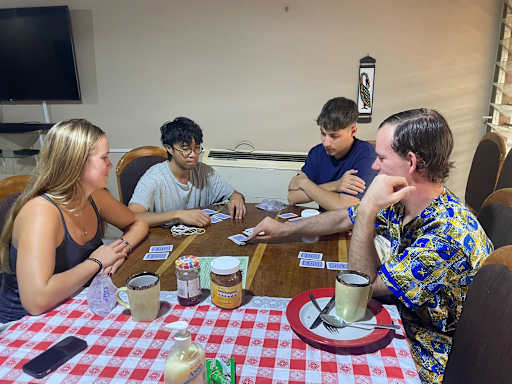
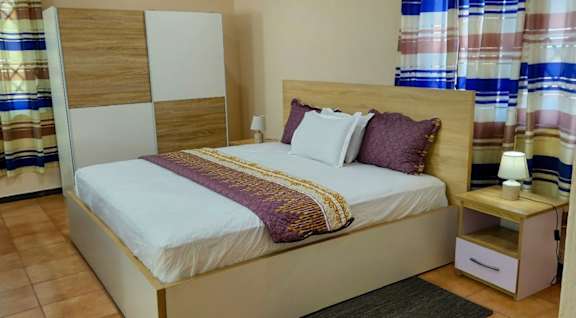
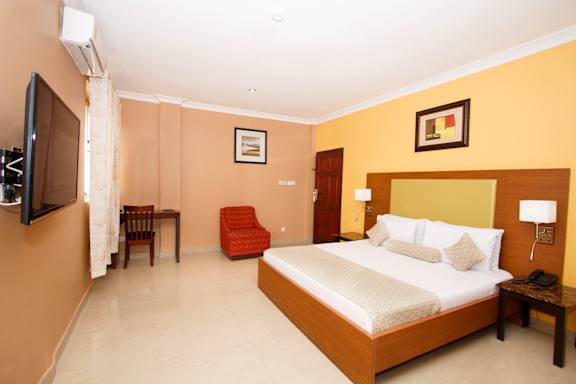
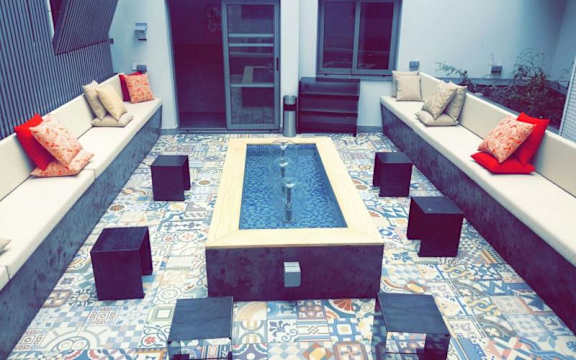
Accra's hostels are small and spread across residential areas, so check the location as well as the price. Most include breakfast and can arrange airport pick-ups.
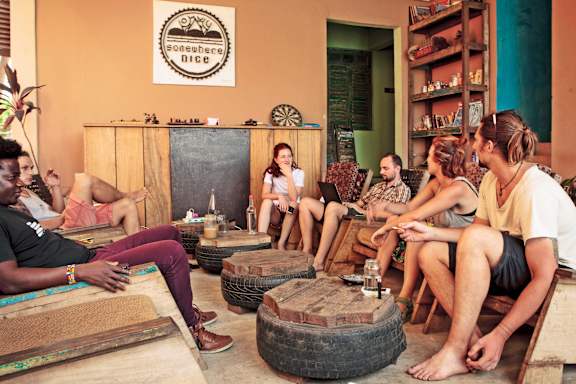
Rated 9.7 from about 170 reviews, with an eco-minded approach, free breakfast and some of the cheapest dorm beds in the city.
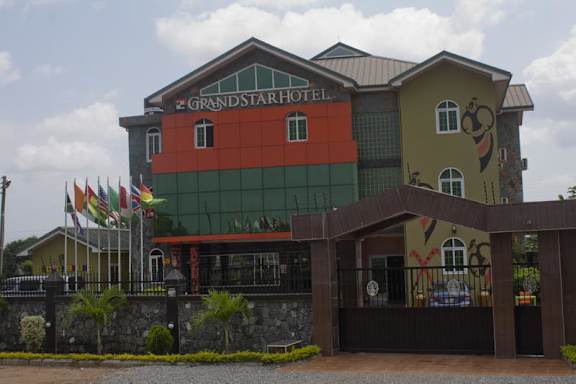
A newer 20-bed hostel with its own bar and restaurant, just off Oxford Street in the heart of Osu. Rated 8.7 from a small number of reviews.
Accra is hot all year, with highs of 28°C to 32°C. November to March is dry and sunny, with dusty harmattan haze in January. The heaviest rain falls from April to June, and December is the busiest, most expensive month of all.
Average daily highs from weather2travel's Accra climate data (32°C January to April, 28°C July and August); other months are rounded between those. Crowd levels are our rough guide.
Pick a style and a number of nights for a rough total, per person, in euros.
Estimates. Beds are based on Hostelworld's listed prices for Accra in October 2026; food and transport assume local food and ride-hailing; doing averages free days with paid sights.
Prices and timetables change. Check before you travel.

Compare Accra hostels: live prices, real reviews and free cancellation on most bookings. Then meet the people already there in the app.

 Get the App.

 Get the App.