Accra
8 hostels
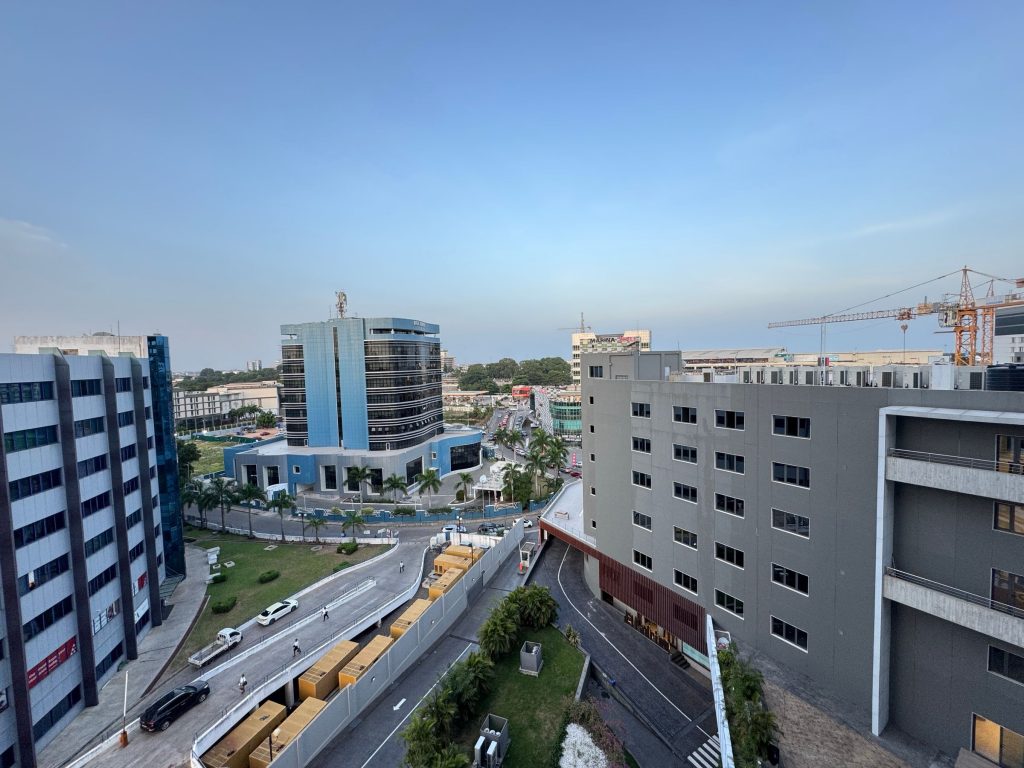
The loud, likeable capital: Jamestown, the Nkrumah memorial, Osu nightlife and almost all of Ghana's hostels. Most trips start here.

Ghana is the easiest way into West Africa: English is the official language, the people are famously welcoming and the big sights sit within a few hours of Accra. Come for the slave castles of Cape Coast and Elmina, the Ashanti capital Kumasi, rainforest canopy walks and surf beaches, and give it two weeks if you can.
Ghana is often called the gentlest introduction to West Africa, and it earns the title. English is the official language, buses and trotros link every town, and strangers will walk you to the right bus station without expecting anything back. "Akwaaba", meaning welcome, is the first word most visitors learn, and you will hear it constantly.
The country is small enough to cover a lot in two weeks. Most trips start in Accra, the loud, sprawling capital, then head west along the coast to Cape Coast and Elmina, where the castles used in the transatlantic slave trade are now museums and a UNESCO World Heritage site. Inland is Kumasi, the old capital of the Asante kingdom, with its huge market and royal palace. Further north, the landscape dries into savannah and Mole National Park, where you can walk with rangers to see elephants.
Ghana is not a cheap country to sleep in. Hostel beds are scarce outside Accra, and guesthouses and beach lodges often cost more than you would expect from the price of food and transport, which are very cheap. Budget for accommodation first and everything else will feel easy.
Travel takes time. Roads between the main cities are mostly paved, but traffic around Accra and Kumasi is heavy, and journeys often run longer than the timetable. Plan fewer stops and longer stays, and travel by day.
Two practical things decide whether a trip runs smoothly: arrange your visa before you fly, because visa on arrival has been scrapped, and carry your yellow fever certificate, because you will not get into the country without it. Malaria is present all year, so talk to a travel clinic well before you go.
Most routes run from Accra west along the coast, then inland to Kumasi and, with more time, north to Mole. These are the places that deserve a stop, with live hostel counts and prices from Hostelworld where there are any.
The loud, likeable capital: Jamestown, the Nkrumah memorial, Osu nightlife and almost all of Ghana's hostels. Most trips start here.
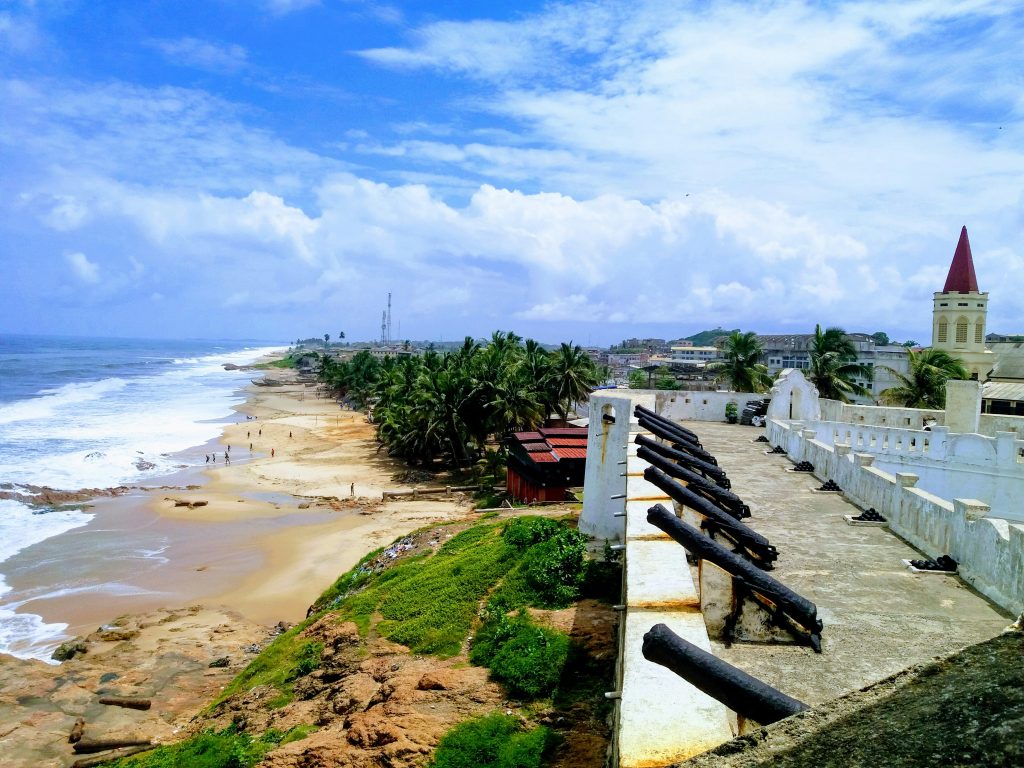
Fishing town built around the castle at the heart of the slave trade, about three hours west of Accra. The base for Elmina and Kakum.
Ghana suits several very different trips. Pick one or two of these and build your route around them, rather than trying to cross the whole country in ten days.
Walk the dungeons of Cape Coast and Elmina, the Nkrumah memorial in Accra and the royal sites of the Asante kingdom.
Slow down on the western coast with beginner surf, palm-lined bays and grilled lobster for dinner.
Cross the canopy at Kakum, hike to Wli Falls and look for monkeys in the forest sanctuaries of the Volta Region.
Head north into the dry savannah for walking safaris in Mole and the 15th-century mud mosque at Larabanga.
Eat your way around Accra's chop bars and street stalls, then stay out for highlife bands and Afrobeats clubs.
Keep going east from Accra: walk across the border into Lomé, then follow the coast to Ouidah, Ganvié and Cotonou in under a week.
Start with the coast west of Accra, because it holds the sites that bring most people to Ghana. Cape Coast Castle and Elmina Castle, about 15 minutes apart by road, were centres of the transatlantic slave trade, and the guided tours through the dungeons and the "Door of No Return" are some of the most powerful museum visits in Africa. Each costs GH₵80 for foreign adults, with the tour included, and both open roughly 9am to 4:30pm. Go early, and leave space in the day afterwards.
From Cape Coast, Kakum National Park is about 30 km inland. Its canopy walkway strings seven rope bridges through the rainforest, the highest more than 40 m above the ground, and is only open on guided walks. Expect to pay around GH₵130 for the walkway plus a small gate fee. Go first thing, when it is cooler and the forest is noisier.
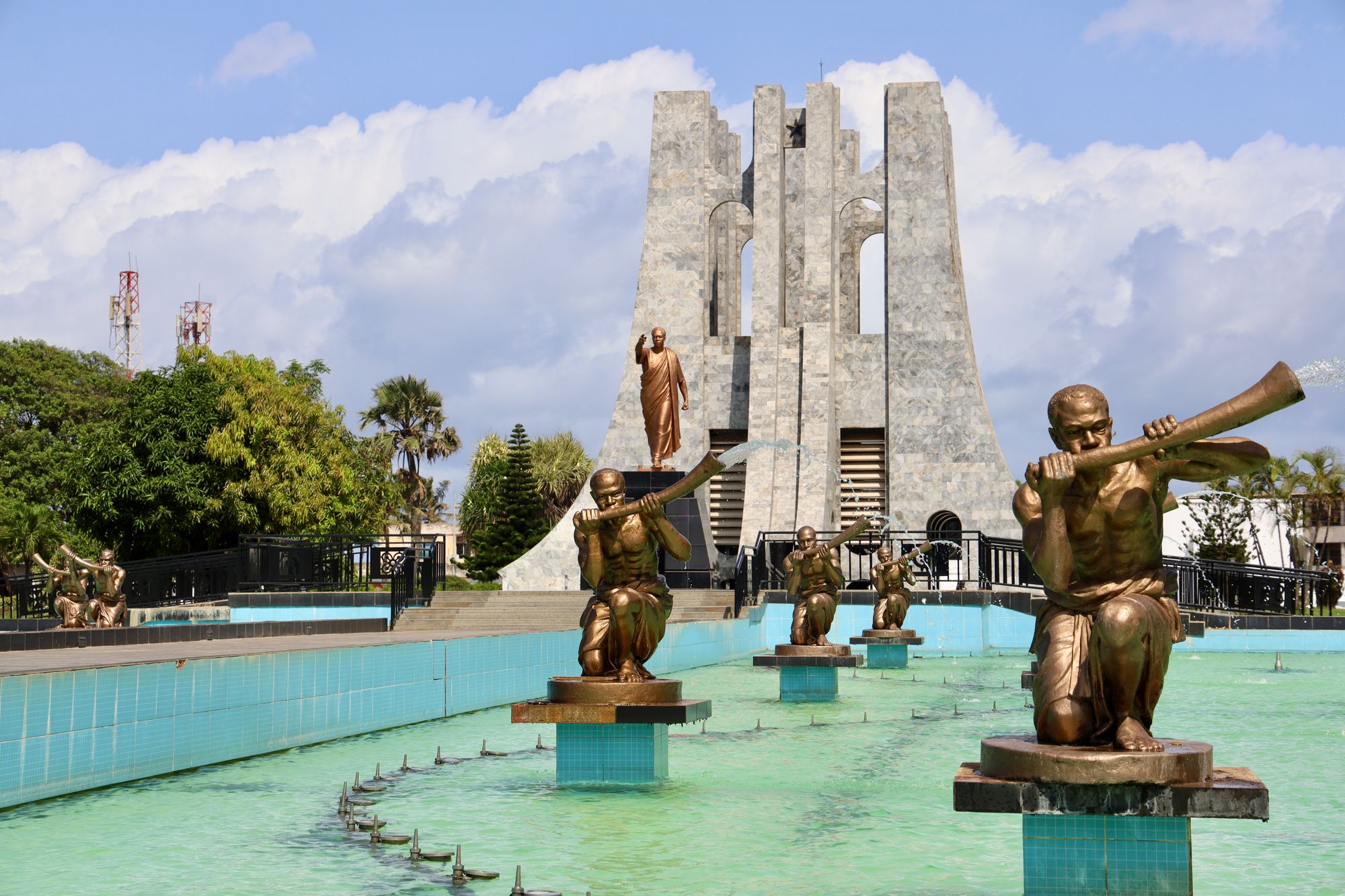
In Accra, the Kwame Nkrumah Memorial Park tells the story of Ghana's independence leader and the 1957 handover from Britain (GH₵100 for non-Ghanaian adults). Walk Jamestown, the old fishing quarter, with its lighthouse and boxing gyms, and Makola Market if you can cope with the crowds.
Kumasi is the cultural heart of the Asante, with the Manhyia Palace Museum, the vast Kejetia Market and craft villages nearby where kente cloth is still woven by hand. In the north, Mole National Park is the best place in West Africa to see elephants on foot, on ranger-led walks from the park headquarters. In the east, the Volta Region has Wli Falls, forest monkey sanctuaries and hill walks that see very few foreign visitors.
If you want to slow down, the western coast around Busua has some of the best surf and quietest beaches in the country.
Ghanaian food is built around starch and soup, and it is hot. Fufu, pounded cassava and plantain, comes in a bowl of light soup, palm nut soup or groundnut soup, and you eat it with your right hand, pinching off pieces and swallowing rather than chewing. Banku, a fermented corn and cassava dough, is the classic partner for grilled tilapia and a fierce pepper sauce. Kenkey, its sharper cousin, comes wrapped in corn husk with fried fish and shito, the black chilli and dried shrimp sauce that Ghanaians put on everything.
Jollof rice is the national obsession, and the rivalry with Nigeria over who makes it best is a running joke you will hear about. Waakye, rice and beans cooked with sorghum leaves, is the standard breakfast and lunch, served from roadside stalls with spaghetti, gari, egg and shito. Red red is a bean stew with fried plantain, and kelewele, spiced fried plantain, is the best street snack in the country, sold in the evenings.
The cheapest and most local way to eat is at a chop bar, a simple canteen serving one or two dishes from big pots. A plate at a chop bar or street stall usually costs well under €5, while a meal in a sit-down restaurant in Accra's Osu or Labone costs more like €8 to €15.
Drink-wise, Star and Club are the big local beers. Palm wine is sold fresh in villages, and akpeteshie, a strong local spirit, is best treated with caution. Drink bottled water, or factory-sealed water sachets from known brands if you need to.
Ghana's nightlife is centred on Accra, and it is good. Osu, around Oxford Street, is the easy starting point, with bars, street food and live music most nights. Labadi Beach is busy at weekends with music and bars on the sand, and Jamestown and the inner suburbs host the art and music events that come and go.
Music is everywhere. Highlife, the guitar-led sound of 1950s and 1960s Ghana, is still played live in bars, and today's Afrobeats and Ghanaian hiplife fill the clubs. If you can, catch a live band rather than only a DJ.
December is the peak. "Detty December" brings the diaspora home and fills Accra with concerts, parties and festivals, finishing with the AfroFuture festival at the end of the month. Prices rise and beds sell out, so book early if you are coming then.
Outside Accra, evenings are quieter. Kumasi has bars and spots playing music late, Cape Coast has a few beach bars, and Busua's nightlife is mostly a bonfire and a bar on the sand. Take a registered taxi or a ride-hailing car home at night rather than walking.
Drink sealed, branded drinks. Australian travel advice warns about drink spiking and poisoned alcohol, and illegal drugs, including small amounts of cannabis, carry long prison sentences in Ghana.
Long-distance buses are the most comfortable way to get around. VIP Jeoun and STC run the main routes from Accra, with assigned seats and air conditioning. VIP's fares from April 2026 are GH₵120 to GH₵150 to Kumasi, GH₵110 to Cape Coast, GH₵120 to Takoradi and GH₵290 to GH₵360 to Tamale. Book a day ahead for popular departures, and expect Accra to Kumasi to take five hours or more with traffic.
Trotros, shared minibuses, go everywhere else. They leave when full from lorry stations in every town, are very cheap and are how most Ghanaians travel. They are cramped and the driving can be hair-raising, but they are the only way to reach many villages. Shared taxis cover shorter hops on fixed routes.
In Accra and Kumasi, Bolt, Uber and Yango work well and are usually the safest option at night. Domestic flights with Africa World Airlines and PassionAir save a long day on the bus to Kumasi or Tamale.
The coast road east continues into Togo and Benin, and it is one of the easiest overland border crossings in West Africa. From Accra, STC buses and trotros run to Aflao, on the Togo border, in about three and a half to five hours. You walk across into Lomé, Togo's capital, which starts right at the frontier. From Lomé, shared taxis take 60 to 90 minutes to the Benin border at Hillacondji, and STM and other buses run Lomé to Cotonou in roughly two to three hours plus the border. On the way, stop at Grand-Popo for the beach and Ouidah for the Route des Esclaves and its own Door of No Return, and take a pirogue to the stilt village of Ganvié outside Cotonou.
Plan the paperwork before you go. Both Togo and Benin need visas for most Europeans, Americans and Australians, so apply online in advance (see Visas below). Togo and Benin use the West African CFA franc, which is fixed at 655.957 to the euro, so bring euros to change. Change money only with banks or trusted changers, count it in front of them, and ignore anyone offering to "help" with border forms for a fee.
Ghana uses the cedi (GHS, written GH₵). In October 2026, €1 buys about GH₵13.1, so GH₵100 is roughly €7.60. Prices have risen fast in recent years, so expect figures in older guides to be well out of date.
The big cost is somewhere to sleep. Hostelworld lists only a handful of hostels in Ghana, almost all in Accra, with the best-rated dorms around US$11 to US$15 a night. Outside Accra you will mostly stay in guesthouses, beach lodges and small hotels, which often start around €20 to €35 for a basic double.
Everything else is cheap. A street-food plate costs a few euros, a VIP bus from Accra to Kumasi is GH₵120 to GH₵150 (about €9 to €11.50), and trotros are cheaper still. Sights cost more: GH₵80 for each castle and around GH₵130 for the Kakum canopy walk, with foreign visitors paying several times the local price.
Cash is still king outside the cities, and mobile money (MoMo) is how most Ghanaians pay. ATMs are easy to find in towns and take Visa more reliably than Mastercard. Withdraw inside banks or malls where you can, and check machines for skimmers.
You must declare large sums of foreign currency on arrival, and the US government gives the limit as US$10,000 in and out. Keep cedis small: many sellers cannot change big notes.
Ghana is one of the more stable and relaxed countries in West Africa, and most visits are trouble-free. The UK advises against all but essential travel only to the Bawku area in the far north-east, while the US asks visitors to exercise increased caution and to reconsider travel to the northern border regions. The tourist route along the coast, Kumasi and Mole is outside those areas, but check the latest advice if you plan to go far north.
Crime has risen in recent years, especially in Accra. The UK warns about robberies, sometimes armed, bag snatching and pickpocketing in crowded areas, and attacks on cars stopped in traffic. Keep car windows up, carry little cash, avoid walking at night and use Bolt, Uber or a registered taxi after dark. At Kotoka airport, only go with drivers you have booked and can identify.
The sea is the most common danger. Rip currents along the southern coast drown swimmers every year, so only swim where locals do, ideally where there are lifeguards, and never alone.
Ghana is conservative. Dress modestly away from the beach, ask before photographing people, and never photograph military sites or the airport. Same-sex sexual acts are illegal and LGBT+ travellers should be very discreet. Penalties for drugs, including small amounts of cannabis, are severe, and bail is usually refused.
Health matters as much as crime. You need a yellow fever certificate to enter, malaria is present everywhere all year, and tap water is not safe to drink.
Most Hostelworld readers need a visa for Ghana, including UK, US, EU, Canadian and Australian passport holders. Ghana launched an online e-visa portal in May 2026, evisa.immigration.gov.gh, and the UK government also points British citizens to the online form on the Ghana High Commission website. Apply well ahead: the UK advice gives 10 to 15 days for processing. The old visa-on-arrival system has been scrapped, so do not fly without one.
Your passport must be valid for at least six months after you arrive, and the US asks for a blank page for each stamp. You must show a yellow fever vaccination certificate to enter, and you will need it again for the visa application. Bring the paper certificate, not a photo of it.
Declare foreign cash on the arrival form. The UK warns that authorities can confiscate the whole amount if you carry the equivalent of US$10,000 or more without declaring it.
If you are continuing along the coast, sort out the next two visas too. Togo needs an e-visa from voyage.gouv.tg, issued for 15 days single entry (about 25,000 CFA, or €38), and the UK says it cannot be bought on arrival. Togo also asks every traveller to complete an online registration before arrival and departure. Benin's e-visa is issued at evisa.bj, from €50 for 30 days, and should be requested at least a week ahead. Both countries also check yellow fever certificates at the border.
Carry a photocopy of your passport photo page, which the UK says is acceptable ID in Ghana, and keep the original somewhere safe.
November to March is the main season: dry, sunny and good for the coast and the north, with December the busiest month of all. The south has two rainy seasons, the heaviest from about April to June and a shorter one in September and October, while July and August are cooler and cloudier.
Temperatures are average daily highs in Accra (weather2travel climate data: 32°C from January to April and 28°C in July and August; the other months are rounded between those). Kumasi is a degree or two hotter in the dry season, and the north is much hotter and drier. Crowd levels are our own rough estimate.
Pick a travel style and the number of nights to see a rough total. Figures are per person per day in euros, based on hostel dorms or guesthouse rooms, local food, buses and trotros, and a mix of paid sights and tours.
Rough figures for 2026, converted at about €1 = GH₵13.1. Outside Accra there are very few dorms, so even a shoestring trip often means a cheap guesthouse room. Mole safaris and surf lessons add to these numbers.
Traditional festivals, independence celebrations and Accra's December party season shape the Ghanaian calendar. Many traditional festivals follow local calendars, so confirm the date before you plan around one.
Parades and celebrations for independence from Britain in 1957.
Effutu deer-hunting festival, with two companies racing to catch a live antelope.
Remembrance of the slave trade and the African diaspora, at the castles and the old slave river.
Street art, performance, music and parties across Jamestown and Osu. 2026 ran 10–17 August.
Ga harvest festival "hooting at hunger", with processions and kpokpoi, a special corn dish.
Colourful procession of chiefs and asafo companies through the town.
Anlo Ewe festival of the migration from Notsie, with a grand durbar of chiefs.
The big end-of-year music festival of Detty December, with Ghanaian and international acts.
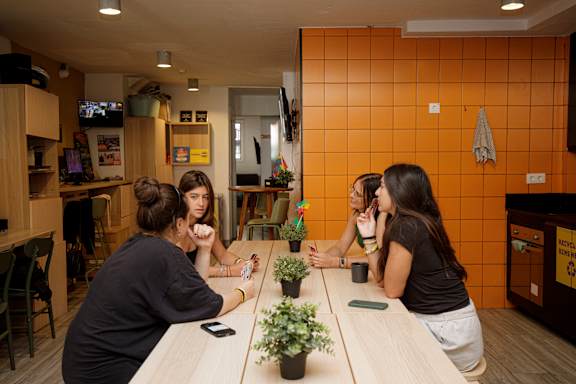
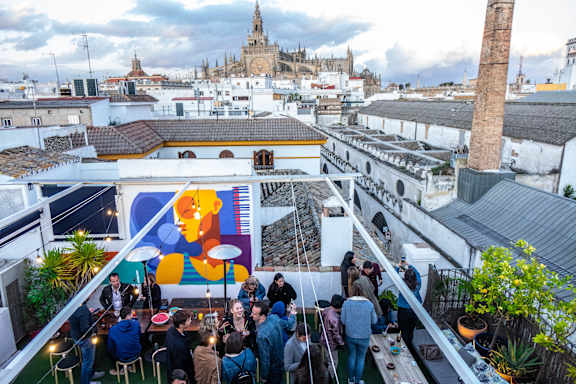
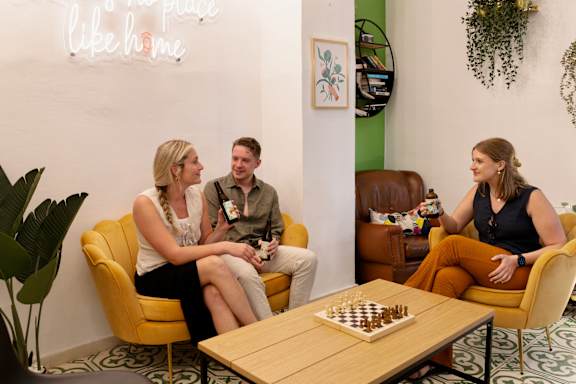
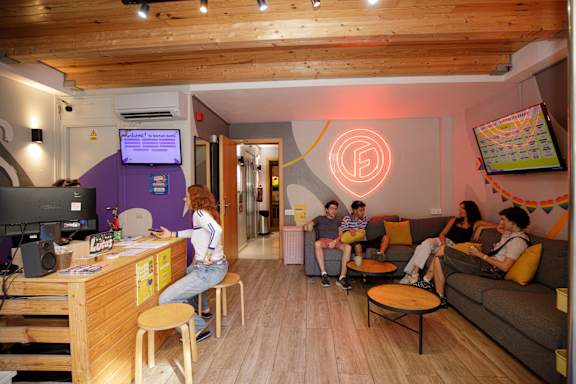
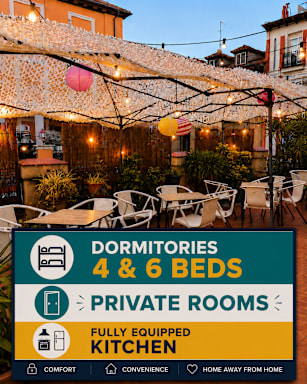
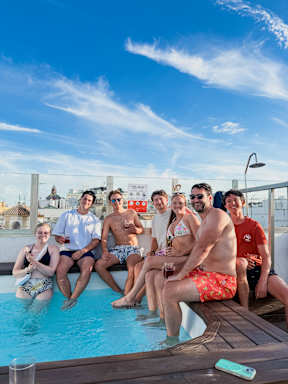
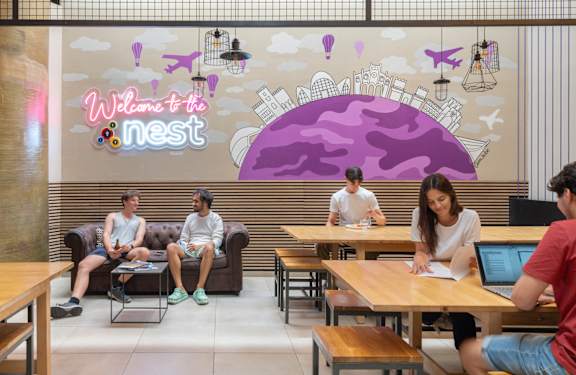
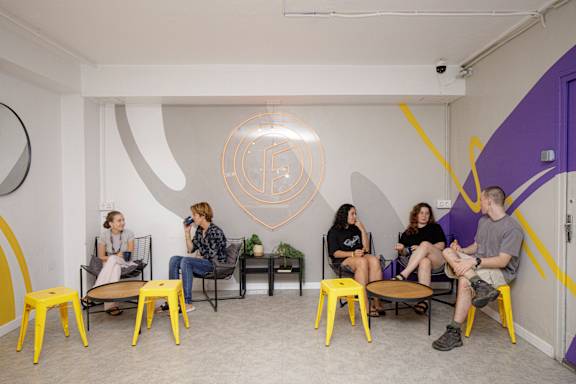
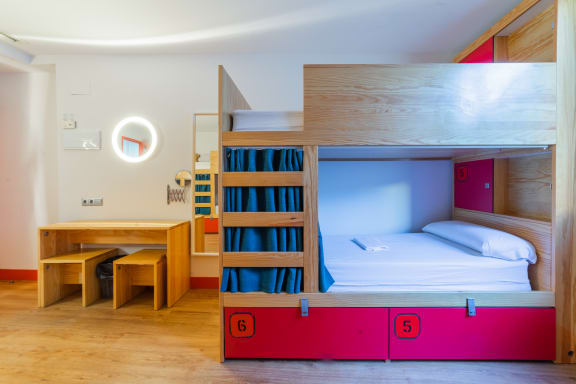
Ghana's hostels are few and almost all in Accra, mostly small, friendly places in residential areas with breakfast included. These are the best-rated right now, with live prices.
Visa, price and timetable details were checked in October 2026. Rules change, so confirm with official sources before you travel.

Compare Ghana hostels: live prices, real reviews and free cancellation on most bookings. Then meet the people already there in the app.

 Get the App.
 Get the App.