Old town and the castle
History and photographersThe hill behind the castle with colonial buildings, Fort William and Fort Victoria, and the fishing beaches below.

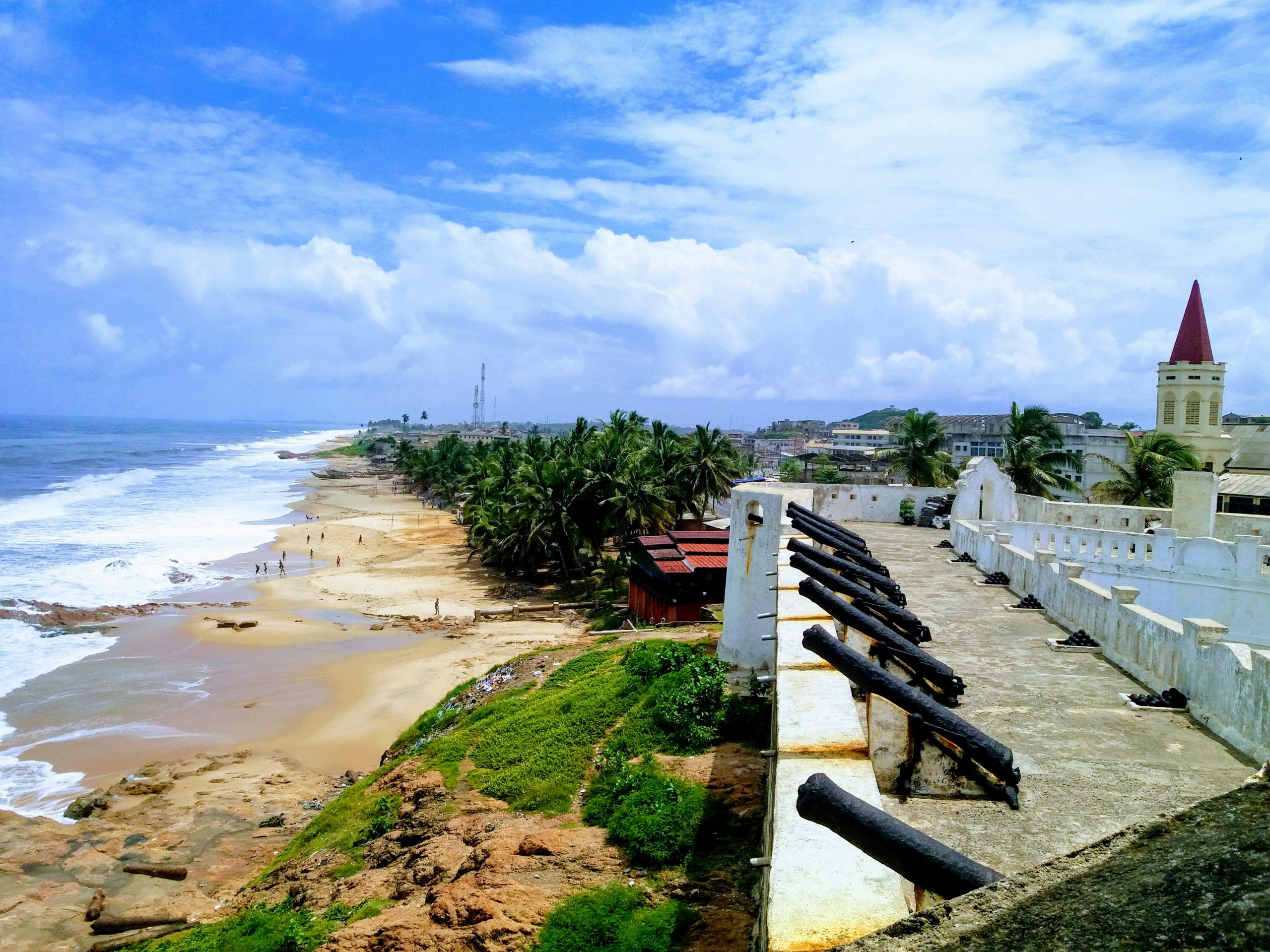
Cape Coast is where most people come face to face with the history of the transatlantic slave trade. The castle dungeons, and those at Elmina down the road, are among the most important sites in Africa. Around them is a relaxed fishing town with a university, beach bars and the rainforest canopy of Kakum half an hour away.
Cape Coast, about 150 km west of Accra, was the capital of the British Gold Coast until 1877, and the white walls of its castle still dominate the seafront. Built as a Swedish trading fort in the 1650s and expanded by the British, Cape Coast Castle held thousands of enslaved Africans in its dungeons before they were shipped across the Atlantic. Together with Elmina Castle and Ghana's other coastal forts, it is part of a UNESCO World Heritage site.
Most visitors come for the castles, and they should. The guided tours are intense, moving and essential to understanding West Africa. Many people, especially travellers from the African diaspora, find the visit overwhelming, so plan a slow afternoon afterwards.
The rest of the town is easy-going. Fishing canoes crowd the beaches below the castle, the old town climbs the hill behind it with crumbling colonial buildings and two smaller forts, and the large University of Cape Coast gives the place a student energy. Beach bars and guesthouses line the shore west of the castle.
Cape Coast is also the natural base for the region. Elmina is 13 km west, with an even older castle and a busy fishing harbour, and Kakum National Park, with its canopy walkway, is about 30 km inland.
Two or three nights is about right: one day for the castles in Cape Coast and Elmina, one for Kakum, and an evening or two on the beach. Hostels are rare here, so expect to stay in a guesthouse or beach lodge.
Most travellers stay on or near the beach west of the castle, or in Elmina for a quieter town. The old town around the castle is better for exploring than sleeping, and the beaches further west suit a few days off.
The hill behind the castle with colonial buildings, Fort William and Fort Victoria, and the fishing beaches below.
Guesthouses and beach bars a short walk from the castle, with the sea right outside.
The big University of Cape Coast campus north-west of town, with cheap food, student bars and guesthouses.
Fishing port 13 km west with St George's Castle, Fort St Jago and a few beach resorts.
Palm-lined beach about 15 km west of Elmina with a few lodges and very little else.
Map data from OpenStreetMap contributors.
Cape Coast Castle is the reason to come. Guided tours, included in the GH₵80 ticket for foreign adults, take you through the male and female dungeons, the governor's quarters and the cells for "rebellious" captives, ending at the Door of No Return that opens onto the sea. The castle also has a museum on the slave trade and the history of the region. It is generally open 9am to 4:30pm, and tours run regularly through the day. Expect to spend two hours or more.
Elmina Castle, or St George's Castle, is 13 km west and 15 minutes by taxi. Built by the Portuguese in 1482, it is the oldest European building south of the Sahara and was later the Dutch headquarters on the Gold Coast. The tour, also GH₵80, is just as powerful. Across the lagoon, Fort St Jago looks down on the castle, and the harbour below is one of the busiest fishing ports in Ghana, packed with painted canoes. Elmina's asafo company shrines, colourful concrete monuments to the town's traditional warrior groups, are scattered around the streets.
Kakum National Park is the third big sight. Its canopy walkway, seven rope bridges strung through the treetops of the rainforest, can only be crossed on a guided walk, and costs around GH₵130 for foreign adults plus a small gate fee. Get there for opening time: it is cooler, the queues are shorter and the birds are more active.
Back in Cape Coast, climb to Fort William, with its lighthouse, and Fort Victoria for views over the town, and walk down to the beach east of the castle to watch the fishing canoes land.
The castles cost money, but much of Cape Coast is free. Walk the seafront below the castle in the morning, when the fishing canoes come in and the beach turns into a market of fish, nets and noise. It is busy and smelly and one of the best scenes on the coast.
The old town behind the castle is worth an hour's wander. Look for the colonial merchant houses, the churches and the steps up to Fort William and Fort Victoria, which give views over the rooftops and the sea.
In Elmina, walk the bridge over the lagoon to watch the boats unload at the harbour, and follow the streets to find the asafo shrines, painted with soldiers, ships and animals.
The beaches west of town are free to walk, but take care in the water: currents are strong all along this coast.
If your visit lines up with Fetu Afahye in early September, the procession of chiefs, drummers and asafo companies through town is free to watch.
Cape Coast is Fante country, and the food is all about fish. Fante kenkey, fermented corn dough wrapped in plantain leaves, comes with fried fish and hot pepper, and fish light soup with fufu is the standard lunch at chop bars around town. Grilled tilapia with banku is the classic evening meal.
The fishing beaches mean seafood is fresh and cheap. Beach bars and guesthouse restaurants serve grilled fish, prawns and lobster, usually with jollof rice or chips, for less than you would pay in Accra.
For quick, cheap food, look for waakye and egg stalls in the morning, and kelewele and grilled meat in the evening around the market and the university.
A plate at a chop bar costs a few euros, and a meal at a beach restaurant around €6 to €12. Drink bottled water or sealed sachets, and try fresh coconut from roadside sellers.
Cape Coast is not a party town, but evenings are relaxed and sociable. The beach bars west of the castle are the main spots, with drinks, grilled fish and music, and they get busier at weekends.
The University of Cape Coast gives the town a student crowd, and bars and spots around the campus play music late during term time.
Big festivals change everything. During PANAFEST and Emancipation Day around the end of July and early August, and Fetu Afahye in September, the town fills with visitors, music and street parties.
Walk in groups at night, or take a taxi: the beach and the old town are quiet after dark, and street lighting is limited.
Most people arrive from Accra, about three hours away. VIP Jeoun's standard coach costs GH₵110 (April 2026 fares), and STC also runs the route. Trotros and Ford vans leave from Kaneshie station in Accra more often and for less, but are more cramped. Leave early to avoid Accra's traffic.
From the west, Takoradi is about 1½ hours away by trotro, and the route continues to Busua and the western beaches. Buses also run north to Kumasi in around four hours.
Around town, shared taxis run fixed routes for a small fare, and you can charter one for a trip. Agree the price first. Elmina is 15 minutes away by shared taxi or trotro.
For Kakum, take a trotro from the stand in Cape Coast heading north towards Twifo Praso and ask to be dropped at the park entrance, or hire a taxi for the morning, which is easier if you also want to stop at Hans Cottage on the way.
Ride-hailing apps are much less reliable here than in Accra, so keep a taxi driver's number once you find a good one.
Cape Coast is cheaper than Accra for food and transport, but beds are the tricky part. Hostelworld currently lists no hostels here, so most travellers stay in guesthouses and beach lodges, with basic rooms often starting around €20 to €35 a night. Sharing a room brings costs down.
The sights are the big expense. Cape Coast Castle and Elmina Castle cost GH₵80 each for foreign adults (about €6), and the Kakum canopy walk costs around GH₵130 (about €10) plus the gate fee. Doing all three costs roughly €22.
Food is cheap: chop bars and street stalls cost a few euros a plate, and a beach restaurant meal is around €6 to €12. Shared taxis around town and to Elmina cost very little.
There are ATMs in town, but carry cash for taxis, chop bars and guesthouses. At about GH₵13.1 to €1, a budget day with a shared room comes to around €30 to €35, including a sight.
Cape Coast is relaxed and most visitors feel safe. The main risk is the sea: rip currents along this stretch of coast are strong, and people drown every year. Swim only where locals do, never alone, and stay out of the water after drinking.
Petty theft happens on the beaches and in crowds, so keep valuables in your room and watch your bag at the markets and at festivals.
You may be approached around the castles by people offering to be your guide, asking for donations or writing your name on "memorial" souvenirs. Politely decline; the official castle guides are included in the ticket.
Take a taxi at night rather than walking along the dark beach roads. Dress modestly in town, and ask before photographing fishermen and their canoes; some will ask for a tip.
Everything near Cape Coast is close: the castle and harbour at Elmina, the canopy at Kakum, the old slave river at Assin Manso and quiet beaches to the west.
St George's Castle, built in 1482, Fort St Jago and one of Ghana's busiest fishing harbours.
Rainforest canopy walkway of seven rope bridges, plus forest trails. Go at opening time.
The "slave river" where captives were washed before the march to the coast, now a memorial and the focus of Emancipation Day.
Fishing town east of Cape Coast with another slave-trade fort and a quieter beach.
Long, palm-lined beach west of Elmina for a lazy day. Take care in the water.
Cape Coast's calendar is shaped by remembrance and tradition: Emancipation Day and PANAFEST in summer, and the Fetu Afahye procession in September.
Public holiday with parades for independence in 1957.
Festival opening the fishing season, with a regatta of canoes on the Benya lagoon.
Pan-African festival of arts, culture and remembrance at the castles. Check the dates for 2027.
Remembrance of the slave trade, with ceremonies at the castle and the slave river.
Grand procession of chiefs in palanquins, drummers and asafo companies through the town.
Church services, beach parties and diaspora visitors.
Cape Coast is warm and humid all year, with highs of around 28°C to 32°C. November to March is dry and sunny, the heaviest rain falls from about April to June, and late July to September brings the big festivals and diaspora visitors.
Highs are based on Accra's weather2travel climate data, as the closest reliable coastal reference. Crowd levels are our rough guide.
Pick a style and a number of nights for a rough total, per person, in euros.
Estimates. With no Hostelworld hostels in Cape Coast, beds assume a shared guesthouse room; doing includes the castles and Kakum spread over a few days.
Prices and timetables change. Check before you travel.

Compare Cape Coast hostels: live prices, real reviews and free cancellation on most bookings. Then meet the people already there in the app.

 Get the App.

 Get the App.