Town centre
Budget rooms and the marketMarket, banks and cheaper hotels.

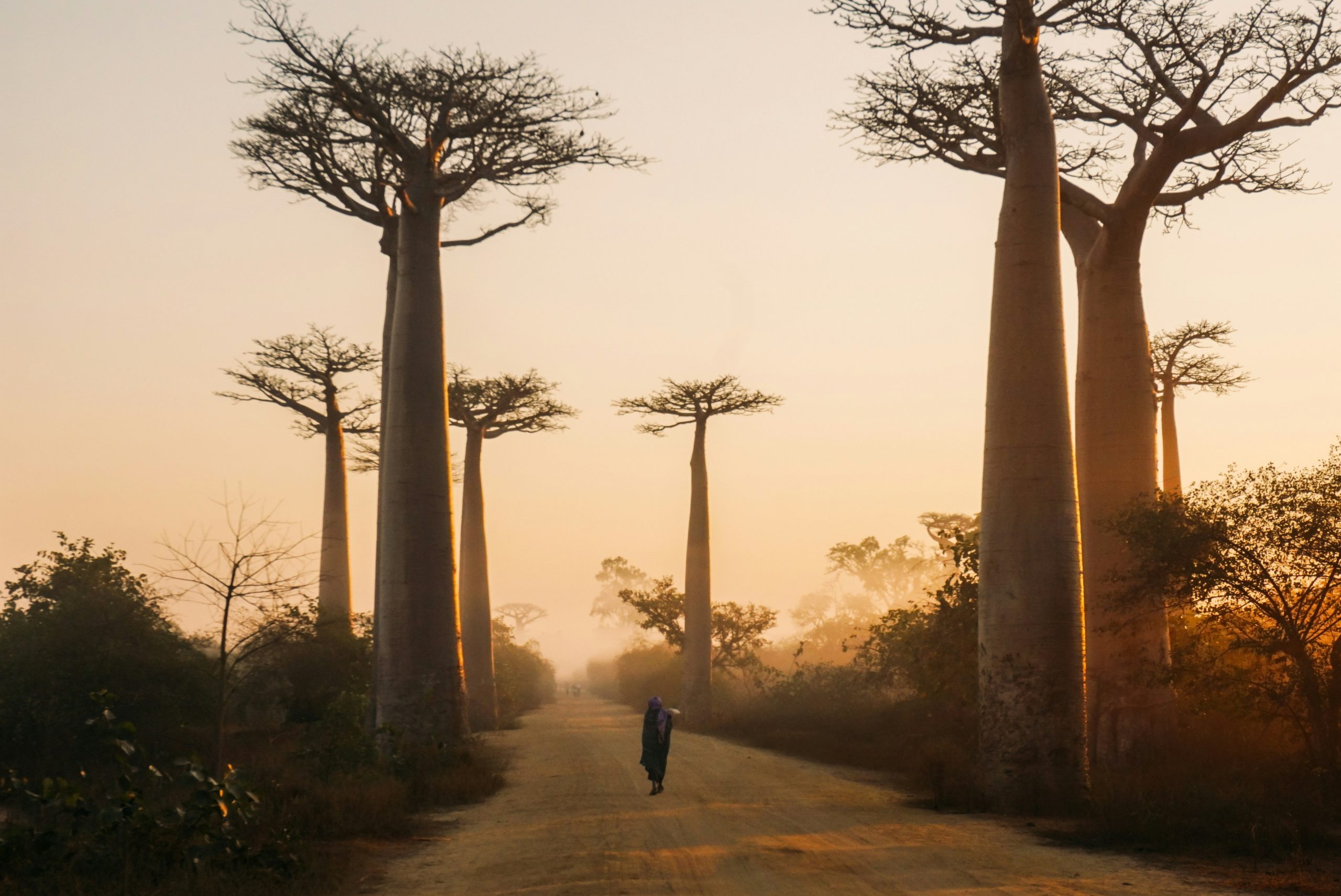
Morondava is a sleepy seaside town on Madagascar's west coast and the base for its most famous view: the Avenue of the Baobabs, where giant trees line a red dirt road, glowing at sunset. From here, head into Kirindy Forest to find the fossa, or north on a long 4x4 trip to the Tsingy de Bemaraha.
Morondava is a small, hot, dusty town on the Mozambique Channel, about 700 km west of Antananarivo by road. It has a laid-back beach strip, a fishing harbour, a market and a handful of hotels and restaurants, most of them on Nosy Kely, the sandy spit south of the town centre.
It's the gateway to Madagascar's dry west, a landscape of deciduous forest, mangroves and baobabs. The Avenue of the Baobabs, about 17 km from town, is a stretch of dirt road lined with Grandidier's baobabs, some over 800 years old and 30 m tall. It's at its best at sunset and sunrise, when the trees turn gold and red.
Nearby are the Baobabs Amoureux, two trees twisted around each other, and the sacred baobab, revered by local communities.
About 50 km north, Kirindy Forest Reserve is one of the best places in Madagascar to see the fossa, the island's largest predator, as well as sifakas, brown lemurs and, on night walks, tiny mouse lemurs.
Further north still, the Tsingy de Bemaraha National Park, a UNESCO site, is reached on a long 4x4 journey via Belo sur Tsiribihina, and is only accessible in the dry season.
Two or three nights covers the baobabs and Kirindy. Add three or four more for the Tsingy.
Stay on Nosy Kely or the beach road for sea views and restaurants, or in town for cheaper rooms. Kirindy has basic lodging inside the forest.
Market, banks and cheaper hotels.
Sandy spit south of town with bungalows and bars.
The famous baobab-lined road, about 17 km away.
Dry forest reserve about 50 km north, with basic lodging.
Map data from OpenStreetMap contributors.
The Avenue of the Baobabs is the highlight. Go for sunset, when the light is warmest and the crowds of photographers line up along the road, or for sunrise, when it's quieter. A taxi round trip from Morondava costs about MGA 60,000. There's a small community entry fee.
Close by are the Baobabs Amoureux, two intertwined trees said to represent lovers, and the sacred baobab, where locals leave offerings. Most tours combine all three.
Kirindy Forest Reserve, about 50 km north, is a dry deciduous forest famous for the fossa, a cat-like predator found only in Madagascar. You'll also see Verreaux's sifakas, brown lemurs and, on night walks, mouse lemurs, including one of the world's smallest primates. Staying overnight at the reserve's basic lodge gives the best chance of seeing wildlife.
The Tsingy de Bemaraha, a UNESCO World Heritage site, is a forest of razor-sharp limestone pinnacles with walkways, ladders and rope bridges. Getting there takes a long 4x4 journey of a day or more via Belo sur Tsiribihina, and it's only open in the dry season. Most travellers book a 3 to 4-day 4x4 trip from Morondava.
In town, walk the beach and harbour to watch the pirogues come in, and visit the market.
Walk the beach and watch the fishermen launch and land their pirogues (outrigger canoes).
Watch the sunset over the Mozambique Channel from the beach or a bar on Nosy Kely.
Wander the town market for fruit, fish and spices.
Walk along the mangroves and the river mouth near Nosy Kely.
If you're on a tight budget, share a taxi to the Avenue of the Baobabs with other travellers to split the cost.
Seafood is excellent in Morondava. Restaurants on the beach and in town serve grilled fish, prawns, crab and calamari, often with coconut sauce or garlic.
Zebu steak and Malagasy dishes like romazava (zebu and greens) are also on menus.
Hotely, small local eateries in town, serve rice with a side dish for a couple of euros.
Mofo gasy (rice cakes) and fruit are sold on the street in the morning.
THB beer and rhum arrangé, rum infused with fruit or vanilla, are the drinks. Drink bottled water.
Morondava is quiet at night. The main evening event is sunset, either at the baobabs or on the beach, followed by dinner and a drink on Nosy Kely.
A few bars in town and on the beach play music at weekends.
Use a taxi after dark rather than walking, and don't walk on the beach alone at night.
Morondava Airport has flights from Antananarivo, about an hour, on Madagascar Airlines. Services aren't daily, so book ahead.
By road, Antananarivo to Morondava takes 9 to 12 hours via Antsirabe. Cotisse Transport runs scheduled buses for about MGA 55,000. Taxi-brousses are cheaper, but the UK advises avoiding them because of robbery risk and accidents.
The UK says attacks have occurred along the west coast between Belo sur Tsiribihina and Toliara, and advises using a recognised tour operator in the region between Besalampy and Morombe, which includes Morondava. It also warns of armed robberies on boats on the Tsiribihina River. Travel in daylight and book trips through a reputable operator.
In town, taxis and tuk-tuks are cheap. Agree the fare first, as drivers may say they have no change.
For Kirindy and the Tsingy, hire a 4x4 with driver or join a tour.
Morondava is cheap. Hostelworld has no listings here, but simple hotels and bungalows cost from about MGA 23,000 to MGA 35,000 a night.
A hotely meal costs a couple of euros, and a seafood dinner around €5 to €12.
A taxi round trip to the Avenue of the Baobabs costs about MGA 60,000, plus a small entry fee.
Kirindy has park fees and a mandatory guide, and its dorm beds cost about MGA 35,000.
The Tsingy is the big expense: a 3 to 4-day 4x4 trip with driver, fuel and park fees costs much more, so share with other travellers.
There are ATMs in town, but bring cash in ariary and small notes.
On a budget, allow around €25 to €40 a day, before Kirindy and Tsingy trips.
Morondava is relaxed, but the wider region needs care. The UK says attacks have happened along the west coast between Belo sur Tsiribihina and Toliara, and advises using a recognised tour operator in the region between Besalampy and Morombe, which includes Morondava.
Armed criminals have robbed passengers on boats on the Tsiribihina River, so seek alternatives to river trips to the Tsingy.
Don't travel by road after dark, and avoid taxi-brousses. If stopped, ask for ID, as criminals have posed as police.
In town, keep valuables hidden, don't walk alone on the beach at night and agree taxi fares in advance.
Respect local fady (taboos), especially at sacred baobabs and tombs, and ask your guide before taking photos.
Malaria is present. Use repellent and sleep under a net. The sun is fierce, so carry water and sun protection.
Morondava is the base for the baobabs, Kirindy Forest and the long trip north to the Tsingy.
Giant baobabs along a dirt road, best at sunset.
The fossa, sifakas and night walks for mouse lemurs.
UNESCO-listed limestone pinnacles with walkways and rope bridges. Dry season only.
Two intertwined baobabs, usually combined with the Avenue.
Morondava's calendar follows Madagascar's national holidays and the dry season.
Public holiday.
Public holiday with parades.
The park is accessible only in the dry season.
Morondava is hot all year, with highs of 28°C to 32°C. April to November is the dry season and the best time to visit; the Tsingy is only accessible from about May to November. December to March is very hot and wet, and roads can flood.
Average daily highs from weather2travel's Morondava climate data. Crowd levels are our rough guide.
Pick a style and a number of nights for a rough total, per person, in euros.
Estimates in euros, converted from ariary. Sleeping is based on budget hotel prices, since Hostelworld has no listings here; doing includes the baobabs but not the Tsingy.
Prices and timetables change. Check before you travel.

Compare Morondava hostels: live prices, real reviews and free cancellation on most bookings. Then meet the people already there in the app.

 Get the App.

 Get the App.