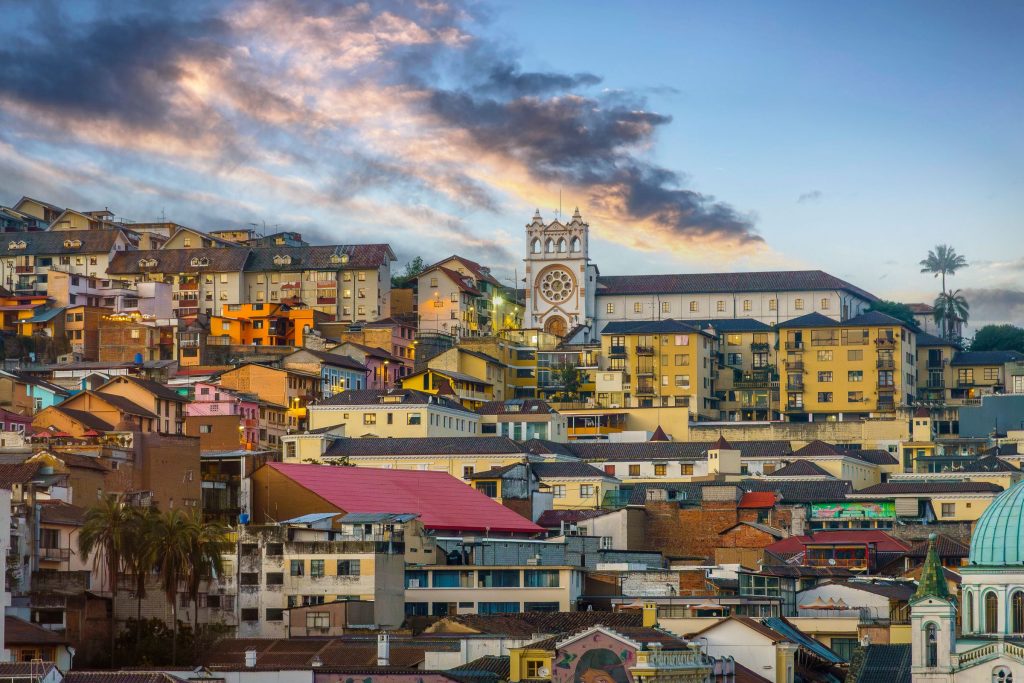
Antananarivo
1 hostel
Hilltop capital with the Rova palace, markets and the main airport.

Madagascar is a world of its own: lemurs leaping through rainforest, giant baobabs at sunset, razor-sharp limestone forests and white-sand islands. Most of its wildlife lives nowhere else on earth. Roads are slow and planning matters, but a few weeks here feels like visiting another planet.
Madagascar is the world's fourth-largest island, about 400 km off the coast of Mozambique. It split from the rest of Africa and India millions of years ago, and its plants and animals evolved in isolation. Around 90% of its wildlife is found nowhere else, including more than 100 kinds of lemur, chameleons, the fossa and six of the world's eight baobab species.
The culture is just as distinctive. The Malagasy people descend from both Southeast Asian and African settlers, and Malagasy, related to languages spoken in Borneo, is the national language, with French widely used. Ancestors play a central role in daily life, and local taboos called fady vary from village to village.
For travellers, Madagascar is spectacular but challenging. It's one of the poorest countries in the world, roads are often in poor condition and journeys take a long time. Many visitors hire a car with a driver, and domestic flights save days.
The classic routes are the RN7 south from Antananarivo through the highlands to Isalo and the coast, the west for the Avenue of the Baobabs and the Tsingy, the east for rainforest and lemurs at Andasibe, and the north for Nosy Be's beaches and islands.
Political protests in late 2025 led to a transitional government, and rallies can still happen. Crime and road banditry are real risks in some areas, so plan routes carefully.
Three to four weeks lets you combine two or three regions without rushing.
Most trips start in Antananarivo, then head east for lemurs, west for baobabs and the Tsingy, south along the RN7, or north to Nosy Be. These are the stops that earn their place, with live hostel counts and dorm prices from Hostelworld.
Hilltop capital with the Rova palace, markets and the main airport.
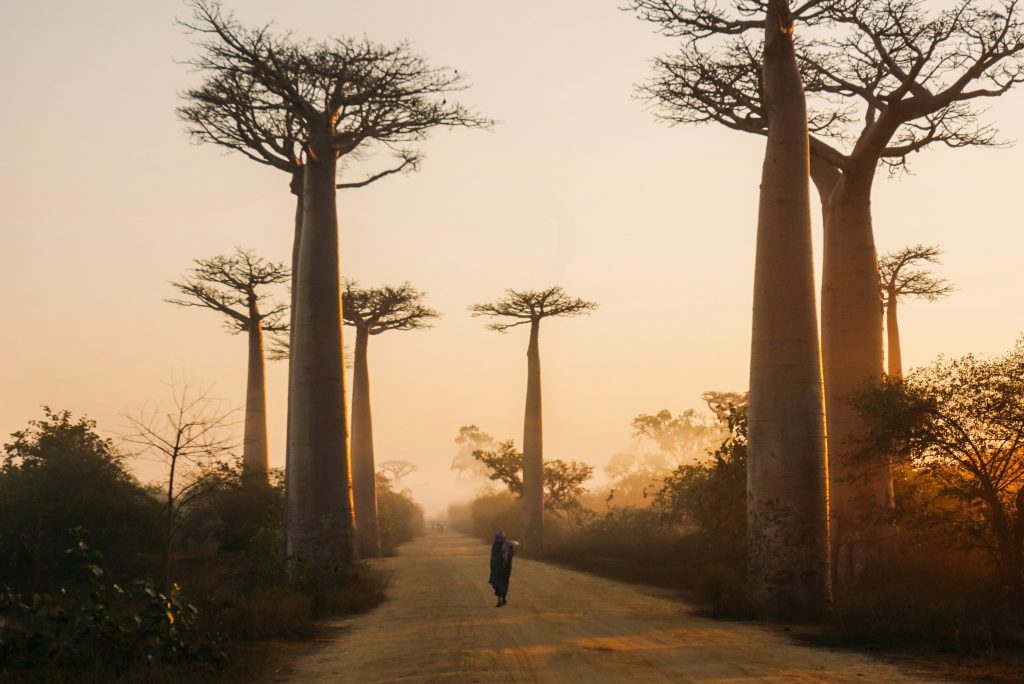
West coast town and base for the Avenue of the Baobabs, Kirindy and the Tsingy.
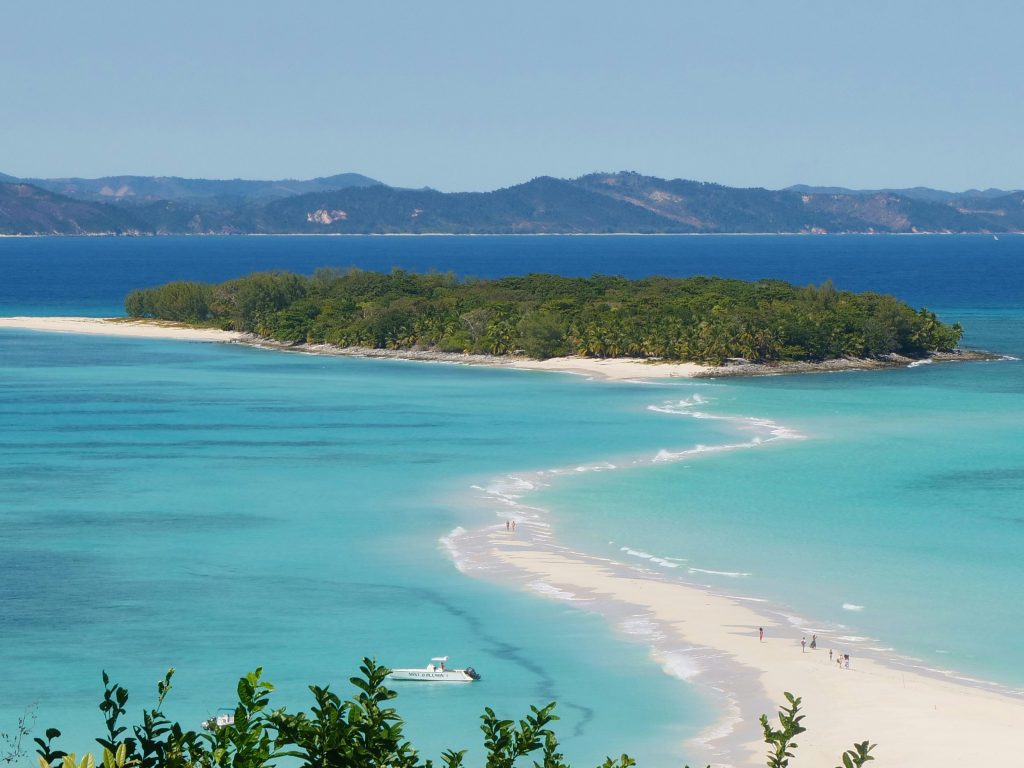
Northern island with beaches, boat trips and whale sharks in season.
Madagascar is big and slow to cross. Pick one or two regions and build your trip around them.
Hear the indri sing in Andasibe, spot golden bamboo lemurs in Ranomafana and go on night walks.
Watch sunset on the Avenue of the Baobabs, track the fossa in Kirindy and cross the Tsingy's rope bridges.
Hop between Nosy Be's islands, snorkel at Nosy Tanikely and relax on the sandbar at Nosy Iranja.
Drive south through the highlands, rice terraces and rainforest to Isalo's canyons and the coast.
Explore the Rova and Ambohimanga, the royal hills of the Merina kings, and learn about fady and famadihana.
Eat romazava and zebu, try mofo gasy at dawn and sip rhum arrangé.
Lemurs are the reason many people come. Andasibe-Mantadia National Park, a few hours east of Antananarivo, is home to the indri, the largest lemur, whose eerie song echoes through the rainforest in the morning. Night walks reveal mouse lemurs, chameleons and frogs. Ranomafana, in the southern highlands, is another rainforest park with golden bamboo lemurs.
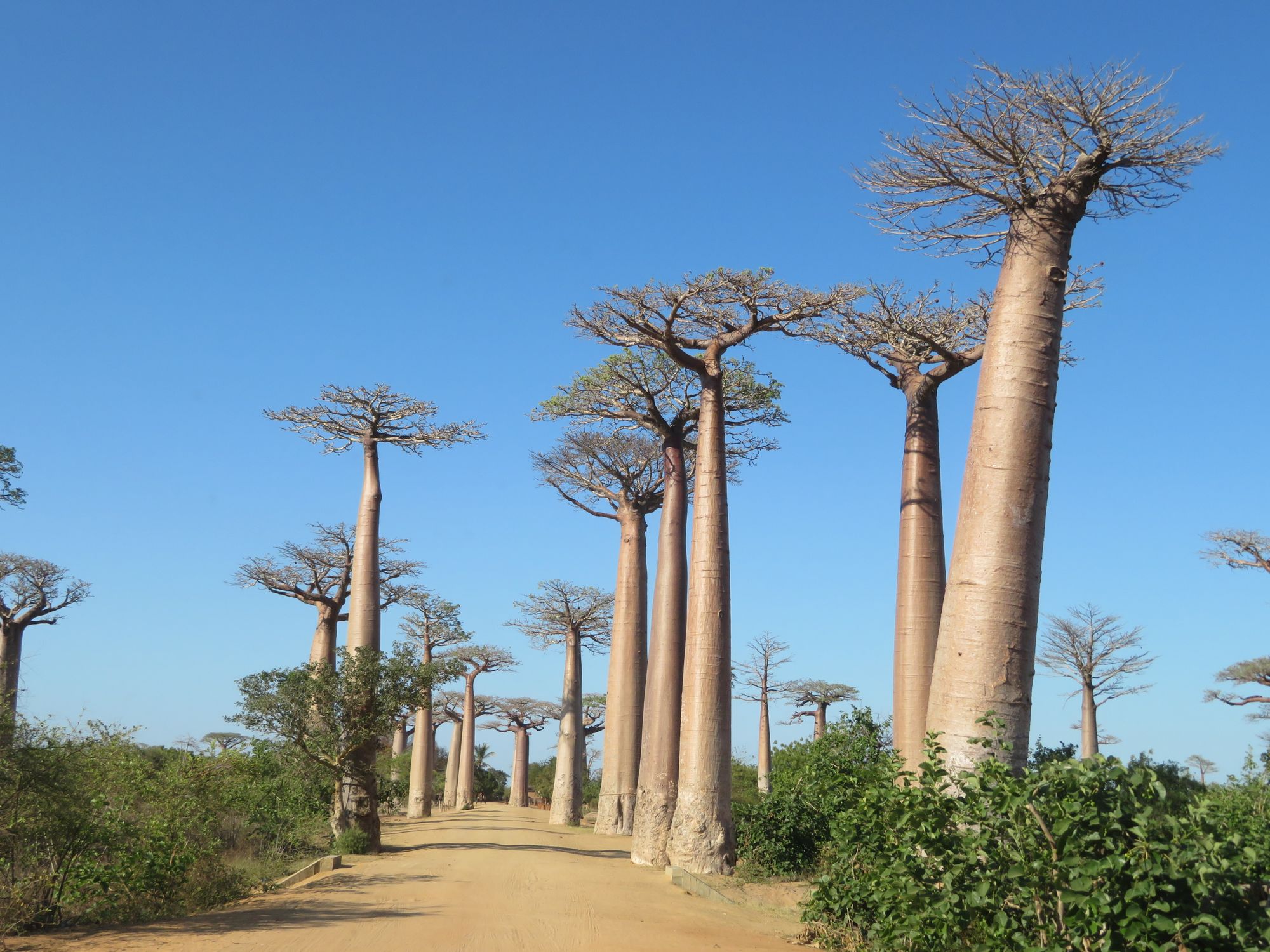
In the west, the Avenue of the Baobabs, near Morondava, is Madagascar's most famous view: a dirt road lined with giant baobabs, some hundreds of years old, best at sunset. North of Morondava, Kirindy Forest is the best place to see the fossa, Madagascar's top predator, and the Tsingy de Bemaraha, a UNESCO World Heritage site, is a forest of razor-sharp limestone pinnacles with rope bridges and walkways.
The RN7, south from Antananarivo, passes the highland towns of Antsirabe and Fianarantsoa, the Ranomafana rainforest and Isalo National Park, a sandstone massif with canyons, natural pools and ring-tailed lemurs, before reaching the beaches near Toliara.
In the north, Nosy Be is Madagascar's main beach island, with boat trips to Nosy Komba, Nosy Tanikely and Nosy Iranja, and whale sharks in season.
Île Sainte-Marie, off the east coast, has humpback whales from about July to September.
In Antananarivo, the Rova, the royal palace complex on the highest hill, and the old royal hill of Ambohimanga, a UNESCO site, tell the story of the Merina kingdom.
Rice is the heart of Malagasy food, eaten at almost every meal. It's served with laoka, a side dish of meat, fish or vegetables.
Romazava, a broth of zebu (local cattle) and leafy greens, is often called the national dish. Ravitoto, pounded cassava leaves cooked with pork, is another favourite. Zebu steak is cheap and widely available.
Cheap meals are served at hotely, small local eateries, for a few euros. Street snacks include mofo gasy (rice-flour cakes), koba (a banana, peanut and rice-flour sweet) and samosas.
French influence shows in the bread, pastries and the steak-frites in larger towns. Seafood is excellent on the coasts.
THB, Three Horses Beer, is the national lager. Rhum arrangé, rum infused with fruit, vanilla or spices, is sold everywhere. Coffee is often very sweet, with condensed milk.
Don't drink the tap water, and avoid unpeeled fruit and salads.
Antananarivo has the most nightlife, with bars, live music venues and clubs. Malagasy music, from salegy to hira gasy, is lively and worth seeking out.
Nosy Be is the beach party spot, with bars and clubs in Ambatoloaka and Madirokely.
In smaller towns, evenings are quiet: dinner, a THB or a rhum arrangé, and an early night before the next long drive.
The UK says not to walk alone in city centres or poorly lit areas after dark. Use pre-booked taxis or hotel transport at night.
Paying for sex is illegal, and sex offences involving minors are strictly prosecuted.
Madagascar's roads are often poor and journeys are long. Antananarivo to Morondava takes 9 to 12 hours, and many secondary roads are impassable without a 4x4 in the rainy season.
Taxi-brousses, the shared minibuses, are the cheapest way to travel, but the UK advises avoiding them because of robbery risk and frequent fatal accidents. Cotisse Transport runs scheduled buses between Antananarivo and larger towns such as Morondava, Toamasina and Mahajanga.
Many travellers hire a car with a driver through a recognised operator, which is safer and lets you stop on the way.
Domestic flights, operated by Madagascar Airlines, connect Antananarivo with Nosy Be, Morondava, Toliara, Sainte-Marie and other towns, and save long days on the road.
The UK warns that armed robberies happen on main roads, especially at night, and recommends a high level of vigilance on the RN7, RN10, RN27 and RN34. Don't travel by road after dark, and use a recognised operator.
Ferries and boats can be overcrowded and poorly maintained, so check conditions before travelling by sea or river.
Madagascar uses the ariary (MGA). In October 2026, €1 is about MGA 5,116. Euros are the easiest foreign currency to change and are often accepted in tourist areas.
ATMs are found in larger towns, mostly for Visa cards, and often have low withdrawal limits. Cards are accepted mainly in Antananarivo and Nosy Be, sometimes with a surcharge. Carry enough cash in small notes for rural areas.
Day-to-day costs are low. A local meal at a hotely costs a couple of euros, and a restaurant meal around €5 to €12.
Accommodation is cheap outside Nosy Be. Hostelworld lists one hostel, in Antananarivo, with dorms from about US$12.
The big costs are transport and parks. A car with driver, domestic flights and national park fees, plus mandatory local guides, add up quickly.
On a budget, allow around €30 to €50 a day, before a driver, flights and park fees.
Significant protests in Antananarivo and other areas in late 2025 led to violence and a transitional government. Political rallies can happen anywhere, so avoid gatherings and expect road closures.
Robbery and theft are common, and foreigners are targeted by pickpockets and muggers. Don't walk alone in city centres or poorly lit areas after dark, and use pre-booked taxis.
Armed robberies happen on main roads, especially at night and outside towns. Travel in daylight, use a recognised operator or hotel transport, and the UK advises avoiding taxi-brousses. If stopped, ask for ID, as criminals have posed as police. Don't resist if attacked.
Violent robberies have happened at isolated beaches, including on Nosy Be and near Toliara. Take local advice before visiting quiet beaches.
Carry your passport, as police carry out random ID checks and may not accept copies. Avoid photographing security personnel.
Respect fady, local taboos, and ask a guide before visiting villages or tombs. Collecting or buying protected animals, plants or rosewood is illegal.
Cyclone season runs from November to April. Malaria, plague and rabies are present, so take health advice before you go.
UK visitors can enter Madagascar visa-free for up to 15 days, paying a €10 administration fee on arrival, with proof of an onward or return ticket.
For longer stays, buy a 30- or 60-day tourist visa on arrival at the airport, paid in euros, US dollars or ariary, or apply in advance at the Embassy of Madagascar in London. Visas can be extended up to a total of 90 days. Make sure your passport is stamped.
Your passport must be valid for at least six months after you arrive and have at least two blank pages.
You can bring in up to 400,000 ariary. Declare foreign cash worth €7,500 or more.
Bringing in food, including fruit, is illegal. When leaving, you can take up to 2 kg of vanilla and 1 kg of pepper or cloves, with receipts.
You need a yellow fever certificate if you are arriving from a country with yellow fever risk. Health screening is in place for travellers from Ebola-affected countries.
The dry season from April to November is the best time to visit. September to November is warm and great for wildlife, with baby lemurs. June to August is cool in the highlands. December to March is hot and wet, with cyclones on the coasts, and some parks and roads close.
Temperatures are average daily highs in Antananarivo (weather2travel climate data). The coasts are much hotter, often above 30°C. Crowd levels are our own rough estimate.
Pick a travel style and the number of nights to see a rough total. Figures are per person per day in euros, based on hostels or budget hotels, local food, buses and a mix of activities.
Rough figures for 2026, converted from ariary. A car with driver, domestic flights and park fees can add a lot.
National holidays, music festivals and the famadihana season shape the Malagasy calendar.
Public holiday remembering the 1947 uprising.
Music festival with artists from Madagascar and the Indian Ocean islands.
Public holiday marking independence in 1960, with parades and fireworks.
Family "turning of the bones" ceremonies; attend only if invited.
Humpbacks breed in the channel off the east coast.
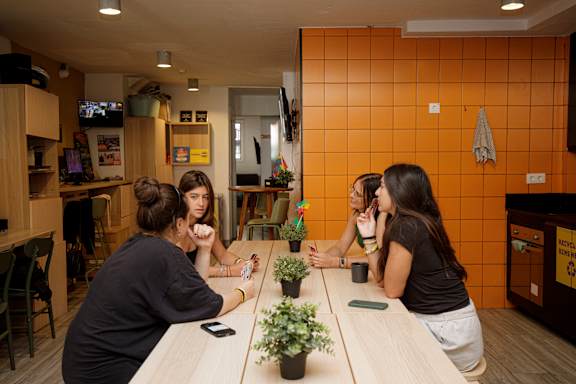
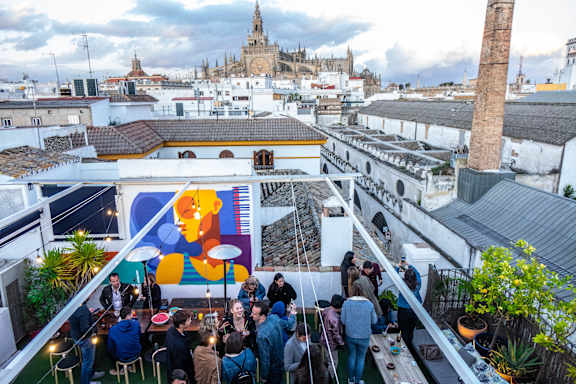
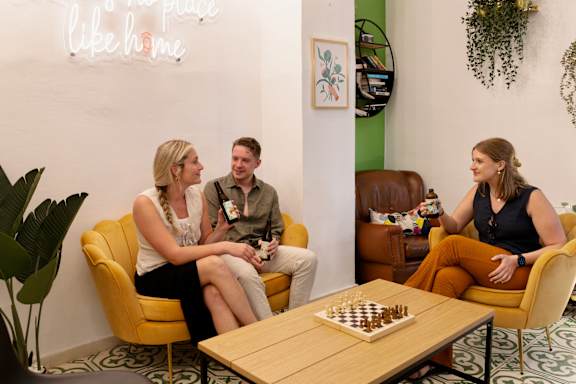
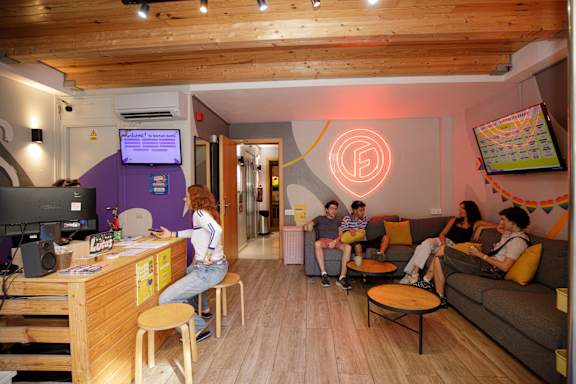
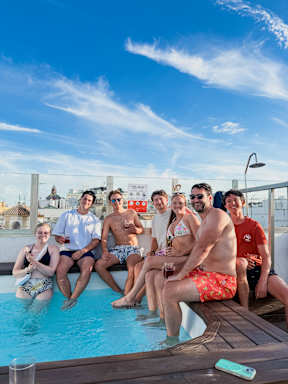
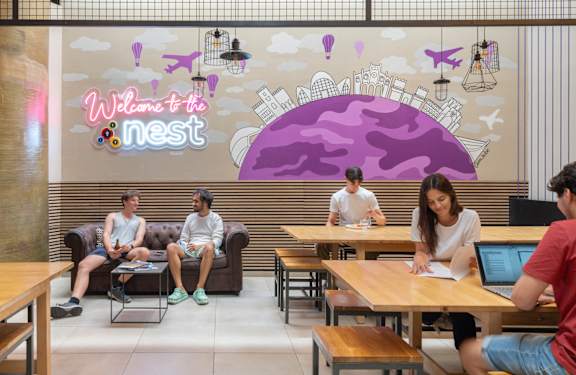
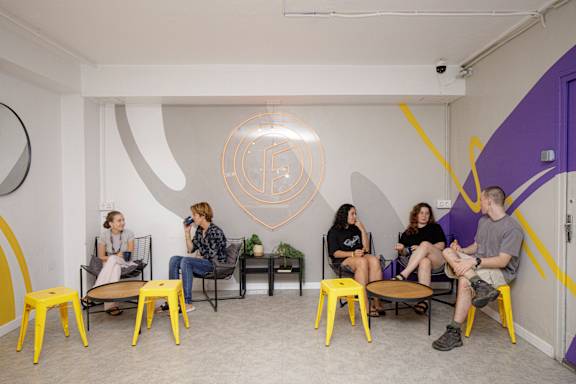
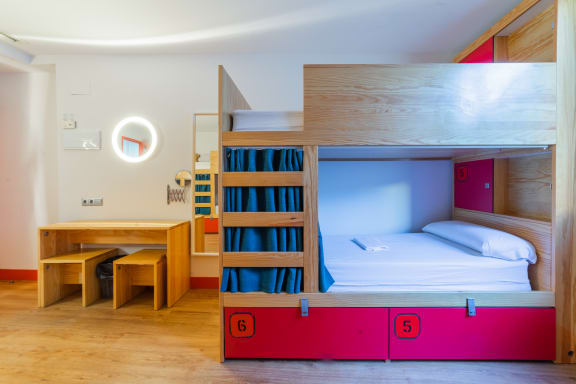
Madagascar has very few hostels, mostly in Antananarivo. Most budget travellers stay in simple hotels and guesthouses. Here are the best-rated hostels right now, with live prices.
Visa, price and safety details were checked in October 2026. Rules change, so confirm with official sources before you travel.

Compare Madagascar hostels: live prices, real reviews and free cancellation on most bookings. Then meet the people already there in the app.

 Get the App.



 Get the App.