
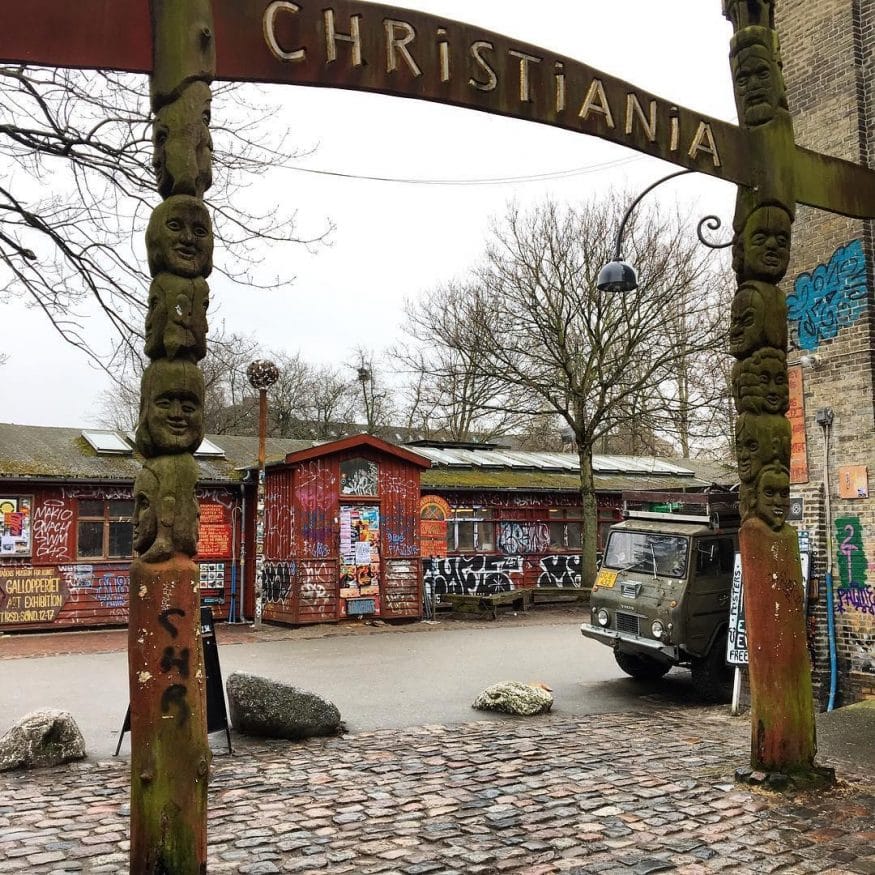

I spent 4 years living in Copenhagen and while I disliked certain aspects of it at times, my fondest memories come from spending summer afternoons and sunlit evenings sitting on the grass at Christiania, watching live music with friends, eating and drinking until making the trip home in the midnight sun. No trip to Copenhagen would be complete without first visiting Christiania. I would go as far as to say that it’s the number one thing to do! It’s unlikely that you will ever find anything like Christiania anywhere else in the world, and if you do, there is almost no chance it will be in the centre of a capital city in one of the most progressive countries in the world. (Planning the rest of your trip? Start with our Copenhagen guides.)
I first visited Copenhagen in 1994, I was a child being dragged around by my parents, but one thing that still stands out from that first big trip away from Australia was walking into the walls of the old army barracks that was by that time known as Christiania. Copenhagen’s “free zone”, I remember seeing massive walls and strange looking people everywhere. Upon entering, it was all long hair, bare feet, laughter, people smoking and drinking, and a strange smell that I could not put my finger on at the tender age of 9. As we walked around inside, it was filled with hobbit-styled houses, graffiti, shoulder to shoulder market stalls selling all kinds of hash and pre-rolled joints, a beautiful lake, dense forest and crazy Danish designed ‘Christiania bikes.’
It was a strangely magical place and not something you can really appreciate at that age. Here’s everything you need to know about Copenhagen’s Christiania:

📷: @brekkedeg
Christiania’s history
Christiania was originally founded in 1971 by a group of young anarchist/artist type hippies that just marched in and took over an abandoned military base. Crazy, right?! They named it ‘Christiania’ being that it sits in the borough of Christianshavn and they turned it into their own self-proclaimed free zone. As you enter, you pass under a big sign that reads ‘You are now leaving the European Union.’
Originally, it was an area in which anyone could squat for free. Things have been up and down since the founding of the community though, as essentially it is a seized piece of government property with an open-air, soft drug market meaning that naturally, the residents have had continuous run-ins with the government. In 2011 they shut the doors for the first time ever, to come together as a community and talk about what to do. Later that year they signed a deal with the government, and in 2012 a foundation set up by the residents took over most of the land, at a price of around 125 million DKK before agreed deductions for upkeep. For years after the deal, every time you went to Christiania they would have fundraisers or ask for donations to help pay for it.
Christiania today
These days, Christiania is still a place for free loving, young, pseudo-hippies to go and enjoy themselves. Beer is cheap, coffee is cheap and in summer when the sun is out 20 hours a day you will never find the place empty!
The biggest change is Pusher Street, the famous hash market. After a run of deadly shootings linked to gangs, the residents themselves dug up the street’s cobblestones in April 2024 to drive the dealers out, and it’s now just an ordinary walkway. In 2026, the community agreed to work with the city on a plan for public housing around the old street. Remember that cannabis is illegal in Denmark – that hasn’t changed, inside Christiania or out.
Christiania rules for visitors
- No photos on the former Pusher Street – look out for the signs. Elsewhere, photos are fine, but ask before snapping residents or their homes.
- Don’t run – it can cause panic.
- No hard drugs, no violence and no cars.
- Bring cash – lots of stalls, bars and the bathhouse don’t take cards.

📷: @itscalypso
The Christiania sauna: Copenhagen’s famous nude sauna
There is a sauna inside of Christiania, in an old wood-heated bathhouse. If you are not European (or at least European-inclined) you might be a little thrown off by the fact that everyone is naked… especially as it’s a unisex sauna! Coming from Australia, I was not really used to seeing naked women just sitting there ignoring the fact that there were naked men all around them. If you can manage not to stare, and you’re confident enough to sit in a room full of naked people, then this is a super fun experience and truly authentic to the ‘free’ nature of Christiania. In the colder months especially, this sauna is extremely popular. You may need to meet and talk to someone inside Christiania to find this hidden gem. I only found out about it after a year or two of living in Copenhagen.
Good to know: it isn’t free – there’s a small entry fee, and you’ll want cash. It’s usually open in the afternoons and evenings from Tuesday to Sunday, but hours change, so check Christiania’s website before you go. Bring a towel, and expect a mixed, all-naked crowd.
More nude saunas in Copenhagen: saunas are a big deal here, and lots of the harbour saunas are swimsuits-on. If you want more naked bathing, Amager Helgoland, the bathhouse at the north end of Amager Beach, has nude areas alongside its saltwater pools.
Best things to do in Christiania
If skating is your thing, or you just enjoy watching it like almost everyone I know, there is an indoor skate park that you might enjoy with a few ramps and hips outside for your enjoyment. Two friends of mine that grew up inside of Christiania constructed the bowl inside, and it quickly became a meeting point for the Copenhagen skate scene. These days, it attracts pros from all around the world.
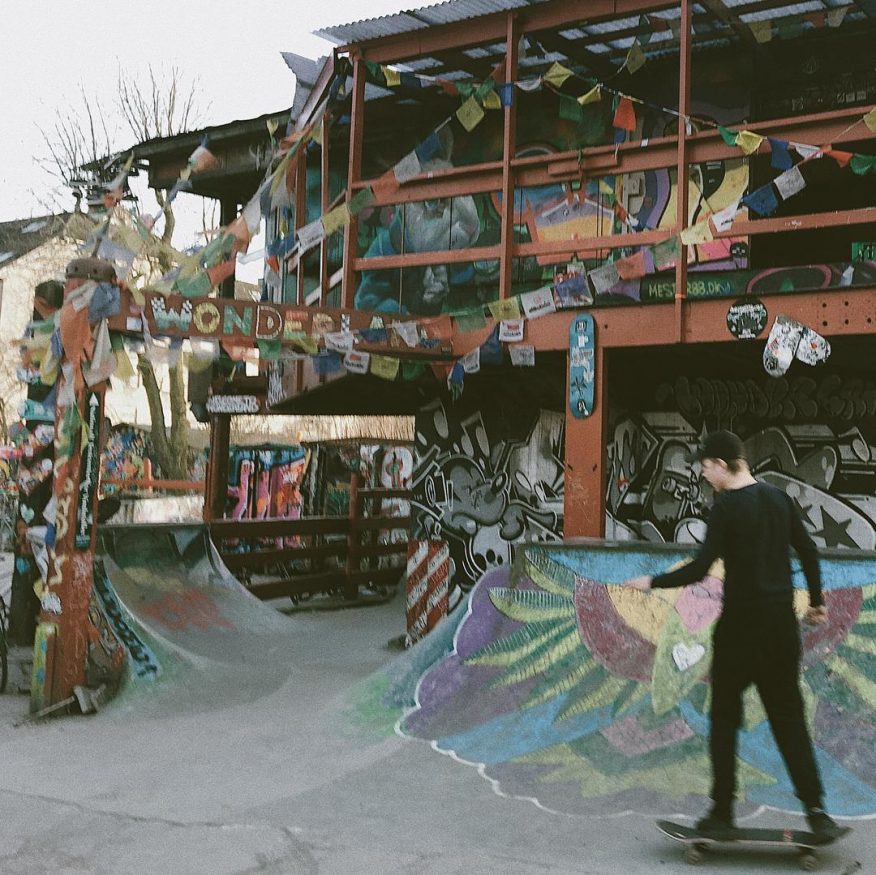
📷: @scummybae
One thing you need to do that is a little hard to really pinpoint is just walk around, find the edge of the lake and follow it, if you see small tracks that look walked on follow them, this will lead you to all the small hobbit styled houses that litter the 85-acre area. Houses of particular interest to me were the one where one entire side was built out of old window frames and windows, the front is entirely filled with cactus and ferns and a host of other plants. Another house had a tree growing straight through the middle of it, and another one that I actually saw in construction looks like some kind of alien flying saucer! The lake is beautiful as well, people sit, drink, smoke and listen to music. If you are traveling alone, just walk up and say hi. Danish people are pretty reserved especially if you don’t speak Danish, but once you get them talking they are always incredibly warm and friendly.
There are also Christiania walking tours you can take that will explain a little bit of the history to you and show you things you might otherwise miss.
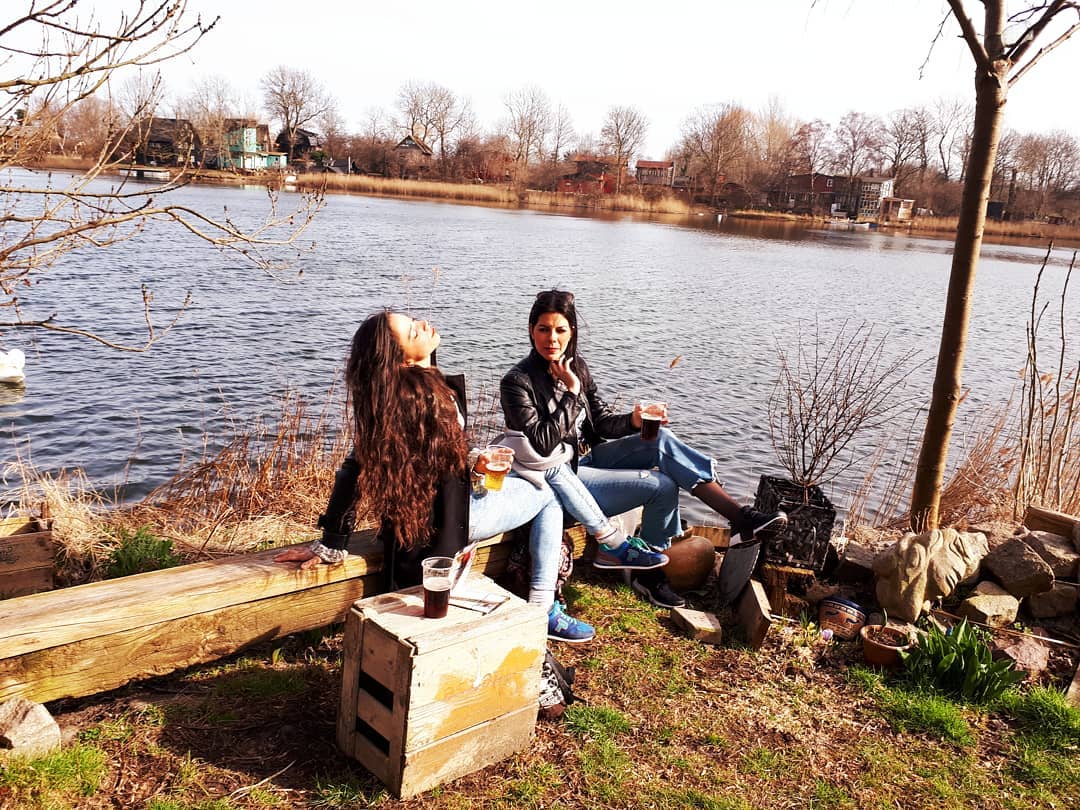
Live music in Christiania
There is live music constantly in Christiania with a string of amazing venues and outdoor locations to see it all. Nemo Land, also a cute cafe, provides two free concerts every Sunday. I have seen everything from open mic freestyle battles to Finnish crust punk, Swedish black metal, and obscure underground euro dubstep.
Loppen, a live music hall, is normally pretty alternative but some really big names in hip-hop and rock have played here also.
The Grey Hall, or Den Grå Hal as it is known in Danish, is another big venue inside of Christiania which has hosted a huge amount of massive names from Bob Dylan to Metallica and Rage Against the Machine… (just to name a few!) As well as this, they have other free concerts on and off all summer long where you will find massive amounts of people just hanging out on the grass enjoying the weather and live music. Keep the night going in town at one of the best bars in Copenhagen that won’t break the bank.

📷: @taigabeppu
Eating in Christiania
Here are some of my top suggestions for where to eat in Christiania (and for the rest of the city, see our guide to cheap eats in Copenhagen):
Morgenstedet: is an organic vegetarian cafe that was personally my favourite place to eat in Christiania.
Spiseloppen: Probably the most multicultural place you will ever eat in, between the chefs, the waiters, and the customers you can easily hear 10-15 different languages being spoken. The food constantly differs but if you are so inclined there is at least one vegetarian meal on the menu every night.
Cafe Månefiskeren or moon fisher is another cute cafe with cheap coffee, pool tables, toilets (which can be hard to find in Christiania) and an outdoor seating and garden area which is also used for more live music during the summer time.

Cafe Månefiskeren 📷: @williamshellard
Final words on Christiania
Like any city, your experience there can be made or broken by interactions and experiences. Some people love a city that other people absolutely hate due to interactions with people or lack of things to do, cost of things or difficulty to get around and see things. I understand when people say they hate London or L.A or Rome (I don’t always agree but I get it) but I could never imagine anyone saying they hate Copenhagen. It can be expensive at times but the city is small so getting everywhere is super easy, not to mention you can rent city bikes (Bycyklen) from stations all over town on a pay-as-you-go basis, or with a subscription if you’re staying a week or more. Each bike has a touch-screen and GPS showing drop off stations and locations around the city – check their website for the latest prices. It takes about 45 minutes by bike to get entirely from one end of the city to the other and if you are just visiting you will never have any reason to go that far. Got a few extra days? Try one of these day trips from Copenhagen.
Check out these hostels in Copenhagen
About the author
Dane Faurschou is a photographer, surfer and traveller from Byron Bay, Australia, who splits his time between the ocean and the mountains. Currently, he’s driving from Canada to Patagonia to search out as many waves and mountains as possible and anything else in between. Follow his adventures on his blog, Instagram and Facebook.
Pin this blog for later!

 Get the App.
Comments