Town centre
First-timersAround the main road and the square: guesthouses, the marshrutka stop, shops and restaurants.

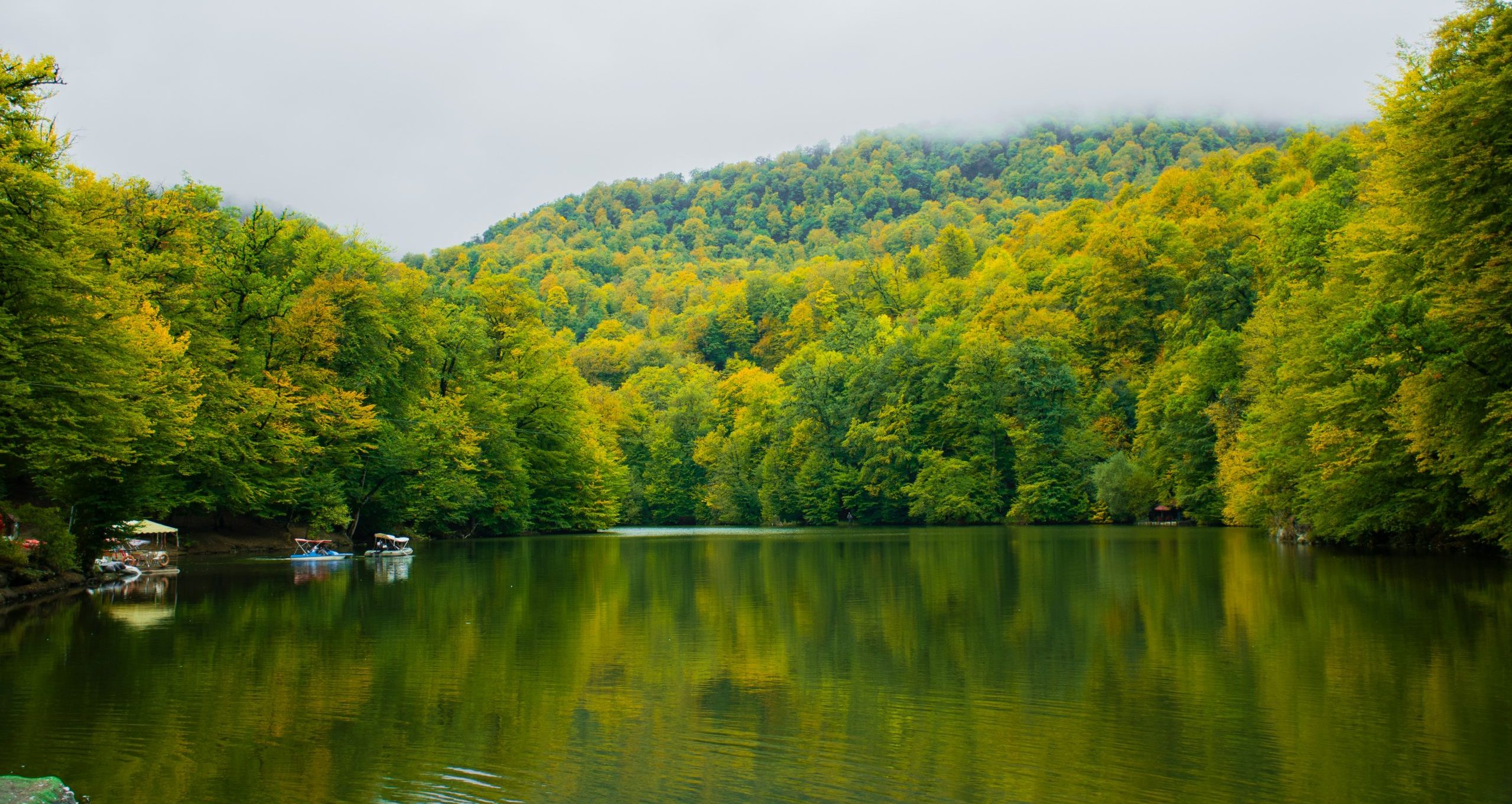
Forested, cool and green in a country that mostly is not, with two medieval monasteries in the trees and a national park around it. Armenia calls it Little Switzerland.
Dilijan sits at 1,500 metres in forested hills in the north, and it is where Armenians go when Yerevan hits 35 degrees. The national park around it is beech and oak forest with walking trails, springs and two of the country's best monasteries hidden in it.
Haghartsin and Goshavank are both twelfth and thirteenth century, both still in use, and both set among trees rather than on the bare hillsides where most Armenian monasteries stand — which makes them feel entirely different.
The town itself is small, with a restored old street of craft workshops and a Soviet sanatorium legacy that explains the mineral water everywhere. The international school on the hill has brought money and a certain polish.
Two days: one for the monasteries, one for the walking.
A small town on a hillside. The centre, the old street, or out in the forest.
Around the main road and the square: guesthouses, the marshrutka stop, shops and restaurants.
The restored old street of wooden balconies and craft workshops, five minutes from the centre.
Guesthouses on the slopes above town, closer to the trailheads and cooler again in summer.
Orange labels are neighbourhoods, dots are the 5 top-rated hostels. Map © MapTiler © OpenStreetMap contributors.
Haghartsin is the one to see first: a thirteenth-century monastery complex in a wooded valley, restored a decade ago, with a walnut tree in the courtyard and almost nobody there on a weekday. A taxi is €10 to €15 return with waiting time.
Goshavank, twenty minutes the other way, is less restored and holds a khachkar — a carved cross-stone — that is considered the finest in Armenia, which is saying something in a country with thousands of them.
The Transcaucasian Trail runs through the national park, and the Dilijan section is waymarked and walkable in day sections. The route between Haghartsin and Goshavank through the forest is the classic, at about four hours.
Sharambeyan street in town is a restored block of nineteenth-century houses with workshops in them, and it takes twenty minutes.
The monasteries are free to enter — only the taxi costs anything.
The national park's trails are free and waymarked, including the forest route between Haghartsin and Goshavank and the shorter loops to Lake Parz.
Mineral springs run throughout the town from Soviet-era fountains, and the water is drinkable and free.
Sharambeyan street costs nothing to walk, and the forest starts at the edge of the town in every direction.
Guesthouse cooking is the best food here, as it usually is in small Armenian towns: home-made preserves, fresh cheese, herbs from the garden and bread from a neighbour's oven, generally €5 to €10 for dinner.
In town, khorovats and Armenian staples run €5 to €9 a plate.
The forest means mushrooms and berries in season, and jams made from cornelian cherry, walnut and rose petals are a local speciality sold on the road.
Dilijan mineral water has been bottled here since Soviet times and is on every table.
There is essentially none, and that is the reason people come.
A handful of cafés and bars in the centre stay open in the evening, and the newer places around the school serve wine and coffee to a mixed crowd of teachers and visitors.
A beer is €1.50 to €2.50.
Evenings here are a guesthouse table, home-made fruit vodka that someone will produce, and an early start for the trail. If you want a night out, Yerevan is two hours away.
Marshrutkas from Yerevan's northern bus station take about two hours and cost €3, running several times a day. The same road continues to Ijevan and the Georgian border.
Within town, everything is walkable, though the town is spread along a hillside and the walk back up from the old street is a climb.
The monasteries need a taxi: €10 to €15 return to Haghartsin with waiting, a little more for both in one trip. Drivers wait at the square and the price is negotiated.
Lake Sevan is 40 minutes away over the pass, which makes it easy to combine Dilijan and the lake on the way back to the capital.
Cheap, with guesthouses as the standard. Dorms and guesthouse beds run €8 to €20, dinner €5 to €10, and a beer €1.50 to €2.50.
A day is €22 to €35.
The taxis to the monasteries at €10 to €15 are the main cost, and splitting one with other guests is normal and halves it. The trails and the monasteries themselves are free.
Cash. There are ATMs in the centre but not everywhere takes cards, particularly guesthouses.
Dilijan is safe and quiet, and the risks are entirely about being in forest and mountains.
Trails in the national park are waymarked but signal is patchy, weather changes with altitude, and the forest is genuinely large. Tell your guesthouse where you are going and take more water than you expect to need.
There are bears and wolves in the park. Encounters with visitors are very rare, and making noise on the trail is the standard precaution.
Winter brings real snow and the pass towards Sevan can close. Emergency number is 911.
Monasteries in the forest, a lake over the pass, and the road to Georgia.
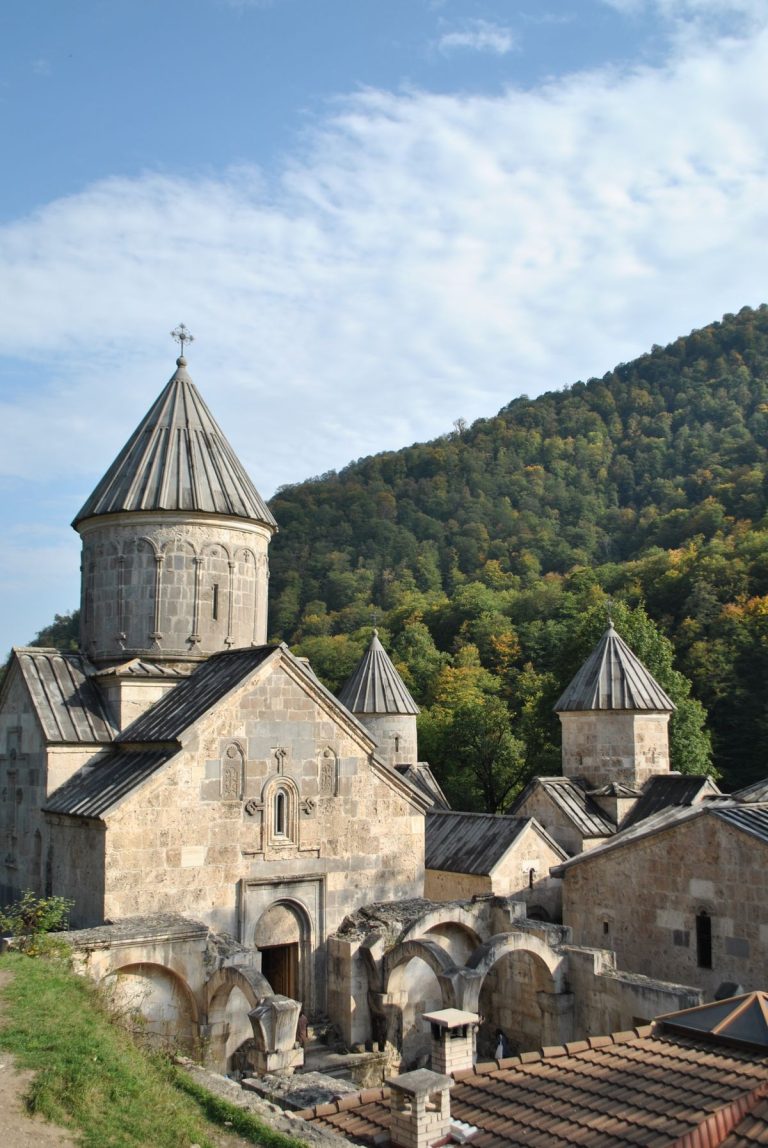
A thirteenth-century monastery complex in a wooded valley, restored and usually almost empty on weekdays.
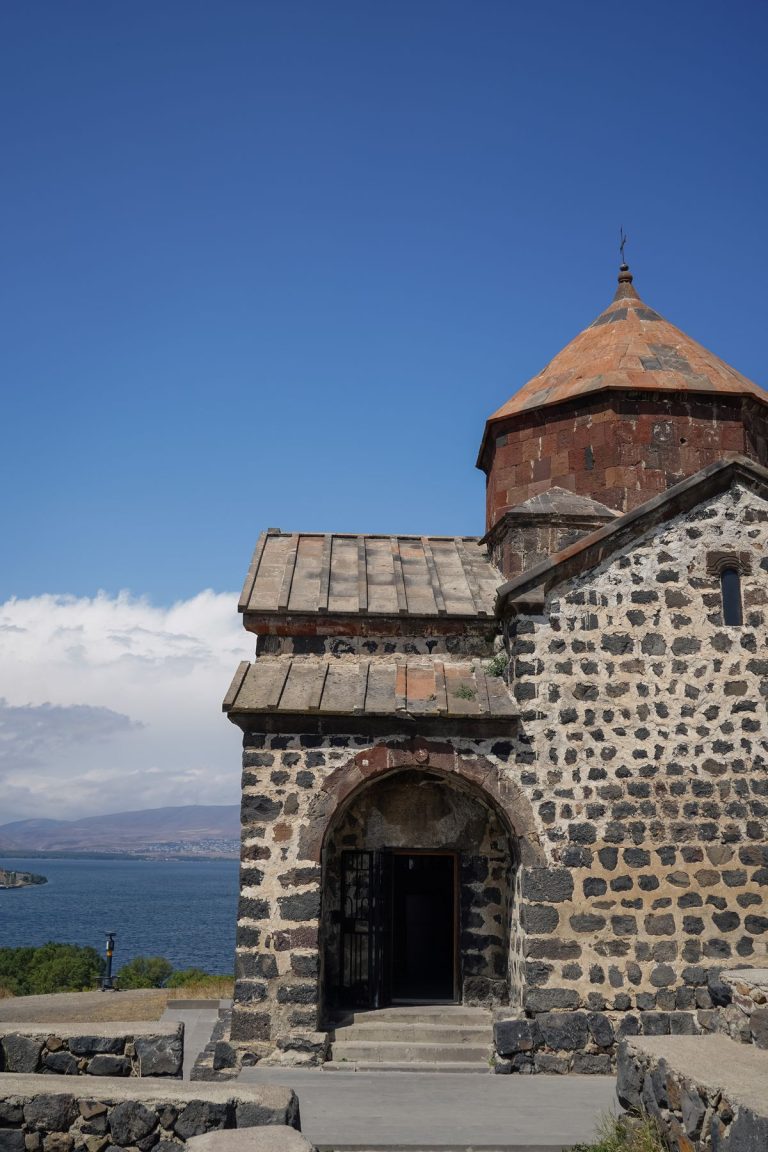
The vast alpine lake, with the Sevanavank monastery on its peninsula and swimming in August.
A quiet calendar. The forest and the monasteries are the reason to be here.
When Yerevan empties into the hills and every guesthouse is full.
The beech forest turns, and it is the best month to look at the place.
The national water festival, observed here as everywhere in Armenia.
Foraging is a local pursuit and guesthouses cook what comes in.
Both are working monasteries and hold services on saints' days.
Family guesthouses are the standard here and the best way to eat. Live from Hostelworld.
Summer, when it is the coolest place in Armenia, and autumn for the forest colour.
Average highs. Dilijan sits at 1,500m in forest and runs about ten degrees cooler than Yerevan, which is exactly why Armenians come here in July and August.
Pick how you travel. Per person per night, in euros.
Guesthouse dinners are usually €5–10 and better than eating out. Monastery taxis at €10–15 are the main variable.
The ones we get asked most.

Compare Dilijan guesthouses and hostels — live prices, real reviews and free cancellation on most bookings. Then meet the people already there in the app.

 Get the App.
 Get the App.