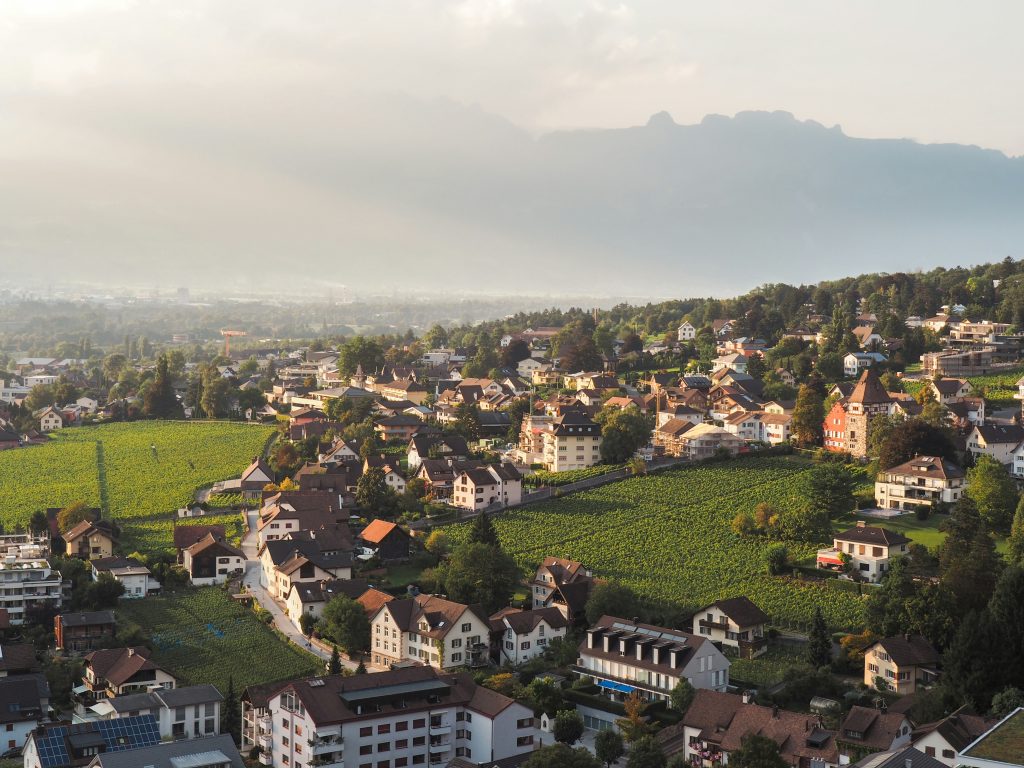
Vaduz
The capital: one main street, the art museum, and the prince's castle on the slope above.

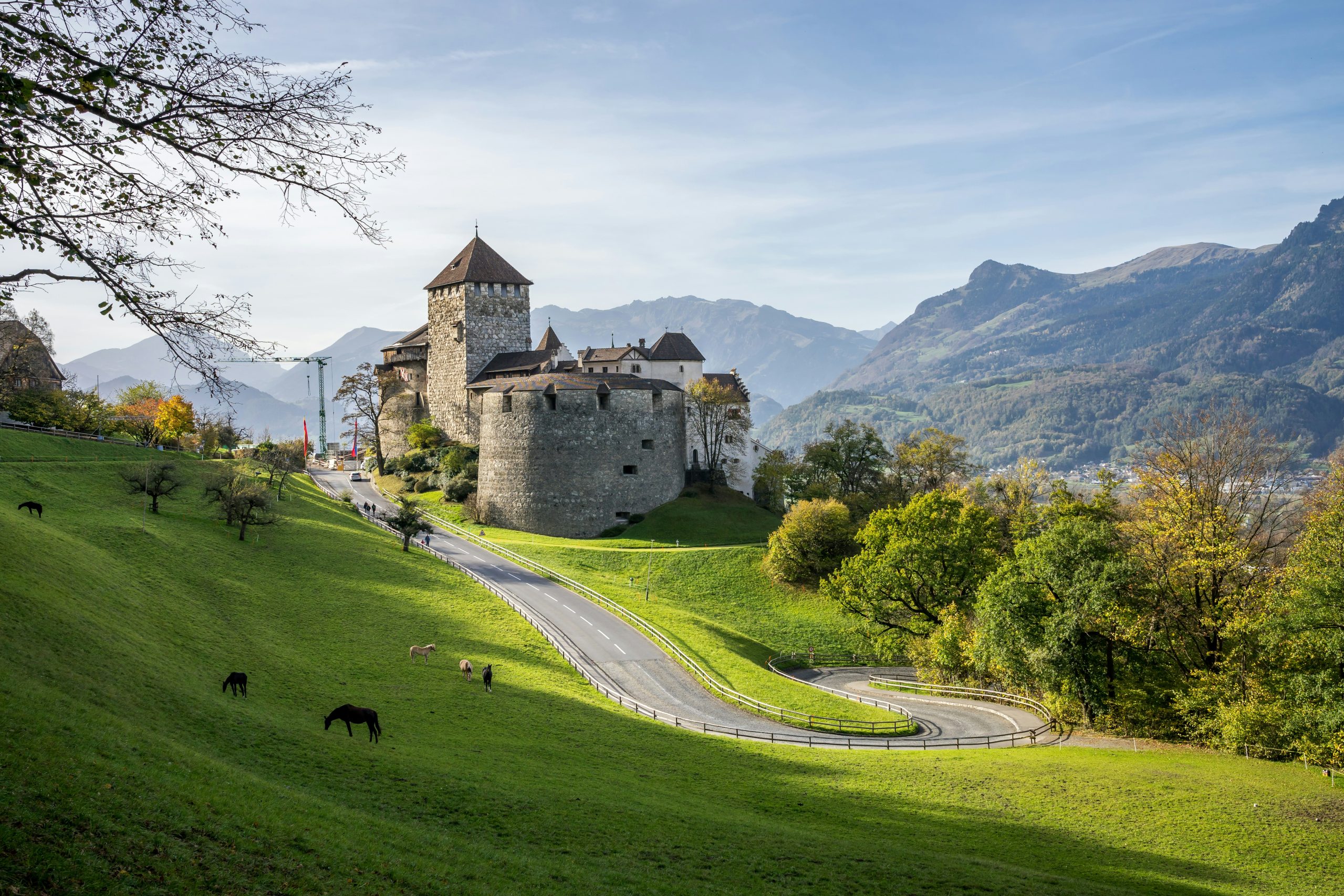
Twenty-five kilometres long, a prince in a castle above the capital, and a mountain trail network far larger than the country has any right to. Most people see it in a day; a few stay and walk it.
Liechtenstein is 25km long and 12km wide, sits between Switzerland and Austria, and has a population smaller than a London borough. It has no airport — you arrive by bus from Sargans or Buchs in Switzerland, or from Feldkirch in Austria — and no border controls in any meaningful sense.
Vaduz, the capital, is a single main street with a modern art museum, a national museum and the prince's castle on the hillside above, closed to the public but visible from everywhere. Most visitors give it two hours, buy a passport stamp as a souvenir at the tourist office, and leave.
The reason to stay is above the valley. Malbun, at 1,600 metres, is a small ski resort in winter and a hiking base in summer, and the Liechtenstein trail network runs 400km through mountains that most people never see because they only ever stood on the main street.
The whole country is 25km long. One bus route runs the valley, and one road climbs to Malbun.
The capital: one main street, the art museum, and the prince's castle on the slope above.
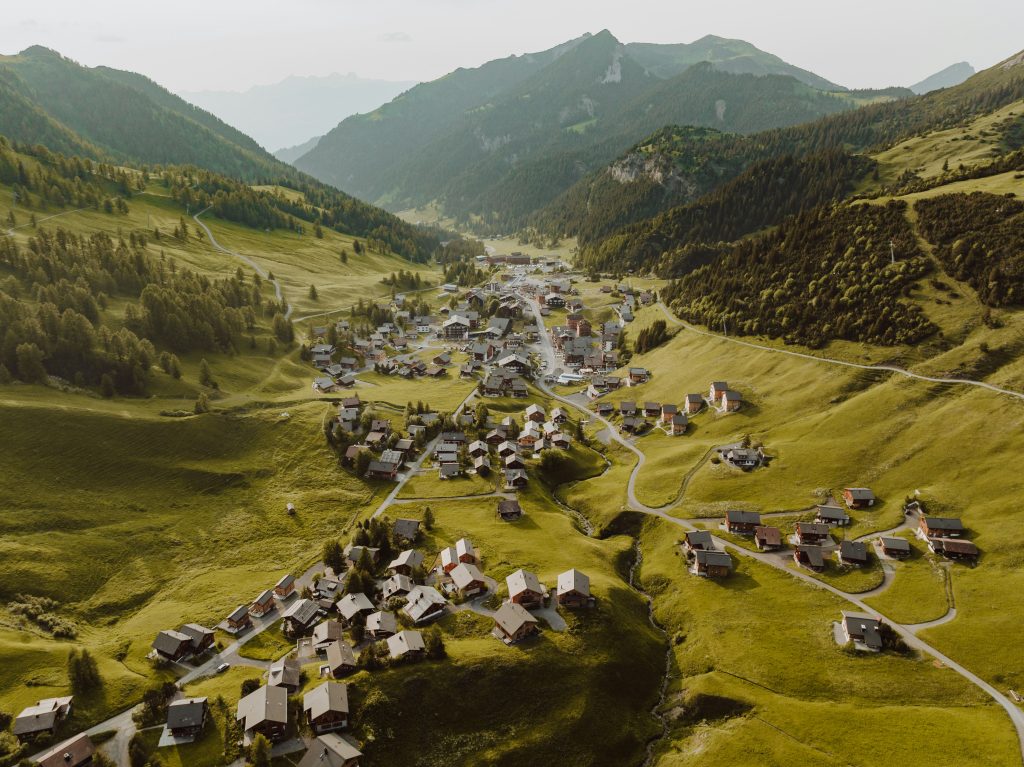
At 1,600 metres: a small ski resort in winter and the best hiking base in summer.
Liechtenstein is a half-day curiosity or a proper mountain trip, depending on whether you go up.
The reason to stay: 400km of trails in a tiny country.
Vaduz in an afternoon, which is all it needs.
A princely art collection and a very unusual constitution.
Swiss prices in a country with almost no hostels.
No sea at all. Mountain lakes and outdoor pools instead.
Vaduz is small and honest about it: the Kunstmuseum holds part of the princely collections in a black concrete cube, the National Museum covers the country's history, and the tourist office will stamp your passport as a souvenir. The castle above is the prince's residence and is closed, but the walk up to it gives the view over the valley.
The mountains are what most visitors miss. The Fürstensteig is the famous path — a narrow ridge route with cables and steep drops, not for anyone uneasy with exposure — and there are 400km of marked trails in a country you can drive across in twenty minutes.
The Liechtenstein Trail, opened for the country's 300th anniversary, runs 75km through all eleven municipalities and takes four or five stages, with an app that explains what you are looking at.
Food here is Alpine German-Swiss: käsknöpfle, a cheese and dumpling dish that is the closest thing to a national plate, rösti, sausages and cheese from the valley dairies.
Prices are Swiss, which means €25 to €40 for a restaurant main and a beer around CHF 6 to 8. Lunch menus are the sensible option at CHF 20 to 28.
Supermarkets in Schaan and Vaduz are the budget route, and there is a small wine industry — the prince owns some of the vineyards on the hillside above Vaduz, and the cellar sells directly.
There is very little, and pretending otherwise would be silly. Vaduz has a handful of bars along and behind the main street, and they close early on weeknights.
In ski season Malbun has modest après-ski, and the national day on 15 August turns into a genuine party — the whole country is invited to the castle gardens, the prince makes a speech, and there are fireworks over the valley.
If you want a night out, Feldkirch in Austria is twenty minutes away and Zurich is just over an hour.
There is no airport and effectively no railway service inside the country — a line crosses it with almost no stops. You arrive by bus from Sargans or Buchs in Switzerland, or Feldkirch in Austria, each about fifteen to twenty-five minutes.
Inside, LIEmobil buses run frequently along the valley and up to Triesenberg and Malbun, and a day pass costs a few francs. It is the only public transport you need.
Swiss rail passes are often valid on the Liechtenstein bus network, which is worth checking if you are already travelling in Switzerland. Cycling along the Rhine path is flat and easy.
Prices are Swiss, because the currency and the economy are tied to Switzerland. Accommodation is the difficulty: there is very little budget accommodation in the country, and dorm beds start around CHF 40 where they exist at all.
That is why most people visit as a day trip from Switzerland or Austria, which is an entirely reasonable way to do it — you can see Vaduz and be back in Zurich the same evening.
If you are staying, the mountains are free, the bus day pass is a few francs, and supermarket food keeps the rest manageable. Museums are modest at CHF 10 to 15.
Liechtenstein has one of the lowest crime rates in the world and there is essentially nothing to warn about in the towns.
The mountains are a different matter. The Fürstensteig and similar ridge paths have serious exposure, cables where the drop demands it, and are not suitable for anyone uncomfortable with heights — people are helped off them every season.
Alpine weather changes fast at 2,000 metres, and rescue is efficient and billed. Check your insurance covers mountain rescue, and in winter check avalanche ratings before going off-piste at Malbun.
Liechtenstein is in the Schengen area but not the EU, and it uses the Swiss franc under a customs and currency union with Switzerland.
EU and EEA citizens need an ID card; UK, US, Canadian and Australian passport holders get 90 days in any 180 across the whole Schengen zone, and time here counts against that allowance.
There are no border controls with Switzerland or Austria — you simply cross — which is why the passport stamp sold in Vaduz is a souvenir rather than a document. Passports need three months' validity beyond departure and to have been issued within the last ten years.
Summer for the trails, winter for Malbun, and a national day in August that is worth arranging a trip around.
Average highs for Vaduz at 450m. Malbun at 1,600m is far colder, with skiing roughly December to March and high trails open from June to September.
Pick how you travel and how long for. Per night, for one person, in Swiss francs.
The doing column can be zero because all the hiking is free. Many people visit as a day trip from Switzerland and skip the bed entirely.
One event matters more than all the others, and the whole country is invited to it.
The whole country is invited to the castle gardens, the prince speaks, and there are fireworks over the valley.
Alemannic carnival with masks and drumming, as across this corner of the Alps.
A small, family-scale resort at 1,600 metres.
Cattle brought down from the summer pastures in flowers and bells.
A mountain marathon climbing from the Rhine valley to the ski village.
Small, on the main street, and over in an afternoon.
What exists here, live from Hostelworld. Budget accommodation is very limited — many visitors stay in Switzerland or Austria and come in for the day.
The ones we get asked most.

Compare places to stay in Liechtenstein — live prices, real reviews and free cancellation on most bookings. Then meet the people already there in the app.

 Get the App.
 Get the App.