Vaduz centre
First-timersThe Staedtle pedestrian street: the museums, the tourist office, restaurants and the castle path.

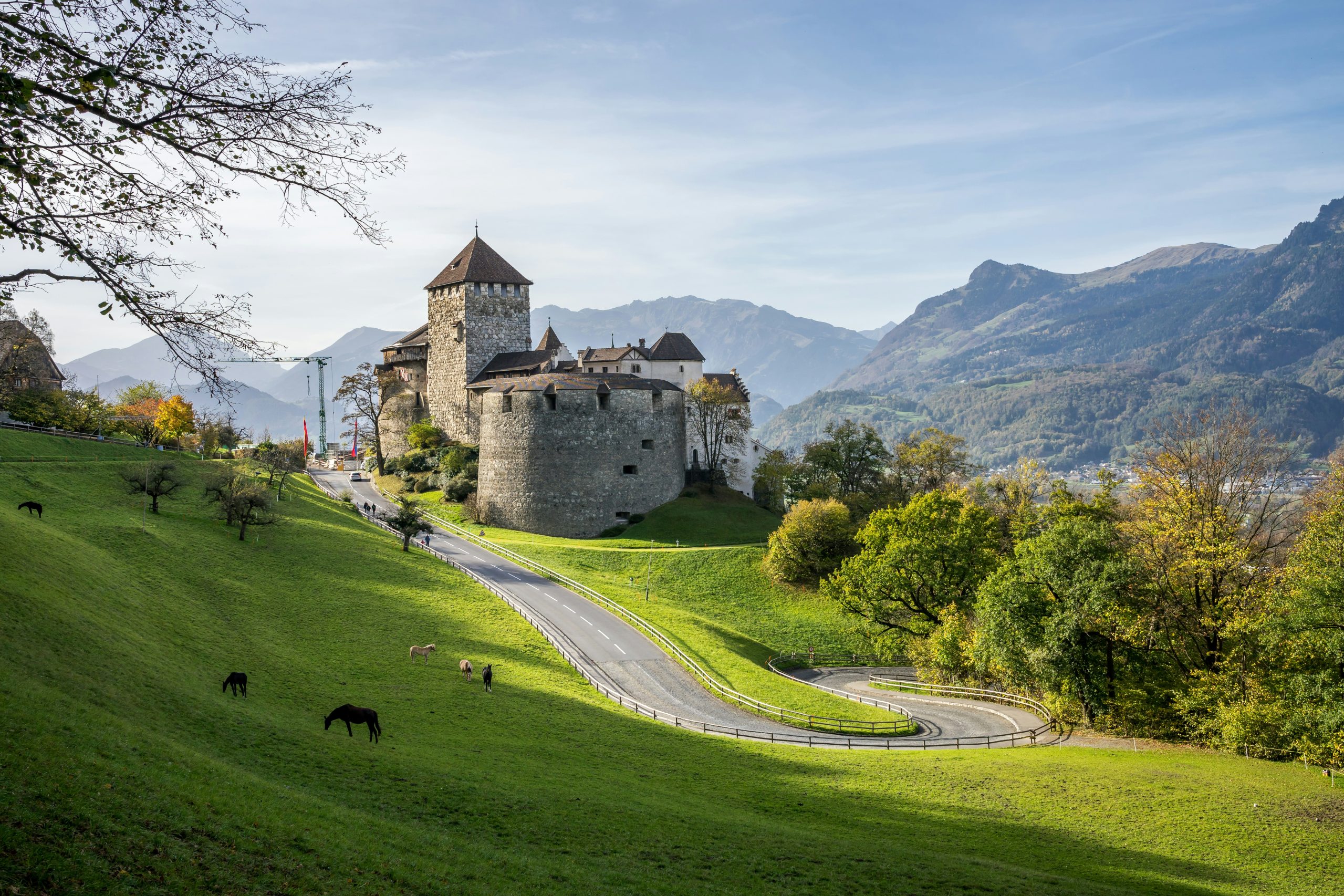
The capital of a country 25 kilometres long: one main street, a serious art museum, a prince's castle on the slope above that you cannot go inside, and a passport stamp you buy as a souvenir.
Liechtenstein is 160 square kilometres, about 25 kilometres long, and home to roughly forty thousand people. Vaduz, the capital, has about five thousand seven hundred.
It is a principality — a hereditary monarchy with a prince who retains real constitutional power, which is unusual in modern Europe — and it is wealthy, orderly and quiet in a way that takes some adjusting to.
The castle above the town is the prince's actual residence. It is not open to the public and never has been, which catches out a surprising number of visitors. You can walk up to it in about twenty minutes and look at the outside, and the view back down the Rhine valley is the reward.
What is worth your time is the Kunstmuseum, a black basalt cube holding a serious modern and contemporary collection built on the princely family's holdings.
Half a day covers Vaduz honestly. The mountains behind it are the reason to stay longer.
A very small capital, with Schaan next door and the mountains above.
The Staedtle pedestrian street: the museums, the tourist office, restaurants and the castle path.
Two kilometres north: the country's largest town, the main bus interchange and cheaper beds.
Map © MapTiler © OpenStreetMap contributors.
The Kunstmuseum Liechtenstein, around CHF 15, is the best thing in the capital — a black basalt and concrete cube holding modern and contemporary art alongside works from the princely collection, which is one of the most significant private art collections in the world.
Walk up to the castle. It takes about twenty minutes on a marked path from the centre, it is free, and you can get close enough to photograph the walls. You cannot go inside — the prince lives there, and it has never been open. The view down the Rhine valley from the terrace is the actual point.
The Postmuseum is free and better than it sounds. Liechtenstein made a serious share of its national income from postage stamps for decades, and the museum explains how a country of forty thousand people built an industry out of it.
The National Museum, about CHF 10, covers the country's history properly.
Then buy the passport stamp at the tourist office for about CHF 3. It is unashamedly a souvenir and almost everyone does it.
The walk up to the castle is free and is the main activity here — twenty minutes on a marked path, with the Rhine valley and the Swiss mountains opposite.
The Postmuseum is free.
The Staedtle, the pedestrian main street, is free to walk and holds a scattering of public sculpture.
The Cathedral of St Florin is free and takes five minutes.
The Rhine embankment is a short walk west, and crossing the old covered wooden bridge to Switzerland on foot costs nothing and takes about two minutes, which is a reasonable way to add a country to your day.
Swiss prices, because this is effectively Switzerland in economic terms. A main is CHF 25 to CHF 45, roughly €26 to €48.
Food is Alemannic and close to eastern Switzerland and Vorarlberg: Kaesknoepfle, the local cheese dumplings with fried onions and apple sauce, is the national dish and costs around CHF 22 to CHF 30.
Ribel, a maize porridge, is the older peasant staple and appears on traditional menus.
The Hofkellerei, the prince's own winery, is in Vaduz and does tastings — Liechtenstein makes a small quantity of decent Pinot Noir and Chardonnay.
A beer is CHF 6 to CHF 9, around €6.50 to €9.50.
Supermarkets are the only real saving, and there are few of them. Crossing into Switzerland or Austria does not help much; both are also expensive.
There is essentially none, and it would be dishonest to suggest otherwise.
Vaduz has about five thousand seven hundred residents and a handful of restaurants and bars that close early. Schaan, two kilometres north, has a little more.
A beer is CHF 6 to CHF 9.
The country's cultural life runs through the Kunstmuseum, the TAK theatre in Schaan and the concert hall, which is a programme rather than a scene.
Feldkirch in Austria is twenty minutes away and Buchs in Switzerland is ten, both with more going on. Most people who want an evening out go to one of them.
This is a place to walk in the mountains and go to bed early.
There is no airport and no passenger railway station in Liechtenstein that is much use. You arrive by bus.
From Switzerland, take a train to Sargans or Buchs and a connecting bus — about twenty minutes either way. Zurich airport is roughly an hour and a half to two hours in total. From Austria, Feldkirch is twenty minutes by bus.
LIEmobil buses cover the entire country on a handful of routes, and a day ticket is around CHF 8 (about €8.50). This is genuinely all you need — one route runs the length of the Rhine valley and another climbs to Malbun.
Vaduz itself is walkable in fifteen minutes.
Borders with Switzerland and Austria are open and unmanned. You can walk into Switzerland across the old covered bridge without anyone noticing.
Expensive, at Swiss levels. Beds are CHF 40 to CHF 90, roughly €42 to €95. A main is CHF 25 to CHF 45 and a beer CHF 6 to CHF 9.
A day is CHF 90 to CHF 160, about €95 to €170.
You pay in Swiss francs. Euros are accepted in some places but the rate is poor, so use francs or a card — cards work everywhere.
The savings are limited. The castle walk, the Postmuseum and the mountain trails are free, the bus day ticket at CHF 8 is cheap for what it covers, and supermarkets are the only real way to reduce the food line.
Accommodation is the pinch point: there is very little of it in the country, so book ahead rather than assuming availability.
Liechtenstein has one of the lowest crime rates in the world and the practical risks here are close to zero in the valley.
The castle is a private residence with security. Stay on the marked public path, do not attempt to approach the walls beyond where the path ends, and do not fly drones near it.
If you go up into the mountains — and that is the reason to be in this country — the risks change entirely. Alpine weather turns fast, several of the trails above Malbun are exposed with cable-assisted sections and serious drops, and the Fuerstensteig in particular requires a head for heights and proper footwear. Check conditions before setting out.
Mountain rescue in Liechtenstein is competent but the terrain is genuine alpine ground, not a hill walk.
Winter brings ice in the valley and snow on the upper roads. Emergency number is 112.
A mountain village, and two countries within half an hour.
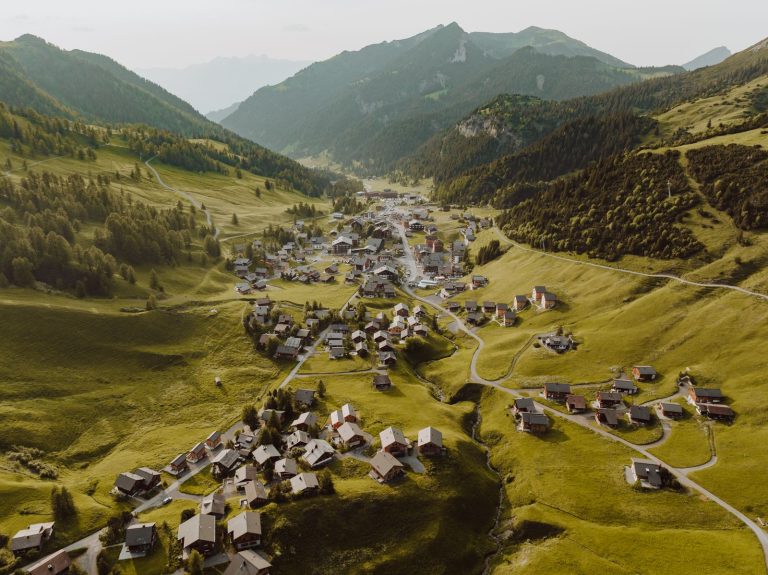
A village at 1,600 metres: skiing in winter, hiking in summer, and the reason most people stay more than a day.
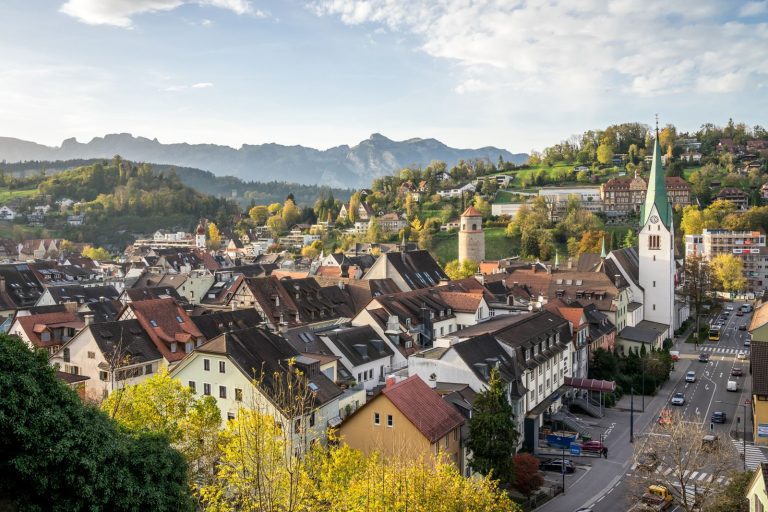
A walled medieval town with a castle, twenty minutes over an open border.
A national day in August when the prince invites the country to the castle garden.
The national day. The princely family opens the castle gardens to the public, there are speeches, a street party in Vaduz and fireworks. The one day the castle grounds are accessible.
The country's only resort, thirty minutes up from the capital.
When the high trails and the Fuerstensteig are clear of snow.
A small market on the pedestrian street.
When the mountain village largely shuts between seasons.
June to September for hiking, December to March for skiing at Malbun.
Average valley highs. Malbun at 1,600 metres runs far colder, and the two shoulder months of April and November are when the mountain village largely closes between seasons.
Pick how you travel. Per person per night, in Swiss francs — roughly €1.06 to the franc.
Shown in Swiss francs because that is what you pay; multiply by roughly 1.06 for euros. The shoestring doing line is zero because the castle walk and the trails are free.
The ones we get asked most.

Compare Vaduz accommodation — live prices, real reviews and free cancellation on most bookings. Then meet the people already there in the app.

 Get the App.
 Get the App.