Marsh Harbour
Transport, shopsThe main town, with the airport and ferries.

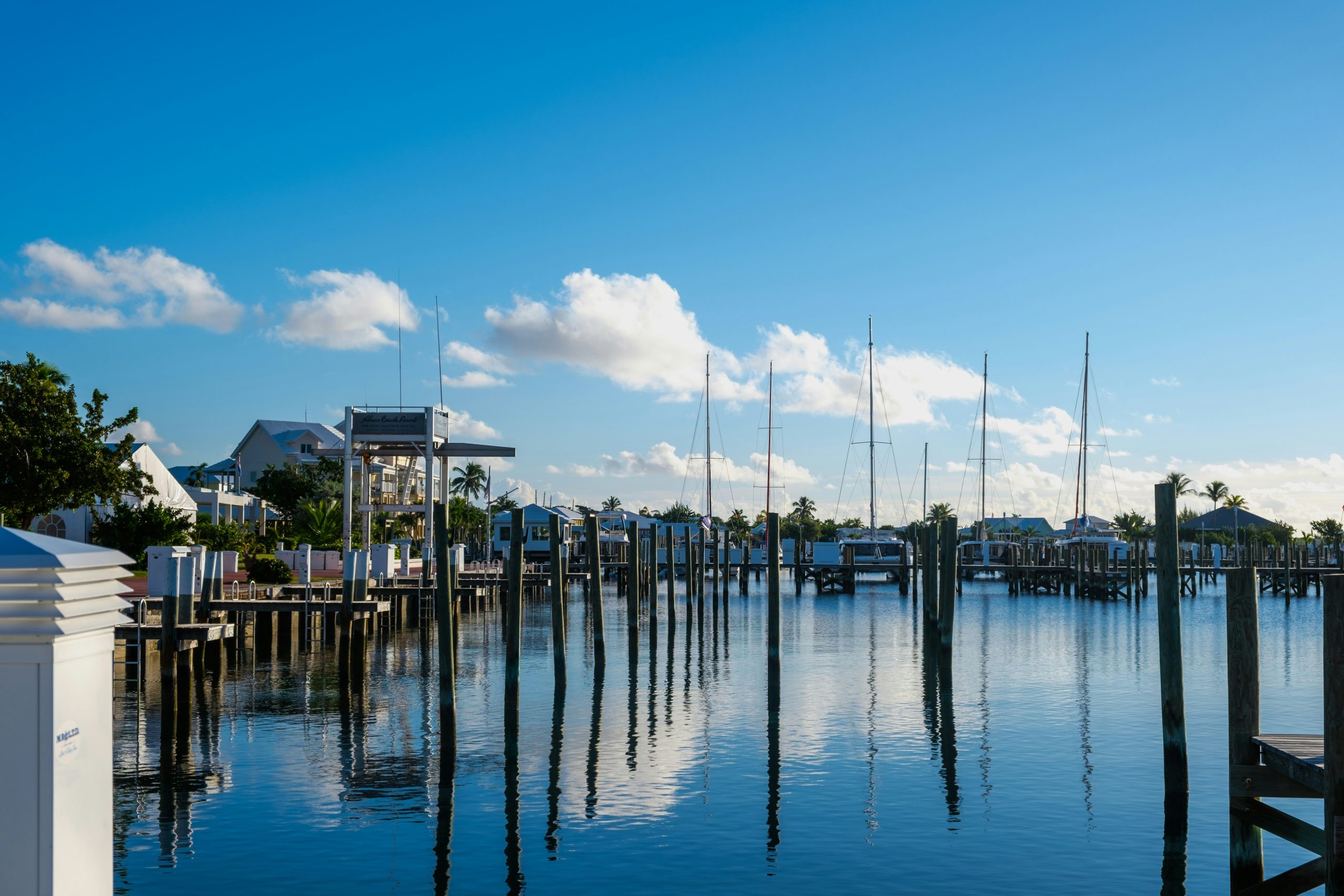
The sailing capital of the Bahamas: Hope Town's candy-striped lighthouse, the boatbuilders of Man-O-War Cay, Green Turtle Cay's colonial village, Treasure Cay's beach and the parrots of Abaco National Park.
Abaco is a group of islands in the north of the Bahamas: Great Abaco and Little Abaco, with a chain of small cays along their eastern side. Between them lies the Sea of Abaco, a sheltered stretch of shallow water that makes this one of the best sailing areas in the Caribbean region.
Marsh Harbour is the main town and transport hub. From there, ferries cross to the cays, each with its own character: Hope Town on Elbow Cay, with its red and white striped lighthouse, still lit by kerosene and wound by hand; Man-O-War Cay, known for its boatbuilding families; Great Guana Cay, with a long beach; and Green Turtle Cay, where New Plymouth has colonial houses and a small history museum. Many cays were settled by Loyalists, who left the newly independent USA after the American Revolution.
Abaco was devastated by Hurricane Dorian in 2019 and has since been rebuilt, with most places to stay, restaurants and ferries running again. Abaco National Park protects the forest where the rare Bahama parrot nests in holes in the limestone. Give Abaco five days to a week.
Marsh Harbour for transport and the cheapest stays, Hope Town for the lighthouse and village, or Green Turtle Cay or Treasure Cay for beaches.
The main town, with the airport and ferries.
A pastel village on Elbow Cay.
New Plymouth's colonial houses.
A long crescent of white sand.
Map data from OpenStreetMap contributors.
Take the ferry to Hope Town on Elbow Cay and climb the Elbow Reef Lighthouse for views over the Sea of Abaco, then walk the village lanes and Tahiti Beach at low tide. Visit Man-O-War Cay to see where wooden boats are still built, and spend a day on the beach at Great Guana Cay.
On Green Turtle Cay, walk the streets of New Plymouth and visit the Albert Lowe Museum. Treasure Cay, on the mainland, has one of the most beautiful beaches in the Bahamas.
Hire a small boat or join a sailing trip to explore the cays, and snorkel at Fowl Cay or the reefs of the Abaco Cays. In Abaco National Park, in the south, look for the Bahama parrot in the pine forest.
All beaches in the Bahamas are public, so Treasure Cay Beach, Tahiti Beach and the beaches of the cays are free.
Walking the villages of Hope Town, Man-O-War Cay and New Plymouth costs nothing; you only pay the ferry fare.
Snorkelling from the shore is free with your own mask.
Conch, grouper, snapper and lobster in season are on every menu, from conch stands in Marsh Harbour to waterfront restaurants on the cays. The Goombay Smash, a rum cocktail, was created on Green Turtle Cay.
Marsh Harbour has the biggest supermarkets, and many visitors self-cater in rented cottages.
Restaurant meals carry 10 per cent VAT, and a service charge is often added.
Nightlife is relaxed: waterfront bars in Marsh Harbour and on the cays, busiest during sailing events.
Regatta Time in Abaco, in late June and early July, brings races and parties.
Most evenings end with sunset drinks and an early night.
Leonard M. Thompson International Airport in Marsh Harbour has flights from Nassau and Florida, and Treasure Cay has its own airport. Mail boats run from Nassau.
Ferries link Marsh Harbour with Hope Town, Man-O-War Cay and Great Guana Cay several times a day, and another ferry serves Green Turtle Cay from near Treasure Cay.
On Great Abaco, a hire car is useful. On the cays, people walk, cycle or use golf carts. Driving is on the left.
Abaco is expensive, with cottages, small inns and apartments from around €100 to €170 a night. Marsh Harbour is the cheapest base.
Ferries to the cays are affordable, but boat hire and sailing trips add up. Restaurant mains cost €22 to €40 plus VAT and service.
Self-catering and sharing boat hire help keep costs down.
Abaco is very safe, and crime against visitors is rare.
On the water, check the weather and tides before hiring a boat, as the Sea of Abaco has shallow sandbanks, and passages to the Atlantic can be rough. Use strong sun protection.
Hurricane season runs from June to November; Abaco was devastated by Dorian in 2019, so take warnings seriously. In an emergency, call 911 or 919.
Regattas, Junkanoo and island festivals.
A week of sailing races and parties between the cays.
Local parades.
December to May is the best time, dry and sunny, with the north cooler in winter than the rest of the Bahamas. June and July are good for sailing. Hurricane season runs from June to November, peaking in September.
Average highs, rounded. Slightly cooler than Nassau in winter.
Per night, for one person, based on Marsh Harbour prices.
Treat these as a guide. Boat hire costs extra.
The ones we get asked most.

Compare places to stay across the Bahamas: live prices, real reviews and free cancellation on most bookings. Then meet the people already there in the app.

 Get the App.



 Get the App.