Cruz Bay
Ferry, nightlifeThe main town.

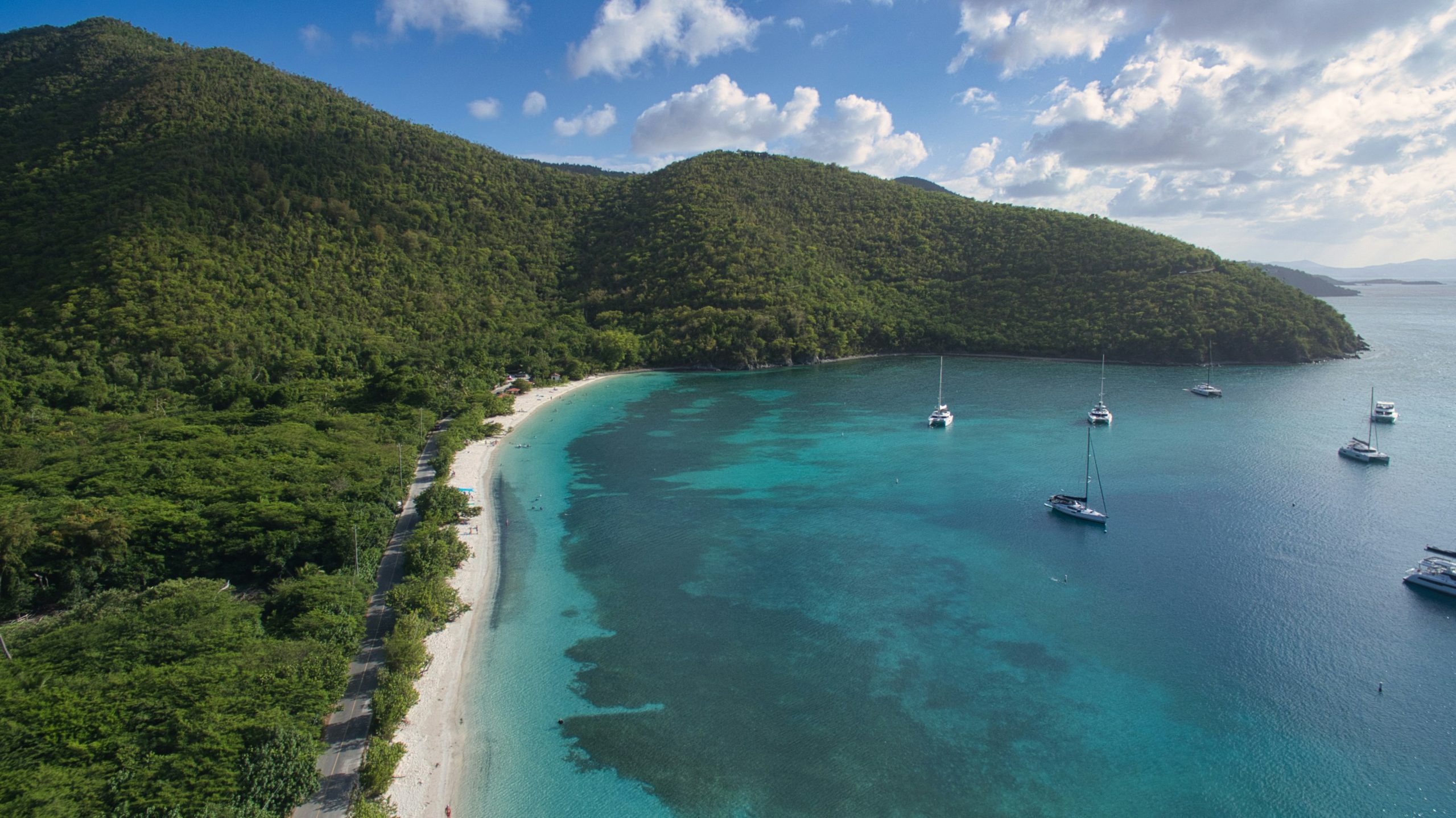
The smallest and wildest of the US Virgin Islands: around 60 per cent national park, with Trunk Bay's underwater snorkelling trail, turtles at Maho Bay, hiking trails to petroglyphs and sugar mill ruins, and the bars of Cruz Bay.
St John lies 20 minutes by ferry from St Thomas. Around 60 per cent of the island, and much of the sea around it, is Virgin Islands National Park, created in 1956 on land donated by Laurance Rockefeller. That has kept its north coast a run of undeveloped bays with white sand and coral reefs.
Cruz Bay, where the ferries land, is the main town, with food trucks, bars, restaurants and shops. On the other side of the island, Coral Bay is smaller and even more laid-back. Most of the rest is forest, crossed by hiking trails past the ruins of sugar plantations.
Accommodation is expensive, but the Cinnamon Bay campground offers a cheaper way to stay. Give St John three or four days.
Cruz Bay for the ferry, food and nightlife; Cinnamon Bay for camping; Coral Bay for quiet.
The main town.
The national park campground.
The east side of the island.
Map data from OpenStreetMap contributors.
Snorkel the marked underwater trail at Trunk Bay, swim with sea turtles at Maho Bay, and snorkel around Waterlemon Cay from Leinster Bay. Spend days at Cinnamon Bay, Hawksnest and Salt Pond Bay.
Hike the Reef Bay trail through the forest to Taíno petroglyphs and a sugar mill ruin, the Ram Head trail to a clifftop at the island's southern tip, and the Lind Point trail to Honeymoon Beach.
Visit the Annaberg sugar plantation ruins, and spend an evening in Cruz Bay after the day-trippers have left.
The national park is free to enter, and so are almost all of its beaches and trails. Trunk Bay charges a small amenity fee.
The Annaberg ruins and the views from the North Shore Road cost nothing.
Boat trips, gear rental and the campground charge.
Cruz Bay's food trucks serve full plates for €10 to €17, and pates and johnny cakes cost €3 to €6. Restaurant mains cost €25 to €45.
Try fish and fungi, and a painkiller cocktail.
Supermarket prices are high, as almost everything is imported. Tipping works as in the US: 15 to 20 per cent in restaurants and bars, on every round.
Cruz Bay is the liveliest place in the territory after dark, especially once the last ferry has taken the day-trippers back. Bars fill with people who live and work on the island.
Coral Bay has a few laid-back bars.
A beer costs €4 to €7 and a cocktail €9 to €14, plus tips.
Passenger ferries run from Red Hook on St Thomas to Cruz Bay roughly hourly and take about 20 minutes; car barges also cross. There is no airport.
Safari taxis run to the north shore beaches at fixed per-person fares. Hire a jeep to explore, especially for Coral Bay and the south; book early in high season. Driving is on the left.
St John is expensive. Rooms start at around €90 to €180 a night; the Cinnamon Bay campground is the budget option. Food truck meals cost €10 to €17.
The ferry costs about €7 each way, the Trunk Bay fee a few euros, jeep hire about €80 to €120 a day, and a snorkel trip about €80 to €120.
The currency is the US dollar; prices here are converted to euros.
St John has very little crime, but car break-ins at beaches and trailheads happen; leave nothing in the car.
On hikes, carry plenty of water and start early, as the trails are hot. Respect turtles and coral: do not touch or chase them, and use reef-safe sunscreen.
Much of the water comes from desalination or rain cisterns, so many people drink bottled or filtered water. In an emergency, call 911.
Beaches, trails and the BVI.

Charlotte Amalie and Magens Bay.
Festivals and holidays.
Parade and food fair around 4 July.
Marks the end of slavery in 1848.
Best weather.
December to April is the dry, busy season. Hurricane season runs from June to November, peaking in September, when some businesses close. The St John Festival peaks around 4 July.
Average highs, rounded. Warm all year.
Per night, for one person, based on St John prices.
Treat these as a guide. Add 15 to 20 per cent tipping to food and drink.
The ones we get asked most.

Compare places to stay across the US Virgin Islands: live prices, real reviews and free cancellation on most bookings. Then meet the people already there in the app.

 Get the App.



 Get the App.