City centre
Market and nightlifeMarket, shops, bars and the bus station.

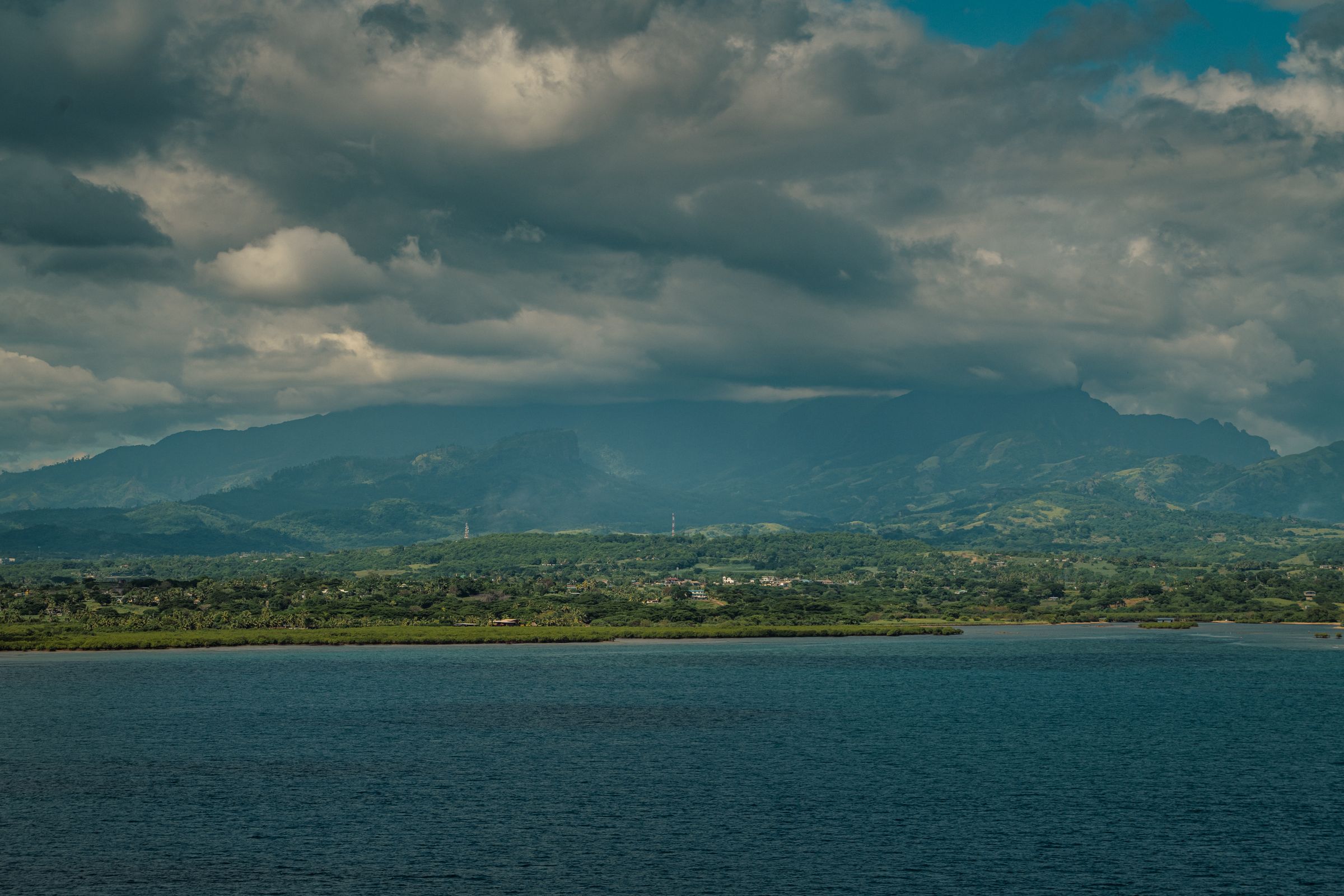
Suva is Fiji's capital and a real working Pacific city, on the wet, green east side of Viti Levu. Almost nobody stays long, which is the point: browse the huge Saturday market, learn Fiji's history at the Fiji Museum, swim in the rainforest at Colo-i-Suva and go out where locals go out.
Suva sits on a peninsula on the south-east coast of Viti Levu, and it's the largest city in the South Pacific outside Australia and New Zealand. It's the seat of government, home to the University of the South Pacific and a hub for regional organisations.
Unlike Nadi, Suva isn't built for tourists. It's a busy, multicultural city of colonial buildings, modern offices, markets and churches, where Fijian, Indo-Fijian, Chinese and other Pacific communities mix.
The city centre is compact and walkable, with the municipal market, the colonial-era Grand Pacific Hotel and Government Buildings, and Thurston Gardens, home to the Fiji Museum.
Suva is on the wet side of the island, so it rains a lot, and the hills behind the city are covered in rainforest.
Most travellers visit for a day or two, at the end of the Coral Coast, or on the way to Taveuni or the outer islands.
Stay near the city centre for the market, museum and nightlife. Hostelworld has no listings in Suva right now, so look at guesthouses and budget hotels.
Market, shops, bars and the bus station.
The Fiji Museum and the colonial quarter.
The promenade along the harbour.
Forest park with pools, 20 minutes north.
Map data from OpenStreetMap contributors.
Suva Municipal Market is one of the biggest in the Pacific, especially on Saturday mornings, with fruit, vegetables, fish, kava and handicrafts.
The Fiji Museum, in Thurston Gardens, covers Fiji's history, from canoes and war clubs to the colonial era and Indo-Fijian indenture.
Walk the colonial centre, past the Government Buildings and the Grand Pacific Hotel, and along the seafront promenade.
Colo-i-Suva Forest Park, about 20 minutes north, has rainforest trails, waterfalls and natural swimming pools with rope swings.
The University of the South Pacific campus has the Oceania Centre for Arts, Culture and Pacific Studies.
Suva is also a base for day trips to villages and the Navua river.
Walk the municipal market, especially on Saturday morning.
Stroll the seafront promenade and Thurston Gardens.
Walk around the colonial centre and the Government Buildings.
Colo-i-Suva Forest Park has a small entry fee.
Suva has the best range of food in Fiji. The market and food stalls serve cheap meals, and Indo-Fijian curry houses and roti shops are everywhere.
Chinese restaurants and cafés are common in the city centre.
Kokoda and fresh fish are on many menus. A roti parcel is FJ$5 to FJ$10, and a beer FJ$5 to FJ$9. Tap water is drinkable in Suva.
Suva has Fiji's only real club scene, with bars and nightclubs in the city centre, busiest on Friday and Saturday nights.
Live music and local DJs play Pacific, reggae and dance music.
Take taxis at night, and don't walk alone after dark.
Nausori Airport, about 23 km north-east, has domestic flights to Nadi, Taveuni and other islands.
Express coaches and local buses run along the Queens Road from Nadi via the Coral Coast, about four hours, and the Kings Road around the north of the island.
In the city, taxis are cheap and common, and local buses run from the main bus station next to the market.
Ferries leave Suva for outer islands, including Taveuni and Kadavu, but schedules are irregular.
Suva is affordable. Hostelworld has no listings right now, so budget travellers use guesthouses and budget hotels.
Food is cheap: roti parcels for FJ$5 to FJ$10, and market meals for a few dollars.
Taxis and buses are cheap.
ATMs are common, so it's a good place to get cash before the outer islands.
Allow around FJ$80 to FJ$130 a day.
Suva is generally safe, but petty theft is more common than elsewhere in Fiji, especially at night. Take taxis after dark and keep valuables out of sight.
Be careful in crowded areas like the market and bus station.
Suva is wet, so carry an umbrella.
Cyclone season runs from November to April.
From Suva, you can reach rainforest parks, the Navua river and villages.
Rainforest trails and swimming pools.
River trips and village visits.
Rafting and shark diving. Covered in the Coral Coast hub.
Suva's big event is the Hibiscus Festival in August.
The capital's biggest annual event, with floats and a carnival.
Independence Day celebrations.
Public holiday.
Suva is hot and wet, with highs from 26°C to 30°C. May to October is slightly drier and cooler. November to April is wetter, with cyclone risk.
Average daily highs from weather2travel's Suva climate data. Crowd levels are our rough guide.
Pick a style and a number of nights for a rough total. Per day, for one person, in Fijian dollars.
Estimates. Sleeping is based on guesthouse prices, since Hostelworld has no listings in Suva.
Prices and timetables change. Check before you travel.

Compare Suva hostels: live prices, real reviews and free cancellation on most bookings. Then meet the people already there in the app.

 Get the App.



 Get the App.