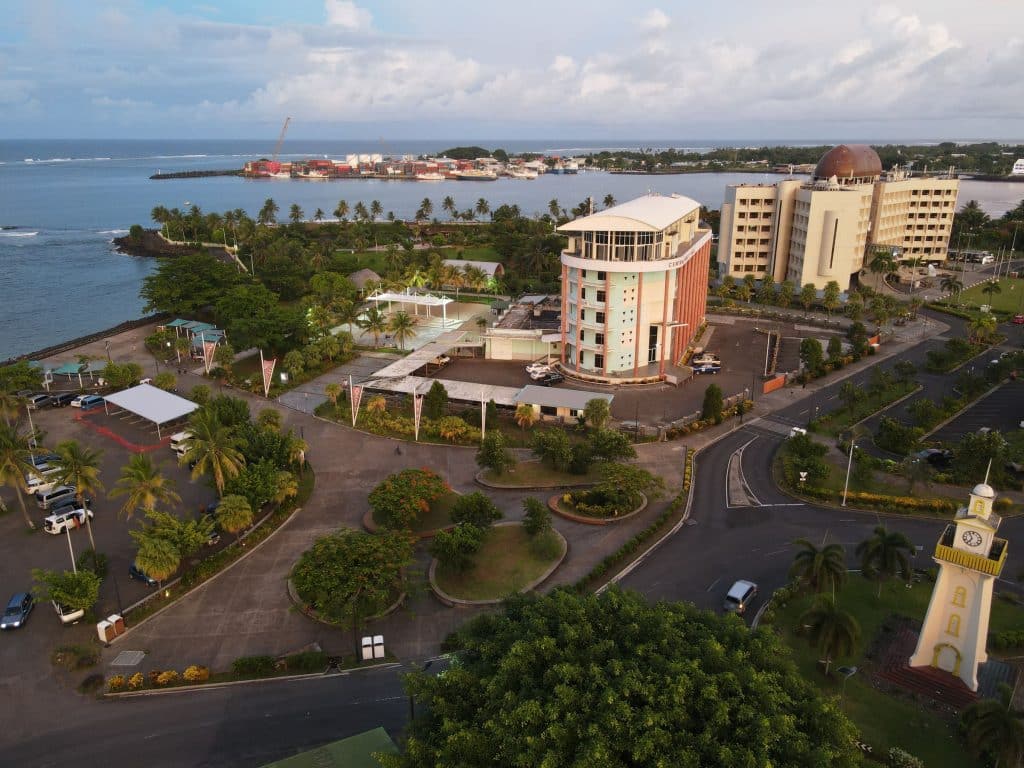
Apia
The capital on Upolu: a market, a harbour, Robert Louis Stevenson's house above town.

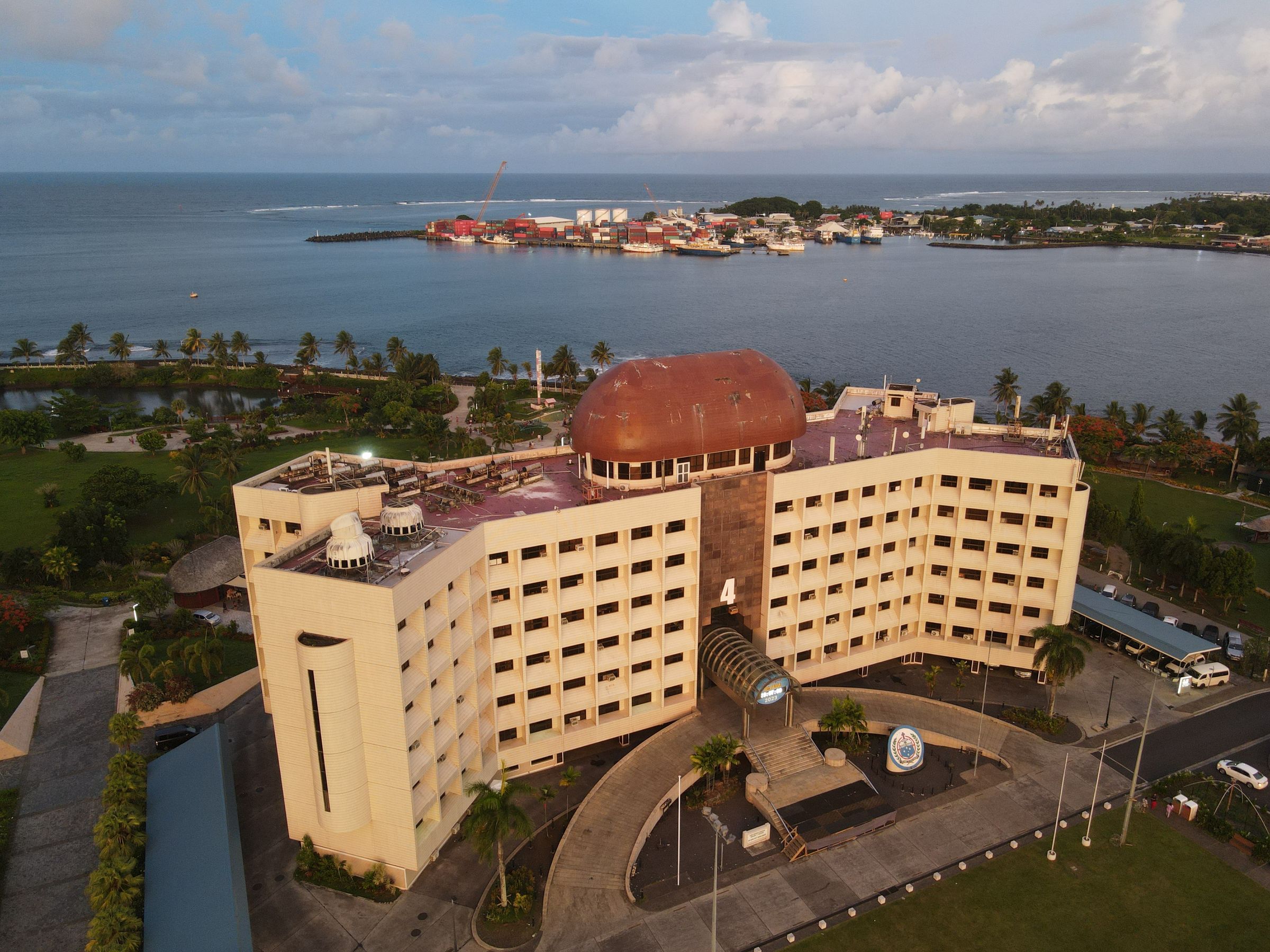
Beach fales on the sand, waterfalls you can swim under, and a culture that has kept itself intact. The Pacific island where you sleep in an open hut for the price of a hostel bed.
Samoa is two main islands and a way of life (fa'a Samoa, the Samoan way) that has survived more intact than almost anywhere else in the Pacific. Extended family, village authority and the church shape the day, and Sunday genuinely stops everything.
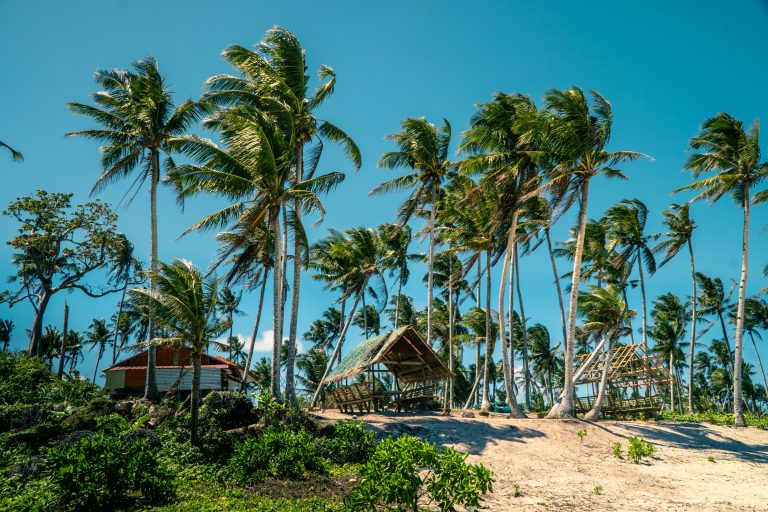
Upolu holds the capital, Apia, and most of the population, along with the To Sua ocean trench, a 30-metre swimming hole reached by a ladder, and the beaches of the south coast where beach fales (open-sided thatched huts on the sand) are the standard accommodation.
Savai'i, the larger island, has fewer people, lava fields from a 1905 eruption, blowholes and a slower pace still.
A week covers both islands. It is not a party destination, and that is rather the point of it.
Two main islands, linked by a ferry. Buses are colourful, cheap and run on nobody's timetable.
The capital on Upolu: a market, a harbour, Robert Louis Stevenson's house above town.
Samoa is a swimming, waterfall and village trip, and it moves slowly by design.
Beach fales on the sand, which is the whole accommodation model.
Waterfalls, lava tubes and a canopy walkway.
Fa'a Samoa, which is lived rather than performed.
Beach fales include meals, which makes budgeting simple.
Taro, coconut, fish and an umu earth oven on Sundays.
Apia over a day or two, and that is enough.
The To Sua ocean trench is the image of Samoa: a deep swimming hole in a garden on Upolu's south coast, connected to the sea by a lava tube, reached by a steep wooden ladder that puts some people off entirely.
Beach fales are the other essential experience. Open-sided huts on the sand, with mats, mosquito nets and a shared bathroom block, they cost WS$70 to WS$150 a night including dinner and breakfast, and sleeping with the sea a few metres away and no walls is why people come back.
Waterfalls are everywhere and most are on village land with a small entry fee paid to whoever is at the gate: Togitogiga, Sopoaga and Afu Aau are the known ones.
On Savai'i, the Alofaaga blowholes fire seawater metres into the air, and the 1905 lava field swallowed villages whole and left a church buried to its roofline.
Most travellers eat where they sleep, because beach fale rates include dinner and breakfast and there is usually nothing else nearby. The food is taro, breadfruit, fish, chicken and coconut in various forms.
Palusami (taro leaves baked in coconut cream) is the dish to look for, and oka, raw fish cured in coconut and lime, is the Samoan version of a Pacific staple.
The umu is an above-ground earth oven, and to'ona'i, the Sunday meal cooked in it after church, is the centre of the week. Being invited to one is a genuine privilege.
Apia's market is the place for cheap eating (a full plate for a few tala) and the fish market early in the morning is worth seeing whether or not you are buying.
Samoa is not a nightlife destination and does not pretend to be. Apia has a handful of bars and clubs, busiest on Friday nights, and Vailima is the local beer at WS$6 to WS$10.
Outside the capital, the evening is dinner at your fale, a guitar, and the sea. Fiafia nights (buffet dinners with Samoan dancing and fire knife performance) are held weekly at larger properties and are the main organised entertainment.
Sunday is the thing to plan around. The country genuinely stops: businesses close, villages observe quiet periods around church services, and swimming or noise near a village during those hours is taken as disrespectful. Travelling on a Sunday means very limited transport and food.
Local buses are wooden-bodied, painted, loud and cheap, and they run when they are full rather than when a timetable says. They are an experience in themselves and reach most of the coast on both islands.
The ferry between Upolu and Savai'i takes about an hour from Mulifanua to Salelologa and runs several times a day.
Hiring a car is the practical option for covering waterfalls and beaches on your own schedule: you need a temporary Samoan licence, bought at the rental desk or a police station for a few tala. Driving is on the left, having switched from the right in 2009.
Taxis are cheap and unmetered, so agree the fare first.
Samoa is good value because the beach fale model bundles bed and meals together. WS$70 to WS$150 a night gets you a hut on the sand, dinner and breakfast, which removes most of the daily decisions.
Beyond that, waterfall and site entry fees are a few tala each, paid to the village that owns the land, and local buses cost almost nothing.
A day comes to WS$120 to WS$220 all in. Car hire at WS$120 to WS$180 a day is the main optional cost and is worth splitting. Cash matters outside Apia: card acceptance is limited and ATMs are concentrated in the capital and Salelologa.
Samoa is safe and crime against visitors is rare. The main considerations are cultural and natural rather than criminal.
Respecting village protocol matters: ask before swimming at a beach that belongs to a village, do not walk through a village during evening prayer, cover up away from the beach, and pay the fees asked at sites: they go to the community that maintains them.
In the water, currents around reef passages are strong and there are few lifeguards anywhere. Coral cuts infect quickly, and reef shoes are worth having.
Cyclone season runs November to April. Medical facilities are limited outside Apia, and evacuation is a flight away, so insurance covering it matters. Dogs in villages can be territorial and are best given a wide berth.
Most nationalities receive a free entry permit on arrival for 60 or 90 days, with proof of onward travel and accommodation sometimes requested.
Passports need six months' validity.
The social rules are the important part. Sunday is observed seriously across the country. Villages have evening prayer periods, usually around dusk, when movement through the village stops: if you hear a bell or a conch and see people sitting, wait where you are for ten minutes. Modest dress away from the beach, particularly for women, is expected rather than optional.
May to October is drier and cooler. November to April is the wet season with cyclone risk, though rain often comes in short heavy bursts rather than all day.
Average highs for Apia, which barely change. The variable is rain and cyclone risk, and the south-east coasts of both islands are wetter than the north-west.
Pick how you travel and how long for. Per night, for one person, in Samoan tala.
Beach fale rates usually include dinner and breakfast, which is why the food line is low. Car hire at WS$120–180 a day is worth splitting.
Teuila in September is the big one, and Sunday is the weekly one.
A week of dance, fire knife competition, choirs and flower shows. The largest festival of the year.
Marking independence in 1962, the first Pacific nation to achieve it in the modern era.
Children dress in white and lead church services. A major family occasion.
The umu feast after church, and the centre of Samoan family life.
Cooler, clearer and the best months for swimming and walking.
Worth planning around, with insurance to match.
The ones we get asked most.

Compare places to stay across Samoa: live prices, real reviews and free cancellation on most bookings. Then meet the people already there in the app.

 Get the App.

 Get the App.