
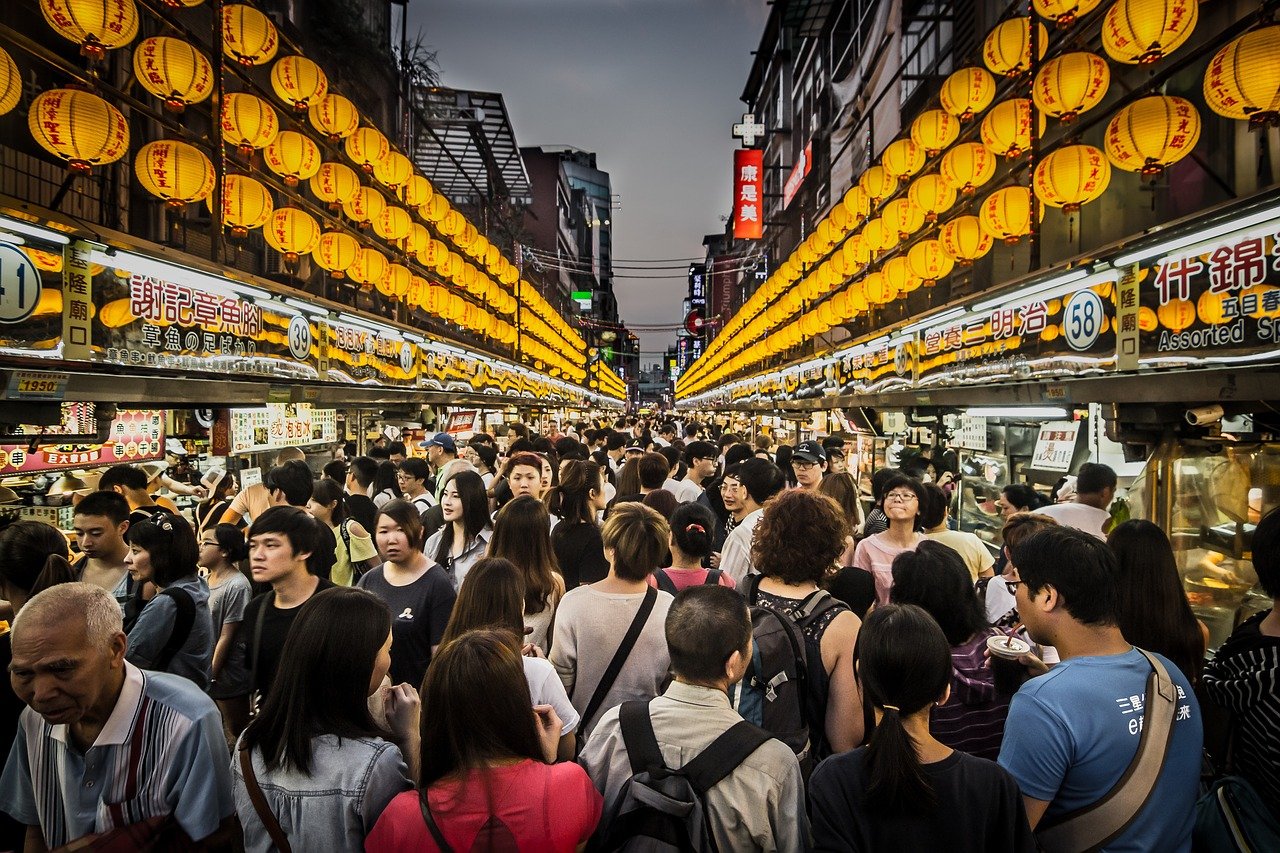

Many of us are familiar with this scene: you arrive at your dream destination after much planning and set off to visit the city’s most famous tourist attraction. When you arrive, you see a crowd of people: huge groups, families of all kinds and groups of teenagers striking a million poses.
Whether it’s the Colosseum in Rome or the Salar de Uyuni, there are places that are truly packed with people. The moment a place becomes accessible to tourists and has the infrastructure to receive them, everything becomes a sea of people, photos and souvenirs.
The problem starts when these crowds become larger than the infrastructure that the place provides for them.

is one tourist bothering too many people?
Tourists have been “harassing” locals for a long time. Back in the 1960s, the American sociologist Dean MacCannell described tourists as stupid creatures who are attracted by “pseudo-events” and “staged authenticity”. According to MacCannell, tourists arrive, are enchanted by something and return to their own reality without recognising the reality of others.
Today, entire cities like Barcelona and Berlin are fighting the advance of collaborative rental housing platforms that use the homes of the people who live there in the name of tourism. However, criticising or banning tourism is counterproductive, especially as a large part of these cities’ income comes from tourism. Scientists have already shown that blaming travellers is not the solution to the problem. First of all, you have to understand the problem.
what is overtourism?
Just because a place is overcrowded does not mean that a destination is saturated. In tourism science, this is called “overcrowding” and simply means that there are too many people in relation to the space. Think of the Eiffel Tower in summer or Times Square in New York.
Crowding occurs when a massive influx of tourists threatens the culture, economy and nature of a place. A group of researchers who conducted a study on this topic on behalf of the European Parliament described“overtourism as a situation in which the impact of tourism at a particular time and place exceeds its physical, environmental, social, economic, psychological and/or political limits”.
How Instagram has contributed to overtourism

Crowded places are not necessarily endangered places. However, with the advent of new communication technologies and the change in our travel behaviour, we need to add another factor to the equation: the Instagram factor. If dozens of influencers visit a place, their followers are likely to want to repeat the photo.
An example of this is the Sky Gates monument in Bali.
There are so many beautiful photos on Instagram these days that there are queues of tourists waiting for their turn to experience an ‘influencer moment’. The surrounding landscape, which is not visible in the photos, is nothing like you would expect. But the Lempuyang Temple, where the famous gates are located, is sacred to the Balinese and worth a (more respectful) visit.
Endangered paradises
It’s not just the ultra-photographed places that suffer from over-tourism. The above-mentioned study by the European Parliament comes to a surprising conclusion: overtourism does not threaten the big cities and their annoying inhabitants, but it does threaten the small rural towns and their environment.
So if the Sagrada Familia in Barcelona is overcrowded, it is simply overcrowding. But when the Thai government decides to close Maya Bay, its most famous beach, by 2021, it is because nature can no longer recover from the damage caused by predatory tourism. At this moment, we need to switch on the warning signal and rethink how we choose our dream destinations, how we travel and how we regulate tourist activities.
The most dangerous facets of overtourism
If overtourism gets out of control, it can wipe out historical sites, indigenous species and ancient cultures. The pressure that thousands of tourists put on a place is much greater than we can imagine. Tourists leave a lot of money everywhere, but also a lot of rubbish.
Imagine a small town with a sewage system designed for 10,000 inhabitants. When the government decides to host an international event with a population of 2,000, it calculates how many dollars the visitors will bring into the economy, but it doesn’t think about the daily waste that overloads the system (yes, we’re talking about pee and poop).
A simple forecasting error can cause a pipe to burst, cut off the city’s water supply, contaminate the water table and rivers, and even destroy an entire city! Does that sound like an exaggeration? Well, this is a common situation in some of the most touristic cities in South America during the Dakar Rally.
Laws to protect tourist resorts from oversaturation
how can you solve the problem? By stopping travelling? By locking ourselves at home and sobbing thinking about places we will never see live and direct? No, it is not the tourist’s job to solve the problem of the infrastructure of entire cities. It’s up to us to respect the rules, not be a nuisance and not waste natural resources. An example of relative success is the sacred mountain of Machu Picchu in Peru.
For years we backpackers have been hearing that Machu Picchu is about to close. Today, the number of visitors who can come to the ruins every day is limited due to pressure from the UNESCO committee responsible for protecting the World Heritage Site. The pressure has worked and we can say that Machu Picchu will be open to visitors for a long time to come.
How not to be one of “those” tourists
Every backpacker thinks they know how to travel better than the “masses”, the package tourists. It’s not me saying this, but there are studies on the subject. Backpackers have more freedom to design their itinerary, to spend more time in one place and not just consume sights and souvenirs and leave. This is a fact, even if there are more factors to consider.
Respecting local customs seems like a given, but it’s difficult to recognise the cultural nuances that set us apart from our hosts if we’re not observant enough. Enquire about customs before you travel, ask questions, listen and observe. You and your friends are looking forward to travelling by train to a European capital, in style, I know, but for others on the train it can be another journey from home to work. It’s important to respect the silence of others.
In short, put yourself in the shoes of someone occupying the same space as you.
Sustainable way of travelling

El Rio Hostel, Santa Marta, Colombia  @elriohostel
There are already more sustainable ways of travelling, and you probably already practice many of them. The hostel is the best way to stay as you have more contact with other travellers, can trade accommodation for work and take up less space than a king-size bed in a five-star hotel.
You can also cook for yourself and avoid the mountains of rubbish that are created in fast food restaurants.
Plus, with a backpack, you probably won’t be busy all day with activities and going from tour to tour. By travelling slower and staying longer in one place, you reduce your ecological footprint, get in touch with the locals and experience what it’s really like to live there.
7 tips for sustainable tourism

These are some very simple tips that you can implement on your next trip that will help reduce the negative impact of over-tourism so that we can visit these destinations for much longer:
- If possible, travel by train or bus instead of taking the plane.
- Take your reusable water bottle and metal utensils (straw, cutlery and plate) with you.
- Research where you are travelling to and choose the low season as your travel time.
- “Do in Rome what the Romans do”, i.e. behave and eat like a local and support small family businesses instead of multinational companies.
- Choose your souvenirs wisely so as not to contribute to the predatory industry (no bird feathers, precious stones, pieces of archaeological sites).
- Do not visit attractions where animals are used, such as elephant rides.
- Never leave your rubbish lying around, especially in nature reserves with the motto “leave nothing, just take photos”.
 About the author
Mariana Eberhard is a freelance journalist and translator. She lives in Berlin, is the mother of a German-Brazilian family and a collector of tropical plants. In her spare time, she is trying to complete a PhD in Sociology of Tourism, where she is researching backpackers in South America and cultural conflicts. Some of her writing can be found on the blog Travel Praxis.

 Get the App.
Comments