Centro
Convenient, agencies, foodThe streets around the Plaza de Armas and Avenida Luzuriaga, with agencies and restaurants.

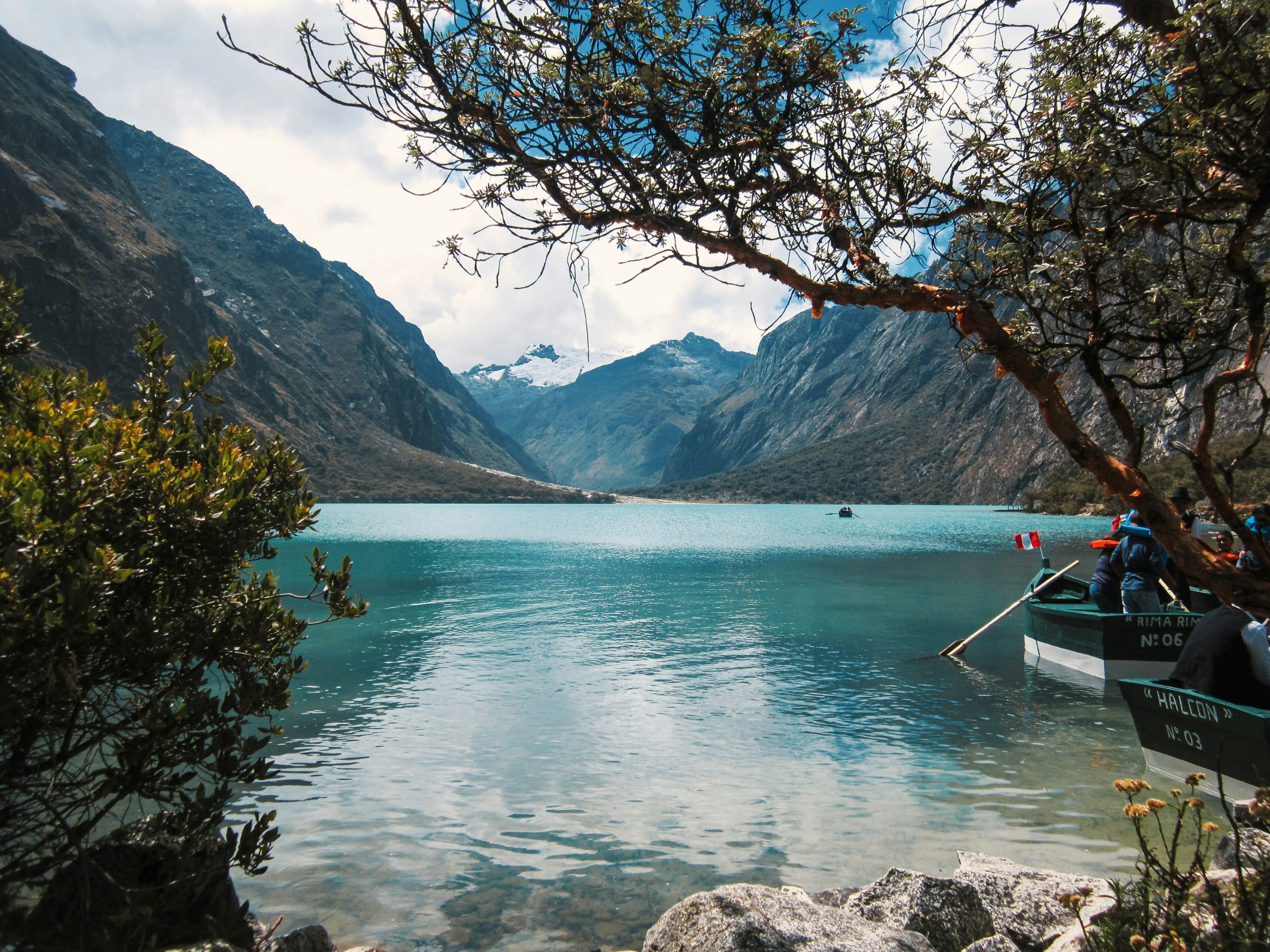
Peru's trekking capital, below the glaciers of the Cordillera Blanca: turquoise lakes like Laguna 69, the Santa Cruz trek and dozens of peaks over 6,000 metres within a day's reach.
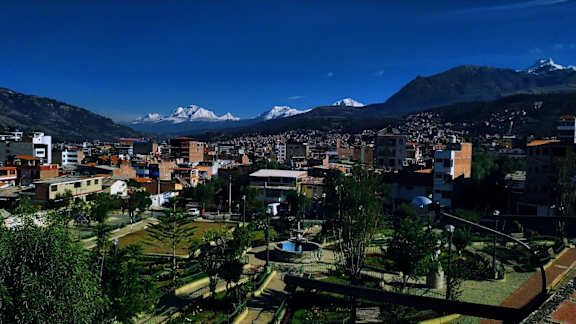
Huaraz sits at around 3,050 metres in the Callejón de Huaylas, a long valley between the snowy Cordillera Blanca and the bare Cordillera Negra. The town itself is busy and not pretty, as it was rebuilt after a devastating earthquake in 1970, but the mountains around it are some of the most spectacular in the Americas. The Cordillera Blanca is the highest tropical mountain range in the world, and much of it is protected in Huascarán National Park.
People come to walk. Day hikes lead to glacial lakes of impossible colours, such as Laguna 69 and Laguna Churup, and multi-day treks such as Santa Cruz cross high passes past glaciers and peaks. Climbers come for summits, and there are hot springs, the ancient temple of Chavín de Huántar and Andean villages to visit on rest days.
Give Huaraz at least five days, starting with an easy acclimatisation hike before anything high. More if you want a multi-day trek. The best time is the dry season from May to September, when the skies are clear.
Stay in the centre, close to the agencies, restaurants and colectivos. The streets above the centre are quieter, with mountain views.
The streets around the Plaza de Armas and Avenida Luzuriaga, with agencies and restaurants.
Residential streets uphill from the centre, with hostels that look out at the peaks.
Orange labels are neighbourhoods, dots are the 12 top-rated hostels. Map data from OpenStreetMap contributors.
Start with an easy acclimatisation walk, such as Wilcacocha, a lake on the Cordillera Negra with views across to the snowy peaks. Then step up to Laguna Churup, a steep half-day climb to a lake at around 4,450 metres.
Laguna 69 is the classic day hike: a long climb from the Llanganuco valley to a turquoise lake below the Chacraraju glacier, at around 4,600 metres. Leave very early by tour or colectivo, and do it only once you have acclimatised. The Santa Cruz trek, usually four days, crosses the Punta Unión pass at around 4,750 metres, with some of the finest mountain scenery in South America; go with an agency or experienced and well equipped.
On rest days, visit Chavín de Huántar, a UNESCO-listed temple complex of underground galleries over 3,000 years old, around three hours away, or soak in the hot springs at Monterrey, just outside town. The Pastoruri glacier is an easy high-altitude visit, and a reminder of how fast the glaciers are retreating.
Some acclimatisation walks are free, including the hike to the Mirador de Rataquenua, a cross above town with views of the Cordillera Blanca. Go with others.
The central market is free to explore and good for fruit, cheese and cheap food. The Plaza de Armas is busy in the evenings.
Most hikes in Huascarán National Park need a park ticket, bought at the entrance.
Highland food is hearty: pachamanca, meat and potatoes cooked underground with hot stones, cuy, trout and caldo de cabeza, a lamb head soup that is better than it sounds. Picante de cuy is a local favourite.
The central market has cheap menús, and the town has plenty of cafés and pizza places catering to trekkers. Many agencies and hostels can prepare packed lunches for hikes.
Coca tea helps with the altitude.
Huaraz has a few bars and pubs aimed at trekkers and climbers, busiest after people come back from treks.
Nights are cold, and most people are up before dawn for hikes, so it is a quiet town.
Go easy on alcohol at altitude.
The centre is walkable, and taxis are cheap. Colectivos run up and down the valley to Caraz, Yungay and the trailheads, though tours with transport are easier for Laguna 69.
Buses from Lima take around eight hours, with comfortable overnight services. There is a small airport at Anta, around 30 minutes away, with limited flights from Lima.
Trailheads for the main hikes are one to three hours from town.
Huaraz is cheap. Dorm beds start around €7, with well-rated hostels from €8 to €15. A menú costs a few euros.
Day tours with transport are good value, and the Huascarán National Park ticket is the main fee for hikes. Multi-day treks with an agency, including donkeys, a cook and gear, cost much more.
Carry cash in soles for park tickets, colectivos and the villages.
Huaraz is generally safe. Take normal care in town, especially at night and around the bus stations.
Altitude is the main risk. Spend at least two days acclimatising before Laguna 69 or any trek. Headaches, nausea and breathlessness are common; if symptoms get worse, go down. Weather in the mountains changes fast, so carry warm, waterproof layers and sun protection.
Hike with others, tell someone your plans, and book treks and climbs only with licensed agencies and guides. Some viewpoints near town have had robberies, so go in groups. In an emergency, call 105 for police or 106 for an ambulance.
Glacial lakes, high passes and an ancient temple.
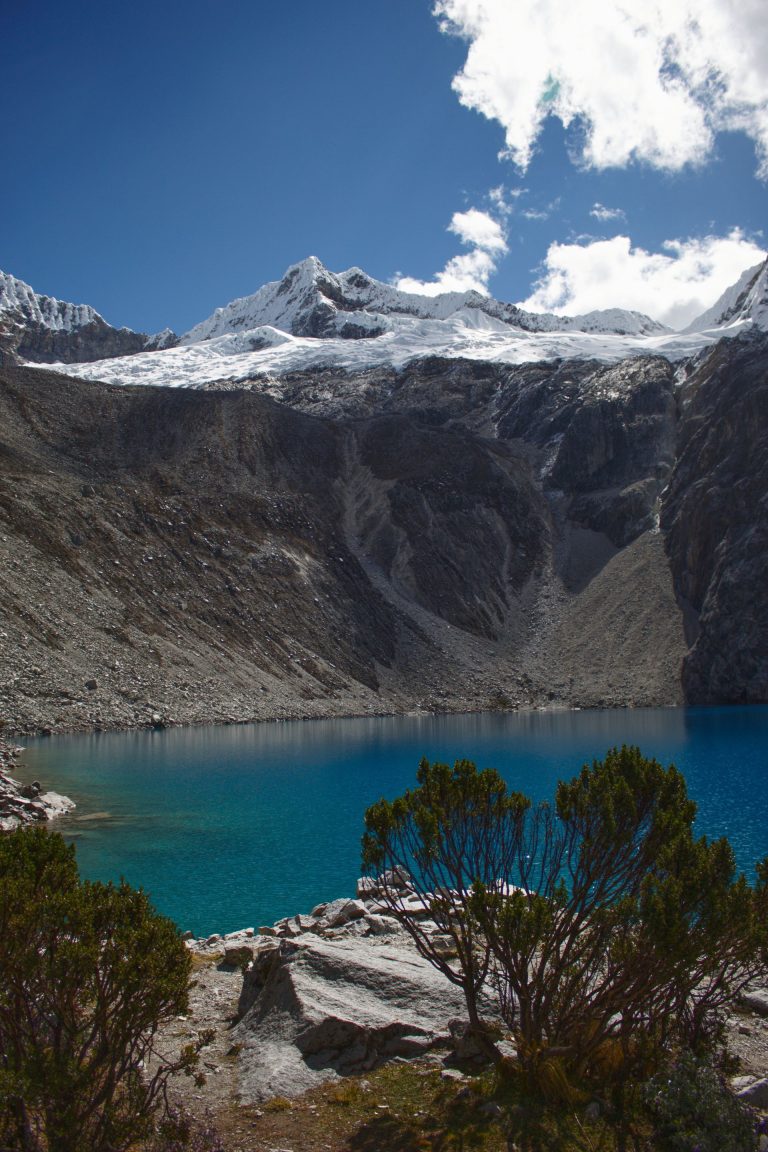
A turquoise lake below a glacier, at around 4,600 metres.
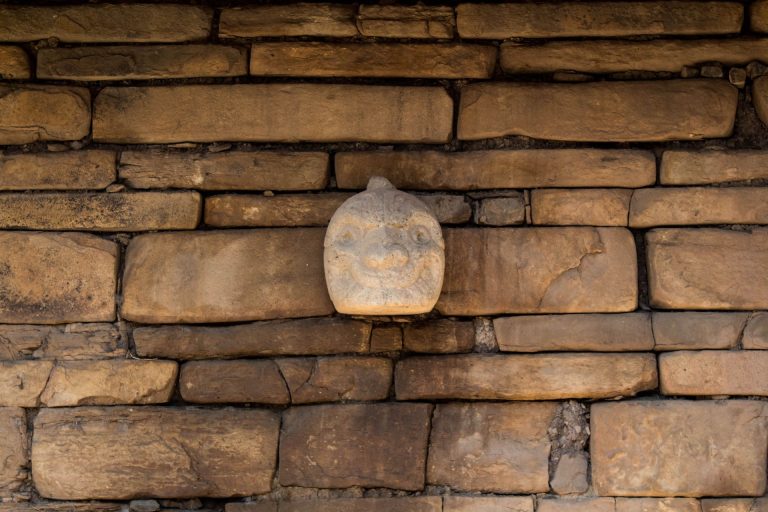
A UNESCO-listed temple with underground galleries.
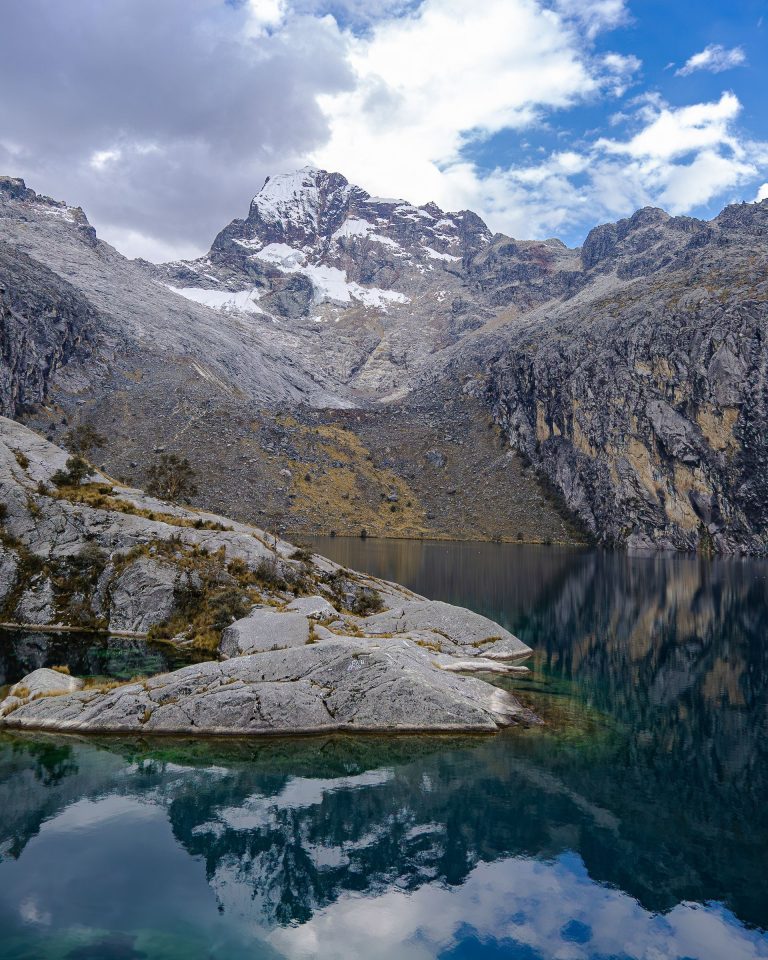
A steep climb to a high lake.
Trekking season, Semana Santa and the Andean festivals.
The dry months, with the clearest skies.
Processions and holiday crowds from Lima.
The town's patron festival, with processions and dances.
The highest-rated hostels in Huaraz, straight from Hostelworld. Prices and availability are live on each property page.


May to September is the dry season, with clear skies and the best trekking. October to April is wet, with cloud and afternoon storms, and some treks are muddy or closed.
Average highs in Huaraz, rounded. It is much colder on the trails.
Per night, for one person, based on Huaraz prices.
Treat these as a guide. Multi-day treks and climbs cost extra.
The ones we get asked most.

Compare hostels in Huaraz: live prices, real reviews and free cancellation on most bookings. Then meet the people already there in the app.

 Get the App.



 Get the App.