Centro
First-timers, foodChurches, markets and most hostels.

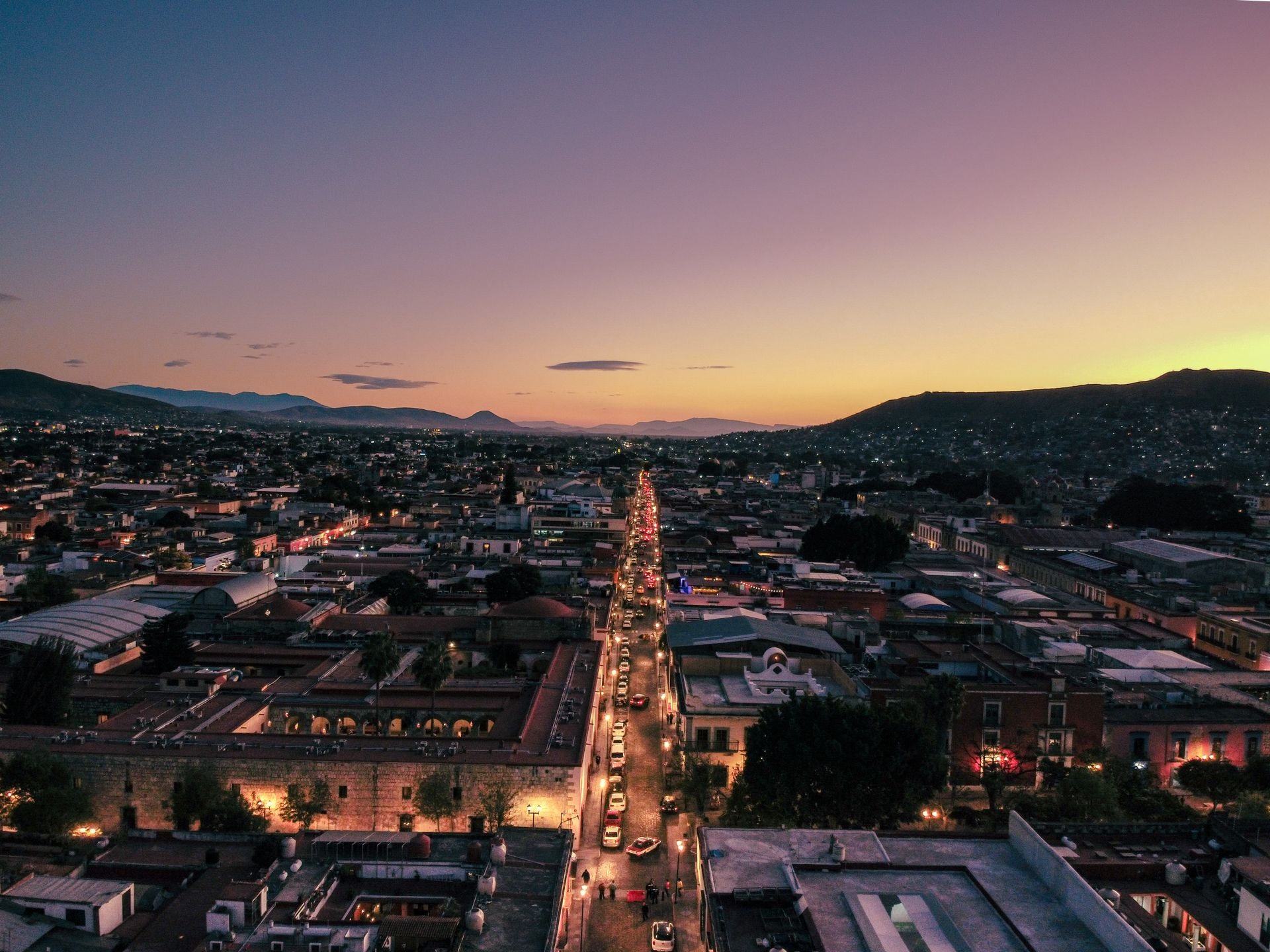
Mexico's food and craft capital: seven moles, mezcal from village distilleries, busy markets, a colourful colonial centre, and the Zapotec city of Monte Albán on the hill above.
Oaxaca de Juárez sits at about 1,550 metres in a valley in southern Mexico, surrounded by villages known for weaving, pottery, carved wooden animals and mezcal. Its centre is a UNESCO World Heritage Site of green-stone churches, painted houses and pedestrian streets.
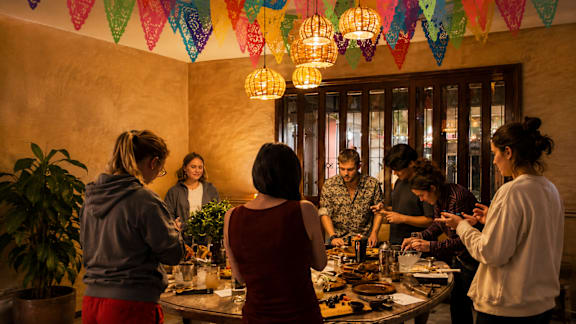
Most people come for the food: mole in seven colours, tlayudas, chocolate, chapulines (grasshoppers) and mezcal. The markets are the place to start, and cooking classes are popular.
The city is busiest in July for the Guelaguetza dance festival and around the Day of the Dead, when the cemeteries fill with candles and marigolds. Give Oaxaca four or five days, with trips to Monte Albán and the valley villages.
The Centro is walkable and has most hostels; Jalatlaco is quieter and close by.
Churches, markets and most hostels.
Cobbled streets just east of the Centro.
An old neighbourhood north of Santo Domingo.
A residential area north of the Centro.
Orange labels are neighbourhoods, dots are the 12 top-rated hostels. Map data from OpenStreetMap contributors.
Walk the Andador Macedonio Alcalá to the Templo de Santo Domingo and its museum, and join a guided tour of the Ethnobotanical Garden behind it. Eat your way through the Benito Juárez and 20 de Noviembre markets.
Take a cooking class, and a mezcal tour to the palenques (distilleries) around Santiago Matatlán. Climb up to Monte Albán, the Zapotec capital on a flattened mountaintop.
Drive the Tlacolula valley for the giant Tule tree, the Mitla ruins, the Sunday market at Tlacolula and the weaving village of Teotitlán del Valle.
Walking the Centro, the Zócalo and the pedestrian Alcalá is free, and so is looking inside Santo Domingo church. The markets cost nothing to wander.
The Jalatlaco neighbourhood has street art, and the Cerro del Fortín viewpoint looks over the city.
Free walking tours run most days; tip the guide.
In the 20 de Noviembre market, pick meat in the smoky grill aisle and eat it with tortillas and salsas for about €5 to €8. Tlayudas, large crisp tortillas, cost €3 to €6, and mole with chicken €5 to €10.
Try tejate, a cold maize and cacao drink, hot chocolate, and chapulines.
Mezcal is everywhere; sip it slowly with orange and worm salt. A 10 to 15 per cent tip is usual in sit-down restaurants; check the bill first, as some add a service charge (propina).
Oaxaca's nights are about mezcal bars, rooftop bars over the Centro and live music, with a few clubs.
Calendas, street parades with giant puppets and brass bands, pass through the Centro on many weekends, often for weddings.
A mezcal costs €2 to €5 and a beer €1.50 to €3.
The Centro is easy on foot. Colectivos (shared taxis) and buses go to the valley villages, and tours are an easy way to see several in a day.
ADO buses run to Mexico City in about 6 to 7 hours, and to San Cristóbal overnight. Vans and buses go to Puerto Escondido in roughly 4 to 7 hours, depending on the route; the newer highway is the quickest.
Oaxaca's airport is about 30 minutes from the Centro, with flights to Mexico City and beyond.
Hostel beds start at around €10 to €18 a night. A market meal costs €3 to €6.
Monte Albán costs under €10 to enter, a mezcal tour about €40 to €70, and a cooking class about €60 to €100.
Pay in pesos. Carry cash for markets, colectivos and the villages.
Oaxaca city is one of the more relaxed places in Mexico for visitors. Watch your bag in markets and crowds.
Protests and road blockades happen often, sometimes closing roads to the coast or the airport; build in a spare day. Some sites, such as Hierve el Agua, close at times because of local disputes, so check before you go.
Do not drink the tap water; use bottled or filtered water, which most hostels provide. In an emergency, call 911.
Ruins, villages and petrified waterfalls.
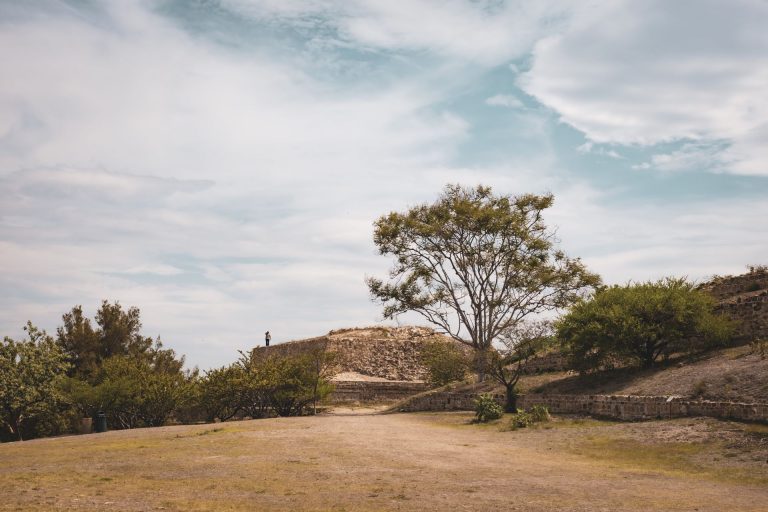
The Zapotec capital.
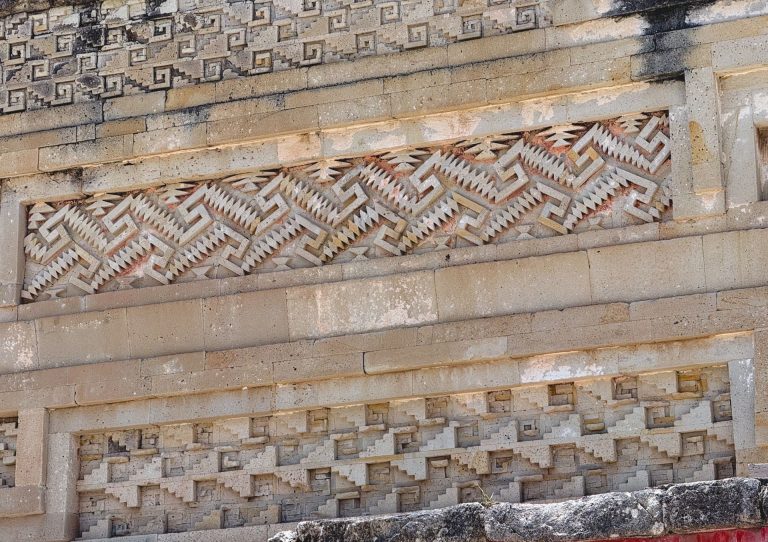
Ruins with stone mosaics.
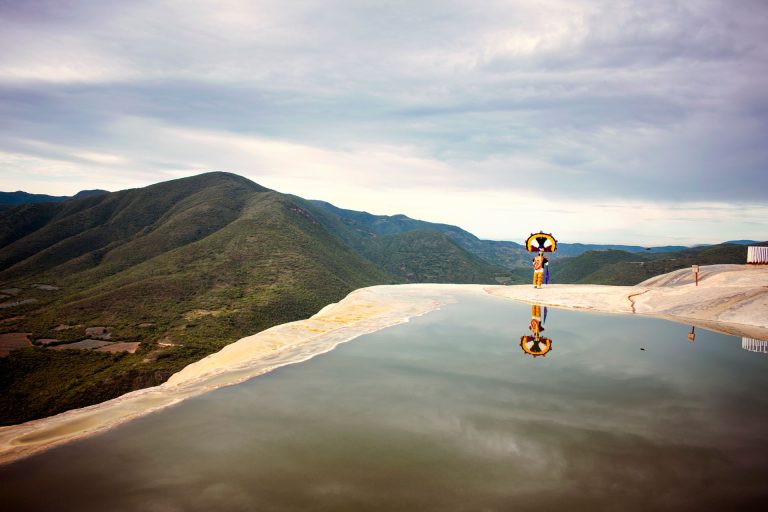
Mineral pools and petrified waterfalls; check it is open.
Dance, the dead and radishes.
Dance from the state's regions.
Altars, parades and candlelit cemeteries.
Carved radish sculptures.
Processions.
The highest-rated hostels in Oaxaca, live from Hostelworld. Prices and availability are live on each property page.
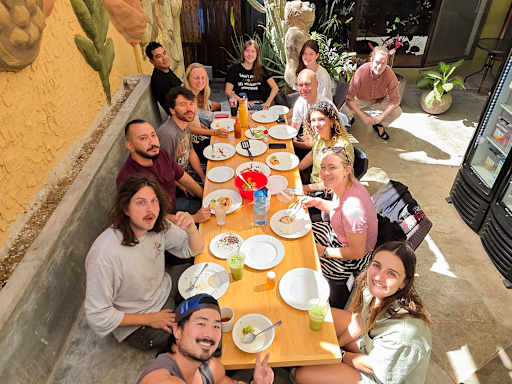
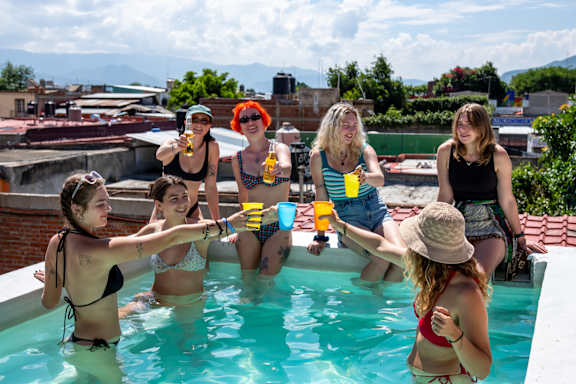
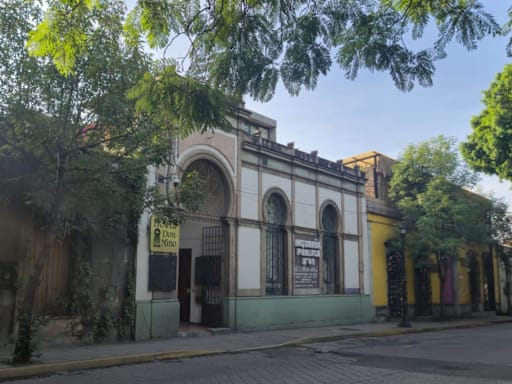

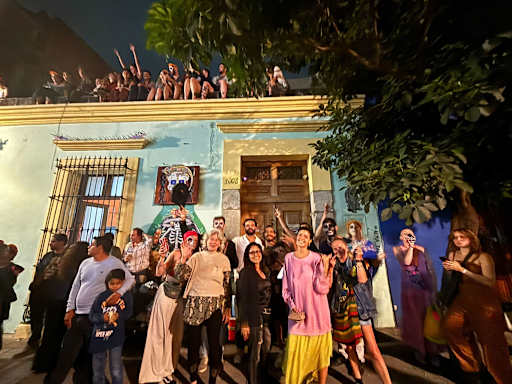
October to May is dry and sunny; April and May are hot. June to September brings afternoon rain and green hills. July is busy for the Guelaguetza, and late October to early November for the Day of the Dead.
Average highs, rounded. Warm days and cool nights.
Per night, for one person, based on Oaxaca prices.
Treat these as a guide. Tours and classes cost extra.
The ones we get asked most.

Compare hostels across Mexico: live prices, real reviews and free cancellation on most bookings. Then meet the people already there in the app.

 Get the App.



 Get the App.