

The ferry docks before lunch, your bag goes in a hostel locker, and an hour later you’re floating in water so clear you can count the pebbles. That’s an ordinary day on a Greek island-hop, and here’s the secret about the best beaches in Greece: most of them aren’t on the islands that fill your feed. They’re a cheap ferry hop away, on islands where a dorm bed and a gyros won’t wipe out your budget.
So this isn’t another list of beaches scattered randomly across the map. It’s a route. We’ve grouped the beaches by island, in the order you’d actually reach them by boat, with how to get to each one, which famous spots are closed or restricted, and what Greece’s beach rules mean for your wallet (spoiler: you rarely need to pay for a sunbed).
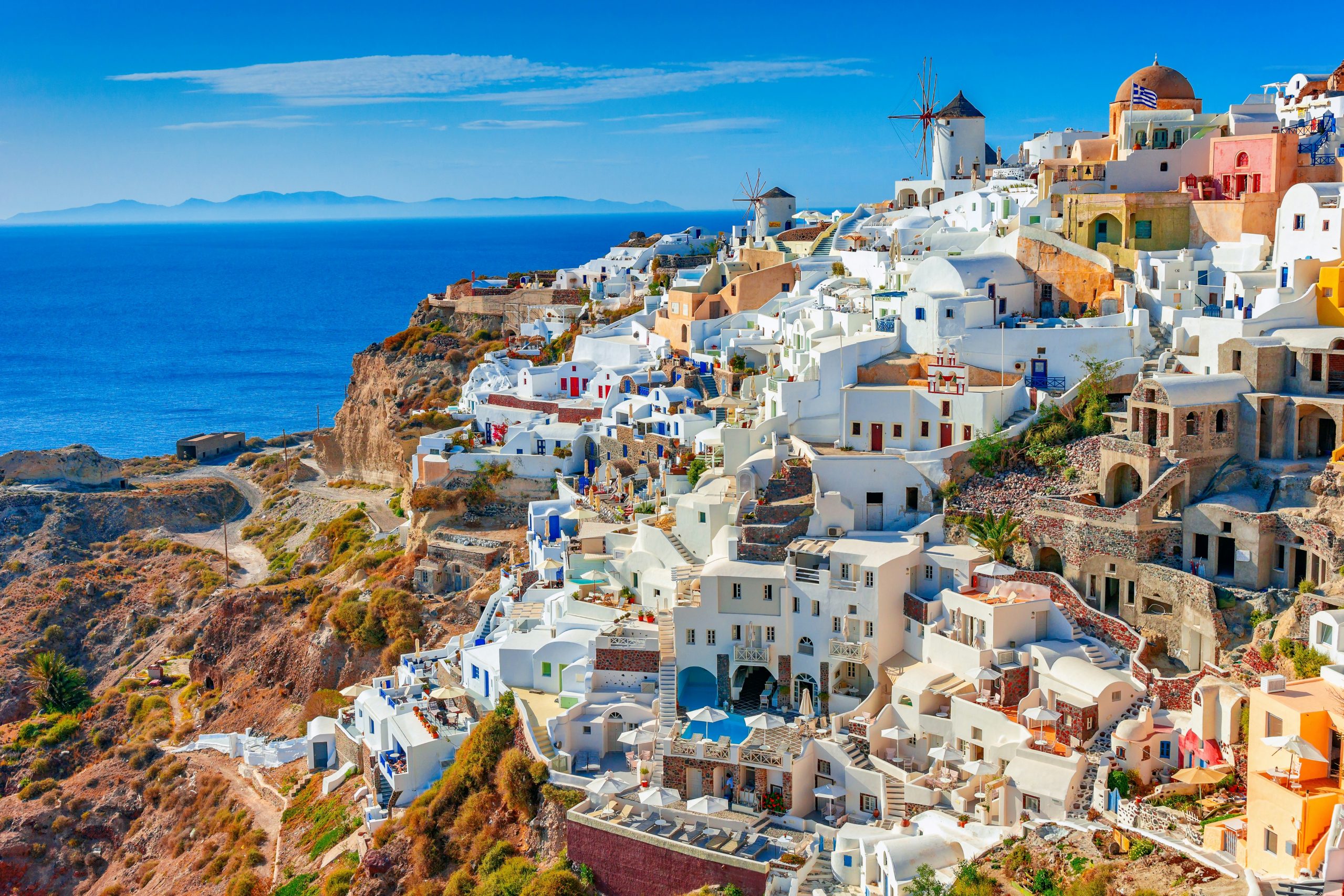
Which Greek islands are best for beaches on a budget?
If you want great beaches without Santorini prices, the Cyclades trio of Naxos, Paros and Milos is where to look. A comparison by Discover Cyclades ranks Naxos as the cheapest of the three, then Milos, with Paros the priciest.
- Naxos: long, sandy beaches and the biggest island in the Cyclades. Best for a base where your money goes furthest.
- Paros: rock-sculpted coves and windsurfing beaches, with a livelier scene. Best for beaches plus nightlife, just a short ferry from Naxos.
- Milos: volcanic moonscapes and boat-only bays. Best for the most dramatic swimming spots, if you plan your ferries ahead.
- Mykonos and Santorini: iconic but expensive. Best for a short stop rather than a base.
Start in Naxos or Paros, add Milos, and finish in Crete if you have time. The sections below follow that route, island by island.
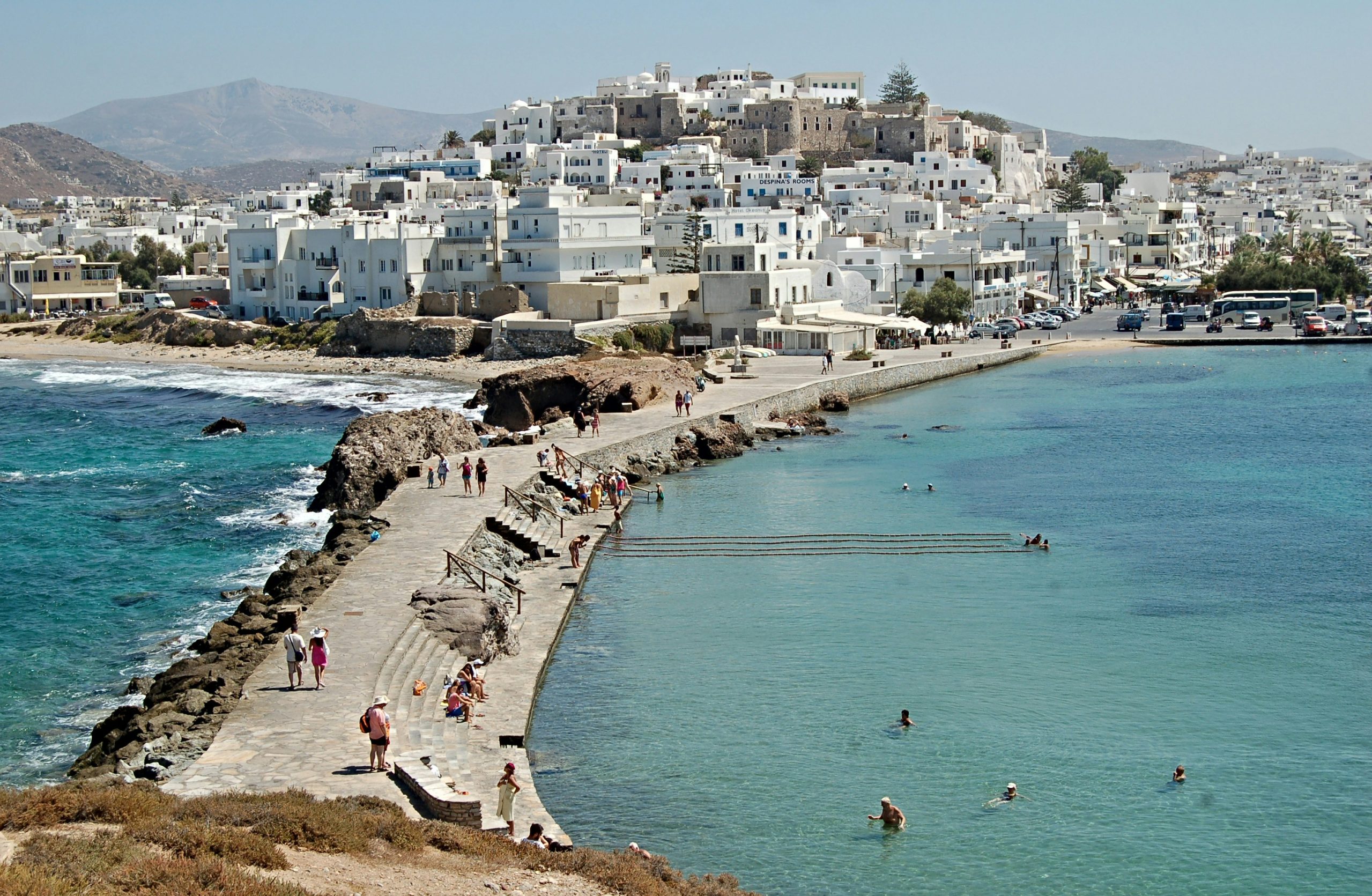
What are the best beaches on Naxos?
Naxos is the easiest place to start, because its best beaches sit in a row down the west coast and one bus links them all. It’s also the biggest of the three budget islands: Discover Cyclades puts it at 429 km², against 196 km² for Paros. Hike Mount Zeus or eat graviera cheese in the hill village of Halki when you need a day off the sand.
- Agios Prokopios: sandy and calm, just south of town. How to get there: Line 1 from Chora, about 10 to 15 minutes.
- Agia Anna: next door, with tavernas and a small harbour. How to get there: same Line 1 bus, one stop on.
- Plaka: the big one. Discover Cyclades says it runs for over 4 kilometres, backed by dunes and cedars. How to get there: Line 1 to the end, about 20 minutes.
In summer, Greeka lists Line 1 running every 30 minutes from 07:30 to 01:00, with fares of €1.80 to €2.60 (checked October 2026). Buy your ticket at the KTEL office opposite the port, because the island’s official site says you can’t pay on board.
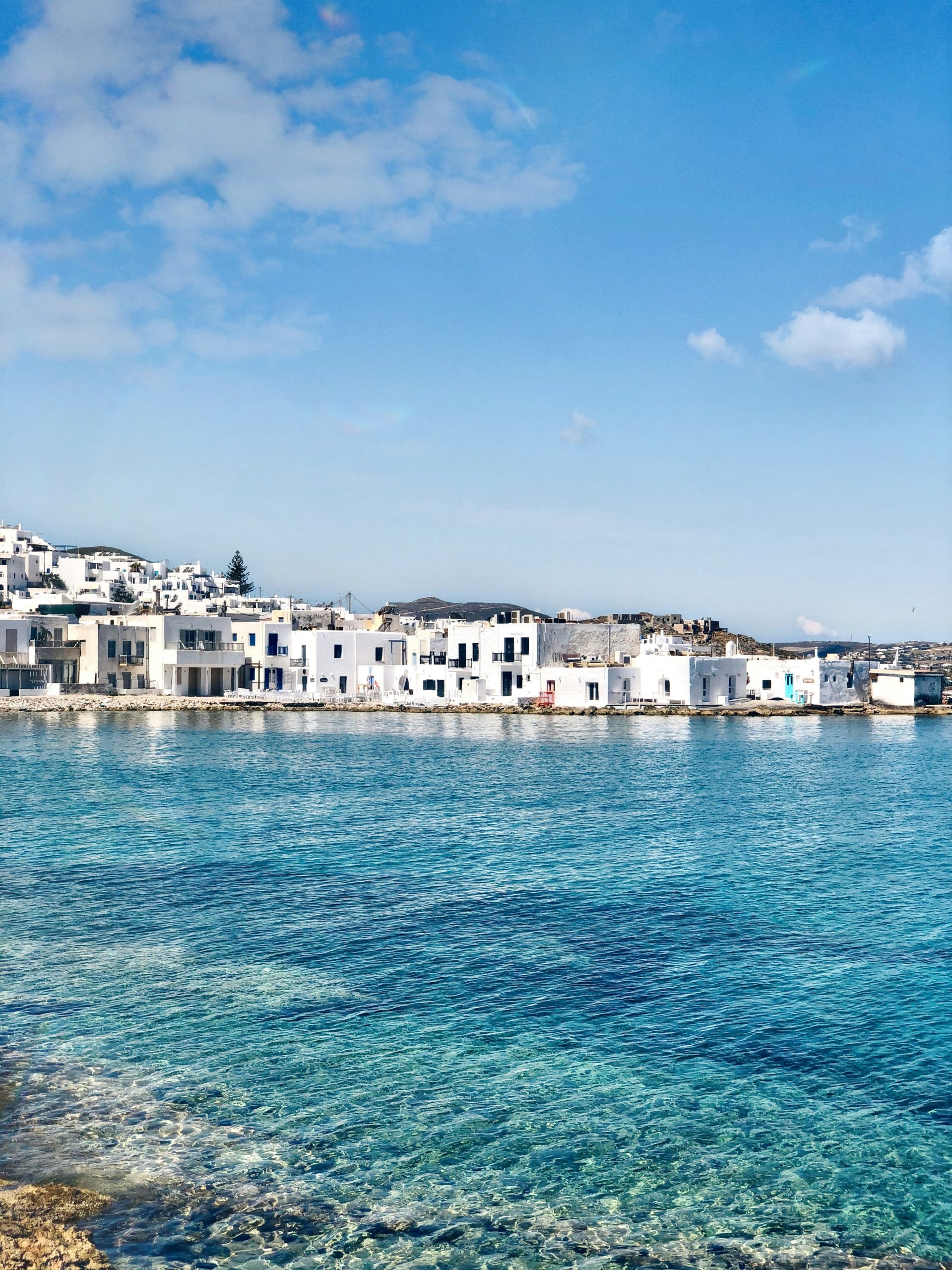
Which Paros beaches are worth it?
Paros is the obvious next stop, because it sits right next door: Ferryhopper says boats from Naxos run every day of the year, taking 30 minutes to 3.5 hours depending on the vessel, with tickets from €15.50 (checked October 2026). Once you’re there, two very different beaches are worth your time. Kolymbithres, across the bay from the fishing village of Naoussa, is the one you’ll recognise from photos: smooth granite boulders worn into strange shapes, with little sandy pockets and shallow water between them, as Discover Cyclades describes it. Summer buses run there from Naoussa, but when the little boats from Naoussa harbour are running they’re quicker and more fun, according to Santorini Dave’s Paros bus guide. Over on the east coast, Golden Beach (Chrysi Akti) is a long strip of sand and one of the Aegean’s windsurfing hotspots, so come for the wind and the people-watching rather than a calm swim. It’s roughly 50 to 55 minutes by bus from Parikia. Buy your bus tickets before you board at the Parikia or Naoussa terminals or at kiosks and mini-markets, since KTEL Paros takes card payments and charges more on board; regular fares start from €2.20, and a €12 day pass pays off if you’re hopping between beaches (checked October 2026, with the latest times on the KTEL Paros timetable). For a cheap bed, Paros Backpackers is the only hostel with dorms we found on Hostelworld (October 2026), with dorms from €23.53; note it takes guests aged 18 to 40 only.
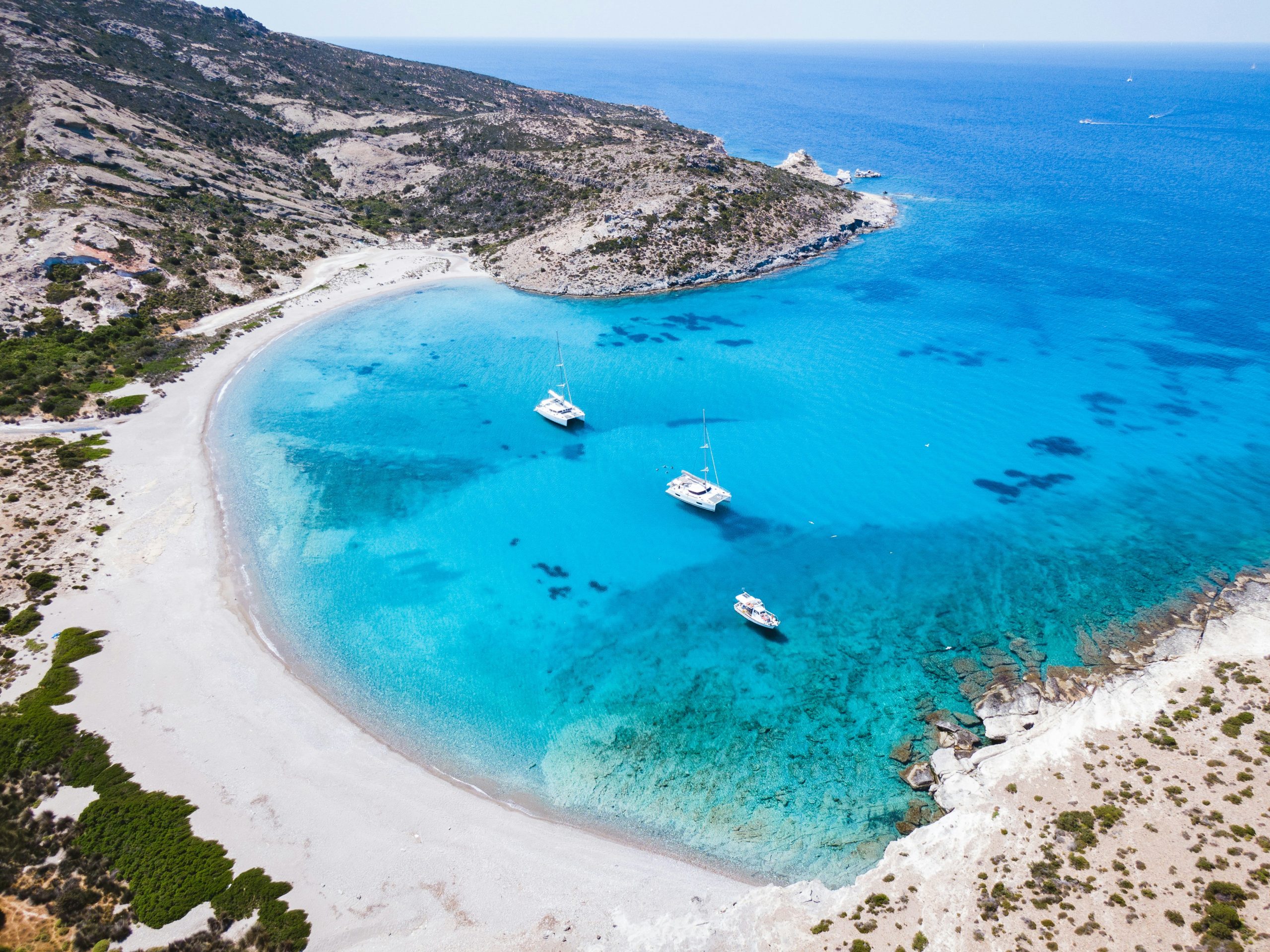
Why is Milos a beach lover’s dream?
Milos has the strangest, most photogenic coastline on this route, and it’s all rock, not sand. Getting there takes more planning, though. Direct Ferries counts roughly one sailing a day from Naxos, averaging about 4 hours, with the fastest SeaJets boat doing it in around 2.5 hours. Book that leg as soon as your dates are fixed.
- Sarakiniko: on the north coast, where north winds and waves have carved greyish-white volcanic rock into a landscape people compare to the moon, as Wikipedia puts it. Swim in the narrow inlet and dry off on the warm rock. How to get there: a direct KTEL bus from Adamas port, with Greeka listing departures from 10:00 to 19:10 and a flat €2 fare, paid in cash to the driver (checked October 2026).
- Kleftiko: a former pirate hideout of sea stacks and caves on the southwest coast. How to get there: by boat only, since the rocks block any safe path, according to Greeka. Day trips leave Adamas daily in season, listed from €120 (checked October 2026).
Milos has no dorms on Hostelworld right now, but it does list a few budget hotels and B&B rooms around Adamas, handy for the bus and boats.
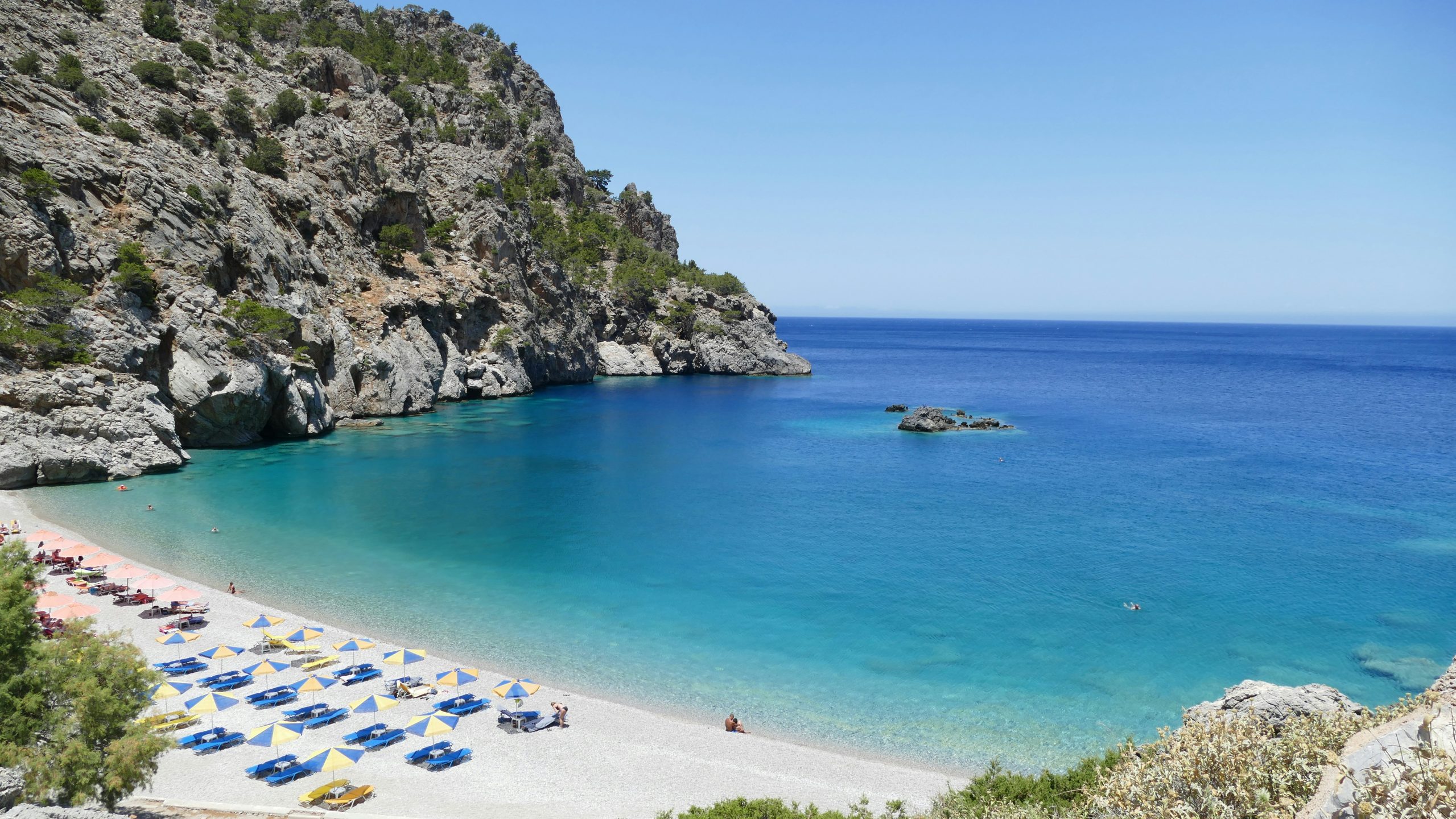
Which beaches are best for partying (and which for quiet)?
If you want your beach day to roll into a beach night, that means Mykonos. It’s a quick hop from Naxos: Ferryhopper lists crossings of 35 minutes to 1.5 hours, with up to 6 a day in summer. Do a night or two there, then head back to a cheaper island when you need to sleep.
Party
- Paradise, Mykonos: the original party beach, famous since the hippie era, says Greeka. Go here for the summer parties with big-name DJs at beach clubs like Tropicana and Paradise Beach Club, both of which had 2026 events listed (Songkick, The Ace VIP). Check their 2027 dates before you plan around a party. It’s crowded, young and loud, which is exactly the point. How to get there: Greeka lists buses from Fabrika in Mykonos Town every 30 to 60 minutes, 07:15 to 01:15, about 15 minutes, with fares of €1.50 to €2.50 paid in cash (checked October 2026).
- Super Paradise, Mykonos: next door, with soft golden sand and turquoise water in a cove. Greeka says DJs turn it into an open-air nightclub in the evening, and it’s a well-known gay-friendly beach. Pick it if you want the party with a prettier setting. How to get there: the water taxi from Platis Gialos.
Quiet
- Agios Sostis, Mykonos: proof Mykonos has a calm side. Greeka calls it one of the island’s quietest beaches: about 250 metres of sand with no sunbeds or bars, so bring water and shade. Go here to recover the morning after. How to get there: scooter or car only, as no bus runs there.
- Alyko, Naxos: white sand, clear water and a cedar forest that gives you natural shade, on the southwest coast about 17.5 km from Chora, according to Naxos.net. It’s unorganised, so pack snacks. Walk five to ten minutes to the small Hawaii cove and the graffiti-covered shell of an unfinished hotel, both covered by Explore Naxos & Paros. How to get there: Line 3 towards Pyrgaki, €3.10, with 5 to 6 buses a day in June to August, or by scooter.
Don’t want to party alone? Join a Linkup in the Hostelworld app, which opens 14 days before check-in, or ask in City Chats who’s heading to Paradise tonight.
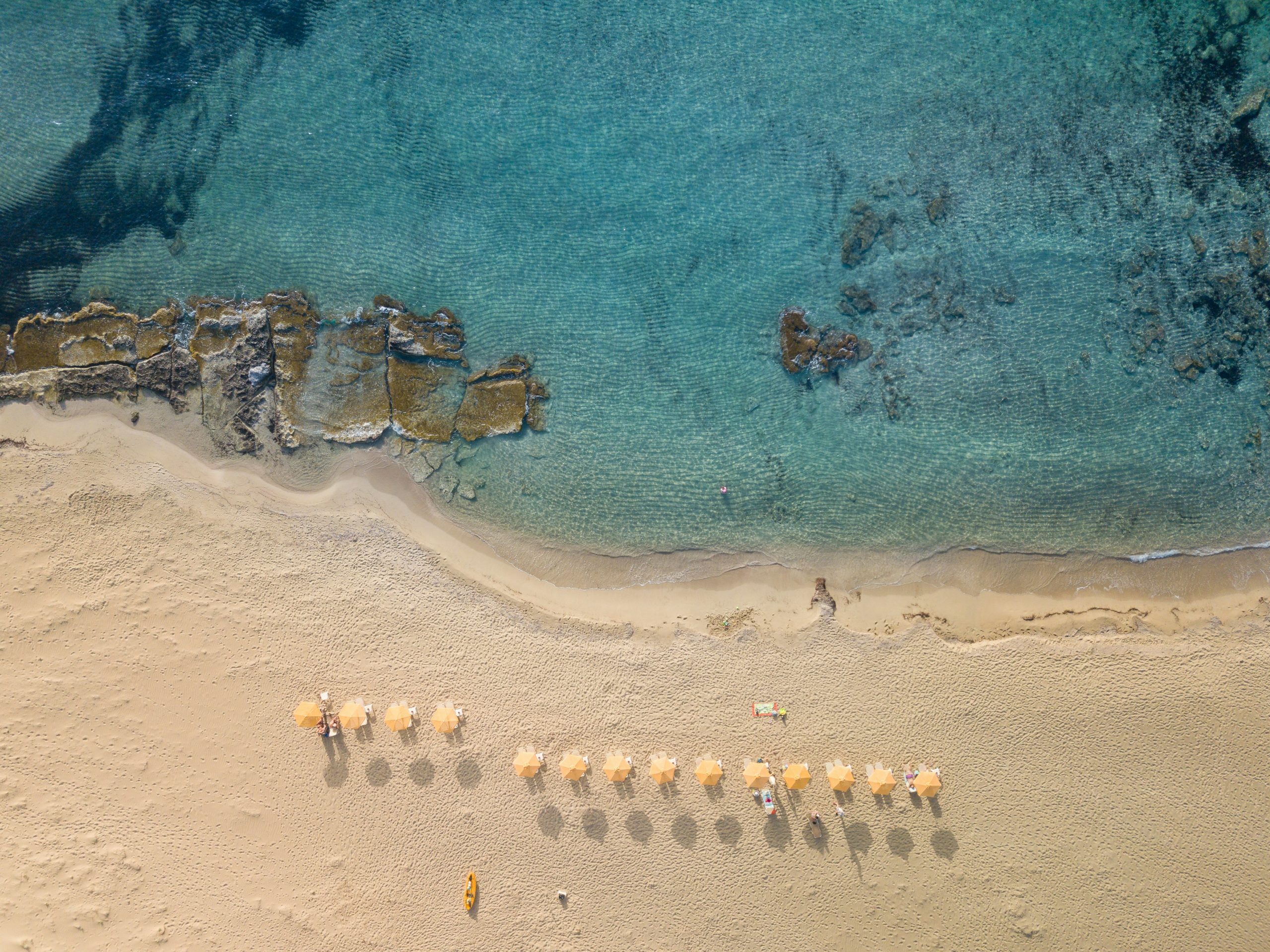
Is it worth adding Crete to your beach route?
If you have a few days left, yes. Crete makes a big finale, and its star beaches look nothing like the Cyclades. The easy way in is Santorini to Heraklion: Ferryhopper lists crossings of 1 hr 35 min to 4 hr 30 min, with slow Blue Star fares from about €15 and up to 3 sailings a day in summer (checked October 2026). Then base yourself in Chania, the closest town to both beaches.
- Balos: a lagoon of white sand and shallow, warm water about 53 km from Chania, says Greeka. How to get there: a boat cruise from Kissamos, listed from €38, beats the rough dirt road. Carry cash for a small municipal fee, reported at €1.
- Elafonisi: pink-tinged sand coloured by crushed shells, in a Natura protected area (Greeka). Cars are banned from the protected core, and a study to cap visitor numbers was still pending in August 2026, so check before you go. How to get there: a day tour from Chania.
Are beaches in Greece free?
Yes. Every beach in Greece is public, and you never have to rent a sunbed to swim or lie on the sand. Beach bars can rent part of a beach from the state, but under the 2024 coastline law they have to follow strict rules. This is how Athens Voice summed them up in August 2026:
Your beach rights in Greece
- Half the beach stays free. At least 50% of every beach must be left clear of sunbeds and facilities, and on protected Natura 2000 beaches, loungers can cover no more than 30% of the rented area.
- The shoreline is yours. A strip of 4 metres from the water’s edge must stay free of sunbeds, umbrellas and tables, so you can always walk along the sea.
- No fences. Nobody can block your way to the water, and there must be a free access path between neighbouring beach bars.
- Check the QR code. Every licensed beach business must display a MyCoast QR sign. Scan it to see what they’re allowed to occupy, and report anything that looks wrong straight from the app.
And the system works: Greeks filed more than 41,700 complaints in 2024, which led to over €1.15 million in fines, according to the same report. So if a waiter tells you that you can’t sit on the sand without paying, you can politely ignore him. Lay your towel down in the free part of the beach and enjoy it.
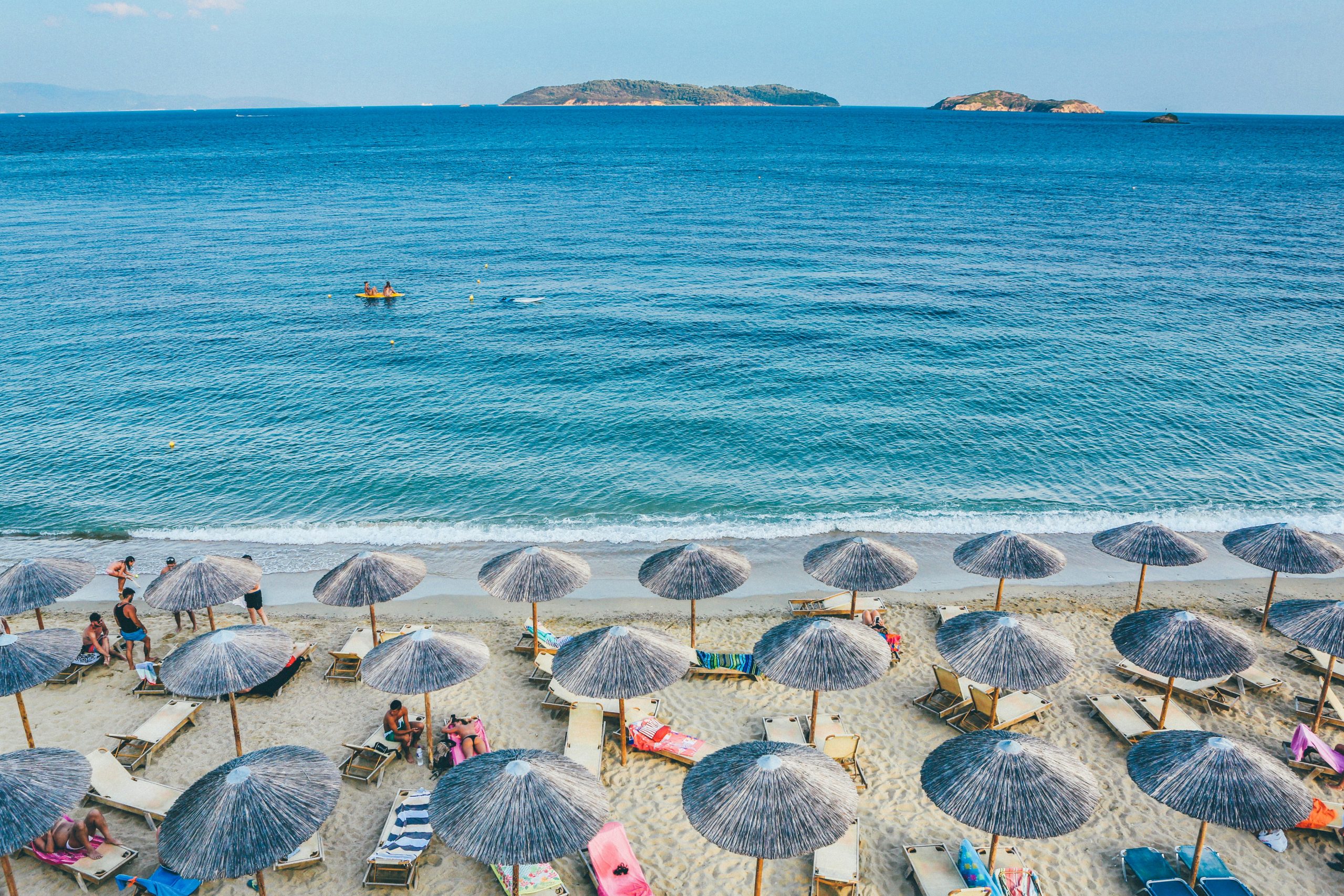
Which famous Greek beaches are closed or restricted?
Two of the most photographed beaches in Greece are off limits, and plenty of travellers only find out once they get there.
- Navagio (Shipwreck Beach), Zakynthos: closed. Landslide risk means a government decision bans all access to the beach, any boat coming within 50 metres of the shore and swimming anywhere in the cove, until 31 October 2026, according to To Vima (June 2026). You can still see the wreck from the clifftop viewing platform, but only once the safety fencing along the edge is finished, so ask locally before you make the trip. Boat tours that promise a landing are breaking the rules.
- Red Beach, Santorini: closed to walkers and swimmers because of rockfalls. Santorini’s council has banned access since 2013, and the earthquakes of February 2025 sent rocks down the cliffs again, as To Vima reported. You’ll see people ignoring the signs. Don’t. Look at it from the path above or from a boat.
Rules for both can change from one season to the next. Check the latest notices with the local port authority or your hostel before you book a tour. Navagio’s ban runs out at the end of October 2026, so look for news of an extension before you plan a 2027 visit.
How do you island-hop between Greek beaches on a budget?
Ferries are your second-biggest cost, so choose them carefully. A simple route: Piraeus to Paros, Paros to Naxos, Naxos to Milos, then on to Crete if you have the days.
- Take the slow boat. On the first leg from Athens’s port, Piraeus, to Paros, conventional Blue Star ferries take 4 to 5.5 hours, while Seajets catamarans take 2 hr 40 min to 3 hr 45 min. Fares start from about €40.50 on the slow boat, while the fast ones are listed at €54.70 to €115.70 depending on the month, according to Ferryhopper (checked October 2026). The big ferries also have open decks for the views, and when the summer meltemi wind blows, large conventional ferries often keep sailing while fast catamarans are held in port, according to Discover Cyclades’ guide to ferry cancellations.
- Book ahead for July and August. Ferries and beds both fill up in high summer. Booking even a couple of weeks ahead saves you from the expensive fast boats being your only option. June and September are calmer, with lighter winds than July and August, according to Discover Cyclades’ month-by-month weather guide.
- Stay in hostels to skip the island tax. Greece adds a per-room “climate resilience” fee to most stays, but youth hostels and campsites are exempt, according to Greek City Times. Hotels and rooms pay from €2 a night from April to October, and rates stayed the same in 2026. Book your beds on Hostelworld, where you can compare dorms and private rooms island by island, with prices and reviews from other travellers. Hostel beds are thin on the ground on some islands, though: Naxos has no dorms listed right now, so book Paros Backpackers early and use Hostelworld’s budget rooms on the islands without a hostel.
- Share the costs. Use City Chats in the Hostelworld app to find people heading to the same island to split taxis, scooters and boat trips. Not booked yet? Social Pass gets you into the chats anyway.
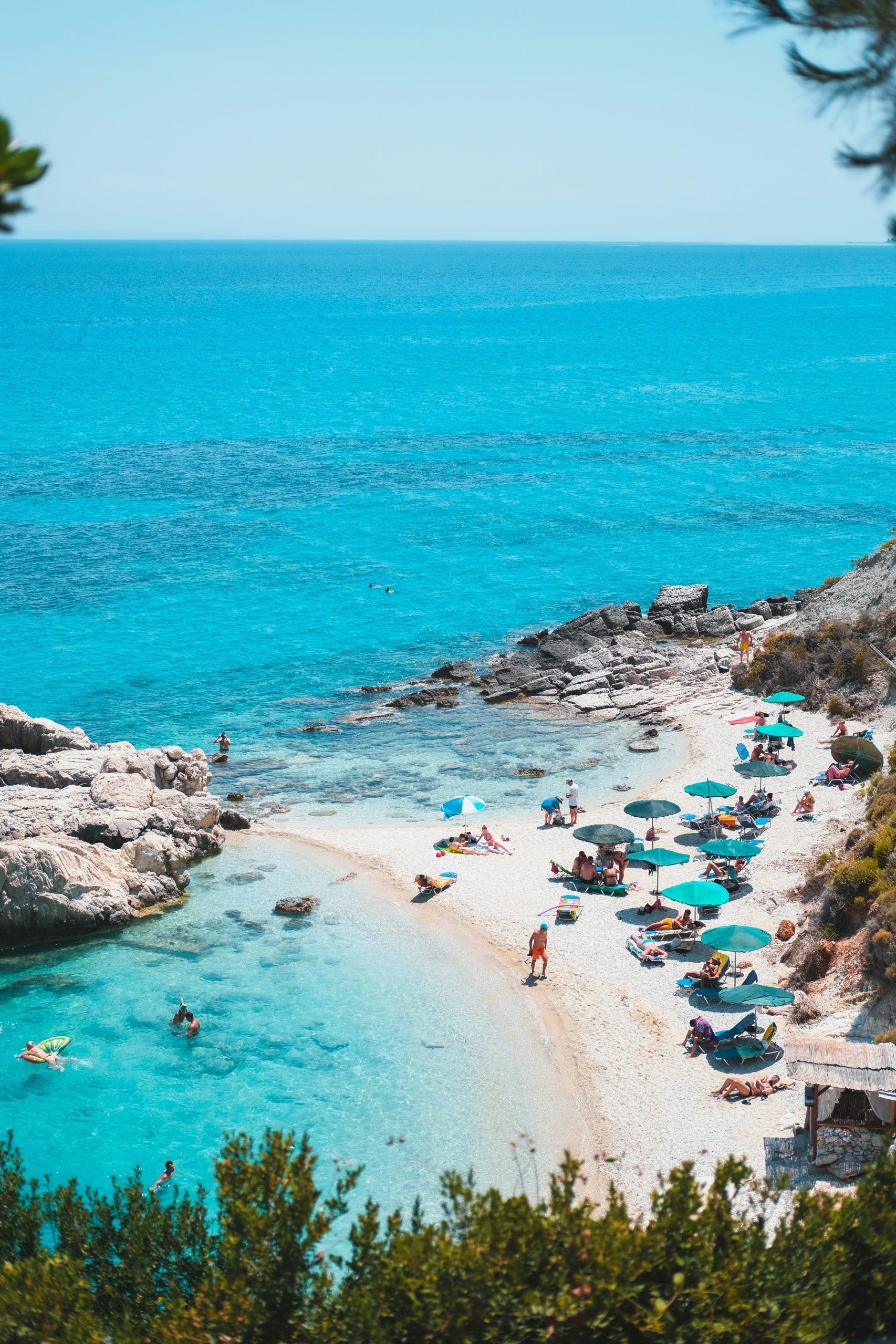
Where should you stay for Greece’s best beaches?
Real dorms are rarer on the islands than you’d think, so it pays to know where they are before you book your ferries. Here’s the route, base by base (checked on Hostelworld, October 2026).
Athens: your first and last night
Most island-hops start and end at Piraeus, so you’ll probably spend a night in Athens either side. It has the biggest choice, with about 50 hostels, and the best-rated ones are central. City Circus (9.5 from more than 3,700 reviews) and When in Athens Hostel (9.5, dorms from €17) are both a short walk from the old town.
Paros: the island with a hostel
Paros Backpackers is the only hostel with dorms we found on Hostelworld on this route (October 2026), so if you want a dorm and a social crowd between beaches, base yourself here and day-trip to Naxos. Book early in summer.
Mykonos: one night for the party
Mycocoon Hostel is Mykonos’s only listing with dorms, from €27. Everything else on the island is private rooms, so book it well ahead if Paradise is on your list.
Naxos, Milos and Crete
Naxos and Milos have no dorms on Hostelworld right now, but both have budget B&B rooms. In Chania on Crete, Cocoon City Hostel is the stand-out, rated 9.4, with dorms from €20.
Timing your trip around a festival or a big summer night? Check the Hostelworld Events page before you lock in your ferries.
Conclusion: Which Greek beach should you start with?
Start with whichever island your first ferry reaches, but if you want one pick, make it Plaka on Naxos: long, sandy, free and a cheap bus ride from town. That’s the whole idea behind this route. The best beaches in Greece for backpackers aren’t the most famous ones but the ones you can reach on a slow ferry and a local bus, with a dorm bed waiting at the end of the day.
Go in June or September for warm water and fewer crowds, as the Discover Cyclades weather guide suggests, and keep a spare day in case the summer wind cancels a crossing. Then lay your towel on the free sand and enjoy it.

 Get the App.
Comments