Jemaa el-Fna and Riad Zitoun
First-timers and social travellersRight on the main square and the lanes just south of it. Loud, central and full of hostels; everything is walkable.

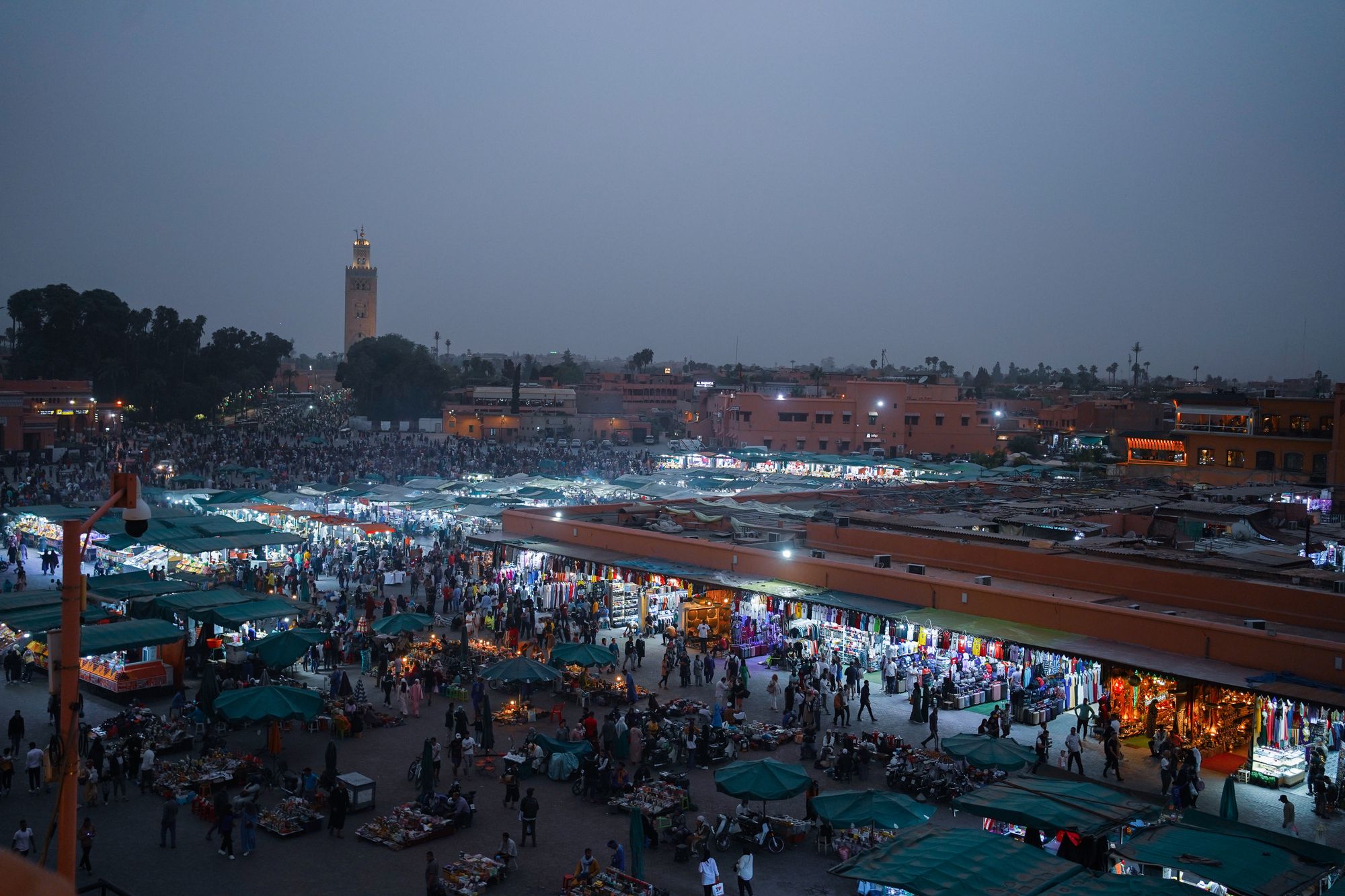
Marrakech is noisy, crowded, pushy and completely absorbing: snake charmers and smoking grills on Jemaa el-Fna, souks you will get lost in, and riad hostels with roof terraces from about €6 a night. Take the 30 MAD airport bus in, give it three or four days, and use it as your base for the Atlas, the desert and the coast.
For most people Marrakech is the start of a Morocco trip, and it is a deliberate shock to the system. The walled medina, a UNESCO site since 1985, is a tangle of lanes, scooters, donkey carts and shopfronts around one enormous square, Jemaa el-Fna. By day it is orange-juice stands and henna artists; from late afternoon it fills with food stalls, musicians, storytellers and crowds that stay until late.
It is also a city that takes a day or two to get used to. Touts, fake guides and persistent sellers are part of the deal, especially in the lanes north of the square. The trick is to walk with purpose, keep an offline map open, say a polite 'la, shukran' (no, thank you) and keep moving. Once you relax into it, Marrakech is friendly, funny and very easy to fall for.
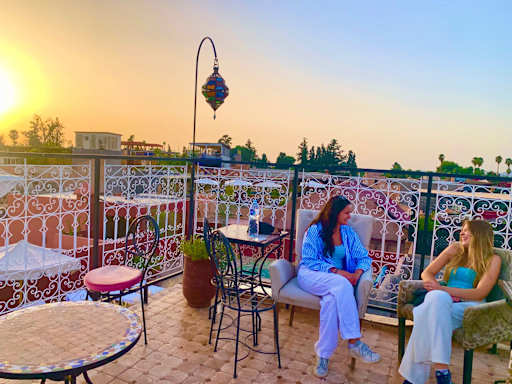
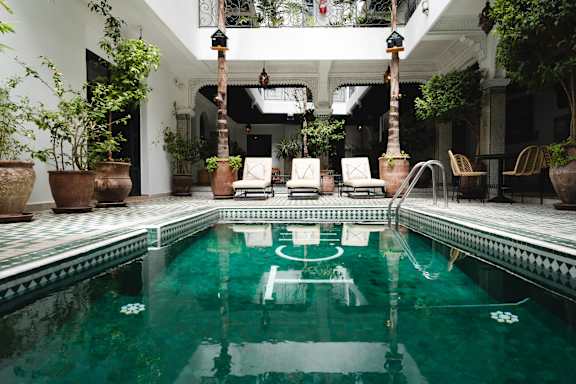
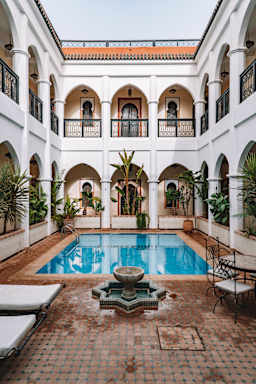
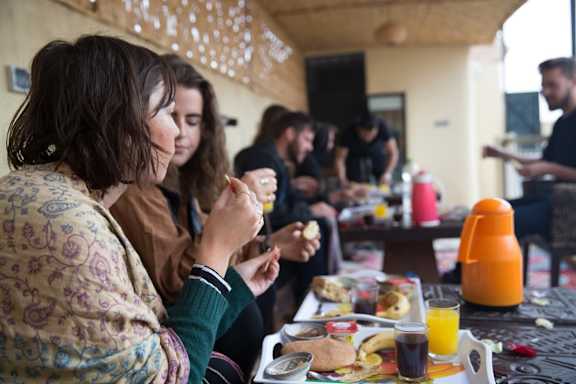
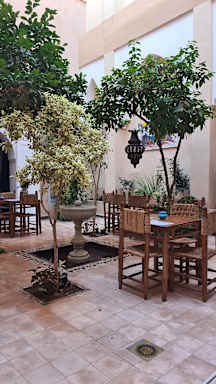
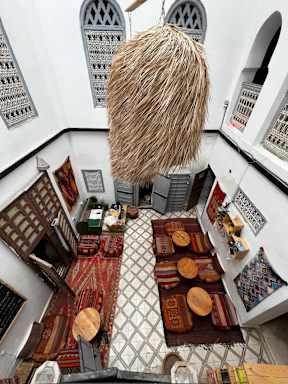
Almost every backpacker stays inside the medina, in a riad hostel: a traditional house built around a courtyard, usually with a roof terrace where breakfast is served. The medina is compact enough to walk, and most of the sights, from the Bahia Palace to the Saadian Tombs, are within 15 to 20 minutes of the square. The new town, Gueliz, is a 15- to 20-minute walk west along Avenue Mohammed V and is where you will find the train station, bars and supermarkets.
Three or four days is right for the city itself: a day for the medina and souks, a day for the palaces and gardens, an evening on Jemaa el-Fna, and a day trip to the Atlas or the Agafay desert. Add more if you are using Marrakech as a base for Imlil, Essaouira or a desert tour, which most people do.
Come between March and May or September and November if you can. Summer is brutal, with average highs of 36°C in July and August, while winter days are pleasant but nights drop to around 6°C, which feels colder in an unheated riad.
Stay inside the medina walls for atmosphere and walking distance to everything, or in Gueliz if you want wide streets, bars and the train station on your doorstep. These are the areas worth knowing.
Right on the main square and the lanes just south of it. Loud, central and full of hostels; everything is walkable.
North-west of the square in the heart of the souks, with fountains, small museums and some of the best-rated riad hostels.
Around the Saadian Tombs and Bab Agnaou, quieter than the souks with fewer touts, and close to Bab Er-Rob for grand taxis to the Atlas.
The old Jewish quarter beside the Bahia and El Badi palaces, with spice and jewellery markets and calmer evenings.
Northwest corner of the medina by the gate of the same name, with a busy local market and fewer tourists.
The French-built new town: wide avenues, supermarkets, bars and clubs, and a 15–20 minute walk to the medina.
Orange labels are neighbourhoods, dots are the 12 top-rated hostels. Map data from OpenStreetMap contributors.
Start on Jemaa el-Fna, the square at the heart of the medina. Come in the late afternoon, grab a fresh orange juice, then climb to one of the café terraces on the edge to watch the food stalls set up and the smoke rise as the sun drops behind the Koutoubia minaret. After dark, walk through the crowds of musicians, acrobats and storytellers. It is touristy, but it is also genuinely local: Marrakchi families come here every night too.
From the square, the souks spread north. Each lane used to have its own trade, and you can still find the dyers, metalworkers and leather sellers if you keep walking past the souvenir stalls. Go in the morning when it is quieter, and accept that you will get lost. The Ben Youssef Madrasa, a former Quranic school with a carved cedar and stucco courtyard, is the best single building in the medina, and Le Jardin Secret (around 100 MAD) is a restored riad garden with a tower you can climb for views over the rooftops.
South of the square are the palaces. The Bahia Palace is a 19th-century maze of painted ceilings and tiled courtyards; El Badi Palace is a huge ruin with storks nesting on the walls; and the Saadian Tombs hold richly decorated 16th-century mausoleums. Each costs 100 MAD (about €9) for foreign visitors, cash only, and opens roughly 09:00 to 17:00. Go at opening time to beat the tour groups.
In the new town, the Jardin Majorelle is the cobalt-blue garden once owned by Yves Saint Laurent. Tickets are sold online only at tickets.jardinmajorelle.com: 150 MAD for the garden, or 300 MAD including the Berber Museum and the YSL Museum. It opens 08:30 to 18:00 and is very busy, so book an early slot.
Then leave the city for a day: a cooking class, a sunset in the Agafay desert, or a morning walking through Atlas villages near Imlil. If you try a hot-air balloon or quad bike, the UK government advises using only licensed operators and wearing a helmet.
Marrakech's best show costs nothing. Jemaa el-Fna in the evening is free to wander, and you could spend every night there and see something different. Just do not stop to take photos of the snake charmers or monkey handlers unless you are happy to pay, and keep your hands to yourself when henna artists approach.
The souks are free too, and simply walking them is one of the city's great experiences. Head for Rahba Kedima, the old spice square, then keep going north into the dyers' and metalworkers' lanes. Window-shopping is fine as long as you are clear you are only looking; accepting tea in a carpet shop usually means sitting through a sales pitch.
For green space, the Koutoubia gardens around the city's landmark mosque are free and calm, and the minaret is lit up at night. Non-Muslims cannot enter the mosque, but the gardens and the view are the point. The Menara Gardens, with their olive groves and reflecting pool in front of a pavilion and the Atlas behind, are also free to walk around, and the Cyber Park on Avenue Mohammed V is a shady stop between the medina and Gueliz.
Walk the city walls. The medina's 12th-century ramparts run for kilometres, and the gates are worth seeking out, especially Bab Agnaou near the Kasbah and Bab Doukkala in the northwest. The Mellah, the old Jewish quarter, is quieter than the souks and has its own spice and jewellery markets.
Finally, use your hostel. Many Marrakech hostels run free city walks, shared dinners and rooftop evenings, and one of the best-reviewed, Hostel Riad Marrakech Rouge, lists a free city tour in its amenities.
Marrakech eats on the street and in small, cheap local places, and that is where you should eat too. Breakfast is msemen or meloui, flaky griddle breads with honey or argan oil, at 3 to 5 MAD each, or sfenj, a ring doughnut fried to order for 1 or 2 MAD. Bissara, a garlicky split-pea soup with olive oil and cumin, is a filling winter breakfast for 5 to 10 MAD.
The city's signature dish is tanjia, beef or lamb with preserved lemon and spices, packed into a clay urn and cooked slowly in the ashes of a hammam furnace. It is traditionally a men's dish for a day off, and a portion in a medina restaurant costs around 80 to 150 MAD. Tagine is on every menu: expect 50 to 100 MAD at a local restaurant and 160 to 360 MAD at a rooftop restaurant overlooking the square. Friday lunch means couscous, so look for neighbourhood places serving it around midday.
Jemaa el-Fna's evening food stalls are an experience, but go in with your eyes open. The numbered grills serve brochettes, fried fish and salads, with mixed plates around 80 to 150 MAD; smaller grills in the medina lanes charge 30 to 60 MAD for similar food. Snail soup (babbouch) from the carts costs 5 to 10 MAD at local stands and more at the tourist-facing ones. Always agree the price before you sit, check the bill against the menu, and send back anything you did not order.
Orange juice on the square costs 4 to 6 MAD by day if you ask the price first, and 10 MAD or more in the evening. Harira, the tomato, lentil and chickpea soup, costs 10 to 15 MAD and is how the city breaks the fast during Ramadan, when cafés close in the day and the streets explode with food at sunset.
Alcohol is only served in licensed places, mostly in Gueliz, Hivernage and hotels, and almost never in traditional medina eateries. Vegetarians should ask for dishes 'bila lahm' (without meat) and check that no meat stock is used.
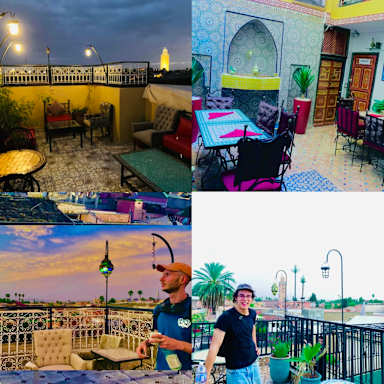
Marrakech has the liveliest nights in Morocco, but most of them are alcohol-free. The evening starts on Jemaa el-Fna, where the food stalls, Gnawa musicians and storytellers run until late, and many travellers never need anything more. Hostel rooftops fill the gap: shared dinners, music and shisha are standard, and they are the easiest place to meet people.
If you want a drink with a view, the medina has a handful of licensed rooftop bars and restaurants, several of them looking straight at the Koutoubia minaret. Some require you to order food as well as drinks, so ask before you sit down. Prices are much higher than in local cafés.
Gueliz, the new town, has a more ordinary bar scene. Café Livre on Rue Tarik Ben Ziad is a bar, restaurant and second-hand bookshop with a quiz on Mondays and live music and karaoke at weekends, and a beer there costs around 25 MAD. For cocktails, Barometre in Gueliz is known for its creative drinks.
Clubbing happens in Gueliz and the Hivernage hotel district. Theatro, on Rue Ibrahim El Mazini, opens from 23:30 to 05:00 with Afro, hip-hop and house and nightly shows. Most clubs have a smart dress code (trousers and collared shirts for men) and a cover charge, and taxis home after 21:00 cost about 50% more.
Drinking in the street is illegal, and the UK government warns about methanol in illicit alcohol, so stick to sealed bottles in licensed venues. During Ramadan many bars close or cut back their hours.
From Marrakech Menara Airport, the cheapest way into town is ALSA bus 19. It costs 30 MAD one way or 50 MAD return, paid in cash on board, runs roughly every 20 to 30 minutes from about 06:00 to 23:30, and stops at Gueliz and the train station before finishing at Jemaa el-Fna, about 20 to 40 minutes away. The stop is just outside arrivals. Luggage space is limited, so it is easier with a backpack than a big case.
Airport taxis are not usually metered. Expect to pay around 70 to 100 MAD to the medina or Gueliz by day and about 150 MAD after 20:00, and agree the total before you get in. Careem and inDrive also work, at roughly 70 to 100 MAD to the centre, though some drivers avoid terminal pickups. Many hostels arrange transfers; two of the best-rated charge €15 by day and €20 after 21:00, which is worth it for a late arrival because taxis cannot drive into most of the medina and riads are hard to find in the dark.
Inside the medina you walk. Everything from the souks to the Bahia Palace is within 15 to 20 minutes of Jemaa el-Fna. Watch out for scooters in the narrow lanes and download an offline map before you arrive, since street signs are rare.
For longer hops, use the beige petit taxis. Ask for the meter ('compteur') before you set off; a short medina hop should cost around 15 to 30 MAD and the medina to Gueliz 30 to 50 MAD, with about 50% extra at night. If a driver refuses the meter, take the next one. Petit taxis carry up to three passengers and drivers sometimes pick up others along the way.
Leaving town, trains depart from Marrakech station in Gueliz to Casablanca (about 2 hours 40 minutes), Rabat, Tangier and Fes. Supratours coaches leave from the terminal next to the station for Essaouira (about 3 hours) and Agadir (about 3½ hours). Shared grand taxis for Imlil and the Atlas leave from Bab Er-Rob, south of the Kasbah.
Marrakech is cheap to sleep and eat in, but easy to overspend in. In October 2026, €1 buys about 10.9 dirhams, so 100 MAD is roughly €9. Bring a card for ATMs, which are easy to find around Jemaa el-Fna and in Gueliz, and keep a stash of small notes and coins for juice stands, snacks and taxis.
Beds are the bargain. Dorms in Marrakech's top-rated hostels currently cost from about €6 to €17 a night, usually with breakfast, and many are in restored riads with roof terraces. Check whether the price includes the city tourist tax, which some hostels add per night.
Food can cost almost nothing or a lot. Street breakfast is a few dirhams, harira is about 10 to 15 MAD, and a tagine in a local medina restaurant is 50 to 100 MAD (€5 to €9). The same tagine on a rooftop facing the square can be 160 to 360 MAD. A beer in a Gueliz bar starts at around 25 MAD.
Sights add up fast. The Bahia Palace, El Badi Palace and Saadian Tombs are 100 MAD each (cash), the Jardin Majorelle is 150 MAD, or 300 MAD with its two museums (card, online only), and Le Jardin Secret is around 100 MAD. Do all of them and you have spent about €60 on tickets alone, so pick the two or three that interest you most.
Bargain in the souks, where first prices are inflated and walking away is part of the process, and agree prices up front for henna, photos, calèches and unmetered taxis. Tours booked through hostels are usually fairly priced, but compare exactly what is included, especially for multi-day desert trips.
Marrakech is not a dangerous city, but it is a hustling one, and nearly every traveller meets at least one scam. The good news is that they are well known and easy to sidestep once you recognise them.
The most common is the fake guide. Someone tells you the square is that way, the road is closed, or the palace is shut for prayer, then walks you through the lanes and either delivers you to a shop where he earns commission or demands 200 to 400 MAD at the end. Check opening hours yourself, keep walking towards your destination, and say no firmly. The lanes north of Jemaa el-Fna, leading into the souks, are where this happens most.
On the square itself, watch for henna artists who grab your hand and start drawing, then ask for 200 to 500 MAD, and for snake charmers and monkey handlers who put an animal on you for a photo and then demand payment. Keep your hands back and walk on. Some cafés and stalls around the square have one menu for locals and another for tourists, so check prices before you sit down.
Petty theft is the main physical risk. Pickpockets work the crowds on Jemaa el-Fna, and bag snatching from passing scooters happens in the medina, so wear your bag across your body and keep your phone in a front pocket. Avoid isolated lanes after midnight. The Kasbah and Mellah, south of the square, are noticeably calmer.
Women travelling alone get the most attention, from comments to people walking alongside you. Covering shoulders and knees reduces it, and ignoring rather than engaging works best. If anyone becomes aggressive or follows you, walk into a hotel, shop or hostel and ask for help, or look for the tourist police (Brigade Touristique) who patrol the medina. Police are on 19 (190 from a mobile) and ambulance on 15.
Marrakech is within a few hours of snowy peaks, a stony desert, waterfalls and the Atlantic. Grand taxis and coaches cover the closer trips; for the further ones a shared tour saves a lot of hassle.
Mountain village at 1,740 m with walks through walnut groves and Amazigh villages, and the trailhead for Toubkal (licensed guide required).
Terraced villages and river cafés, with a short scramble up to waterfalls at Setti Fatma. Busy at weekends.
Stony desert plateau with Atlas views, camel and quad rides and sunset dinners at camps. Not sand dunes, but close.
Windy, walkable UNESCO port town with fish grills and ramparts. Better as an overnight than a day trip.
Morocco's tallest waterfalls, about 110 m, with Barbary macaques on the paths and boats under the spray.
UNESCO-listed earth ksar over the Tizi n'Tichka pass. Long for a day; better as the first stop of a desert trip.
Marrakech hosts Morocco's main folk arts festival and an international film festival, and the city changes completely during Ramadan. These are the dates worth planning around.
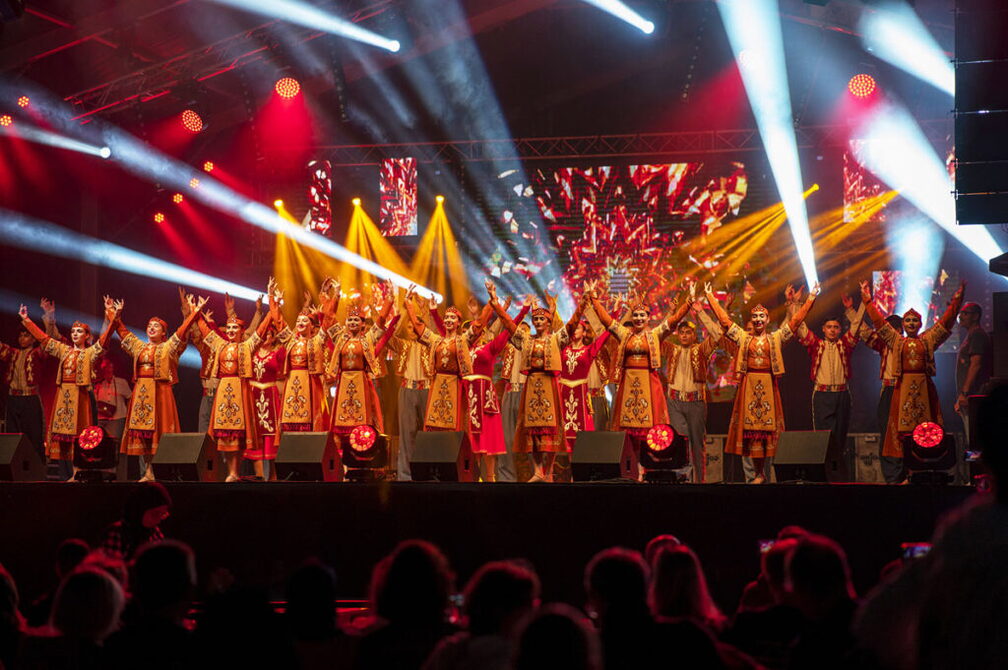 Staff pick
Marrakech Folklore Days in Marrakech, Morocco, is recognized as Africa’s largest traditional art festival, drawing folk artists and performers from across the globe. The…
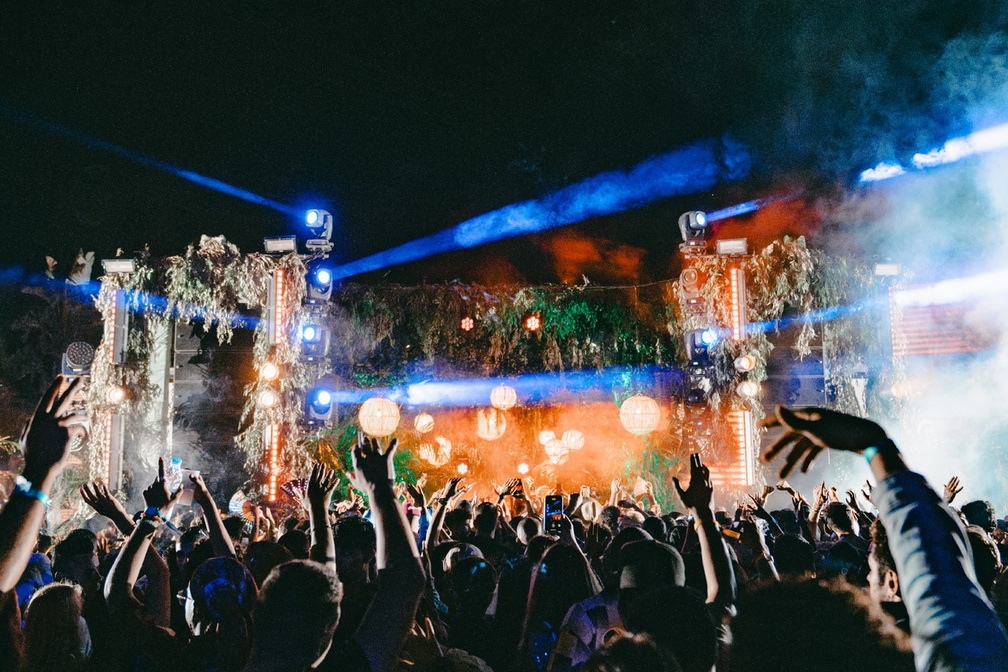 Staff pick
Cultivora Festival in Marrakech, Morocco, is a dynamic music event that blends cutting-edge sounds with the city’s rich cultural heritage. Attendees can expect an…
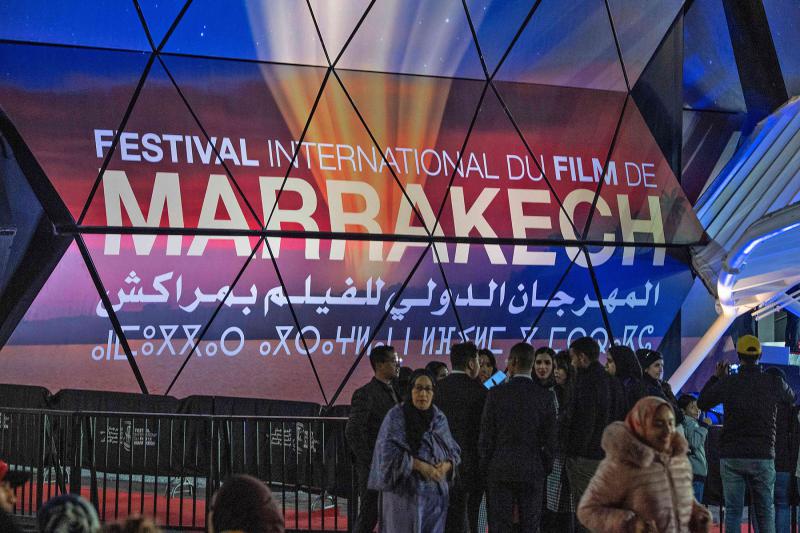 Staff pick
The Marrakech International Film Festival in Marrakech, Morocco, is a renowned celebration of global cinema, drawing filmmakers, actors, and cinephiles from around the world.…
 Staff pick
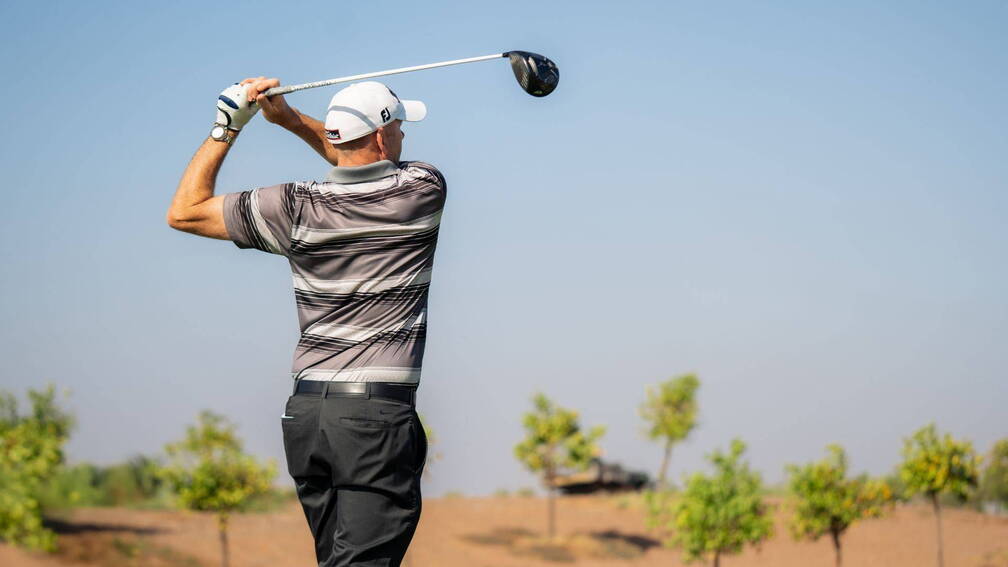
The Marrakech Golf Festival in Marrakech, Morocco, brings together amateur golfers from around the world for a week of competition and cultural immersion. Participants…
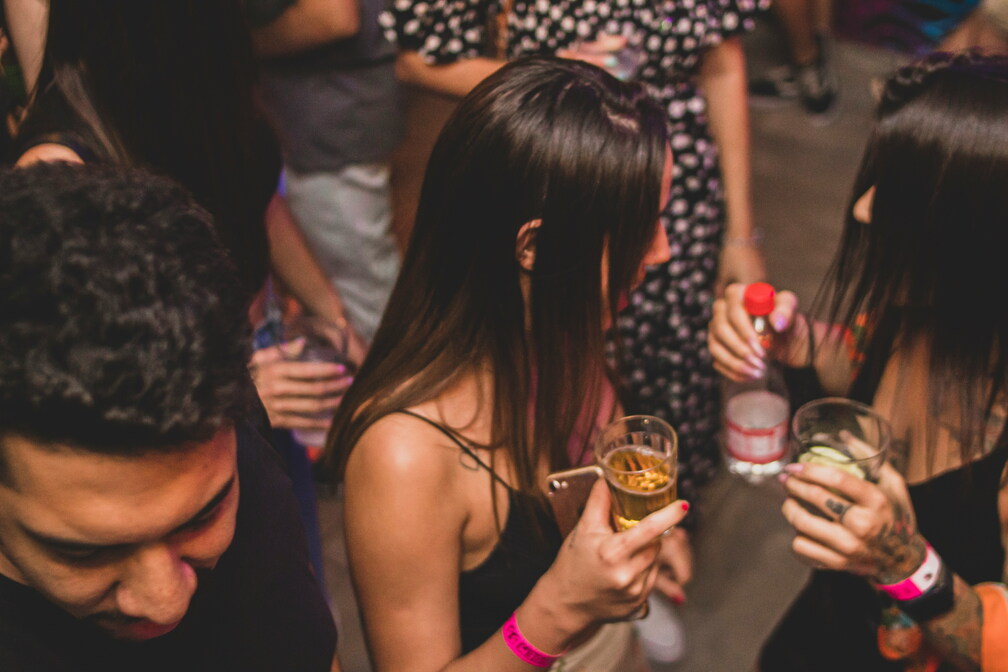
GLITCHED has grown from a series of events into a full-blown community, shaped by the dancers, artists, and crews who show up each time.…
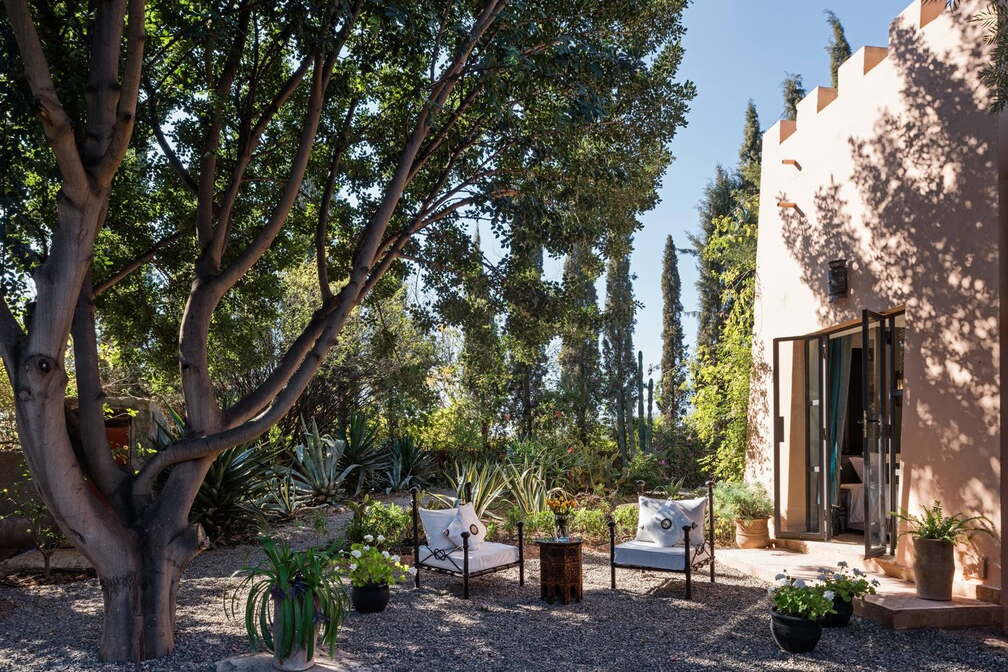
A palm-fringed villa in Marrakesh sets the stage for this wellness retreat led by Natalie Nardi, blending daily yoga classes with Moroccan culture and…
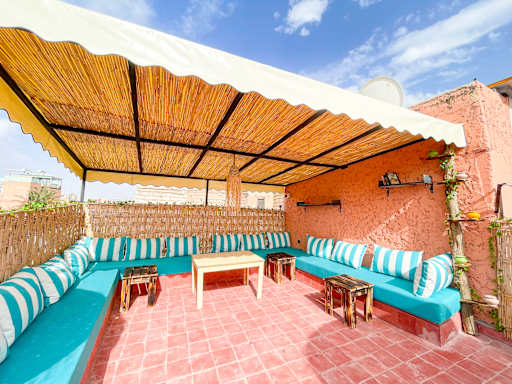
Marrakech hostels are mostly converted riads: dorms around a courtyard, a roof terrace, free breakfast and staff who will book your desert trip. Live prices and ratings below.
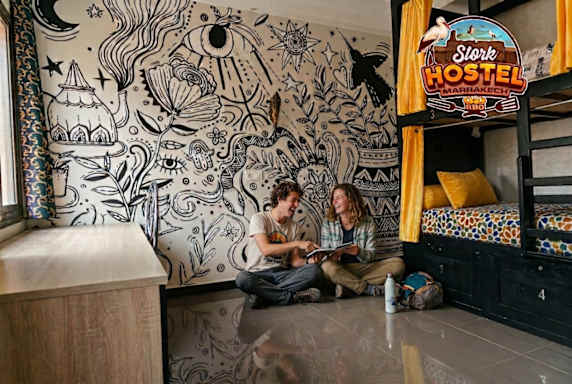
Over 9,600 reviews, a roof terrace and Berber tent, free breakfast and a free city tour, two minutes from Jemaa el-Fna.
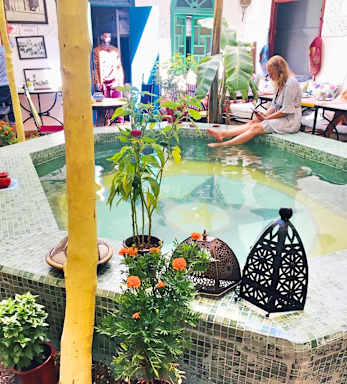
Courtyard pool open 10:00–18:00, a rooftop bar and hammam, in Mouassine about 300 m from the square.
Courtyard fountains, a terrace garden, air-conditioned rooms and free breakfast, five minutes from the square; staff score 9.6.
Spring and autumn are perfect: mid-20s by day, cool nights and the Atlas still white in early spring. Summer is very hot and quieter, winter is bright and cool, and Christmas and Easter bring the crowds.
Average daily highs for Marrakech from weather2travel climate data. Nights are much colder than the highs suggest from November to March (around 6°C in December and January). Crowd levels are our own rough estimate. Ramadan and Eid dates depend on the moon and move about 11 days earlier each year.
Choose a style and a number of nights for a rough total. Figures are per person per day in euros: a bed, food, local transport, and sights or activities.
Rough 2026 figures at about €1 = 10.9 MAD. Day trips and desert tours are extra, and the airport transfer (30 MAD by bus, 70–150 MAD by taxi) is a one-off.
Prices and timetables were checked in October 2026 and change often. Confirm the essentials before you travel.

Compare Marrakech hostels — live prices, real reviews and free cancellation on most bookings. Then meet the people already there in the app.

 Get the App.

 Get the App.