Houmt Souk
First-timers and social travellersThe island's capital, with covered souks, café squares, the fort and most of the hostels and transport.

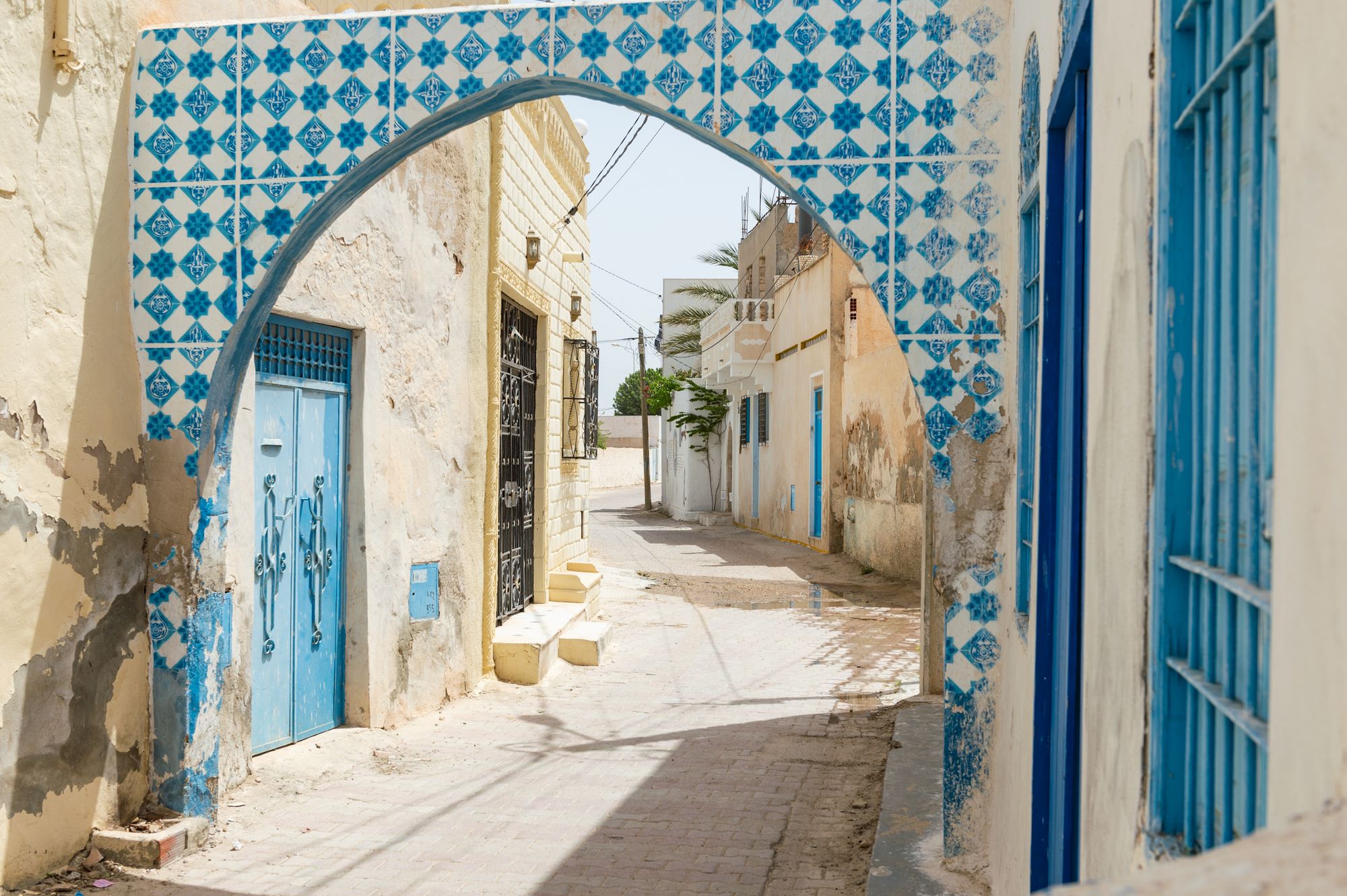
Djerba is a flat, sunny island off Tunisia's south coast with whitewashed villages, palm groves, long beaches and a street-art village called Djerbahood. It's an easy place to slow down for a few days, and the best base for trips to the troglodyte houses of Matmata and the ksour of the south.
Djerba is the largest island in North Africa, about 25 km across, linked to the mainland by a ferry at Ajim and a Roman-era causeway to Zarzis. It has been inhabited for thousands of years, and in Homer's Odyssey it is often identified as the island of the lotus-eaters. In 2023 UNESCO listed the island for its distinctive pattern of settlement: scattered farmsteads, small fortress-like mosques and villages spread across the countryside.
Djerba has a mix of cultures found nowhere else in Tunisia. Berber Ibadi Muslims, Arabs and one of the oldest Jewish communities in the Arab world have lived here side by side for centuries, and the El Ghriba synagogue, said to date back more than 2,000 years, is still a place of pilgrimage.
The island's capital, Houmt Souk, is a lively market town with whitewashed lanes, covered souks, cafés and an old Spanish-Ottoman fort by the sea. A few kilometres south, the village of Erriadh became Djerbahood in 2014, when more than a hundred street artists from around the world painted its walls.
The east coast, from Sidi Mahrez to Aghir, is the hotel zone, with long sandy beaches and big resorts. Elsewhere, the island is quiet: olive and palm groves, pottery workshops in Guellala, flamingos on the lagoons and very little traffic.
Three or four nights is a good stay: a day for Houmt Souk and Djerbahood, a day for the beach, and a day trip to the mainland. Djerba is also a natural stop on the way between the coast and the Sahara.
Houmt Souk is the best base for independent travellers, with the souks, cafés and transport. Erriadh is quieter and arty, the east coast is for the beach, and Midoun is a market town close to the hotel zone.
The island's capital, with covered souks, café squares, the fort and most of the hostels and transport.
Village south of Houmt Souk covered in street art, next to El Ghriba synagogue.
Market town in the east, close to the hotel zone beaches.
Long sandy beaches on the north-east coast, lined with resorts and hotel bars.
Pottery village in the south-west, with workshops and the heritage museum.
Orange labels are neighbourhoods, dots are the 4 top-rated hostels. Map data from OpenStreetMap contributors.
Start in Houmt Souk. Wander the covered souks for pottery, blankets and silver, sit in one of the café squares, and walk to Borj el Kebir, the 15th-century fort by the sea, rebuilt by the Ottoman corsair Dragut in the 16th century. In the mornings, the fish auction near the market is a loud, local show.
Next, head to Erriadh, about 7 km south, to see Djerbahood. In 2014 a project brought artists from more than 30 countries to paint the village's walls, doors and domes, and many of the murals are still there, set among white houses and courtyards. Walk the lanes slowly and respect that people live here.
On the edge of Erriadh is El Ghriba, the oldest synagogue in Africa according to tradition, with a richly tiled interior. It is usually open to visitors, with security checks; dress modestly and cover your head. In 2023 a shooting near the synagogue during the annual pilgrimage killed five people, and security has been heavy since.
In the south-west, Guellala is the island's pottery village, with workshops where you can watch potters at the wheel, and a heritage museum on Djerban traditions on the hill above.
For the beach, the east coast between Sidi Mahrez and Aghir has long stretches of fine sand, and is busiest in summer. Boat trips run to Ras Rmel, a sandy spit known as Flamingo Island, where you may see flamingos on the lagoon.
Djerba is also great for cycling. The island is flat, distances are short and many guesthouses rent bikes.
Djerba is cheap to enjoy. Walking Houmt Souk's lanes and souks is free, and the market squares are good places to watch island life over a coffee.
Djerbahood is an open-air gallery, free to wander at any time. Go early in the morning or late afternoon, when the light is soft and it is cooler.
The beaches are free. The east coast has long public stretches between the hotels, and quieter beaches lie towards the south and west.
Look for the island's small white mosques, many of them low, fortified buildings unique to Djerba, scattered in the countryside. You can see them from outside on a bike ride.
Watch the boats come in at the harbour in Houmt Souk in the late afternoon, and catch the sunset from the coast road west of town.
Djerba's food is coastal and simple. Grilled fish and octopus are on every menu, and riz djerbien, a fragrant rice steamed with fish or chicken, vegetables and herbs, is the island's own dish. Couscous with fish is the other speciality.
In Houmt Souk, cheap snack bars and small restaurants serve brik, lablabi, ojja and casse-croûte sandwiches for a few dinars, and the restaurants around the market squares grill fresh fish by the kilo. Ask the price before you order.
Djerba is also known for its sweets and dried fruit, and the souks sell dates, almonds and pastries.
A local meal costs around 8 to 15 TND, and a fish dinner around 25 to 45 TND, depending on the fish and the weight. The hotel zone is more expensive.
Alcohol is available in the resort hotels and some restaurants and shops, and Djerba is one of the places in Tunisia where you can also find boukha, the fig spirit made by the island's Jewish community.
Djerba is a quiet island at night, and that is part of its charm. In Houmt Souk, evenings are spent in the café squares, with mint tea and shisha, and families walking around the souks until late.
Most bars and clubs are in the resort hotels along the east coast, from Sidi Mahrez to Aghir, and they are busiest from June to September. Some hotels sell evening passes to non-guests.
Midoun has a few bars and an evening market atmosphere on some days, and is close to the hotel zone.
During Ramadan, the island comes alive after sunset, with busy cafés and food stalls.
Taxis are the easiest way around at night. Agree the fare or insist on the meter.
Djerba–Zarzis International Airport is about 8 km from Houmt Souk. Tunisair Express flies from Tunis in about an hour, and there are also international flights, especially in summer. A taxi into Houmt Souk costs a few dinars.
By road from Tunis, louages cost around 40 to 55 TND including the ferry, and SNTRI buses around 28 to 35 TND. The trip takes most of a day. From Gabès, Medenine or Tataouine, louages run regularly.
Coming from the north or west, you will usually cross by the car ferry from Jorf to Ajim, which takes about 15 minutes and costs foot passengers less than 1 TND. From the south, the El Kantara causeway connects the island to Zarzis.
On the island, taxis are cheap and are the easiest way around. Local buses connect Houmt Souk with Midoun, Ajim, Guellala and the hotel zone, but they are slow and infrequent.
Djerba is flat, so bikes and scooters are a great way to explore. Many guesthouses and shops in Houmt Souk rent them by the day.
Djerba can be cheap or expensive, depending on where you stay. Hostelworld lists dorm beds from about US$15 to US$20 in Houmt Souk and Djerbahood, and coliving spaces from about US$30. Local pensions cost about 60 to 90 TND a room, while the beach resorts cost much more, though all-inclusive deals can be good value out of season.
Food is cheap in Houmt Souk: a snack or brik costs a few dinars, a local meal 8 to 15 TND and a fish dinner 25 to 45 TND.
Transport is cheap too. Taxis cost a few dinars, the Jorf–Ajim ferry less than 1 TND, and bike hire is a few dinars a day.
The biggest costs are day trips to the mainland. A guided day tour to Matmata or the ksour, or a 4x4 trip to Ksar Ghilane, costs much more than doing it by louage, but saves a lot of time.
At about 3.37 TND to €1, an independent budget day comes to around €25 to €35.
Djerba is relaxed and safe for most visitors. The main security concern is terrorism: in 2023, a gunman killed five people near the El Ghriba synagogue during the annual pilgrimage. Security around the synagogue and during the pilgrimage is very tight, and you should follow instructions at checkpoints.
Day to day, problems are minor: pushy sellers in the souks, taxi drivers overcharging and occasional theft from beaches. Agree prices, keep valuables in your room and watch your bag in crowded places.
Women may get unwanted attention, particularly on beaches and in summer.
If you travel to the mainland, check the latest advice. The UK advises against all travel to Ben Guerdane and within 20 km of the Libyan border, and against all but essential travel within 75 km of the border, although Zarzis and the areas of Medenine Governorate north of the C118 road are excluded. Matmata, Chenini and Tataouine are outside these zones, but check before you go.
Sun and heat are real risks in summer. Drink plenty of water and avoid cycling in the middle of the day.
Djerba is the gateway to the south: Matmata's underground homes, the hilltop Berber village of Chenini, the ksour around Tataouine and the dunes and hot spring of Ksar Ghilane.
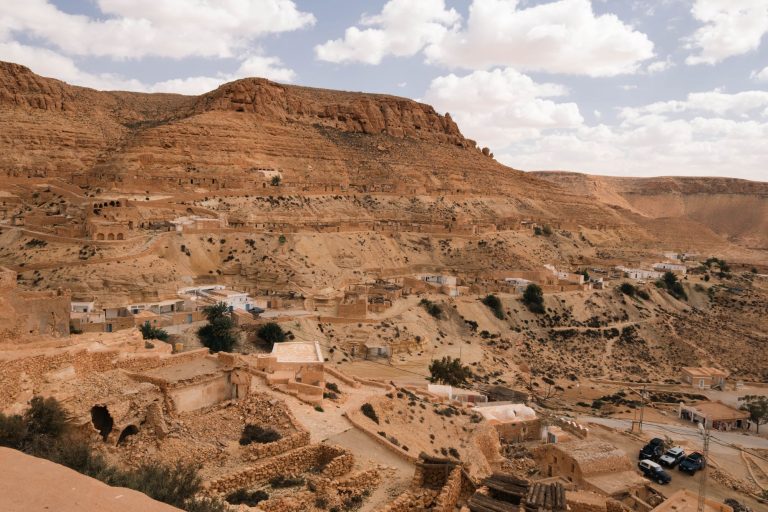
Berber village of underground troglodyte houses, including the Hotel Sidi Driss, Luke Skywalker's home in Star Wars.
Hilltop Berber village of stone houses and granaries carved into the ridge.
Fortified granary of vaulted rooms stacked four storeys high, used in Star Wars.
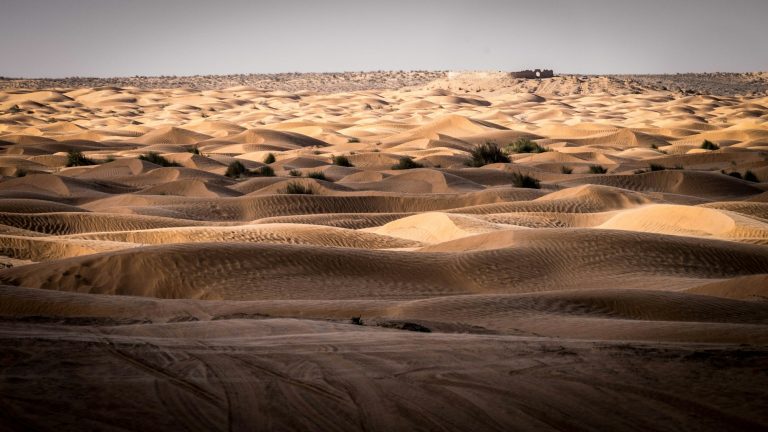
Oasis with a hot spring at the edge of the Grand Erg Oriental dunes. Best as an overnight.
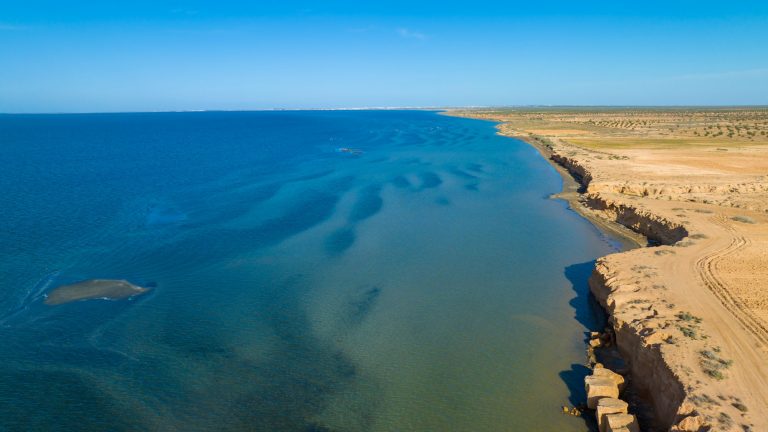
Quieter mainland beach town with olive groves and a small port.
Djerba's calendar is shaped by the El Ghriba pilgrimage in spring, summer festivals in the hotel zone and the religious holidays.
Quiet days and lively evenings in Houmt Souk after sunset.
The annual Jewish pilgrimage to the synagogue, with processions and very tight security.
End of Ramadan; some shops close for a day or two.
Public holiday in peak beach season.
Local summer festivals with music and traditional performances.
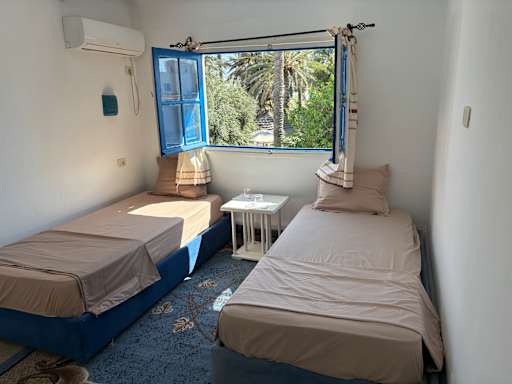
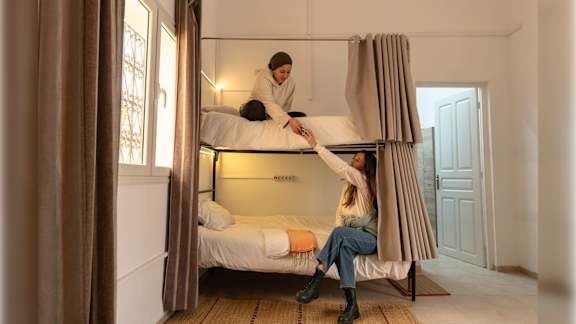
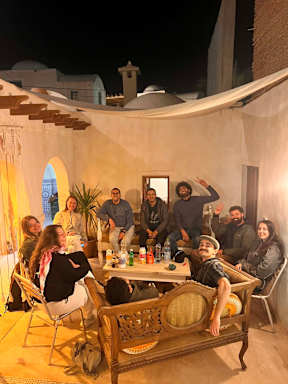
Djerba's hostels are new, small and social, in Houmt Souk and around Djerbahood, plus a coliving space for longer stays. Most include breakfast and rent bikes.
Rated 9.6 from 80 reviews, a modern hostel in the Djerbahood area, with dorms and cheap private rooms.
The sister hostel in Houmt Souk, rated 9.3 from a handful of reviews, close to the souks and transport.
Rated 9.8 from 25 reviews, a coliving space for digital nomads and remote workers in the centre of the island.
Djerba is sunny all year, with highs from about 16°C in winter to 32°C in summer and very little rain. Spring and autumn are perfect for exploring and day trips south; July and August are hot and busy, and the sea is warmest in August.
Highs from weather2travel's Djerba climate data (16°C in January, 32°C in July and August, 18°C in December); the months in between are rounded estimates. Crowd levels are our rough guide.
Pick a style and a number of nights for a rough total, per person, in euros.
Estimates. Beds are based on Hostelworld's listed prices for Djerba in October 2026; doing includes bike hire and one day trip to the mainland.
Prices and timetables change. Check before you travel.

Compare Djerba hostels: live prices, real reviews and free cancellation on most bookings. Then meet the people already there in the app.

 Get the App.

 Get the App.