Tunisia
Tunisia country guide

Tunisia Travel Guide

Tunisia packs Roman amphitheatres, UNESCO medinas, Saharan dunes and Mediterranean beaches into a country you can cross in a day by louage. It's two to three hours' flight from most of Europe, visa-free for most visitors, and one of the best-value trips in the Mediterranean. Give it ten days to two weeks.

9
UNESCO World Heritage sites
€25–40
A typical backpacker day
2h45
Flight from London to Tunis
Apr–Jun
Best months, with Sep–Oct

What travelling Tunisia is actually like

Tunisia is the smallest country in North Africa and one of the easiest to travel. Distances are short, transport is cheap and frequent, and in two weeks you can go from the medina of Tunis and the ruins of Carthage to the Roman amphitheatre at El Jem, the island of Djerba and the edge of the Sahara.

Many people know Tunisia for its beach resorts at Sousse, Hammamet and Djerba, and you can certainly have that holiday. But independent travellers get a much richer country: nine UNESCO World Heritage sites, the holy city of Kairouan, Berber villages carved into hillsides, palm oases and the film sets where Star Wars was shot.

Tunisia feels Mediterranean and North African at once. French is widely spoken alongside Tunisian Arabic, cafés are full of men drinking coffee and mint tea, women's rights are stronger than elsewhere in the region, and alcohol is easy to find in cities and resorts. It is also a Muslim country, more conservative away from the coast, so dress modestly in medinas and villages.

Prices are low. Beds cost less than in Morocco, food is cheap and good, and a long louage trip costs a few euros. Hostels are still few, with Hostelworld listing a dozen or so, mainly in Tunis, Djerba and Sousse, so you will also use small guesthouses and budget hotels.

The main things to plan around are the summer heat, which is fierce in the south, and the security situation near the Algerian and Libyan borders, where governments advise against travel. The usual tourist route avoids those areas.

Where to go in Tunisia

Most routes start in Tunis, run down the coast through Sousse, El Jem and Sfax, then turn south to Djerba and the desert oases. These are the stops that earn their place, with live hostel counts and dorm prices from Hostelworld.

Tunis

Tunis

6 hostels

The capital: a UNESCO medina, the Bardo mosaics and the TGM out to Carthage, Sidi Bou Said and La Marsa. Most trips start here.

Pros: - Lots of interesting history and well preserved historical sites - Good food, especially if you like spicy dishes - Friendly and helpful people - Dry and sunny most days Cons: - Can get very hot - Heavy reliance on taxis

A traveller, on Hostelworld
The Tunis guide
Sousse

Sousse

3 hostels

Beach city with a walled UNESCO medina and Ribat, two hours from Tunis by train. The easy base for El Jem, Monastir and Kairouan.

The Sousse guide
Djerba

Djerba

4 hostels

Island in the south with beaches, the street art of Djerbahood, the El Ghriba synagogue and the souks of Houmt Souk.

The Djerba guide
Tozeur

Tozeur

Palm oasis on the edge of the Chott el Djerid, with brick-patterned old town, mountain oases and Star Wars sets nearby.

The Tozeur guide

Pick your kind of Tunisia trip

Tunisia works for very different trips. Choose one or two of these and build the route around them, rather than trying to see the whole country in a week.

Roman ruins and history in Tunisia

Walk through Carthage, the arena of El Jem and the hillside Roman town of Dougga, then see their mosaics in the Bardo.

What to do

  • El Jem amphitheatre
  • Carthage ruins
  • Bardo mosaics
  • Dougga
  • Kerkouane

Spots to visit

  • El Jem
  • Carthage
  • Dougga
  • Bardo Museum
  • Kerkouane

Best cities for it

Things to do

Roman ruins, medinas and the edge of the Sahara

Start with history, because Tunisia has more of it than its size suggests. The ruins of Carthage, the Phoenician city destroyed by Rome in 146 BC and rebuilt as a Roman capital, are scattered across the suburbs north of Tunis and reached on the cheap TGM light railway. Nearby, the Bardo Museum holds one of the world's greatest collections of Roman mosaics. Further inland, Dougga is a remarkably complete Roman town on a hillside, and usually almost empty.

The amphitheatre at El Jem is the big one: a Roman arena for around 35,000 spectators rising out of a small town, and one of the best-preserved in the world. Foreign visitors pay 20 TND, and it is an easy day trip by train from Sousse or Tunis.

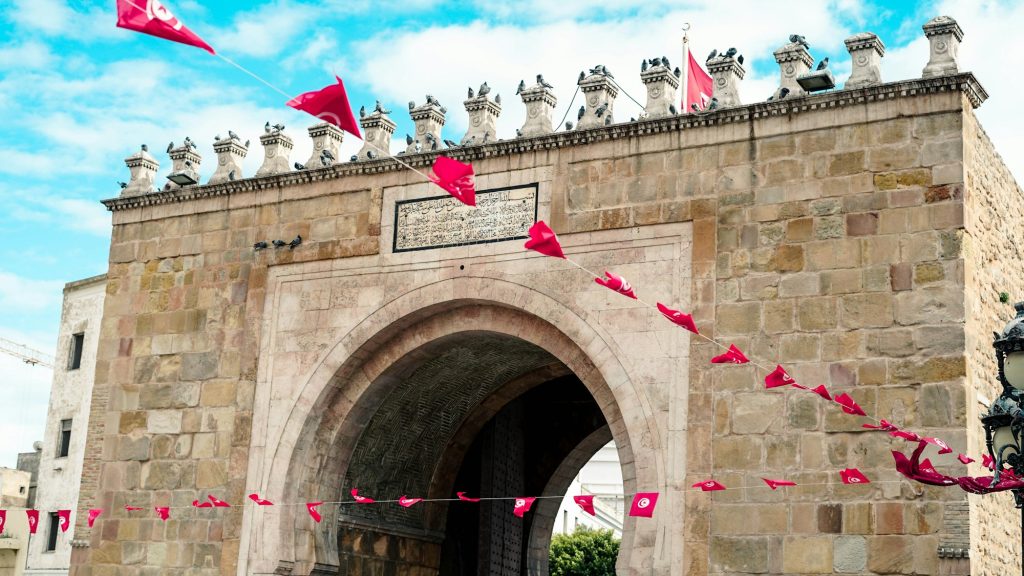
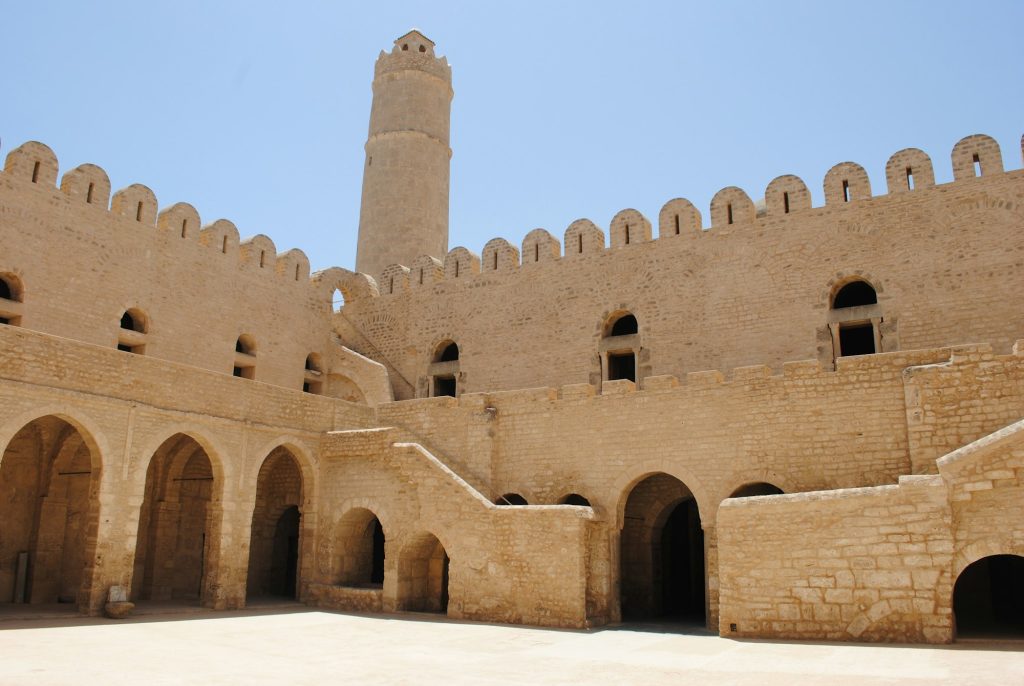
The medinas are the other highlight. The medina of Tunis, a UNESCO site, is a working old city of souks, mosques and palaces around the Zitouna Mosque. Sousse's walled medina, with its fortress-like Ribat, sits right next to the beach. Kairouan, the fourth holiest city in Islam for many Muslims, has the Great Mosque and lanes of carpet shops.

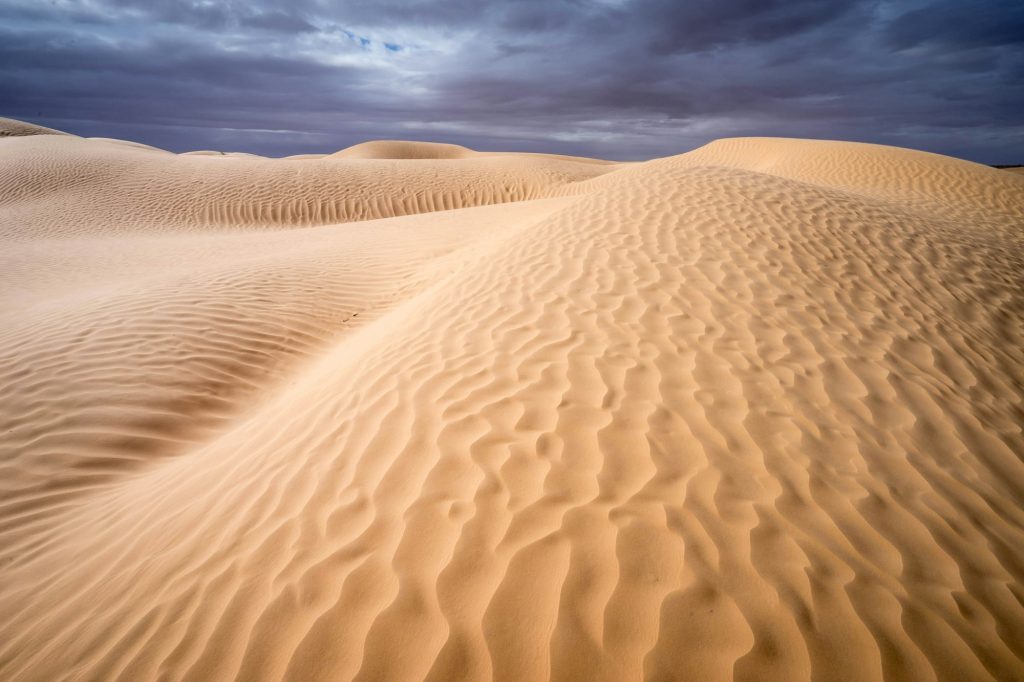
Head south for the desert. Douz is the gateway to the dunes of the Grand Erg Oriental, with camel treks and nights in desert camps, and Ksar Ghilane has a hot spring at the edge of the sand. Matmata's troglodyte houses and the ksour, fortified granaries, around Tataouine show how Berber communities lived in the heat. Around Tozeur, the mountain oases of Chebika and Tamerza and the salt flat of Chott el Djerid are some of the most dramatic landscapes in North Africa, though Tamerza and Mides sit within 10 km of the Algerian border, where the UK advises against all but essential travel.

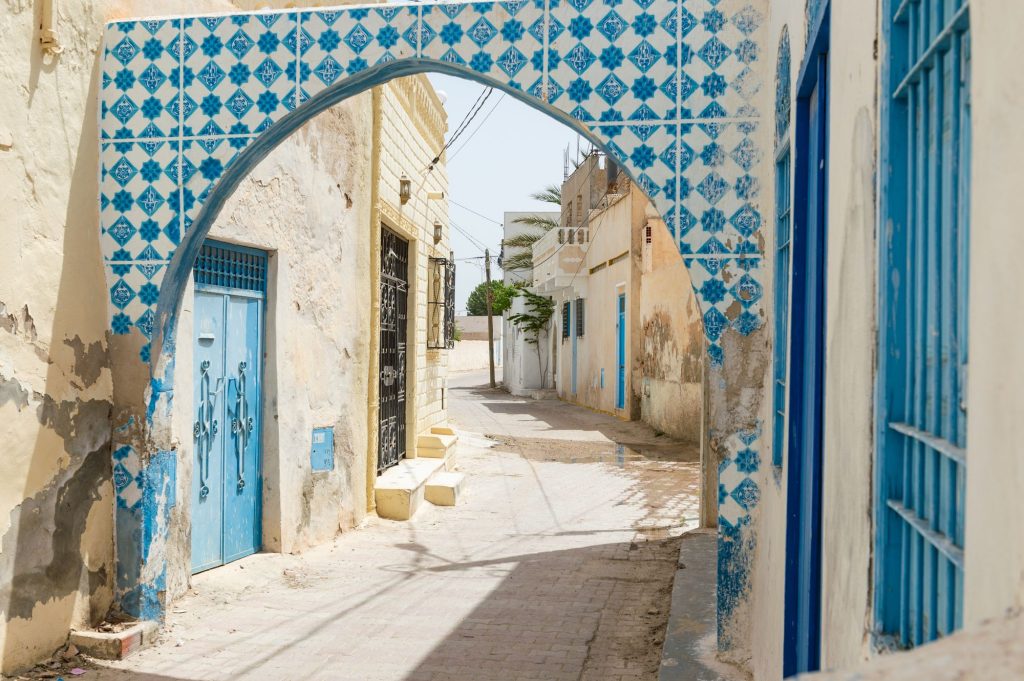
To finish, Djerba has beaches, a lively old town, the street art of Djerbahood and the ancient El Ghriba synagogue.

Food and drink

Brik, couscous and a lot of harissa

Tunisian food is the spiciest in North Africa, thanks to harissa, the chilli paste served with bread at almost every meal. Start with brik, a crisp fried pastry usually filled with egg, tuna and parsley, which costs about 1.5 to 2.5 TND from a street stall. Eat it carefully: the yolk should still be runny.

Couscous is the national dish, steamed semolina with lamb, fish or vegetables, and a plate in a local restaurant costs around 8 to 15 TND. Lablabi, a chickpea soup poured over bread with cumin, harissa and an egg, is the cheap, filling breakfast of choice, at around 3 to 5 TND. Ojja, eggs cooked in a spicy tomato and pepper sauce, often with merguez, is another favourite.

Salads are good: salade méchouia is grilled peppers, tomatoes and garlic mashed with olive oil, and Tunisian olive oil is excellent. On the coast, grilled fish is fresh and cheap. For snacks, look for fricassé, small fried sandwiches of tuna, egg and olives.

Sweets are a speciality. Kairouan is famous for makroudh, semolina cakes with dates, and Sidi Bou Said for bambalouni, sugared doughnuts. Mint tea is often served with pine nuts.

Alcohol is legal and available. Celtia is the national beer, Tunisian wine is good value, and boukha is a strong fig spirit. Supermarkets don't sell alcohol on Fridays, and sales are restricted during Ramadan outside the resorts.

Nightlife

Cafés, rooftops and summer clubs

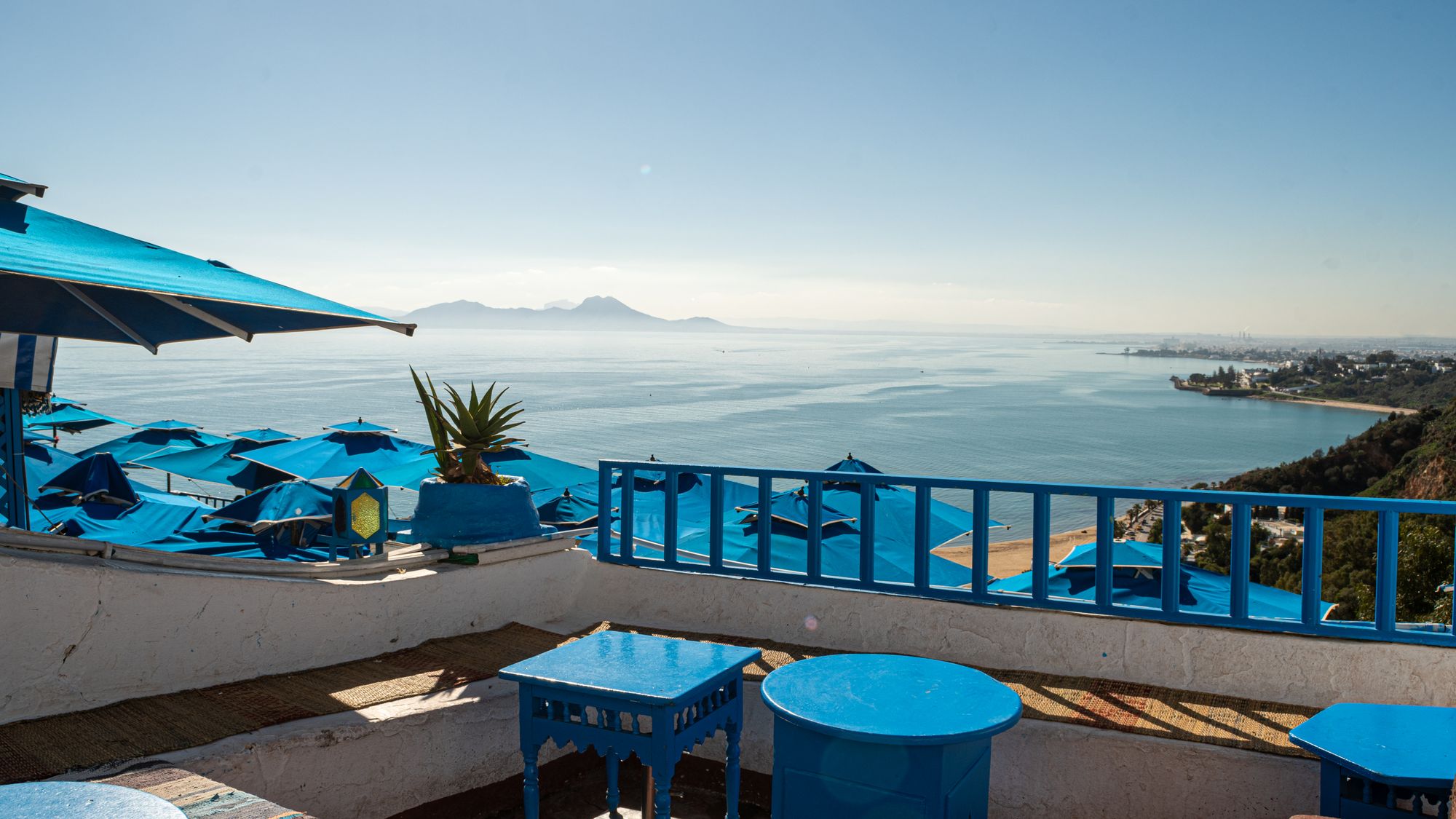
Most Tunisian evenings are spent in cafés, not bars. Café terraces fill up after sunset with coffee, mint tea and shisha, and during Ramadan the cities come alive late into the night after the fast is broken. It is the most authentic night out in the country, and costs a couple of dinars.

For bars and clubs, head to the coast north of Tunis. La Marsa and Gammarth have bars, beach clubs and nightclubs, busiest in summer. In the resort areas, Sousse's Port El Kantaoui, Hammamet's Yasmine and the hotel zone on Djerba have bars and clubs aimed at tourists, especially from June to September.

Summer is festival season. The Carthage International Festival brings concerts to the Roman theatre in July and August, and Hammamet and other towns run their own summer programmes.

Alcohol is served in licensed bars, hotels and restaurants, and inside the medinas it is rare. Supermarkets don't sell it on Fridays, and during Ramadan sales are banned outside the resorts. Drink only sealed, branded drinks, as Australian advice warns about methanol in poor-quality alcohol.

Getting around

Louages, trains and the TGM

Louages, shared minibuses, are the backbone of Tunisian travel. They run between almost every pair of towns from a louage station, leave when all eight seats are full and cost a few dinars more than the bus. Tunis to Sousse costs around 10 to 14 TND, Tunis to Tozeur 35 to 45 TND and Tunis to Djerba 40 to 55 TND including the ferry. Get there in the morning, when they fill fastest.

The SNCFT railway runs down the coast from Tunis to Sousse (about two hours, roughly 10 to 12 TND), El Jem, Sfax and Gabès, plus lines inland. Trains are cheap and comfortable, but can run late. The Métro du Sahel connects Sousse, Monastir and Mahdia. Rail services to Tozeur have been disrupted, with trains running only as far as Metlaoui, so check before relying on them.

SNTRI buses run long distances, such as Tunis to Djerba for around 28 to 35 TND, and are fine for overnight trips. Tunisair Express flies from Tunis to Djerba and Tozeur, which saves a long day on the road.

In Tunis, the TGM light railway runs from Tunis Marine to Carthage, Sidi Bou Said and La Marsa for about 1 TND, and the métro léger covers the city. Yellow taxis are metered and cheap: insist on the meter, and expect a surcharge at night.

To arrive by sea, ferries sail to Tunis from Marseille and Genoa, as well as from other Italian ports. Driving is possible, but checkpoints are common and night driving outside towns is risky.

Costs

What Tunisia costs in 2026

Tunisia uses the dinar (TND). In October 2026, €1 buys about 3.37 TND, so 10 TND is roughly €3. The dinar is a closed currency: you cannot buy it before you travel, and you cannot take it out of the country, so change only what you need and keep your exchange receipts.

Tunisia is good value. Hostelworld dorm beds run from about US$15 to US$20 a night in Tunis, Sousse and Djerba, and small medina guesthouses from around 35 to 60 TND for a room. Street food such as brik and lablabi costs a few dinars, a local couscous 8 to 15 TND, and a mid-range meal around 20 to 35 TND.

Transport is cheap too. The TGM to Carthage is about 1 TND, the train from Tunis to Sousse about 10 to 12 TND, and a louage across the country rarely more than 55 TND.

Sights cost more than you might expect. El Jem charges foreign visitors 20 TND, and the Bardo and Carthage are in the 10 to 18 TND range. A Sahara tour from Douz is the biggest extra.

ATMs are easy to find in towns, and cards work in larger hotels and shops, but carry cash for louages, cafés and souks. Many hotels also collect a tourist tax per night.

Safety

Staying safe in Tunisia

Tunisia is a popular, generally safe destination, and the usual tourist route sees few problems. The UK, US and Australian governments all advise caution because of the risk of terrorism. A state of emergency has been in place since 2015, the year of attacks at the Bardo Museum and a Sousse beach resort, and there was a shooting at the El Ghriba synagogue on Djerba in 2023. Expect visible security and police checkpoints.

Some areas are off-limits. The UK advises against all travel to the Chaambi Mountains and military zones in the west, and to Ben Guerdane and areas near the Libyan border, and against all but essential travel to Kasserine Governorate (including Sbeitla) and areas close to the Algerian border. Tozeur, Douz, Djerba and the coast are outside these zones, but check the latest maps before travelling in the south or west.

Day to day, the main issues are petty theft and touts. Watch your bag in the medinas, insist on meters in taxis and agree prices for anything else. Women may face harassment, especially in summer and at quiet beaches or busy places at night.

Avoid demonstrations, which often happen on 14 January and 17 December. Same-sex relations are illegal, drug penalties are severe, and you should not photograph government or military buildings.

Dress modestly in medinas, mosques and villages, and during Ramadan avoid eating, drinking or smoking in public during the day.

Entry and documents

Visas, passports and paperwork

Good news for most Hostelworld readers: UK, EU, US, Canadian and Australian passport holders can visit Tunisia without a visa for up to 90 days. Your passport is stamped on arrival, and overstays are fined when you leave.

The UK says your passport must be valid for your whole stay, while the US asks for six months' validity beyond arrival and a blank page per stamp, so aim for six months. Border officials may ask for your return ticket and proof of accommodation, and the UK reports some visitors being delayed or refused entry without enough accommodation evidence, so carry booking confirmations.

Currency rules are strict. You cannot take dinars out of Tunisia. The US says amounts over 5,000 TND in foreign currency must be declared if you plan to take them out again, and undeclared money can be confiscated. Keep your declaration form and exchange receipts.

Drones need authorisation and will be held at the airport otherwise, and the UK warns that some recording devices, such as smart glasses and walkie-talkies, can be confiscated.

Other nationalities should check with a Tunisian embassy before booking, as rules vary.

When to go to Tunisia

Spring and autumn are the sweet spots: warm, sunny days that suit the ruins, the medinas and the desert. July and August are hot everywhere and scorching in the south, but the best time for the beach, while winter is mild on the coast and cold at night in the Sahara.

15°
Jan
Mild days, cool nights
16°
Feb
Ramadan expected from about 8 Feb 2027
18°
Mar
Eid al-Fitr around 9–10 Mar 2027
21°
Apr
Spring flowers; great for ruins
25°
May
Warm, El Ghriba pilgrimage on Djerba
29°
Jun
Beach season starts
33°
Jul
Hot; Carthage festival
33°
Aug
Hottest month; busiest beaches
30°
Sep
Warm sea, fewer crowds
25°
Oct
Ideal for the desert
20°
Nov
Good touring weather
16°
Dec
Sahara Festival in Douz
Bar height is temperature. Colour is how busy it gets: quiet busy peak

Temperatures are average daily highs in Tunis (weather2travel climate data). The south is much hotter: Tozeur averages about 39°C in July and August. Crowd levels are our own rough estimate. Ramadan and Eid dates depend on the moon.

How much a day in Tunisia costs

Pick a travel style and the number of nights to see a rough total. Figures are per person per day in euros, based on hostel dorms or guesthouse rooms, local food, louages and trains, and a mix of paid sights and tours.

Rough figures for 2026, converted at about €1 = 3.37 TND. A Sahara camp or 4x4 tour can push a day well above these numbers.

—
  • Beds—
  • Food and drink—
  • Getting around—
  • Doing things—
What's on

Festivals and events in Tunisia

Summer festivals in Roman theatres, desert festivals in winter and religious holidays shape the Tunisian calendar. Ramadan and the two Eids move about 11 days earlier each year.

Tunisia travel FAQs

Visa, price and timetable details were checked in October 2026. Rules change, so confirm with official sources before you travel.

Is Tunisia safe for backpackers?
Yes, for most travellers on the usual routes. The UK, US and Australian governments advise caution because of terrorism, and you will see heavy security at tourist sites. Avoid the areas near the Algerian and Libyan borders, Kasserine and the Chaambi Mountains, where travel is advised against. Day to day, the main issues are petty theft and touts.
Do I need a visa for Tunisia?
Not if you hold a UK, EU, US, Canadian or Australian passport and are visiting for up to 90 days. Your passport is stamped on arrival. Carry proof of accommodation and your return ticket, as border officials can ask for both.
How many days do I need in Tunisia?
Ten days covers Tunis, Carthage, Sidi Bou Said, Sousse, El Jem and Kairouan. Two weeks lets you add Djerba and a night in the Sahara from Douz or Tozeur. With a week, stick to the north and the coast.
What is the best time to visit Tunisia?
April to June and September to October, when it is warm and sunny but not too hot for the ruins and the desert. July and August are best for the beach but very hot, especially in the south. Winter is mild on the coast and the best time for the Sahara, but cold at night.
How much does a trip to Tunisia cost per day?
Most backpackers spend around €25 to €40 a day. That covers a dorm bed or simple guesthouse room, street food and local restaurants, louages or trains, and a sight. Desert tours and camp nights cost extra.
How do I get from Tunis to Djerba?
Fly with Tunisair Express in about an hour, take an SNTRI bus (around 28 to 35 TND, most of a day or overnight), or a louage (around 40 to 55 TND including the ferry). The louage is usually fastest by road.
Can I drink alcohol in Tunisia?
Yes. Beer, wine and spirits are sold in licensed bars, hotels and restaurants, and in some supermarkets. Supermarkets don't sell alcohol on Fridays, and during Ramadan sales are banned outside the resorts. Stick to sealed, branded drinks.

Can I take Tunisian dinars home?
No. The dinar is a closed currency and can't be taken out of the country. Change money as you go, keep your exchange receipts and spend or change your dinars back before you leave.
Is Tunisia good for solo female travellers?
Many women travel solo in Tunisia without problems, and it is more liberal than many neighbouring countries. Expect some unwanted attention, particularly in summer. Dress modestly away from the beach, avoid quiet beaches and parks alone, and take taxis at night.
Where were Star Wars scenes filmed in Tunisia?
Several places in the south. Luke Skywalker's home is the Hotel Sidi Driss in Matmata, Mos Espa's set still stands in the dunes near Tozeur, and Ksar Ouled Soltane near Tataouine was used for the slave quarters. Tours from Tozeur and Djerba visit the main sites.

Say yes to hostels, meet the world

Compare Tunisia hostels: live prices, real reviews and free cancellation on most bookings. Then meet the people already there in the app.

Get the App. QRGet the App.
Get the App. QR  Get the App.
Scroll to Top