Luxor Temple and the Corniche
First-timers, nightlife, river viewsThe centre of the East Bank. Luxor Temple, the riverside promenade, the ferry landing and the souq are all within ten minutes' walk. Busy and full of touts, but convenient.

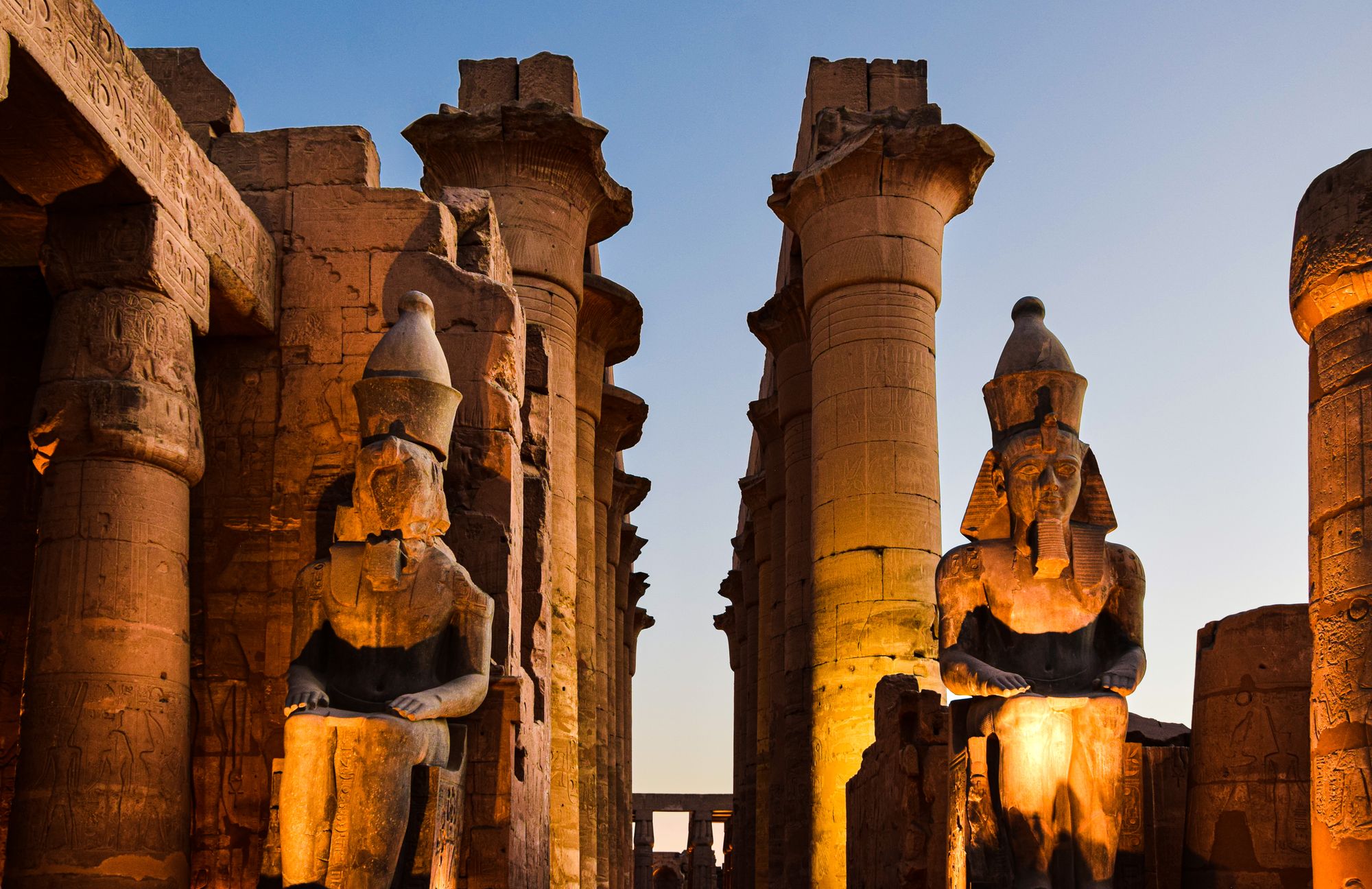
Luxor is ancient Thebes: Karnak and Luxor Temple on the East Bank, the Valley of the Kings and a dozen more tomb sites across the Nile on the West Bank. Give it three days, start at 6am to beat the heat and the coaches, and you will see more of ancient Egypt here than anywhere else in the country.
Luxor is a small, easy city laid along the east bank of the Nile, roughly 650km south of Cairo. The modern town grew up around two temples: Luxor Temple, right on the Corniche, and the huge Karnak complex 3km north, linked by the restored Avenue of Sphinxes. Most hostels, the train station, the bus offices and the street food are on this side.
Across the river, the West Bank is where the pharaohs were buried. The Valley of the Kings, Hatshepsut's terraced temple at Deir el-Bahari, Medinet Habu, the Ramesseum, the workers' village at Deir el-Medina and the Tombs of the Nobles are spread over a few kilometres of farmland and desert cliff. It feels like a different place: sugar cane, donkeys, mud-brick villages and far fewer touts. Plenty of backpackers sleep over here and only cross to the East Bank for Karnak.
A typical first visit runs like this. Day one on the East Bank: Karnak early, Luxor Museum in the late morning, Luxor Temple at dusk when it is lit up. Day two on the West Bank: Valley of the Kings at opening, Hatshepsut, then Medinet Habu in the afternoon. Day three for what you missed, the Tombs of the Nobles, or a day trip to Dendera or Esna. Add a dawn balloon flight if your budget stretches.
It is hot. Average highs pass 35°C from April to October and reach 41°C in midsummer, so from May to September you sightsee from 6am to 11am, hide, then go out again after 4pm. Winter (November to February) is the comfortable season and the busiest, with highs of 23–29°C.
Be ready for hassle. Luxor depends on tourism, and calèche drivers, felucca captains and taxi men will follow you down the Corniche. It is persistent rather than threatening, a firm "la, shukran" (no, thank you) and walking on works, and it drops off a lot on the West Bank. Most entry tickets are now paid by card at the gate, so carry a Visa or Mastercard as well as small notes for everything else.
The big decision in Luxor is which side of the Nile to sleep on. The East Bank has the transport, the street food and the noise. The West Bank has the tombs, the fields and the quiet. The public ferry between them takes a few minutes, so you can switch halfway through.
The centre of the East Bank. Luxor Temple, the riverside promenade, the ferry landing and the souq are all within ten minutes' walk. Busy and full of touts, but convenient.
The cheap end of town, behind Luxor Temple. Hostels cluster near the station, and Television Street (Sharia at-Televizyon) is lined with koshary, juice and shawarma stands at local prices.
The district around the Karnak temples, 3km north of the centre. Mostly residential with a few guesthouses. Being able to walk to Karnak at 6am before the tour buses is the main reason to stay.
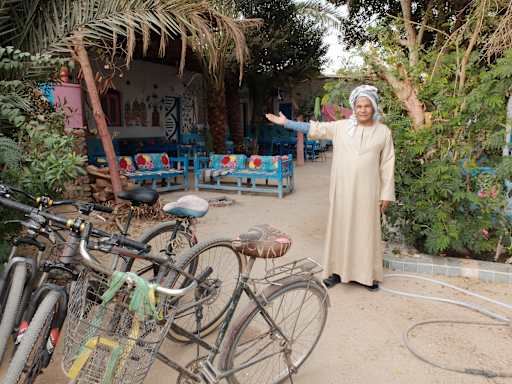
The village where the public ferry lands on the West Bank. Guesthouses, a few cafés with Nile views, and bike hire. From here it is 15–20 minutes by taxi to the Valley of the Kings.
Farm villages around the Colossi of Memnon, closer to Medinet Habu and the Valley of the Queens. Very quiet after dark; you will rely on taxis or a bike to get anywhere.
Orange labels are neighbourhoods, dots are the 4 top-rated hostels. Map data from OpenStreetMap contributors.
Start with the Valley of the Kings. The standard ticket (EGP 750, about €13) gets you into three tombs from whichever are open that day, and the rotation changes, so ask at the gate. Tutankhamun's tomb (KV62) is an extra EGP 700 and small: go for the mummy and the history, not the size. The tomb of Ramses V and VI (KV9) is only EGP 220 extra and has some of the best-preserved ceilings in the valley. Seti I's tomb (KV17) costs EGP 2,000 on top, which is steep, but it is the longest and most richly decorated tomb in Egypt.
Karnak is the other essential. It is less a temple than a city of temples built over 2,000 years, and the Great Hypostyle Hall, 134 columns as thick as tree trunks, is the part that stops people. Go at 6am when it opens and you will have the hall largely to yourself for an hour. Tickets cost EGP 600. Luxor Temple (EGP 500) is smaller and right in town, and it is best at dusk, when the floodlights come on and the statues of Ramses II glow against the dark sky.
On the West Bank, Hatshepsut's temple at Deir el-Bahari (EGP 440) is the striking terraced one built into the cliff; the morning light suits it. Medinet Habu (EGP 220) is the one most people say they wish they'd known about: deep, colourful reliefs, often with almost nobody else there. The Tombs of the Nobles are sold in small clusters (EGP 120–200 each) and show daily life, fishing, harvests and banquets, rather than gods and kings.
Hot-air balloons lift off from the West Bank at dawn for around 45 minutes over the temples and fields. Expect to pay roughly €45–60 booked locally through a hostel, more online, and check the operator's safety record. A felucca on the Nile at sunset is the cheap alternative: EGP 400–600 an hour for the whole boat.
If you are seeing a lot, the Luxor Pass covers almost every site on both banks for five days. It costs $130 or €120 (students $70 or €60), cash only in clean notes, bought in person at Karnak or the Valley of the Kings visitor centre with a passport photo and copy. Note that the tomb of Nefertari in the Valley of the Queens has been closed since March 2024.
Luxor is not a free city, since nearly every ancient site has a ticket, but plenty of the best moments cost little or nothing. The Colossi of Memnon, two 18-metre statues of Amenhotep III standing alone in the fields on the West Bank, are free and open all day. Stop on your way to the tombs or cycle out at sunrise when the light turns them gold.
The Avenue of Sphinxes, the processional road between Karnak and Luxor Temple, reopened in 2021 after decades of excavation. You can see long stretches of the sphinx-lined avenue from the street, especially at the Luxor Temple end, and walking alongside it towards Karnak is a good way to cover the 3km between the two temples without paying a taxi.
The Corniche, the riverside promenade, is where Luxor spends its evenings. Walk it at sunset to watch the feluccas come in and the light drop behind the West Bank cliffs, then cross on the public ferry, which costs just a few Egyptian pounds and is one of the best-value boat rides in Egypt. Ignore the private motorboat captains who tell you the ferry has stopped; it runs frequently through the day.
On the West Bank, walking or cycling the lanes between the villages is free and interesting in its own right. You will pass sugar cane fields, irrigation channels, water buffalo and alabaster workshops. From the road near Hatshepsut's temple there are views up to the cliffs that hide the Valley of the Kings, and at the end of the day the light over the fields is worth staying for.
Back on the East Bank, the souq behind Luxor Temple is fun to wander, as long as you are clear that you are looking, not buying. Mosques such as Abu al-Haggag, built on top of Luxor Temple itself, sit in the middle of town; the mosque is visible from the street and from inside the temple, and is a reminder that the site has been in use for over 3,000 years.
Eating cheaply in Luxor is easy if you eat where locals do. Koshary, the national carb mountain of rice, lentils, macaroni and chickpeas under tomato sauce and fried onions, costs EGP 50–100 for a big bowl at the simple places around the station and along Television Street. Ta'ameya (Egyptian falafel, made with fava beans) and ful medames (stewed beans with oil, cumin and lemon) are the breakfast of choice, stuffed into baladi bread for a few pounds a sandwich.
For a sit-down meal, expect EGP 100–200 per person in a local restaurant for grilled chicken or kofta, rice, salads, tahini and bread. Look out for molokhia, a garlicky green soup that people either love or really do not, and for fiteer, a flaky folded pastry stuffed with cheese, meat or honey. Pigeon stuffed with rice (hamam mahshi) is a local favourite and worth trying once.
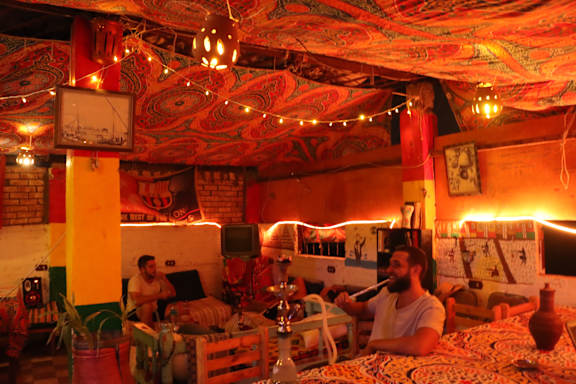
Fresh juice stands are everywhere: sugar cane juice (asab) is cheap and very refreshing in the heat, and mango and guava are good in season. Tea is drunk strong and sweet, and the ahwa (coffee house) is where Luxor men sit for hours with a shisha. Women travellers can go to the busier ones in town, but you will usually be the only woman there.
The tourist restaurants with rooftop terraces along the Corniche and around Luxor Temple charge two or three times local prices, but some are worth it for the view at sunset. Check the menu prices, and whether service and tax are added on top, before you order.
Alcohol is available but not everywhere. Stella and Sakara are the local beers, sold in hotel bars, some tourist restaurants and a handful of licensed shops. Do not expect beer with your koshary, and do not drink in the street. During Ramadan, many local cafés close during daylight and open with a crowd at sunset for iftar, the meal that breaks the fast.
Be honest with yourself about Luxor nightlife: there isn't much, and that's fine. The day starts at 5am for balloons and 6am for the tombs, so most travellers are in bed by 11pm. What you get instead is rooftop drinks, Nile views and long conversations at the hostel.
Hostel rooftops are the social centre of backpacker Luxor. Bob Marley House and New Everest, both close to the station, have rooftop terraces where people swap tomb recommendations and split taxis for the West Bank the next morning. On the West Bank, guesthouses around Al Gezira are quieter still: a few cafés with Nile views, a sheesha, and a sky full of stars once you are away from the lights.
For a beer, head to the bars inside the bigger hotels on the Corniche, or to tourist restaurants that hold an alcohol licence. Prices are much higher than in local places. The Sound and Light Show at Karnak runs most evenings for around $20 (about €17); it is dated and a bit theatrical, but walking through the floodlit temple at night is atmospheric.
Luxor Temple stays open into the evening and is the best night-time activity in town: arrive an hour before sunset, watch the floodlights come up, then walk the Corniche afterwards. The streets around the souq stay busy until late, and the local ahwas fill up after dark with men playing dominoes and watching football.
During Ramadan the city flips: quiet in the daytime, alive at night, with families out late, lanterns strung across the streets and cafés busy until the early hours. It is a good time to see local life, as long as you do not eat or drink in public during daylight.
Getting to Luxor from Cairo, most backpackers take the train. The sleeper, run by Abela, leaves Cairo in the evening (around 7.45pm and 9.10pm on the daily services) and reaches Luxor around 6–8am. A berth in a shared two-bed cabin costs $110–125 one way, booked online through trainsegypt.com, 12Go or Abela itself. Day trains take about 10 hours; foreigners are now quoted fares in US dollars and generally need to buy at the station's tourist window, not online. Go Bus runs overnight buses from Cairo in about 10 hours for around $10, and EgyptAir flies Cairo to Luxor in about an hour.
On the East Bank, walk. Luxor Temple, the souq, the station and most hostels are within 15 minutes of each other on foot. For Karnak, 3km north, take a taxi (agree the price first) or a shared microbus along the main road for a few pounds. Calèches, horse-drawn carriages, will offer rides constantly; they can be fun for a short trip, but settle the full price and route before you climb in.
To cross the Nile, use the public ferry from the landing opposite Luxor Temple. It runs frequently through the day and costs a few Egyptian pounds. Private motorboats will offer the same trip for much more.
The West Bank sites are spread out over several kilometres, so most people hire a taxi for the day (roughly EGP 600–1,000 if you deal directly with a driver, more through a hotel) and split it between three or four people. Cycling is popular in the cooler months: bikes cost around EGP 100–150 a day near the ferry landing, but the road up to the Valley of the Kings is a long, hot climb, so start at dawn.
Onward to Aswan, the day train takes about 3 hours (foreigners are quoted roughly $25–45 depending on class), buses take about 3 hours too, and private drivers will stop at Esna, Edfu and Kom Ombo on the way, which turns the journey into a day of temples.
The Egyptian pound (EGP) is the currency, and in October 2026 €1 bought about EGP 58. Day-to-day life in Luxor is cheap. The sites are not, and they are where most of your budget goes, so plan your tickets before anything else.
A realistic ticket plan for three days looks like this: Valley of the Kings EGP 750, Karnak EGP 600, Luxor Temple EGP 500, Hatshepsut EGP 440 and Medinet Habu EGP 220. That is about EGP 2,500, or €43, before any extra tombs. Add Tutankhamun (EGP 700) or Seti I (EGP 2,000) and it climbs fast. Students with an ISIC card pay half at most sites. If you plan to see a lot, compare that with the Luxor Pass at €120 for five days.
Beds are cheap. Hostelworld lists Luxor dorms from just a few euros, and most well-rated ones cost €4–10 a night, often with breakfast. Street food costs a euro or two and a local sit-down meal €2–4. Tourist restaurants on the Corniche cost several times that.
Most ticket offices are now card only, so you need a Visa or Mastercard that works abroad, ideally one with no foreign transaction fees. For everything else, cash rules: ferries, taxis, food, tips and the Luxor Pass, which is paid in US dollars or euros. ATMs are easy to find around the station and the Corniche. Carry small notes (EGP 10, 20 and 50), because nobody ever has change for a 200.
Haggling is normal for taxis, calèches, feluccas, souvenirs and tours, and first prices to foreigners are often double or triple what is reasonable. Agree on the price, the currency (pounds, not dollars or euros) and what is included before you set off. Baksheesh, small tips, are part of life: a tomb guardian who unlocks a side chamber or a toilet attendant will expect a small note. If someone 'helps' you without asking, you can say no.
Luxor is safe for travellers in the sense that matters most: violent crime against tourists is rare, and there is a visible tourist police presence at every site. The UK Foreign Office lists Luxor and the Valley of the Kings as outside its restricted areas. What wears people down is the hustle, and knowing the common tricks takes most of the sting out.
The classics: a friendly man tells you the temple is closed for prayer or a ceremony and offers to take you to a papyrus or alabaster shop instead (it is not closed). A calèche driver agrees on EGP 50, then at the end insists it was 50 per person, or 50 euros. A felucca captain sets off for an hour and returns after 30 minutes. Taxi drivers at the station claim the ferry has stopped. In every case the fix is the same: agree the price, the currency and the duration out loud before you start, and walk away if it changes.
At the sites, guardians may wave you into a closed area, or offer to take your photo in a spot that is off-limits, and then ask for a tip. It is your choice, but photographing inside some tombs is restricted and breaking the rules can mean a fine. Do not buy 'antiques'; real ones are illegal to export, and fakes are everywhere.
The heat is the real danger. From May to September highs reach 39–42°C, and the Valley of the Kings sits in a reflecting bowl of rock. Start at opening, carry two litres of water, wear a hat and cover your shoulders, which also keeps you within local norms on dress.
Women travelling solo report staring, comments and persistent attention, especially around the Corniche and souq. Modest clothing (shoulders and knees covered), sunglasses and a firm, short answer help. Hot-air balloons are popular, but there have been fatal accidents in the past; the UK advice is to check safety with your operator before booking. For emergencies, call the tourist police on 126.
The temples north and south of Luxor are some of the best preserved in Egypt, and they see a fraction of the visitors. Hire a driver for the day and split it, or pick them off on the way to Aswan.
A late temple with a near-complete roof, painted ceilings and the famous zodiac relief. Go up to the roof for the views.
Recent cleaning has revealed the original colours on the columns and ceiling. Small, sunk below street level in the middle of town. EGP 200.
The finest relief carving in Egypt and the Abydos King List. A long day, but a quiet one.
Edfu is the best-preserved temple in Egypt; Kom Ombo sits on the river with a small crocodile museum. Ideal on the move to Aswan.
Drift over the Valley of the Kings, Hatshepsut's temple and the fields at dawn.
Luxor's calendar is a mix of film festivals, religious holidays and one very local saint's festival. Ramadan and the two Eids change opening hours across the city, so check dates before you book.
Luxor's own saint's festival, with Quran recitals, horse displays and processions through the old town around the temple.
A week of African cinema; the 2026 edition ran 30 March to 5 April.
Quiet days, busy nights; shorter opening hours at some sites and cafés closed until sunset.
Three days of family celebrations after Ramadan; Egyptian visitors fill the sites.
The feast of sacrifice; banks and offices close and domestic travel peaks.
Egypt's Christian minority celebrates with midnight mass and family feasts.
An ancient spring festival when families picnic by the Nile and eat salted fish.
Luxor's hostels are small, family-run and very cheap, and most will sort your train tickets, West Bank taxi and balloon flight for you. Pick the East Bank for convenience or the West Bank for peace.
Rated 9.0 from over 950 reviews, near the station, with a social rooftop and staff who are praised for organising everything.
About 100m from the station and a short walk from Luxor Temple, rated 9.2 with perfect scores for staff and location.
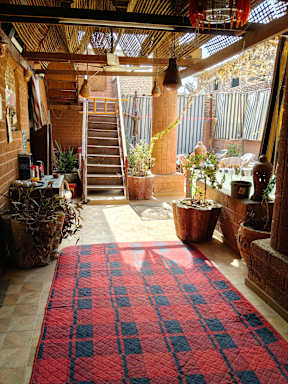
Huts and rooms around a courtyard with a firepit in Ramlah village, rated 9.3; about ten minutes' walk from the public ferry.
October to April is the season: dry, sunny and warm, with chilly early mornings in December and January. From May to September it is fiercely hot, the crowds thin out and prices drop, but you can only sightsee early and late.
Average daily highs for Luxor from 1991–2020 climate normals (climate-zone.com), rounded to the nearest degree. Crowd levels are our own estimate based on the high season and Egyptian holidays, so treat them as a guide.
Pick a style and the number of nights. The 'doing' column is where Luxor gets expensive, because site tickets are priced for foreigners.
Daily estimates in euros per person, based on October 2026 prices (about EGP 58 to €1). 'Doing' averages site tickets over three days; a balloon flight or Seti I's tomb will push it up. Prices change often in Egypt, so treat these as a guide.
Prices checked October 2026. Egyptian site fees change often, so confirm at the ticket office.

Compare Luxor hostels — live prices, real reviews and free cancellation on most bookings. Then meet the people already there in the app.

 Get the App.
 Get the App.