Addis Ababa
2 hostels
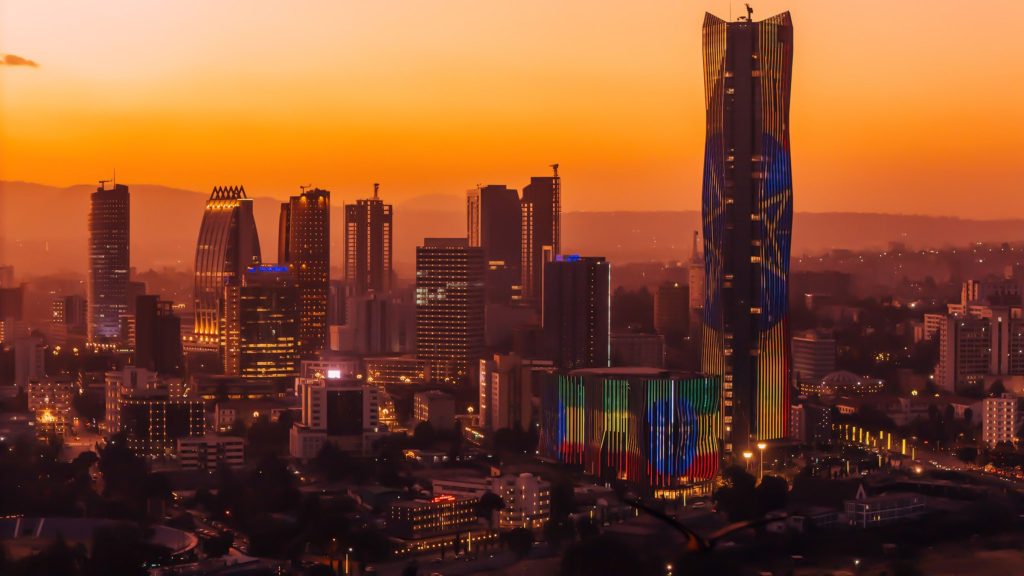
The high-altitude capital: Lucy at the National Museum, Unity Park, Merkato, azmari bars and some of the best food in Africa. The only place with hostels.

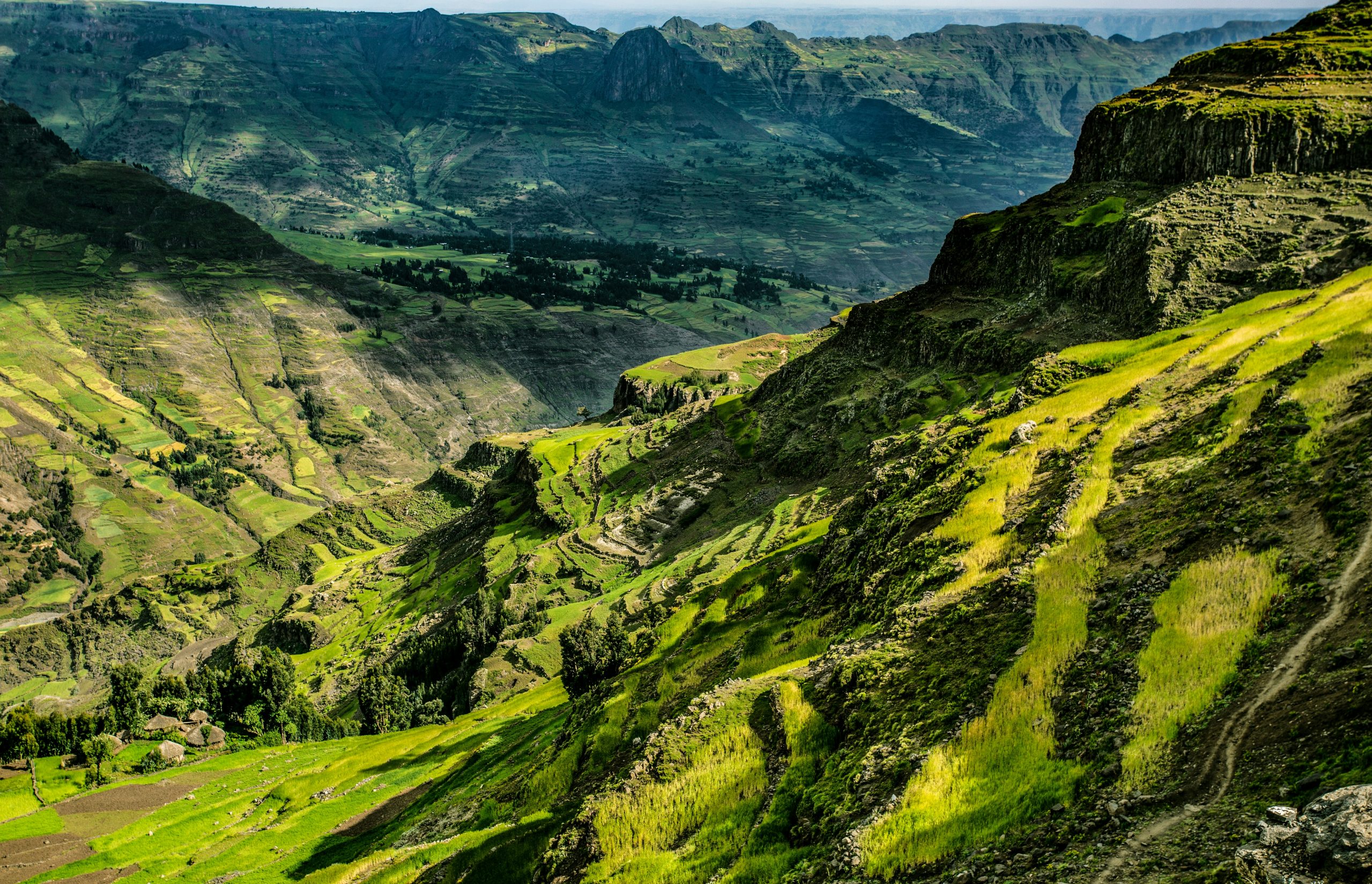
Ethiopia has its own alphabet, calendar, clock, church and cuisine, and nowhere in Africa feels quite like it. In 2026, conflict puts the historic north off-limits, so this guide focuses on what you can still visit: Addis Ababa, the Rift Valley lakes, the Omo Valley and the walled city of Harar, plus a hop to Djibouti.
Ethiopia is one of the oldest countries in the world and was never colonised, apart from a short Italian occupation, and it shows. It has its own script, its own Orthodox Christian church, a calendar with 13 months that runs about seven to eight years behind the Western one, and a clock that starts the day at sunrise. It is also the home of coffee, and the coffee ceremony is part of daily life.
But travel here in 2026 needs careful planning. Armed conflict continues in several regions, and the UK government advises against all travel to the whole of the Amhara and Tigray regions, which contain the famous historic route: the rock-hewn churches of Lalibela, the castles of Gondar, the Simien Mountains, Bahir Dar's lake monasteries and Aksum. Most of Afar, including the Danakil Depression, is also off-limits. Check the latest advice before you plan anything outside Addis Ababa.
That leaves a smaller but still fascinating country. Addis Ababa, the capital, is a huge, high-altitude city with excellent museums, food and nightlife. South of the capital, the Rift Valley has a chain of lakes, and further south the Omo Valley is home to some of Africa's most distinctive cultures. In the east, the walled Muslim city of Harar is one of the most atmospheric places in the Horn of Africa.
Ethiopia is cheap day to day, but transport is slow and the country is large, so domestic flights with Ethiopian Airlines save a lot of time.
Hostelworld lists only a handful of places, all in Addis Ababa, so expect guesthouses and simple hotels elsewhere.
With the north off-limits under UK advice, most trips focus on Addis Ababa, the south and Harar. These are the places that still make sense in 2026, with live hostel data from Hostelworld where there is any.
The high-altitude capital: Lucy at the National Museum, Unity Park, Merkato, azmari bars and some of the best food in Africa. The only place with hostels.
Choose one or two of these and check the latest travel advice for each region before you book.
Spend a few days in the capital for Lucy, Unity Park, Merkato, the Red Terror museum and live Ethio-jazz.
Head south along the A7 to the lakes of the Rift Valley, with birdlife, fish markets and hot springs.
Visit the markets and villages of the south with a local guide, and the terraced landscapes of Konso.
Get lost in Harar's walled lanes, watch the hyena feeding at night and ride the train through Dire Dawa.
Trek on the Sanetti Plateau of the Bale Mountains in search of the Ethiopian wolf.
Fly or take the train to Djibouti for salt lakes, lunar landscapes and whale sharks in the Gulf of Tadjoura.
Most trips start in Addis Ababa. The National Museum holds the fossil skeleton of Lucy, a human ancestor more than three million years old, and Unity Park, in the grounds of Emperor Menelik II's palace, shows the country's history and regions. The Red Terror Martyrs Memorial Museum tells the story of the Derg regime's violence in the 1970s, and Merkato is one of the biggest open-air markets in Africa.
South of Addis, the Rift Valley holds a string of lakes. Hawassa, reached by the main A7 road, has a lakeside fish market and birdlife, and Arba Minch, further south, is the gateway to Nechisar National Park and the crocodiles of Lake Chamo.
Beyond Arba Minch, the Omo Valley and the Konso highlands are home to many different peoples, each with their own dress, markets and traditions. Visit with a local guide, choose community-run visits and always ask before taking photos.
In the east, Harar's walled old town, the Jugol, is a UNESCO site of narrow lanes, more than 80 mosques, colourful houses and markets. At night, the city's "hyena men" feed wild hyenas just outside the walls.
The Bale Mountains, south-east of Addis, protect the highest plateau in Africa and the rare Ethiopian wolf.
The historic north, including Lalibela, Gondar, the Simien Mountains, Aksum and the Danakil Depression, is covered by UK advice against all or all but essential travel in 2026.
Ethiopian food is one of the great cuisines of Africa, and it is all served on injera, a large, spongy, sour flatbread made from teff, which you tear and use to scoop up stews with your right hand.
Wat is the name for the stews: doro wat, spicy chicken with a boiled egg, is the national dish, and misir wat is red lentils. Tibs, sautéed meat with onions and peppers, is cheap and everywhere, and kitfo, minced raw beef with spiced butter, is a delicacy.
Ethiopian Orthodox Christians fast on Wednesdays, Fridays and for long periods before Easter and Christmas, avoiding all animal products, so vegan food is excellent. Order beyaynetu, a platter of colourful vegetable and lentil dishes on injera.
Coffee is sacred here. The coffee ceremony, roasting the beans, grinding them and brewing three rounds in a clay pot, often with incense and popcorn, is a sign of hospitality. Accept if invited.
A local meal costs a few euros. To drink, try tej (honey wine), local beers such as St George, and fresh juices. Drink bottled water.
Ethiopian nightlife centres on Addis Ababa, which has bars, clubs and live music venues, especially around Bole and Kazanchis.
The most memorable night out is at an azmari bet, a traditional music bar where singers improvise witty verses about the audience, accompanied by the one-stringed masenqo. Expect to be teased and to tip.
Ethio-jazz, the 1960s and 1970s sound made famous by Mulatu Astatke, is still played live in Addis.
Outside the capital, nights are quieter, with local bars serving beer and tej.
Alcohol is unrestricted, though harder to find in Muslim areas. The UK warns of muggings and robberies in parts of Addis, so take a taxi at night rather than walking.
Ethiopia is big and roads are slow, so many travellers fly. Ethiopian Airlines, based at Addis Ababa's Bole International Airport, connects the capital to Arba Minch, Jinka, Dire Dawa and other cities, often cheaply if you arrive on an Ethiopian international flight.
Long-distance buses run from Addis to most towns, and minibuses cover shorter routes. Buses leave early, are cheap and are crowded. The UK advises against driving after dark outside Addis Ababa and warns that buses have been attacked in some regions, so stick to daylight travel on main roads in areas without travel warnings.
In Addis, ride-hailing apps such as Ride and Feres are the easiest way to get around, and the light rail runs across the city.
The trip to Djibouti is the classic border hop. The quickest way is to fly: Ethiopian Airlines connects Addis Ababa and Djibouti City in about an hour and a half. There is also the Addis Ababa to Djibouti railway, with a train every second day in each direction, an overnight stop at Dire Dawa and foreigner fares from about US$45 for a seat. But the line crosses parts of Afar and the Somali region where the UK advises against all but essential travel, and for overland entry you need a Djibouti visa from the embassy in Addis, because e-visas aren't accepted at land borders. Flying is the simpler option.
In Djibouti, you can see Lake Assal, the lowest point in Africa, the limestone chimneys of Lac Abbé and, from November to January, whale sharks in the Gulf of Tadjoura. Djibouti is much more expensive than Ethiopia.
Ethiopia uses the birr (ETB). The currency was floated in 2024 and has fallen fast, and in October 2026 €1 buys about 183 birr. Prices change quickly, so treat any figure in older guides with caution.
Day-to-day travel is cheap. Local meals cost a few euros, buses are cheap, and Hostelworld lists dorm beds in Addis from about US$11. Many hotels, tours and attractions charge foreigners in US dollars or at higher rates.
Ethiopia is largely a cash economy. ATMs and card payments are limited outside Addis, so carry enough cash, and keep your exchange receipts: you may not be able to change birr back without them. You can only take 3,000 birr in or out of the country (10,000 birr if travelling to Djibouti), and must declare foreign cash over US$10,000, or over US$500 if arriving by land.
Domestic flights are the biggest transport cost, but are much cheaper if booked together with an Ethiopian Airlines international ticket.
Djibouti uses the Djiboutian franc, pegged to the US dollar, and is far more expensive than Ethiopia.
Ethiopia needs more caution in 2026 than most countries in this guide. Armed clashes continue in Amhara, Oromia, Afar and Tigray, and the UK advises against all travel to the whole of Amhara, Tigray and Gambela, parts of Oromia and Afar, and all border areas. All civilian flights to and from Tigray were suspended in September 2026. Check the latest UK, US or Australian advice for every region you plan to visit, as travelling against advice can invalidate your insurance.
The UK also says terrorist attacks are very likely, including at religious festivals, markets, hotels and tourist sites. Large crowds gather for Timket, Meskel and other holidays.
In Addis Ababa, muggings are rising, and robberies, including at knifepoint, have increased in Bole Medhanealem, Bole Atlas, Meskel Square, Yeka Hills and Entoto. Take taxis rather than walking, especially after dark. Pickpockets work around the airport and use distraction tricks.
Protests can start suddenly, and the internet and mobile networks can be cut with no warning.
Same-sex acts are illegal, with prison terms of 1 to 15 years, and the UK reports detentions at venues in Addis. Drug possession is punished severely, and khat, while legal in Ethiopia, is illegal to take out of the country. Don't photograph military sites or the Presidential Palace.
You need a visa to visit Ethiopia. Apply online before you travel through the official e-visa platform, evisa.gov.et, with a scan of your passport and a photo. Tourist e-visas are single entry, and a 2026 guide gives the fees as US$50 for 30 days or US$70 for 90 days. Use only the official site.
Your passport must be valid for at least six months after you arrive and be machine-readable. You need a yellow fever certificate if arriving from a country with a risk of yellow fever, and you may need one to travel on from Ethiopia, including to Djibouti.
Currency limits are strict: you can only carry 3,000 birr in or out (10,000 birr if going to Djibouti), and must declare large amounts of foreign cash. Drones, satellite phones and binoculars need prior approval.
For Djibouti, British citizens can buy a tourist visa on arrival at the airport, paid in US dollars cash, or apply online at evisa.gouv.dj, and must show an onward ticket. If you go by train or road, get your visa in advance from the Djibouti embassy in Addis Ababa, as e-visas aren't accepted for overland entry. The UK advises against all travel to Djibouti's border with Eritrea.
Overstaying in Ethiopia costs US$30 a day, and you can't leave until it is paid.
October to March is the dry season and the best time to visit, with sunny days and cool nights in the highlands. The main rains, the kiremt, fall from June to September, when Addis is wet and grey. September and January bring the big festivals of Meskel and Timket.
Temperatures are average daily highs in Addis Ababa (weather2travel climate data), where nights drop to 4–10°C. The lowlands of the Omo Valley and Harar are much hotter. Crowd levels are our own rough estimate.
Pick a travel style and the number of nights to see a rough total. Figures are per person per day in euros, based on dorms or simple hotels, local food, buses and some paid sights.
Rough figures for 2026, converted at about €1 = 183 birr. Prices change fast. Domestic flights, guided Omo Valley trips and Djibouti cost much more.
Ethiopian Orthodox festivals are some of the most spectacular in Africa, and they follow the Ethiopian calendar. The UK warns that big crowds at religious events could be targets, so stay aware.
Ethiopian Orthodox Christmas, with all-night church services.
Colourful processions carrying the tabots, replicas of the Ark of the Covenant, to water.
Celebration of the 1896 victory over Italy.
Orthodox Easter, ending the long fast with feasting.
Ethiopian New Year, at the end of the rains.
Huge bonfire festival marking the finding of the True Cross. A UNESCO-listed tradition.
Oromo thanksgiving festival at the end of the rains.
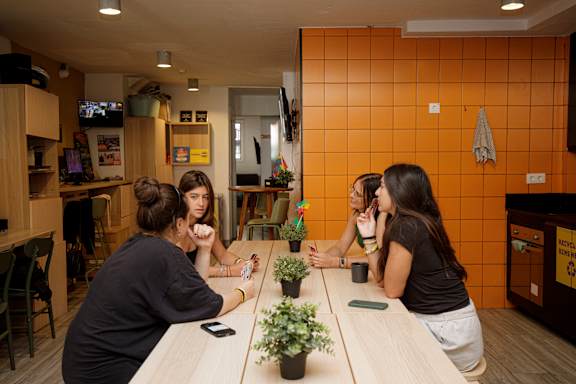
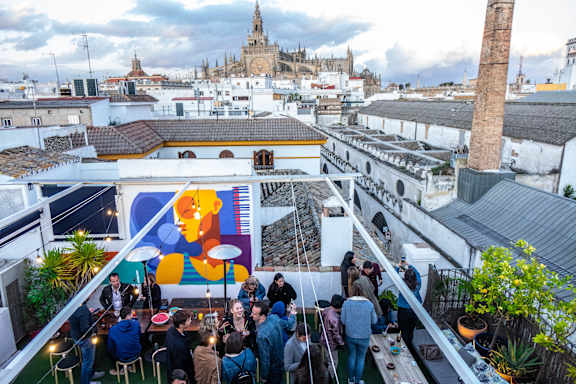
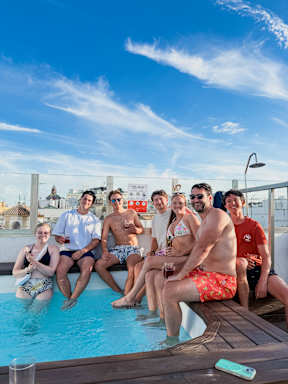
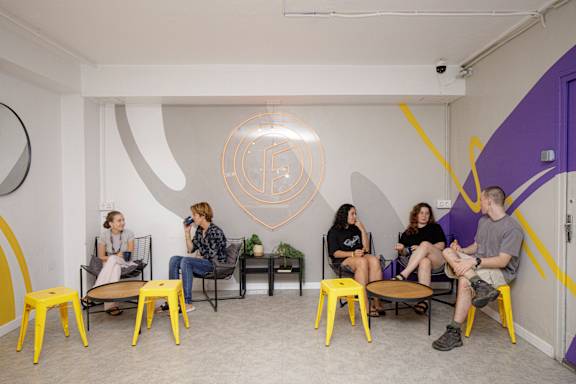
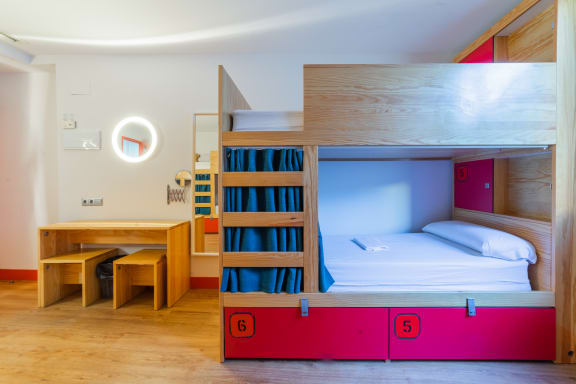
Ethiopia has very few hostels, all in Addis Ababa so far. These are the best-rated right now, with live prices.




Visa, safety and price details were checked in October 2026. The security situation changes quickly, so check official advice before you travel.

Compare Ethiopia hostels: live prices, real reviews and free cancellation on most bookings. Then meet the people already there in the app.

 Get the App.
 Get the App.