Kasbah
Views and atmosphereThe walled citadel at the top of the medina, with the Kasbah Museum and views to Spain. Quiet at night, a climb from the port.

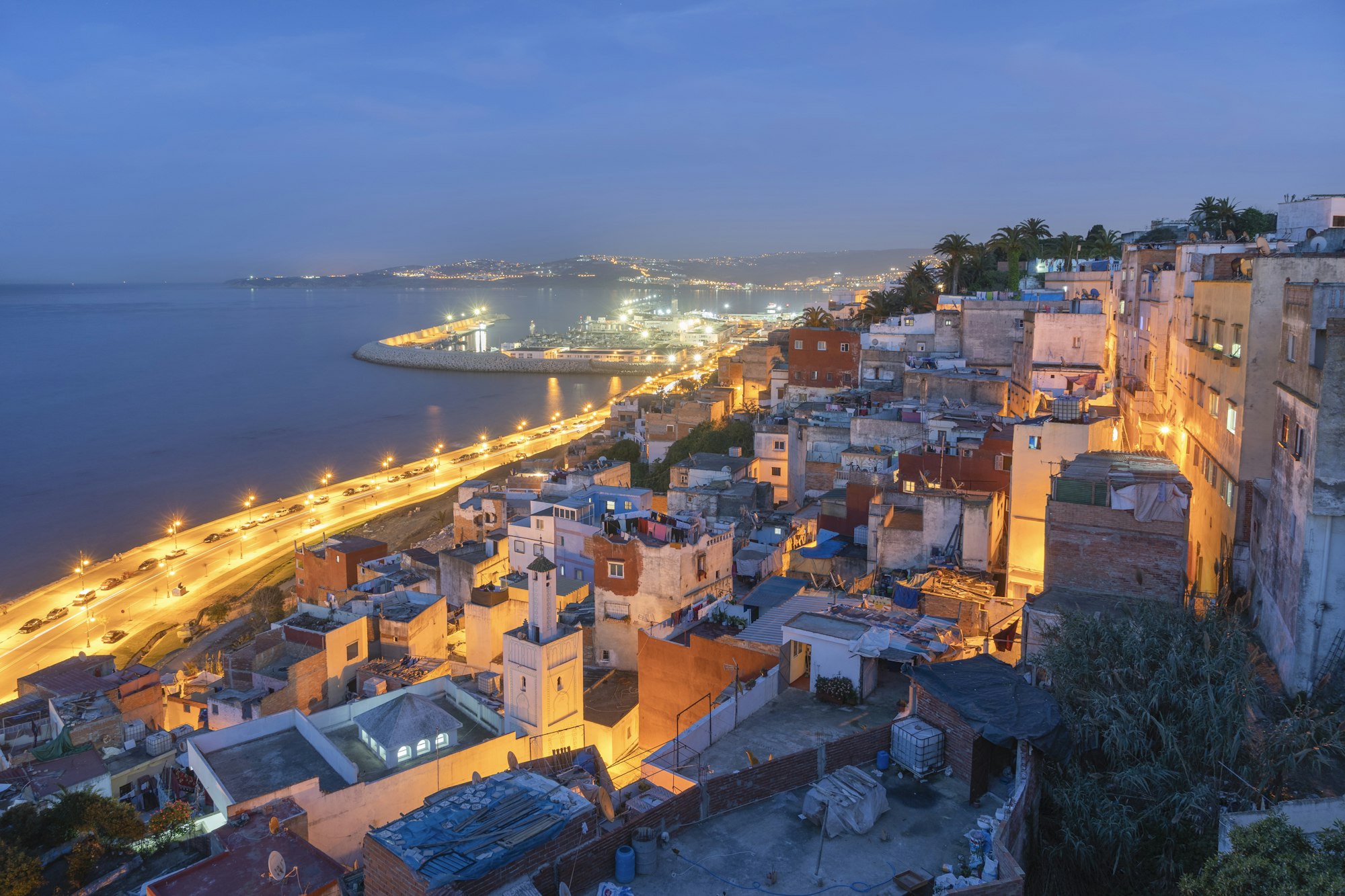
Tangier is where Africa starts for anyone crossing from Spain: about an hour by fast ferry from Tarifa, with a hilltop kasbah, a medina running down to the port and a café scene that drew writers and musicians for a century. It is also the fastest way into the rest of Morocco, with high-speed trains to Rabat and Casablanca and buses to Chefchaouen.
Tangier sits on the Strait of Gibraltar, close enough to Spain that you can see it on a clear day. For most of the 20th century it was an International Zone run by several foreign powers, and it attracted spies, smugglers, artists and writers. That history still shows in its Spanish-style cafés, Art Deco boulevards, a 19th-century Anglican church and the American Legation, the first property the United States owned abroad.
Today it is a big, busy port city that has had a lot of money spent on it. The corniche and beach have been redone, the marina has new restaurants, and the Al Boraq high-speed line puts Rabat about 1 hour 20 minutes away and Casablanca a little over 2 hours. It feels more modern and more European than Fes or Marrakech, and many travellers find it an easier introduction to Morocco.
The old town is compact. The medina tumbles down from the kasbah at the top to the port at the bottom, with the Petit Socco, a small square of cafés, at its centre. Just outside the walls, the Grand Socco is the busy hub where the medina meets the Ville Nouvelle, the French-built new town around Boulevard Pasteur and Place de France.
Tangier used to have a bad reputation for hustlers meeting the ferries. It is much calmer now, but you will still meet a few faux guides around the port and medina. Compared with Fes or Marrakech, the hassle is mild.
Two or three days is about right. Spend one on the medina, kasbah and museums, one heading west to Cap Spartel and the Caves of Hercules, and use a third for Asilah or Tetouan. Tangier also works well as a short first or last stop on a route through Chefchaouen, Fes and the south. If you are arriving by ferry, it is worth giving it at least a night rather than rushing straight to the bus station.
Most hostels are in the medina and kasbah, close to the sights and the ferry port. The Ville Nouvelle is a good choice if you want bars, restaurants and an easier walk to the train station.
The walled citadel at the top of the medina, with the Kasbah Museum and views to Spain. Quiet at night, a climb from the port.
The old town around the small café square, close to the port, the American Legation and most hostels.
The busy square where the medina meets the new town, with taxis, the market and Cinema Rif. A good base on the edge of the old town.
The French-era new town around Boulevard Pasteur and Place de France. Modern, with more nightlife and an easier walk or taxi to the station.
Leafy clifftop district west of the kasbah, home to Café Hafa and the Phoenician tombs. Mostly residential.
The seafront east of the centre along the bay, with new hotels, the promenade and Malabata beach. Closest area to Tanger Ville station.
Orange labels are neighbourhoods, dots are the 6 top-rated hostels. Map data from OpenStreetMap contributors.
Start at the top. The kasbah, the old walled citadel, looks across the Strait to Spain, and its sultan's palace now houses the Kasbah Museum, with archaeology and history displays and an Andalusian-style garden. Recent reports put entry between 50 and 80 MAD. The square outside, with its views over the port, is free.
Walk down through the medina to the Petit Socco, the small square that was the heart of the International Zone's café life. Order a mint tea at one of the terraces and watch the city go by. Nearby, the Tangier American Legation Museum (50 MAD) fills a historic building in the lower medina with art, maps and stories of the city's past, including a room about the writer Paul Bowles.
The Grand Socco, officially Place du 9 Avril 1947, is the city's main hub, with a fountain, a busy market and the Cinema Rif, an old cinema with a café on the square. From there, the Mendoubia gardens are a shady place to rest, and St Andrew's Church, a 19th-century Anglican church built in Moorish style, welcomes visitors for a donation.
Café Hafa, open since 1921, is the café everyone goes to: terraces stepped down a cliff in the Marshan district with tea, simple snacks and a view of the sea. It is basic and cheap, which is the point. The nearby Phoenician tombs, cut into the rock above the sea, are free to see.
Further west, Cap Spartel marks the north-western tip of Africa, with a lighthouse and a small museum. The Caves of Hercules, a few kilometres south along the Atlantic coast, have a sea-facing opening shaped like a map of Africa. Entry is now reported at about 80 MAD. Both are about 25 minutes from the centre by grand taxi; agree a price for the round trip and waiting time, or join a half-day tour.
Tangier is a great city to walk. The medina, the kasbah square and the Grand and Petit Socco are all free, and the views across the Strait to Spain from the kasbah walls cost nothing. Go early in the morning for the quietest lanes, or late afternoon for the best light.
The Marshan district, west of the kasbah, is a calm residential area of old villas. Walk along the clifftop to the Phoenician tombs, cut into the rock above the sea, and the views over the water. Café Hafa is here too: not free, but a mint tea costs very little.
The corniche and city beach stretch east from the port along the bay. The promenade has been rebuilt and is where locals walk in the evening. The water is not the cleanest near the city, so swim further out at Malabata or along the Atlantic coast.
The Mendoubia gardens beside the Grand Socco are a shady place to sit, with old trees and cannons. St Andrew's Church asks only for a donation, and its cemetery holds graves from Tangier's international years.
In the Ville Nouvelle, Boulevard Pasteur and Place de France are good for people-watching, with the Terrasse des Paresseux, a viewpoint where locals gaze at the port and Spain beyond. Wander towards the restored Gran Teatro Cervantes, a 1913 Spanish theatre, to see the city's European past. The Art Deco and colonial-era buildings along the boulevards are an underrated free sight in themselves. Finally, the city's markets are free to browse. The stalls around the Grand Socco and the lanes running into the medina sell fruit, spices, fish and Rif cheese brought in by women from the countryside, in their striped red-and-white cloths and wide straw hats.
Tangier eats a little differently from the rest of Morocco, thanks to its Spanish past and its port. The famous street snack is calentica (also spelled kalinte), a soft chickpea-flour tart baked in big trays, seasoned with cumin and salt and sold by the slice from carts and small shops in the medina. It costs a few dirhams.
Bissara, the fava bean soup, is the breakfast of the north, served with olive oil and bread. Fish and seafood are fresher and cheaper here than inland: look for grilled sardines, fried fish and fish tagines in small places around the port and the lower medina.
The café is the centre of social life in Tangier. Mint tea and coffee on a terrace at the Petit Socco or Grand Socco, at Café Hafa above the sea, or at one of the grand old cafés on Place de France is a daily ritual. Most cafés are male-dominated, but tourist-friendly ones welcome everyone.
For a sit-down meal, the medina and the area around the Grand Socco have plenty of simple restaurants serving tagine, couscous, harira and brochettes for 40 to 80 MAD. The marina and the corniche have newer, more expensive restaurants, some licensed.
Alcohol is easier to find than in most Moroccan cities. Some restaurants in the Ville Nouvelle and along the corniche serve wine and beer, and supermarkets have alcohol sections. In the medina, bars are rare. For something sweet, the pastry shops in the Ville Nouvelle mix Moroccan and Spanish traditions, with almond biscuits, churros and cakes to go with your coffee. Fresh orange juice is everywhere and costs very little, and the fruit and nut stalls around the Grand Socco are good for picnic supplies before a day at Cap Spartel.
Tangier has more nightlife than most Moroccan cities, though it is still low-key by European standards. Evenings start with a walk along the corniche, then mint tea or a beer as the lights come on across the bay.
The Ville Nouvelle, around Boulevard Pasteur, Place de France and the streets off them, is where you will find bars. Some are old-fashioned places from the International Zone era, others are hotel bars and newer lounges. Some local bars are male-only in practice, so ask your hostel which ones are welcoming. Drinks are cheaper here than at the marina, and the older bars are a good window onto the city's International Zone past.
The marina and the corniche have newer bars and restaurants with terraces, and a few clubs open late in summer. They tend to be more expensive and dressier than the old-town cafés.
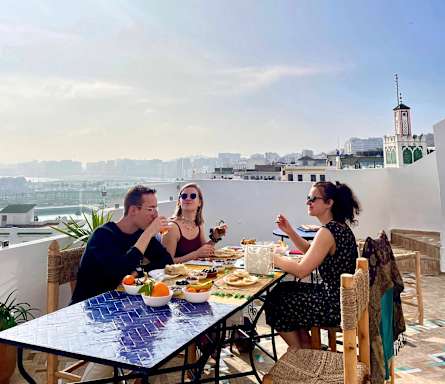
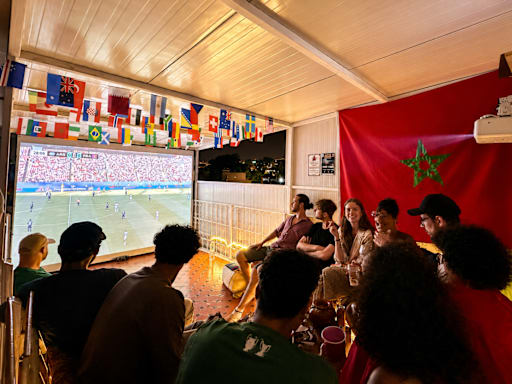
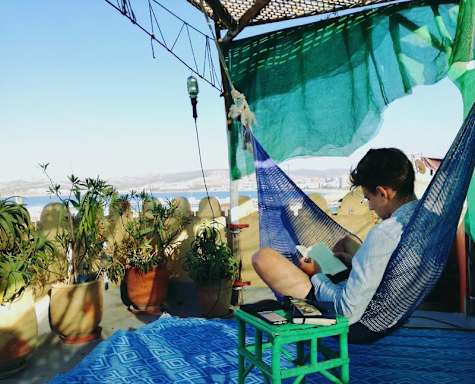
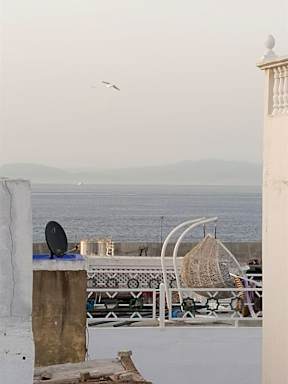
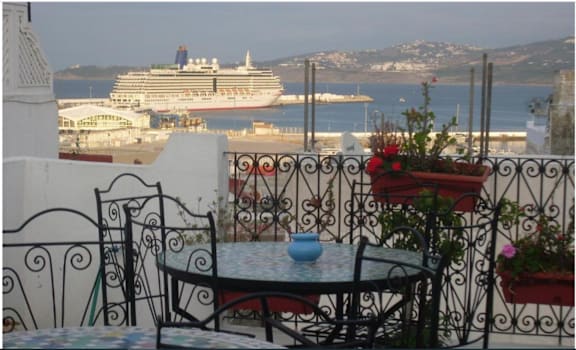
In the medina, nights are quieter. The Petit Socco cafés stay open late, and hostel rooftops are the main place for travellers to meet. Several medina hostels have roof terraces with views over the port, and on a clear night you can see the lights of Spain across the water. It is the cheapest and friendliest night out in town.
The biggest night out of the year is Tanjazz, the city's jazz festival, which ran 18 to 20 September in 2026 at the Palais des Institutions Italiennes, with some free concerts around town. During Ramadan, the city comes alive after sunset, with busy streets and cafés until the early hours. Whatever the night, take a petit taxi back rather than walking through the empty lower medina alone; it costs very little.
Tangier Ibn Battouta Airport is south-west of the city. Taxis have fixed fares: about 100 MAD to the city centre by day (from 5.30 am to 10.30 pm) and 150 MAD at night, or 120 MAD to Tanger Ville station. A local ALSA bus also runs to the centre for a few dirhams and takes about 45 minutes.
From Spain, fast ferries from Tarifa to the Tanger Ville port take about an hour, with around 10 crossings a day run by AML and Baleària. Foot-passenger fares are roughly €30 to €50 one way. The port sits below the medina, close to the old town. Ferries from Algeciras usually go to Tanger Med, a big port about 40 km east of the city, so check which port your ticket is for.
Tanger Ville train station is in the east of the city, about 3 km from the medina. Al Boraq high-speed trains reach Rabat Agdal in about 1 hour 20 minutes and Casablanca in about 2 hours 10, roughly hourly. Regular trains run to Asilah in about 40 minutes, and to Fes in about 4 to 5 hours, either direct or changing at Kenitra. Book on oncf-voyages.ma.
The CTM bus station is on La Rocade, about 15 minutes by car from the medina. CTM runs about five buses a day to Chefchaouen (2¼ to 2¾ hours, from about 60 MAD) and services to Tetouan and further afield. Shared grand taxis leave from beside it.
Around town, petit taxis are cheap and metered: the day rate starts around 7 MAD, and most rides cost 10 to 30 MAD. Uber does not operate in Tangier; Careem and inDrive work but coverage is lighter than in Casablanca. The medina itself is walkable but steep.
Tangier is a little pricier than Fes or Chefchaouen, especially for food in the new town and the marina, but still cheap by European standards. At about 10.9 MAD to €1 (October 2026), a slice of calentica costs a few dirhams, a sandwich 20 to 30 MAD, and a tagine in a simple restaurant 40 to 80 MAD.
Dorm beds in the best-rated medina hostels typically cost around €9 to €15 a night, usually with breakfast. Tangier has fewer hostels than Marrakech or Fes, so book ahead in summer, when Moroccans living abroad return for the holidays and ferries and beds fill up.
The main sights are inexpensive. The Kasbah Museum is reported at 50 to 80 MAD, the American Legation at 50 MAD, and the Caves of Hercules at about 80 MAD. A grand taxi to Cap Spartel and the caves is the biggest cost of a day out; share it with others from your hostel.
Transport into and out of Tangier is good value. Al Boraq to Rabat costs roughly €9 to €20 depending on class and how early you book, and CTM to Chefchaouen from about 60 MAD. The Tarifa ferry, at €30 to €50 one way, is the biggest transport cost for most travellers.
Change money or withdraw dirhams once you arrive; ATMs are everywhere in the Ville Nouvelle and around the Grand Socco. Keep cash for taxis, cafés and the medina, where cards are rarely accepted. A realistic backpacker budget is about €30 to €35 a day.
Tangier is much safer and calmer than its old reputation suggests. Violent crime against tourists is rare, and the city has a large police presence around the port, medina and main squares. Most travellers who pass through find it one of the easier big cities in Morocco.
The hassle you will meet is concentrated around the ferry port and the lower medina. Men may offer to guide you, carry your bags, find you a hotel or a 'good price' taxi. You do not need any of it: the medina is small, and the port is a short walk or taxi ride from everywhere. Say no politely and keep walking.
Watch for the usual tricks: the 'friendly student' who wants to practise English and ends up leading you to a shop, or the claim that your hostel is closed or full. Check with your hostel directly. Agree prices for grand taxis in advance, and insist on the meter in petit taxis.
Pickpocketing happens in crowded places like the Grand Socco market and the medina lanes. Keep phones and wallets in front pockets. After dark, the lower medina gets quiet, so use main streets or take a taxi.
Women may get more comments in the medina, though less than in Fes or Marrakech. Dress modestly in the old town, walk with purpose, and ignore persistent comments. Solo women generally find the Ville Nouvelle and the corniche relaxed, and hostel staff are happy to share which streets to avoid after dark. In an emergency, call 19 for the police or 15 for an ambulance.
Tangier has the Atlantic, the Rif and two very different medinas within easy reach. Trains, buses and grand taxis cover all of them.
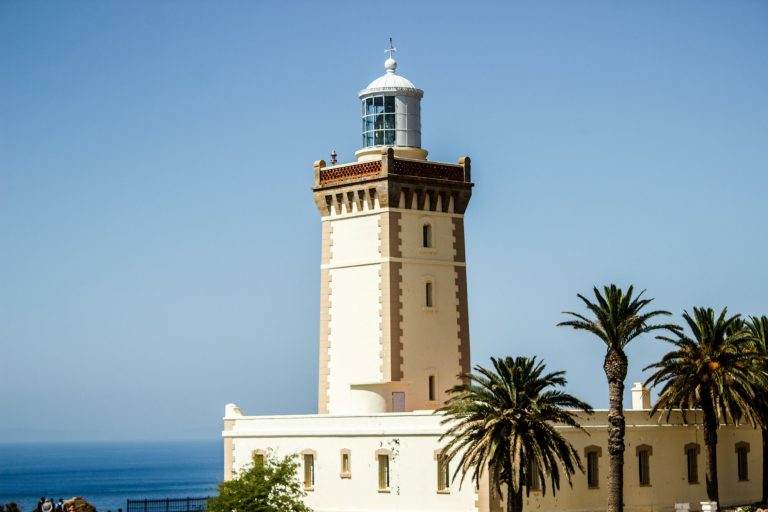
Africa's north-western tip and a sea cave on the Atlantic coast; agree a round-trip price with waiting time.
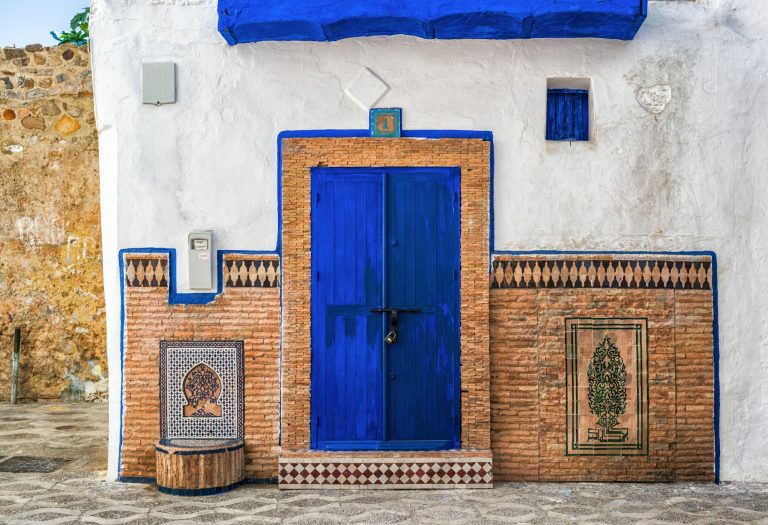
Whitewashed Atlantic town with murals, ramparts and a calm, compact medina; good for a slow day by the sea.
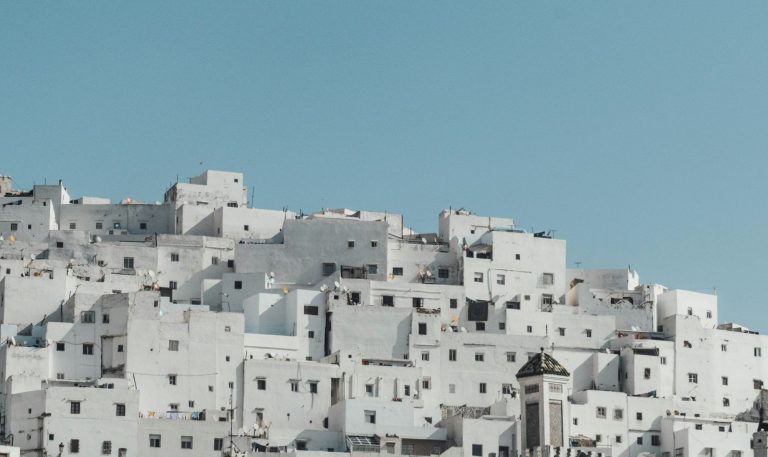
UNESCO-listed medina with Andalusian influence and the white Spanish-built Ensanche, with very few tourists.
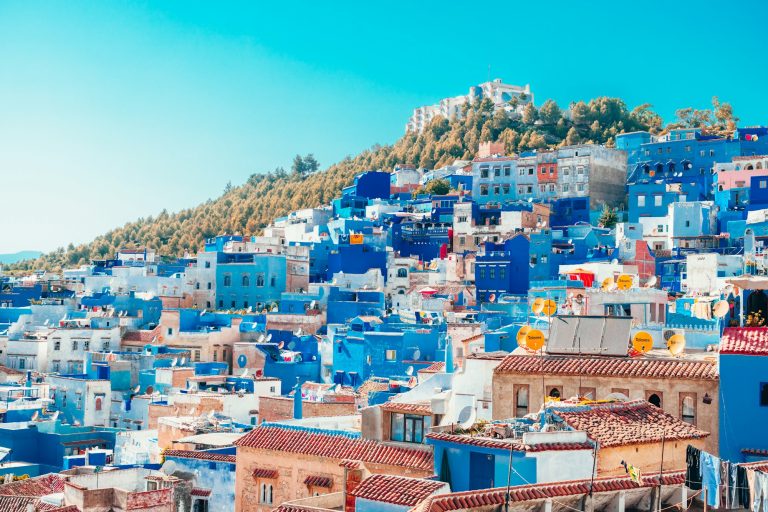
Possible as a long day trip, but the blue town deserves at least one night.
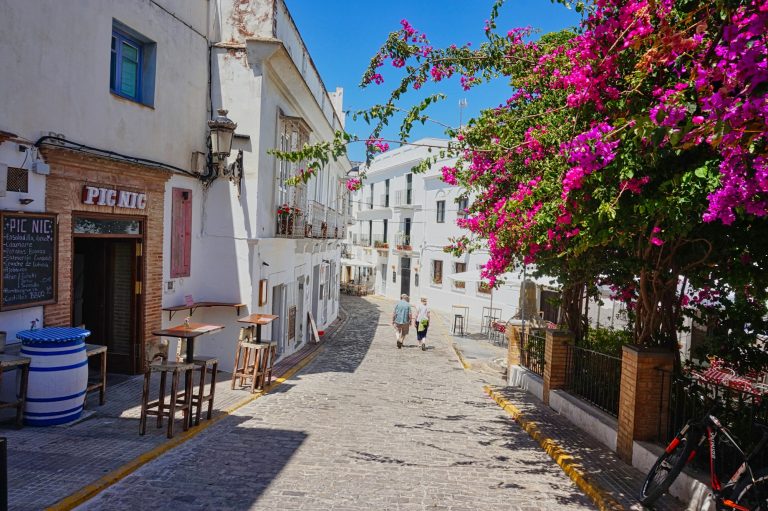
Spain's southernmost town and a kitesurfing hub. Bring your passport and check the last return sailing.
Tangier's calendar centres on its jazz festival in September, with summer ferry season and Ramadan changing the feel of the city.
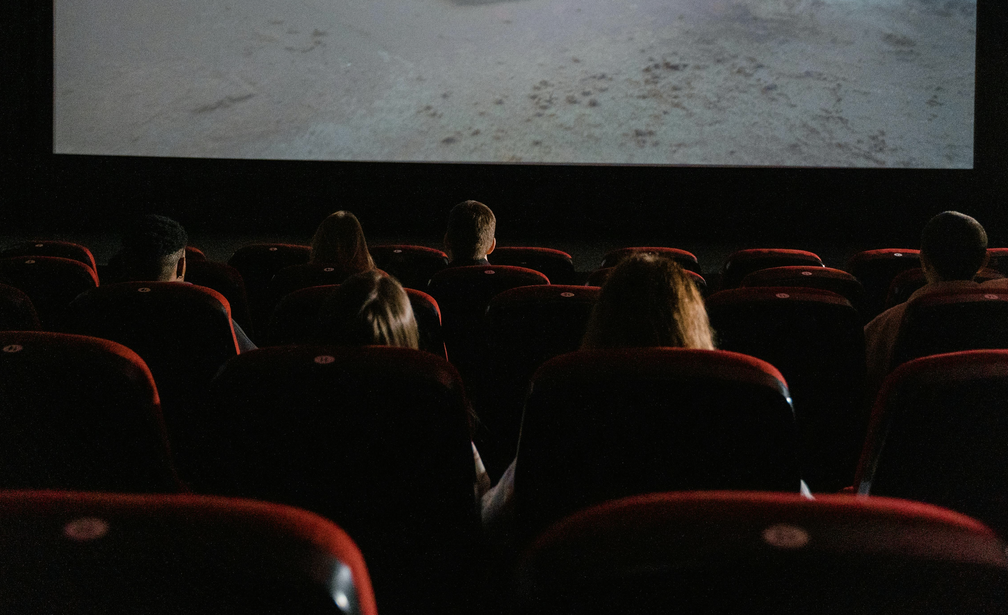
Morocco's longest-running film festival brings together the country's latest cinematic productions in Tangier, a city with deep ties to the arts. You can catch…
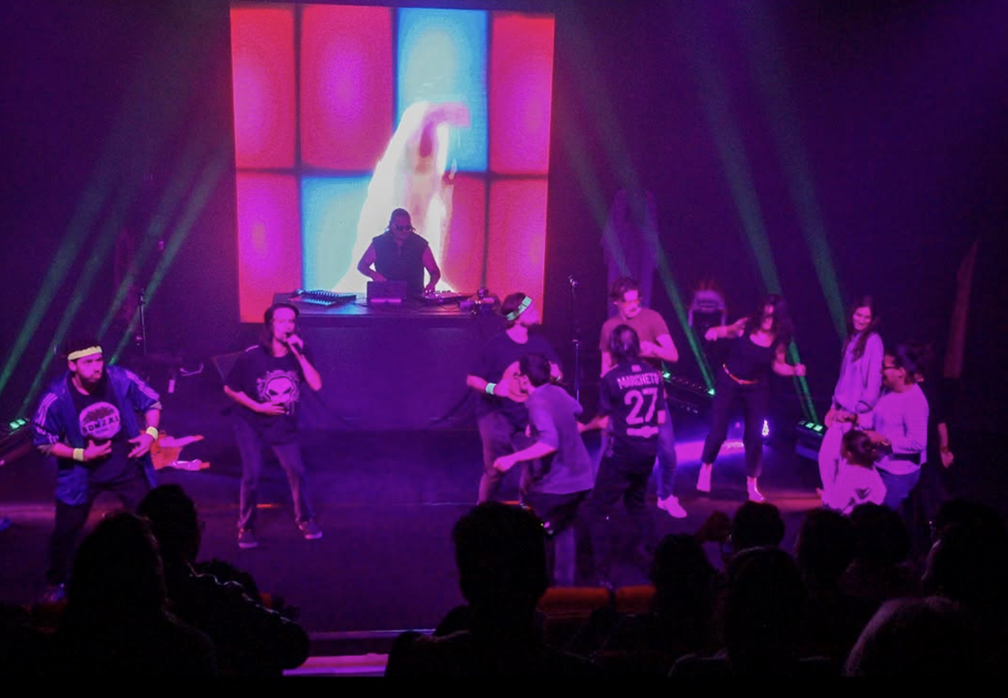
Digital November brings a month-long exploration of digital cultures to Tangier, blending visual arts, virtual reality, film, performances, and workshops across the city. Highlights…
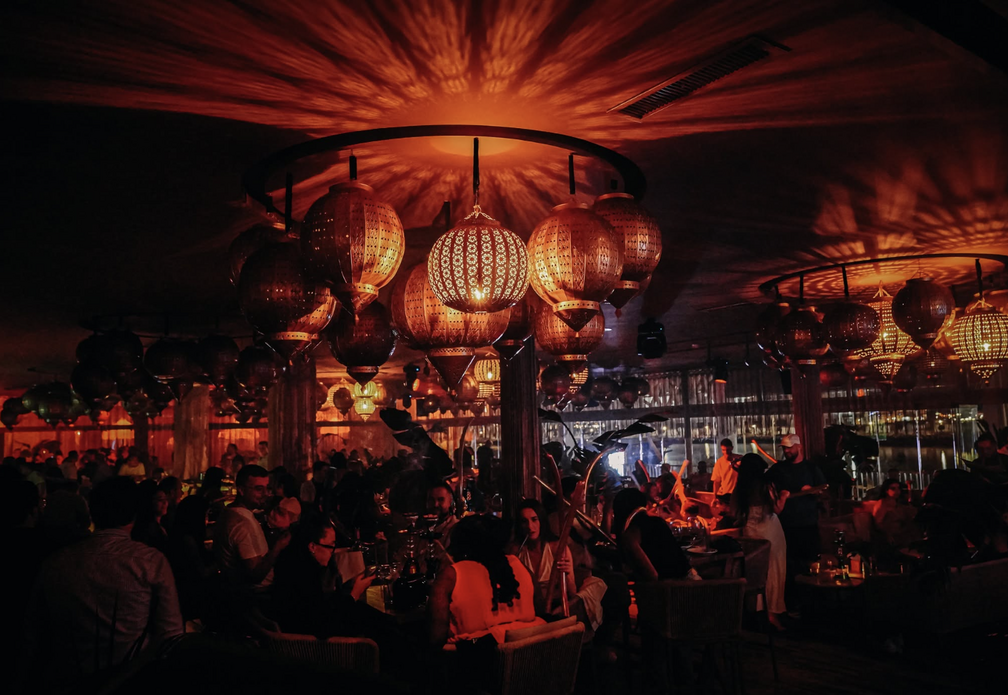
Every Saturday, Tanger Sky 5 transforms into a lively scene where food and dancing share the spotlight. The doors open at 5 PM at…
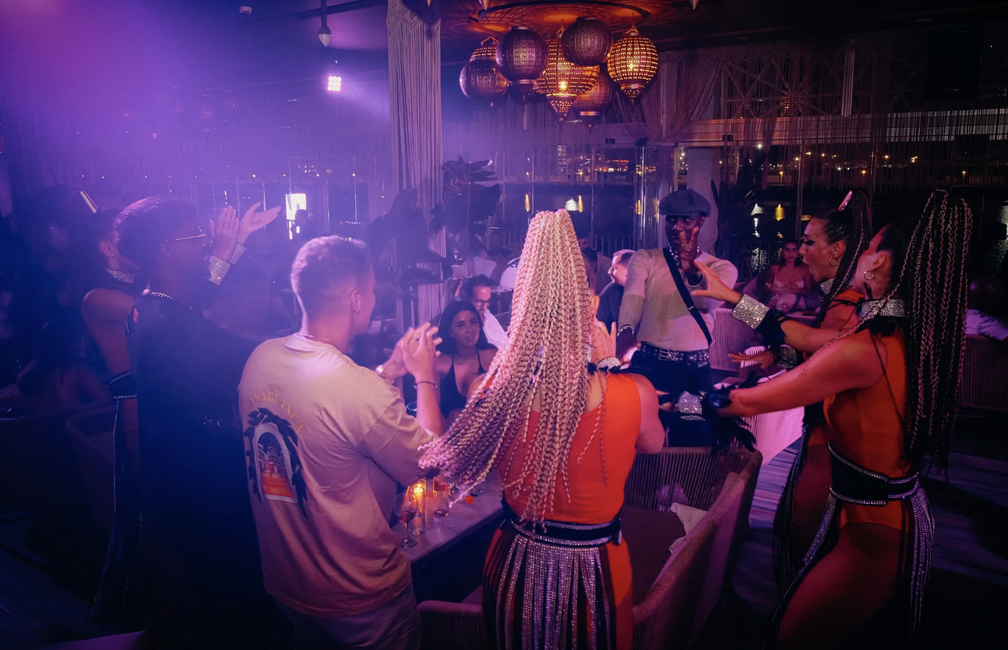
Friday nights at Sky 5 Tanger bring together cocktails, dancing, and food at the Marina Bay location on Avenue Mohamed VI. The doors open…
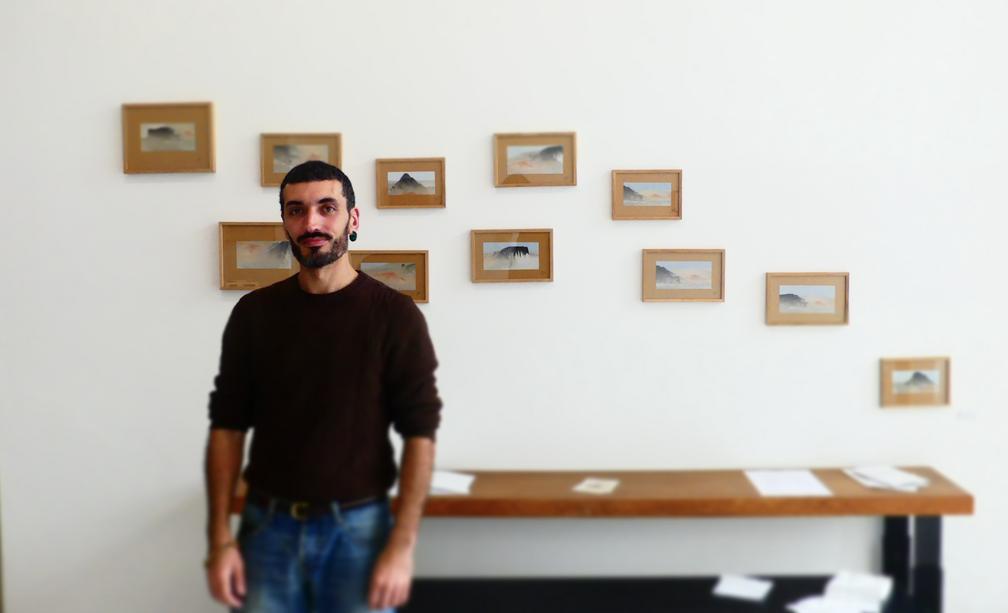
Ceramic vessels take on new meaning in this exhibition, where traditional jars have been remodeled and deformed to explore the tension between ancient craft…
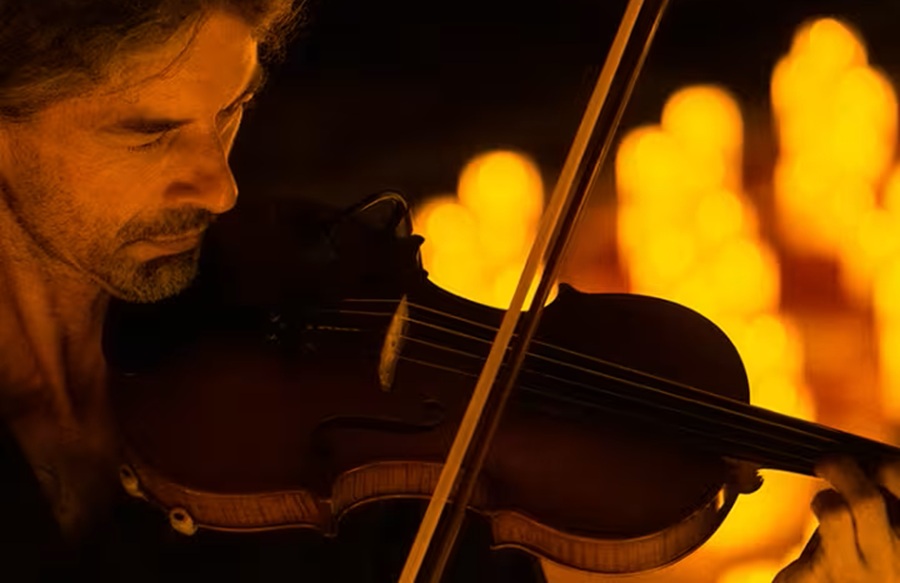
Experience a unique musical evening with Candlelight: Coldplay and Imagine Dragons in Tangier. The concert takes place in the elegant Barceló Tanger, where a…
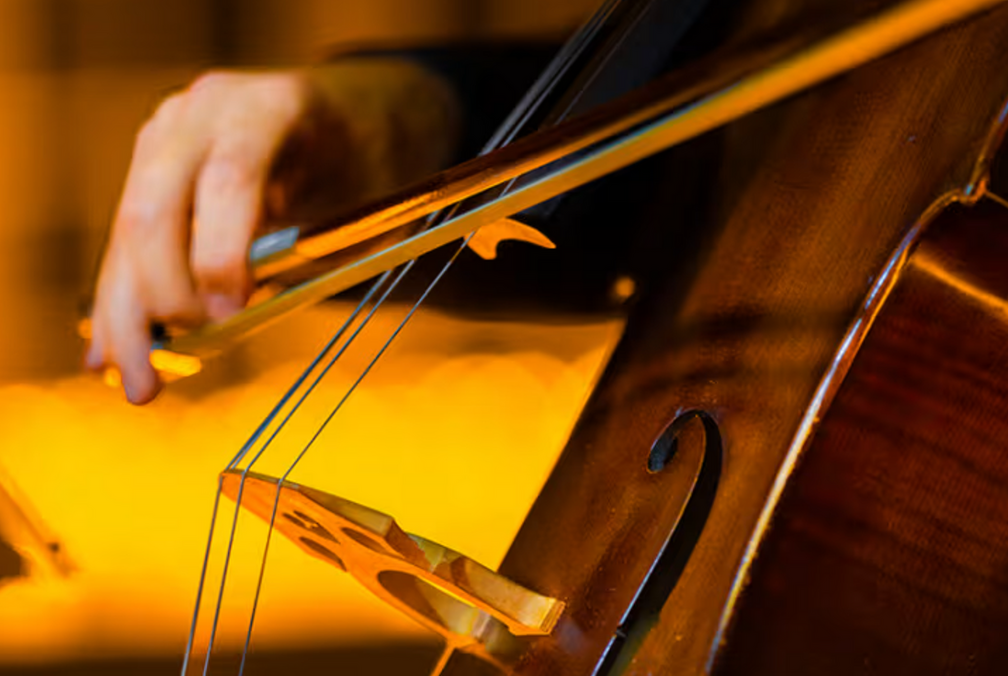
Experience the evocative music of Hans Zimmer performed by the Atlas Quartet in an intimate candlelit setting. The concert takes place at Barceló Tanger,…
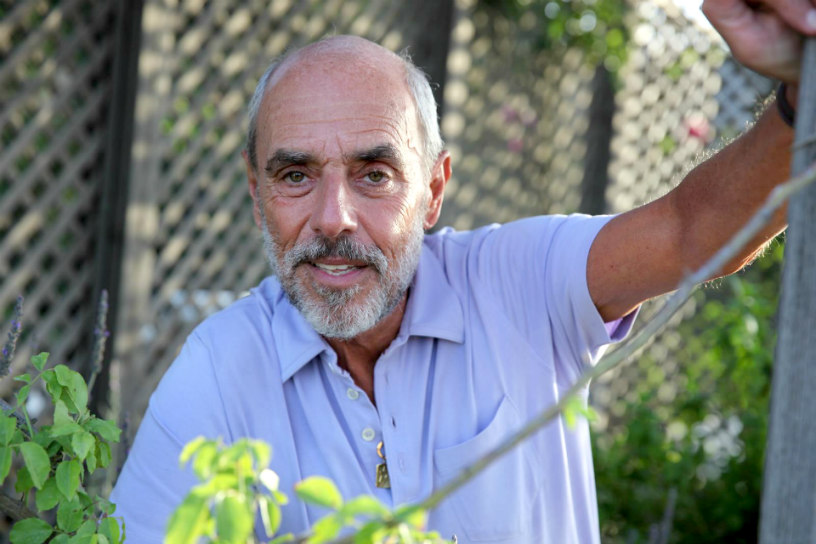
Ralph Toledano presents his new novel "The Moon in the Whirlwind," a story set in Tangier that follows Luna, a woman from a privileged…
Tangier's hostels are mostly converted medina houses near the kasbah and the Petit Socco, with roof terraces looking across to Spain. There are fewer than in Fes or Marrakech, so book ahead in summer. Live prices and reviews below.
Nearly 3,000 reviews and a 9.5 rating on Hostelworld; the best-known hostel in Tangier.
A 9.7 rating from more than 700 reviews, in a traditional house in the upper medina.
A 9.7 rating from over 400 reviews, in a traditional riad in the medina.

May, June and September are the sweet spot: warm, dry and not too busy. July and August are hot and crowded with returning Moroccans and ferry traffic. Winter is mild but windy and wet.
Average daily highs for Tangier from WeatherSpark (1980–2016 averages), rounded. The sea ranges from about 16°C in February to 22°C in August. Crowd numbers are our own estimate. Ramadan 2027 is expected roughly 8 February to 9 March.
Pick a style and a number of nights for a rough total. Figures are per person per day in euros: a bed, food, local transport, and sights or activities.
Our estimates at about €1 = 10.9 MAD (October 2026), built from current dorm prices, museum tickets and taxi fares. Ferries, trains and day trips are extra.
Prices and timetables were checked in October 2026 and change often. Confirm the essentials before you travel.

Compare Tangier hostels — live prices, real reviews and free cancellation on most bookings. Then meet the people already there in the app.

 Get the App.

 Get the App.