Stone Town
Guesthouses and sightsColonial palaces, churches, museums and most of the guesthouses.

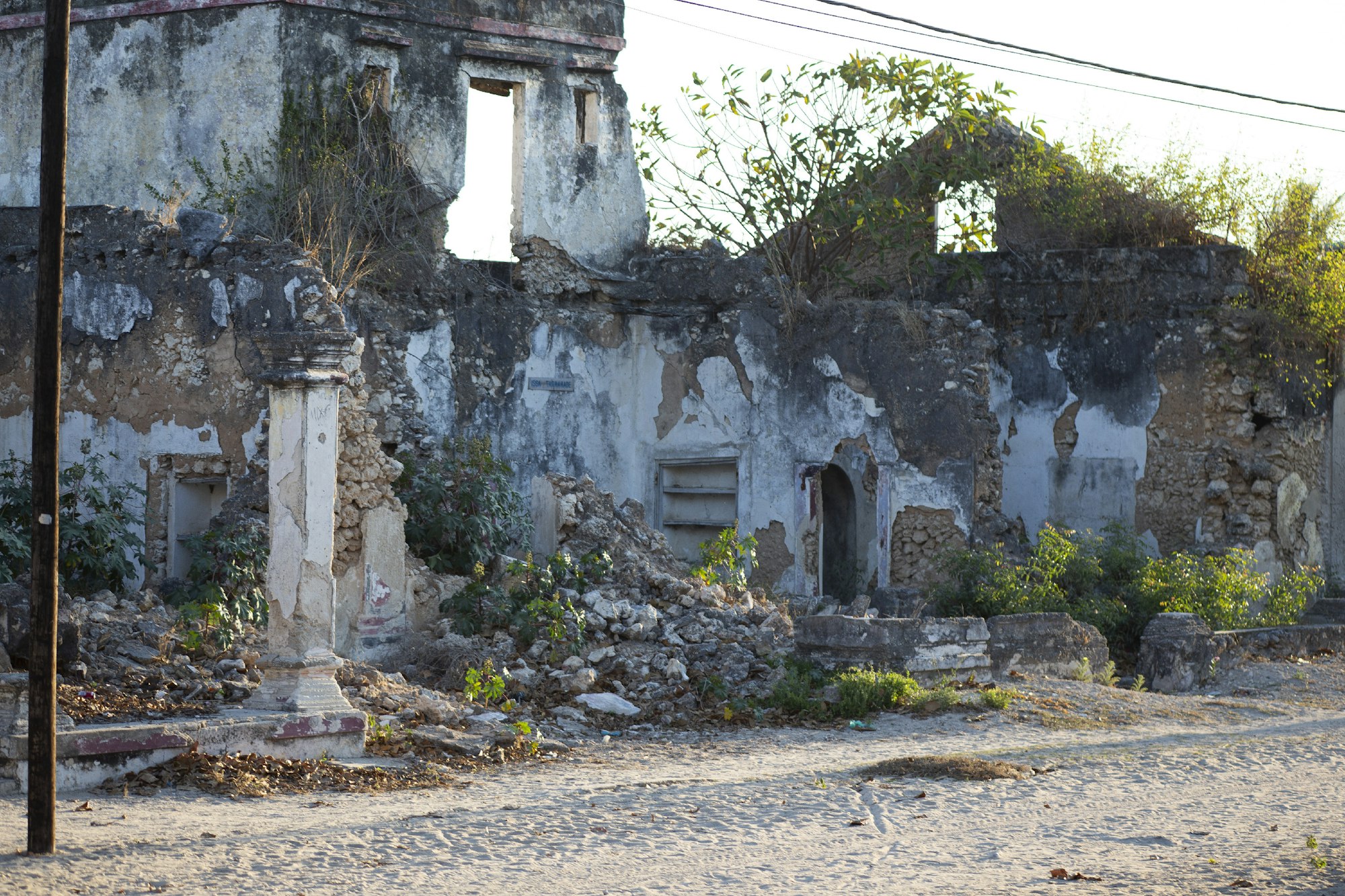
Ilha de Moçambique is a tiny coral island off Mozambique's north coast, and for nearly four centuries it was the colonial capital. Its stone town of pastel palaces, churches and mosques, a massive 16th-century fortress and the lively reed-roofed Makuti town make it one of the most atmospheric places in East Africa.
Ilha de Moçambique, or Island of Mozambique, is a small island about 3 km long and a few hundred metres wide, in Nampula province. It is linked to the mainland by a 3.5 km single-lane bridge.
Long before the Portuguese, the island was an Arab-Swahili trading port. Vasco da Gama arrived in 1498, and the Portuguese made it the capital of Portuguese East Africa until 1898, when the capital moved to Lourenço Marques, now Maputo. The country itself takes its name from the island.
Its history is written in its architecture. The northern half is the Stone Town, with colonial palaces, churches, mosques, a Hindu temple and grand merchant houses, many restored and some crumbling. The southern half is Makuti Town, a dense, lively neighbourhood of houses with reed roofs, where most of the island's people live.
At the northern tip stands the Fortress of São Sebastião, built in the 16th century and one of the oldest European forts in sub-Saharan Africa. Next to it, the tiny Chapel of Nossa Senhora do Baluarte, from 1522, is thought to be the oldest European building in the southern hemisphere.
The island is a UNESCO World Heritage site and moves at a slow pace: kids swim off the jetties, dhows sail by and the call to prayer echoes over the rooftops.
Two or three nights is ideal for the Stone Town, the fortress, Makuti and a dhow trip to the beaches across the bay.
Stay in the Stone Town, where most guesthouses are in restored colonial houses, close to the sights and restaurants. The island is small enough to walk everywhere.
Colonial palaces, churches, museums and most of the guesthouses.
Southern half of the island, with reed-roofed houses, mosques and markets.
Northern tip, with the fortress and the 1522 chapel.
Mainland beaches across the bay, reached by dhow.
Map data from OpenStreetMap contributors.
Start at the Fortress of São Sebastião, at the northern tip of the island. Built from 1558, it is a huge, star-shaped fort with thick walls, cisterns and views over the ocean. The Chapel of Nossa Senhora do Baluarte, at the fort's edge, dates from 1522.
The Palace of São Paulo, once the governor's residence, is now a museum with furniture, paintings and objects from Portugal, India and China, showing the island's role in Indian Ocean trade. The Museum of Sacred Art, in a former hospital church, holds religious art, and the Maritime Museum displays finds from shipwrecks around the island.
Wander the Stone Town's streets to see the restored colonial buildings, the old customs house, the Church of the Misericórdia and the Indian and Arab merchant houses. Look out for the statue of Luís de Camões, the Portuguese poet who lived here.
In the south, Makuti Town is a maze of narrow lanes, reed-roofed houses and small shops. Go with a local guide to see daily life, the mosques and the old cemetery.
From the island, dhow trips go to Goa Island, with its lighthouse, and to the mainland beaches at Chocas and Cabaceira, where Cabaceira Pequena has ruins of a colonial summer palace.
Snorkelling is possible around the island, and the jetties are where locals swim at sunset.
The island itself is the attraction, and walking it costs nothing.
Wander the Stone Town's streets and squares, looking at the colonial architecture, churches and mosques.
Walk along the seafront at sunset, when locals swim off the jetties and dhows sail past.
Stroll around the edges of Makuti Town, where life spills out into the lanes.
Watch the fishermen and dhow builders at work on the beaches.
Sit at the Camões statue or by the old customs house and watch the island go by.
Ilha's food reflects its mix of African, Arab, Indian and Portuguese influences. Seafood is the highlight: grilled fish, prawns, crab and octopus, often with coconut or piri-piri.
Matapa, cassava leaves cooked with peanuts and coconut, and coconut-based curries with rice are local favourites.
Small restaurants in the Stone Town serve seafood and Mozambican dishes, and there are a few cafés serving coffee and pão (bread rolls).
The market and street stalls in Makuti sell cheap snacks, fruit and grilled fish.
Beer is available, but the island has a large Muslim population, so be respectful, especially during Ramadan. Drink bottled water.
Ilha de Moçambique is not a nightlife destination. Evenings are about sunset drinks on a terrace, dinner in a Stone Town restaurant and a stroll by the sea.
A few bars play music at weekends, and occasional cultural events are held in the old buildings.
The island is quiet after dark. Walk in groups or with a guide in Makuti at night, and keep valuables out of sight.
The nearest airport is in Nampula, with LAM flights from Maputo and other Mozambican cities. From Nampula, chapas to Ilha leave from Avenida de Trabalho, near the train station, when full. The trip takes about 3 to 4 hours and costs about MZN 300.
Private transfers from Nampula are quicker and can be arranged through guesthouses.
The island is reached by a 3.5 km bridge from Lumbo, on the mainland.
Ilha is small enough to walk everywhere, though tuk-tuks and bikes are available.
Chapas back to Nampula leave very early, between about 3am and 5am, so plan ahead.
The UK advises against all travel to the Memba and Eráti districts of Nampula province, north of the island, and to most of Cabo Delgado. Don't continue north by road without checking the latest advice.
Ilha is affordable once you get there. Guesthouses in restored colonial houses are the main type of accommodation, and Hostelworld has no listings on the island right now.
Local meals and street food cost a few euros, and a seafood meal in a restaurant around €8 to €15.
Museum entry is cheap, and the fortress has a small fee. Dhow trips to the nearby islands and beaches cost more, depending on group size.
The flight to Nampula is the biggest cost of getting here, and the chapa to the island costs about MZN 300.
ATMs on the island can run out of cash, so bring meticais from Nampula.
On a budget, allow around €25 to €40 a day.
Ilha de Moçambique is generally calm and welcoming, and most visitors have no problems. Petty theft happens, so keep valuables out of sight and don't leave things on the beach.
At night, walk in the Stone Town in groups, and visit Makuti with a guide.
The island is in Nampula province. The UK advises against all travel to the Memba and Eráti districts, north of the island, and to most of Cabo Delgado, because of attacks by Islamist militants. The island itself is not in those areas, but check the latest advice before you travel.
Dress modestly, especially in Makuti and near mosques, and ask before taking photos of people.
Carry your passport at all times, as police don't accept copies. Malaria is present, so use repellent and a net.
From the island, dhows sail to Goa Island and the mainland beaches across the bay.
Small island with a lighthouse and snorkelling.
Mainland beaches and the ruins of a colonial summer palace at Cabaceira Pequena.
The mainland village at the end of the bridge, with an old railway terminus.
The island's calendar follows Mozambique's national holidays and the Islamic calendar.
Public holiday.
The island's Muslim community marks Ramadan and Eid; be respectful.
Public holiday.
The island is hot all year, with highs of around 28°C to 31°C. May to November is the dry season and the best time to visit. December to April is hot and humid, with heavy rain and cyclone risk.
Temperatures are estimates based on weather2travel's Quirimbas climate data, the nearest northern coast station they cover. Crowd levels are our rough guide.
Pick a style and a number of nights for a rough total, per person, in euros.
Estimates in euros, converted from meticais. Sleeping is based on guesthouse prices, since Hostelworld has no listings on the island.
Prices and timetables change. Check before you travel.

Compare Ilha de Moçambique hostels: live prices, real reviews and free cancellation on most bookings. Then meet the people already there in the app.

 Get the App.

 Get the App.